Amita M et al. (MAR 2013)
Proceedings of the National Academy of Sciences of the United States of America 110 13 E1212--E1221
Complete and unidirectional conversion of human embryonic stem cells to trophoblast by BMP4
Human ES cells (hESC) exposed to bone morphogenic protein 4 (BMP4) in the absence of FGF2 have become widely used for studying trophoblast development,but the soundness of this model has been challenged by others,who concluded that differentiation was primarily toward mesoderm rather than trophoblast. Here we confirm that hESC grown under the standard conditions on a medium conditioned by mouse embryonic fibroblasts in the presence of BMP4 and absence of FGF2 on a Matrigel substratum rapidly convert to an epithelium that is largely KRT7+ within 48 h,with minimal expression of mesoderm markers,including T (Brachyury). Instead,they begin to express a series of trophoblast markers,including HLA-G,demonstrate invasive properties that are independent of the continued presence of BMP4 in the medium,and,over time,produce extensive amounts of human chorionic gonadotropin,progesterone,placental growth factor,and placental lactogen. This process of differentiation is not dependent on conditioning of the medium by mouse embryonic fibroblasts and is accelerated in the presence of inhibitors of Activin and FGF2 signaling,which at day 2 provide colonies that are entirely KRT7+ and in which the majority of cells are transiently CDX2+. Colonies grown on two chemically defined media,including the one in which BMP4 was reported to drive mesoderm formation,also differentiate at least partially to trophoblast in response to BMP4. The experiments demonstrate that the in vitro BMP4/hESC model is valid for studying the emergence and differentiation of trophoblasts.
View Publication
产品类型:
产品号#:
05850
05857
05870
05875
07923
85850
85857
85870
85875
产品名:
Dispase (1 U/mL)
mTeSR™1
mTeSR™1
Khorashad JS et al. (JUN 2009)
Haematologica 94 6 861--4
The level of BCR-ABL1 kinase activity before treatment does not identify chronic myeloid leukemia patients who fail to achieve a complete cytogenetic response on imatinib.
Imatinib is currently the first line therapy for newly diagnosed patients with chronic myeloid leukemia. However,20-25% of patients do not achieve durable complete cytogenetic responses. The mechanism underlying this primary resistance is unknown,but variations in BCR-ABL1 kinase activity may play a role and can be investigated by measuring the autophosphorylation levels of BCR-ABL1 or of a surrogate target such as Crkl. In this study we used flow cytometry to investigate the in vitro inhibition of Crkl phosphorylation by imatinib in CD34(+) cells in diagnostic samples from two groups of patients distinguished by their cytogenetic response. No difference in inhibition of Crkl phosphorylation was observed in the two groups. The observation that increasing the dose of imatinib in vivo did not increase the level of cytogenetic response in some non-responders suggests that in at least a proportion of patients imatinib resistance may be due to activation of BCR-ABL1-independent pathway.
View Publication
产品类型:
产品号#:
18056
18056RF
产品名:
Ueno NT et al. (NOV 2003)
Blood 102 10 3829--36
Rapid induction of complete donor chimerism by the use of a reduced-intensity conditioning regimen composed of fludarabine and melphalan in allogeneic stem cell transplantation for metastatic solid tumors.
We evaluated the feasibility and efficacy of a reduced-intensity conditioning (RIC) regimen of fludarabine and melphalan to achieve rapid complete donor chimerism after allogeneic stem cell transplantation (SCT) in patients with metastatic solid tumors. Between January 1999 and January 2003,8 patients with metastatic breast cancer (BC) and 15 with metastatic renal cell carcinoma (RCC) underwent allogeneic SCT after an RIC regimen of 5 days of fludarabine and 2 days of melphalan. Filgrastim-mobilized stem cells from HLA-identical related or unrelated donors were infused. Prophylaxis for graft-versus-host disease (GVHD) consisted of tacrolimus and methotrexate. All 22 evaluable patients had 100% donor chimerism at day 30 and at all measurement times thereafter. One patient died 19 days after SCT. Nine patients (39%) had grades II to IV acute GVHD and 10 patients (43%) had chronic GVHD. Five patients (22%) died of nonrelapse treatment-related complications. Treatment-related disease response was seen in 10 patients (45%),with 3 complete responses,2 partial responses,and 5 minor responses. Fludarabine-melphalan is a feasible and effective RIC regimen for allogeneic SCT in metastatic BC and RCC. It induces rapid complete donor chimerism without the need for donor lymphocyte infusion. Tumor regression associated with GVHD is consistent with graft-versus-tumor effect.
View Publication


 EasySep™小鼠TIL(CD45)正选试剂盒




 MegaCult™-C含细胞因子全套试剂盒 人CFU-Mk检测全套试剂盒
 MegaCult™-C无细胞因子全套试剂盒 人CFU-Mk检测全套试剂盒
 MegaCult™-C含细胞因子培养基 用于培养人和小鼠CFU-Mk的培养基,含细胞因子。24 x 2 mL管装
 MegaCult™-C胶原和含细胞因子培养基 胶原蛋白和含细胞因子的培养基,用于人CFU-Mk检测
 MegaCult™-C胶原和含脂质培养基 胶原蛋白和含脂质培养基的试剂盒,不含细胞因子,用于人和小鼠CFU-Mk检测
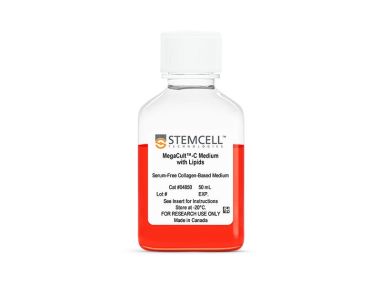 MegaCult™-C含脂质培养基
 MegaCult™-C胶原和无细胞因子培养基 胶原蛋白和不含细胞因子的培养基,用于人和小鼠CFU-Mk检测
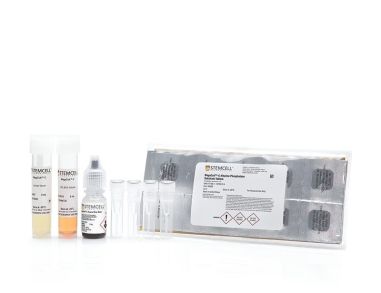 MegaCult™-C CFU-Mk染色试剂盒 人CFU-Mk染色试剂盒
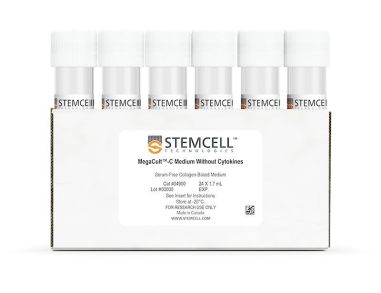 MegaCult™-C无细胞因子培养基 用于培养人和小鼠CFU-Mk的培养基,不含细胞因子。24 x 1.7 mL管装
 沪公网安备31010102008431号