Clarke DM et al. (JAN 2009)
Cytotherapy 11 4 472--9
Improved post-thaw recovery of peripheral blood stem/progenitor cells using a novel intracellular-like cryopreservation solution.
BACKGROUND AIMS Peripheral blood stem cells (PBSC) have become the preferred stem cell source for autologous hematopoietic transplantation. A critical aspect of this treatment modality is cryopreservation of the stem cell products,which permits temporal separation of the PBSC mobilization/collection phase from the subsequent high-dose therapy. While controlled rate-freezing and liquid nitrogen storage have become 'routine' practice in many cell-processing facilities,there is clearly room for improvement as current cryopreservation media formulations still result in significant loss and damage to the stem/progenitor cell populations essential for engraftment,and can also expose the patients to relatively undefined serum components and larger volumes of dimethylsulfoxide (DMSO) that can contribute to the morbidity and mortality of the transplant therapy. METHODS This study compared cryopreservation of PBSC in a novel intracellular-like,fully defined,serum- and protein-free preservation solution,CryoStor (BioLife Solutions Inc.),with a standard formulation used by the Fred Hutchinson Cancer Research Center (FHCRC). Briefly,human PBSC apheresis specimens were collected and 5 x 10(7) cells/1 mL sample vial were prepared for cryopreservation in the following solutions: (a) FHCRC standard,Normosol-R,5% human serum albumin (HAS) and 10% DMSO; and (b) CryoStor CS10 (final diluted concentration of 5% DMSO). A standard controlled-rate freezing program was employed,and frozen vials were stored in the vapor phase of a liquid nitrogen freezer for a minimum of 1 week. Vials were then thawed and evaluated for total nucleated cell count (TNC),viability,CD34 and granulocytes by flow cytometry,along with colony-forming activity in methylcellulose. RESULTS The PBSC samples frozen in CryoStor CS10 yielded significantly improved post-thaw recoveries for total viable CD34(+),colony-forming units (CFU) and granulocytes. Specifically,relative to the FHCRC standard formulation,cryopreservation with CS10 resulted in an average 1.8-fold increased recovery of viable CD34(+) cells (P=0.005),a 1.5-fold increase in CFU-granulocyte-macrophage (GM) numbers (P=0.030) and a 2.3-fold increase in granulocyte recovery (P=0.045). CONCLUSIONS This study indicates that use of CryoStor for cryopreservation can yield significantly improved recovery and in vitro functionality of stem/progenitor cells in PBSC products. In addition,it is important to note that these improved recoveries were obtained while not introducing any extra serum or serum-derived proteins,and reducing the final concentration/volume of DMSO by half. Further in vitro and in vivo studies are clearly necessary; however,these findings imply use of CryoStor for cryopreservation could result in improved engraftment for those patients with a lower content of CD34(+) cells in their PBSC collections,along with reducing the requirement for additional apheresis collections and decreasing the risk of adverse infusion reactions associated with higher exposure to DMSO.
View Publication
产品类型:
产品号#:
07933
07953
07949
07930
07931
07940
07955
07956
07959
07954
100-1061
07952
产品名:
CryoStor®CS5
CryoStor®CS5
CryoStor®CS5
CryoStor® CS10
CryoStor® CS10
CryoStor® CS10
CryoStor® CS10
CryoStor® CS10
CryoStor® CS10
CryoStor® CS10
Thirumala S et al. (JUL 2009)
Organogenesis 5 3 143--54
Clinical grade adult stem cell banking.
There has been a great deal of scientific interest recently generated by the potential therapeutic applications of adult stem cells in human care but there are several challenges regarding quality and safety in clinical applications and a number of these challenges relate to the processing and banking of these cells ex-vivo. As the number of clinical trials and the variety of adult cells used in regenerative therapy increases,safety remains a primary concern. This has inspired many nations to formulate guidelines and standards for the quality of stem cell collection,processing,testing,banking,packaging and distribution. Clinically applicable cryopreservation and banking of adult stem cells offers unique opportunities to advance the potential uses and widespread implementation of these cells in clinical applications. Most current cryopreservation protocols include animal serum proteins and potentially toxic cryoprotectant additives (CPAs) that prevent direct use of these cells in human therapeutic applications. Long term cryopreservation of adult stem cells under good manufacturing conditions using animal product free solutions is critical to the widespread clinical implementation of ex-vivo adult stem cell therapies. Furthermore,to avoid any potential cryoprotectant related complications,reduced CPA concentrations and efficient post-thaw washing to remove CPA are also desirable. The present review focuses on the current strategies and important aspects of adult stem cell banking for clinical applications. These include current good manufacturing practices (cGMPs),animal protein free freezing solutions,cryoprotectants,freezing & thawing protocols,viability assays,packaging and distribution. The importance and benefits of banking clinical grade adult stem cells are also discussed.
View Publication
产品类型:
产品号#:
07930
07931
07940
07955
07956
07959
07954
100-1061
07952
产品名:
CryoStor® CS10
CryoStor® CS10
CryoStor® CS10
CryoStor® CS10
CryoStor® CS10
CryoStor® CS10
CryoStor® CS10
Pei S et al. (NOV 2013)
The Journal of biological chemistry 288 47 33542--58
Targeting aberrant glutathione metabolism to eradicate human acute myelogenous leukemia cells.
The development of strategies to eradicate primary human acute myelogenous leukemia (AML) cells is a major challenge to the leukemia research field. In particular,primitive leukemia cells,often termed leukemia stem cells,are typically refractory to many forms of therapy. To investigate improved strategies for targeting of human AML cells we compared the molecular mechanisms regulating oxidative state in primitive (CD34(+)) leukemic versus normal specimens. Our data indicate that CD34(+) AML cells have elevated expression of multiple glutathione pathway regulatory proteins,presumably as a mechanism to compensate for increased oxidative stress in leukemic cells. Consistent with this observation,CD34(+) AML cells have lower levels of reduced glutathione and increased levels of oxidized glutathione compared with normal CD34(+) cells. These findings led us to hypothesize that AML cells will be hypersensitive to inhibition of glutathione metabolism. To test this premise,we identified compounds such as parthenolide (PTL) or piperlongumine that induce almost complete glutathione depletion and severe cell death in CD34(+) AML cells. Importantly,these compounds only induce limited and transient glutathione depletion as well as significantly less toxicity in normal CD34(+) cells. We further determined that PTL perturbs glutathione homeostasis by a multifactorial mechanism,which includes inhibiting key glutathione metabolic enzymes (GCLC and GPX1),as well as direct depletion of glutathione. These findings demonstrate that primitive leukemia cells are uniquely sensitive to agents that target aberrant glutathione metabolism,an intrinsic property of primary human AML cells.
View Publication
产品类型:
产品号#:
07930
07931
07940
07955
07956
07959
07954
100-1061
07952
产品名:
CryoStor® CS10
CryoStor® CS10
CryoStor® CS10
CryoStor® CS10
CryoStor® CS10
CryoStor® CS10
CryoStor® CS10
Kolodziej S et al. (MAY 2014)
Nature communications 5 3995
PADI4 acts as a coactivator of Tal1 by counteracting repressive histone arginine methylation.
The transcription factor Tal1 is a critical activator or repressor of gene expression in hematopoiesis and leukaemia. The mechanism by which Tal1 differentially influences transcription of distinct genes is not fully understood. Here we show that Tal1 interacts with the peptidylarginine deiminase IV (PADI4). We demonstrate that PADI4 can act as an epigenetic coactivator through influencing H3R2me2a. At the Tal1/PADI4 target gene IL6ST the repressive H3R2me2a mark triggered by PRMT6 is counteracted by PADI4,which augments the active H3K4me3 mark and thus increases IL6ST expression. In contrast,at the CTCF promoter PADI4 acts as a repressor. We propose that the influence of PADI4 on IL6ST transcription plays a role in the control of IL6ST expression during lineage differentiation of hematopoietic stem/progenitor cells. These results open the possibility to pharmacologically influence Tal1 in leukaemia.
View Publication
产品类型:
产品号#:
07930
07931
07940
07955
07956
07959
07954
100-1061
07952
产品名:
CryoStor® CS10
CryoStor® CS10
CryoStor® CS10
CryoStor® CS10
CryoStor® CS10
CryoStor® CS10
CryoStor® CS10
Miere C et al. ( 2016)
Methods in molecular biology (Clifton,N.J.) 1357 33--44
Sendai Virus-Based Reprogramming of Mesenchymal Stromal/Stem Cells from Umbilical Cord Wharton's Jelly into Induced Pluripotent Stem Cells.
In an attempt to bring pluripotent stem cell biology closer to reaching its full potential,many groups have focused on improving reprogramming protocols over the past several years. The episomal modified Sendai virus-based vector has emerged as one of the most practical ones. Here we describe reprogramming of mesenchymal stromal/stem cells (MSC) derived from umbilical cord Wharton's Jelly into induced pluripotent stem cells (iPSC) using genome non-integrating Sendai virus-based vectors. The detailed protocols of iPSC colony cryopreservation (vitrification) and adaption to feeder-free culture conditions are also included.
View Publication
产品类型:
产品号#:
07930
07931
07940
07955
07956
07959
07954
100-1061
07952
产品名:
CryoStor® CS10
CryoStor® CS10
CryoStor® CS10
CryoStor® CS10
CryoStor® CS10
CryoStor® CS10
CryoStor® CS10
P. A. De Sousa et al. (APR 2017)
Stem cell research 20 105--114
Rapid establishment of the European Bank for induced Pluripotent Stem Cells (EBiSC) - the Hot Start experience.
A fast track Hot Start" process was implemented to launch the European Bank for Induced Pluripotent Stem Cells (EBiSC) to provide early release of a range of established control and disease linked human induced pluripotent stem cell (hiPSC) lines. Established practice amongst consortium members was surveyed to arrive at harmonised and publically accessible Standard Operations Procedures (SOPs) for tissue procurement
View Publication


 EasySep™小鼠TIL(CD45)正选试剂盒




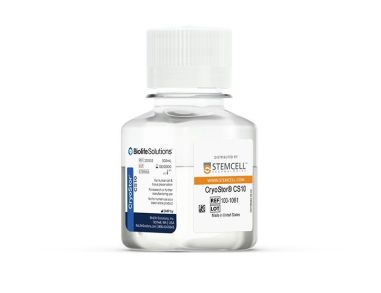 CryoStor® CS10 以cGMP标准生产、不含动物成分、成分明确、含10% DMSO的冻存液
 CryoStor®CS5 无动物成分,含有5% DMSO的冷冻保存培养基
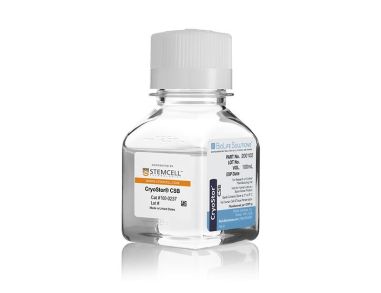 CryoStor®CSB 无动物成分和无蛋白质冷冻保存配方
 CryoStor®CS2 无动物成分,含有2% DMSO的冷冻保存培养基
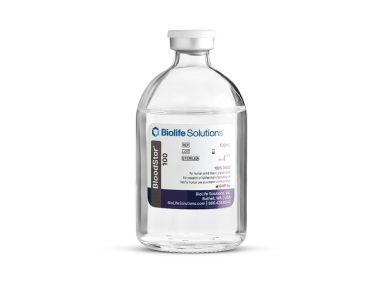 BloodStor®100 细胞和组织的生物保存试剂
 实验方案How to Cryopreserve Human Pluripotent Stem Cells in CryoStor® CS10
 沪公网安备31010102008431号