若您需要咨询产品或有任何技术问题,请通过官方电话 400 885 9050 或邮箱 info.cn@stemcell.com 与我们联系。

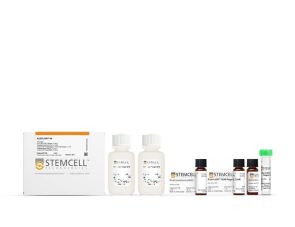
AZ628

MEK/ERK通路抑制剂;抑制B-RAF、B-RAFV600E和C-RAF-1
只有 %1
¥386.00

产品号 #(选择产品)

产品号 #72982_C

MEK/ERK通路抑制剂;抑制B-RAF、B-RAFV600E和C-RAF-1

总览

AZ628是一种喹唑啉酮,可抑制多种快速加速纤维肉瘤(RAF)激酶,包括B-RAF、B-RAF V600E和C-RAF-1(体外激酶测定IC₅₀值分别为105、34和29 nM( Khazak et al.)。它强烈促进B-Raf二聚化,作为一种紧密结合抑制剂,并表现出极慢的解离速率(Hatzivassiliou et al.; Lavoie et al.)。特异性分析显示,还可以抑制其他多种酪氨酸激酶的活化,包括激酶插入结构域受体(KDR)、盘状结构域受体2 (DDR2)、Lck/Yes Novel (LYN)、猫McDonough肉瘤(FMS)和FMS样酪氨酸激酶1 (FLT1) (Khazak et al.)。

癌症研究
·抑制肿瘤生长、诱导细胞周期阻滞和引起细胞凋亡,尤其是在B-RAF V600E突变的细胞系中效果显著(McDermott et al.; Khazak et al.)。

细胞类型
癌细胞及细胞系
 
种属
人,小鼠,非人灵长类,其他物种,大鼠
 
研究领域
癌症
 
CAS 编号
878739-06-1
 
化学式
C₂₇H₂₅N₅O₂
 
纯度
≥98%
 
通路
MEK/ERK
 
靶点
B-RAF,C-RAF
 

产品说明书及文档

请在《产品说明书》中查找相关支持信息和使用说明,或浏览下方更多实验方案。

Document Type
Product Name
Catalog #
Lot #
Language
Product Name
AZ628​
Catalog #
72982
Lot #
All
Language
English
Document Type
Safety Data Sheet
Product Name
AZ628​
Catalog #
72982
Lot #
All
Language
English

相关材料与文献

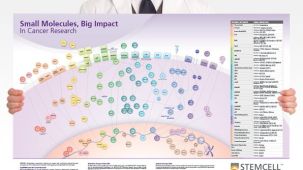
技术资料 (2)

文献 (4)

Selective Raf inhibition in cancer therapy. Khazak V et al. Expert opinion on therapeutic targets 2007

Abstract

Over the past 5 years,the Raf kinase family has emerged as a promising target for protein-directed cancer therapy development. The goal of this review is to first provide a concise summary of the data validating Raf proteins as high-interest therapeutic targets. The authors then outline the mode of action of Raf kinases,emphasizing how Raf activities and protein interactions suggest specific approaches to inhibiting Raf. The authors then summarize the set of drugs,antisense reagents and antibodies available or in development for therapeutically targeting Raf or Raf-related proteins,as well as existing strategies combining these and other therapeutic agents. Finally,the authors discuss recent results from systems biology analyses that have the potential to increasingly guide the intelligent selection of combination therapies involving Raf-targeting agents and other therapeutics.
Identification of genotype-correlated sensitivity to selective kinase inhibitors by using high-throughput tumor cell line profiling. McDermott U et al. Proceedings of the National Academy of Sciences of the United States of America 2007

Abstract

Kinase inhibitors constitute an important new class of cancer drugs,whose selective efficacy is largely determined by underlying tumor cell genetics. We established a high-throughput platform to profile 500 cell lines derived from diverse epithelial cancers for sensitivity to 14 kinase inhibitors. Most inhibitors were ineffective against unselected cell lines but exhibited dramatic cell killing of small nonoverlapping subsets. Cells with exquisite sensitivity to EGFR,HER2,MET,or BRAF kinase inhibitors were marked by activating mutations or amplification of the drug target. Although most cell lines recapitulated known tumor-associated genotypes,the screen revealed low-frequency drug-sensitizing genotypes in tumor types not previously associated with drug susceptibility. Furthermore,comparing drugs thought to target the same kinase revealed striking differences,predictive of clinical efficacy. Genetically defined cancer subsets,irrespective of tissue type,predict response to kinase inhibitors,and provide an important preclinical model to guide early clinical applications of novel targeted inhibitors.
RAF inhibitors prime wild-type RAF to activate the MAPK pathway and enhance growth. Hatzivassiliou G et al. Nature 2010

Abstract

Activating mutations in KRAS and BRAF are found in more than 30% of all human tumours and 40% of melanoma,respectively,thus targeting this pathway could have broad therapeutic effects. Small molecule ATP-competitive RAF kinase inhibitors have potent antitumour effects on mutant BRAF(V600E) tumours but,in contrast to mitogen-activated protein kinase kinase (MEK) inhibitors,are not potent against RAS mutant tumour models,despite RAF functioning as a key effector downstream of RAS and upstream of MEK. Here we show that ATP-competitive RAF inhibitors have two opposing mechanisms of action depending on the cellular context. In BRAF(V600E) tumours,RAF inhibitors effectively block the mitogen-activated protein kinase (MAPK) signalling pathway and decrease tumour growth. Notably,in KRAS mutant and RAS/RAF wild-type tumours,RAF inhibitors activate the RAF-MEK-ERK pathway in a RAS-dependent manner,thus enhancing tumour growth in some xenograft models. Inhibitor binding activates wild-type RAF isoforms by inducing dimerization,membrane localization and interaction with RAS-GTP. These events occur independently of kinase inhibition and are,instead,linked to direct conformational effects of inhibitors on the RAF kinase domain. On the basis of these findings,we demonstrate that ATP-competitive kinase inhibitors can have opposing functions as inhibitors or activators of signalling pathways,depending on the cellular context. Furthermore,this work provides new insights into the therapeutic use of ATP-competitive RAF inhibitors.

更多信息

更多信息
物种 人, 其它物种, 大鼠, 小鼠, 非人灵长类
Cas Number 878739-06-1
Chemical Formula C₂₇H₂₅N₅O₂
纯度 ≥ 98%
Target B-RAF, C-RAF
Pathway MEK/ERK
质量保证:

产品仅供研究使用,不用于针对人或动物的诊断或治疗。 欲获悉更多关于STEMCELL的质控信息,请访问 STEMCELL.CN/COMPLIANCE.
Copyright © 2026 by STEMCELL Technologies. All rights reserved.

在线联系