若您需要咨询产品或有任何技术问题,请通过官方电话 400 885 9050 或邮箱 info.cn@stemcell.com 与我们联系。

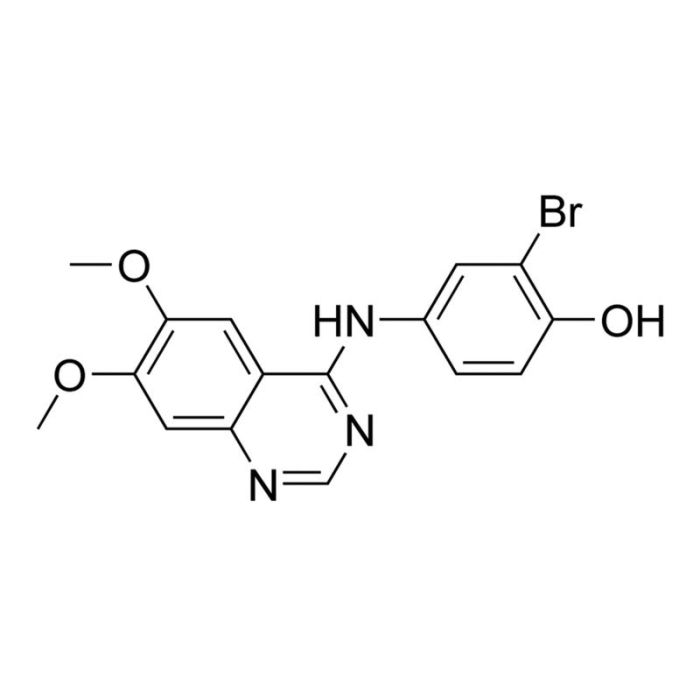
WHI-P154

JAK/STAT通路抑制剂;抑制JAK3
只有 %1
¥1,812.00

产品号 #(选择产品)

产品号 #73552_C

JAK/STAT通路抑制剂;抑制JAK3

总览

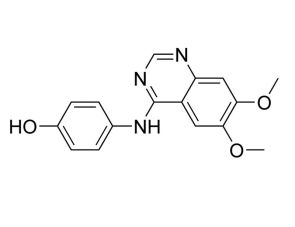
WHI-P154 是Janus激酶3(JAK3)的抑制剂,对人和小鼠蛋白的IC₅₀值分别为28和128 μM(Sudbeck et al.)。据报道,它还表现出对其他激酶的显著抑制,包括nM范围内的表皮生长因子受体(EGFR)(Changelian et al.; Uckun et al.)。尚未观察到对JAK1或JAK2的显著抑制(Sudbeck et al.)。

分化
·促进小鼠神经元前体细胞分化为神经元和少突胶质细胞,但阻止星形胶质细胞分化(Kim et al.)。
·消除PDGF诱导的人神经祖细胞神经突生长增加(Richards et al.)。

免疫学
·抑制脂多糖(LPS)诱导的巨噬细胞和人上皮细胞中一氧化氮合酶的表达和一氧化氮的生成(Sareila et al.)。

癌症研究
·诱导人胶质母细胞瘤细胞系U373和U87的凋亡和细胞死亡。与EGF偶联时,可抑制小鼠异种移植模型中的肿瘤生长(Narla et al.)。

细胞类型
癌细胞及细胞系,单核细胞,神经干/祖细胞,神经元
 
种属
人,小鼠,非人灵长类,其他物种,大鼠
 
应用
分化
 
研究领域
癌症,免疫,神经科学
 
CAS 编号
211555-04-3
 
化学式
C₁₆H₁₄BrN₃O₃
 
纯度
≥98%
 
通路
JAK/STAT
 
靶点
JAK3
 

产品说明书及文档

请在《产品说明书》中查找相关支持信息和使用说明,或浏览下方更多实验方案。

Document Type
Product Name
Catalog #
Lot #
Language
Product Name
WHI-P154
Catalog #
73552
Lot #
All
Language
English
Document Type
Safety Data Sheet
Product Name
WHI-P154
Catalog #
73552
Lot #
All
Language
English

相关材料与文献

技术资料 (3)

文献 (7)

Structure-based design of specific inhibitors of Janus kinase 3 as apoptosis-inducing antileukemic agents. Sudbeck EA et al. Clinical cancer research : an official journal of the American Association for Cancer Research 1999

Abstract

A novel homology model of the kinase domain of Janus kinase (JAK) 3 was used for the structure-based design of dimethoxyquinazoline compounds with potent and specific inhibitory activity against JAK3. The active site of JAK3 in this homology model measures roughly 8 A x 11 A x 20 A,with a volume of approximately 530 A3 available for inhibitor binding. Modeling studies indicated that 4-(phenyl)-amino-6,7-dimethoxyquinazoline (parent compound WHI-258) would likely fit into the catalytic site of JAK3 and that derivatives of this compound that contain an OH group at the 4' position of the phenyl ring would more strongly bind to JAK3 because of added interactions with Asp-967,a key residue in the catalytic site of JAK3. These predictions were consistent with docking studies indicating that compounds containing a 4'-OH group,WHI-P131 [4-(4'-hydroxyphenyl)-amino-6,7-dimethoxyquinazoline],WHI-P154 [4-(3'-bromo-4'-hydroxylphenyl)-amino-6,7-dimethoxyquinazoline],and WHI-P97 [4-(3',5'-dibromo-4'-hydroxylphenyl)-amino-6,7-dimethoxyquinazolin e],were likely to bind favorably to JAK3,with estimated K(i)s ranging from 0.6 to 2.3 microM. These compounds inhibited JAK3 in immune complex kinase assays in a dose-dependent fashion. In contrast,compounds lacking the 4'-OH group,WHI-P79 [4-(3'-bromophenyl)-amino-6,7-dimethoxyquinazoline],WHI-P111 [4-(3'-bromo-4'-methylphenyl)-amino-6,7-dimethoxyquinazoline],WHI-P112 [4-(2',5'-dibromophenyl)-amino-6,7-dimethoxyquinazoline],WHI-P132 [4-(2'-hydroxylphenyl)-amino-6,7-dimethoxyquinazoline],and WHI-P258 [4-(phenyl)-amino-6,7-dimethoxyquinazoline],were predicted to bind less strongly,with estimated K(i)s ranging from 28 to 72 microM. These compounds did not show any significant JAK3 inhibition in kinase assays. Furthermore,the lead dimethoxyquinazoline compound,WHI-P131,which showed potent JAK3-inhibitory activity (IC50 of 78 microM),did not inhibit JAK1 and JAK2,the ZAP/SYK family tyrosine kinase SYK,the TEC family tyrosine kinase BTK,the SRC family tyrosine kinase LYN,or the receptor family tyrosine kinase insulin receptor kinase,even at concentrations as high as 350 microM. WHI-P131 induced apoptosis in JAK3-expressing human leukemia cell lines NALM-6 and LC1;19 but not in melanoma (M24-MET) or squamous carcinoma (SQ20B) cells. Leukemia cells were not killed by dimethoxyquinazoline compounds that were inactive against JAK3. WHI-P131 inhibited the clonogenic growth of JAK3-positive leukemia cell lines DAUDI,RAMOS,LC1;19,NALM-6,MOLT-3,and HL-60 (but not JAK3-negative BT-20 breast cancer,M24-MET melanoma,or SQ20B squamous carcinoma cell lines) in a concentration-dependent fashion. Potent and specific inhibitors of JAK3 such as WHI-P131 may provide the basis for the design of new treatment strategies against acute lymphoblastic leukemia,the most common form of childhood cancer.
Structure-based design of novel anticancer agents. Uckun FM et al. Current cancer drug targets 2001

Abstract

Recently identified agents that interact with cytoskeletal elements such as tubulin include synthetic spiroketal pyrans (SPIKET) and monotetrahydrofuran compounds (COBRA compounds). SPIKET compounds target the spongistatin binding site of beta-tubulin and COBRA compounds target a unique binding cavity on alpha-tubulin. At nanomolar concentrations,the SPIKET compound SPIKET-P causes tubulin depolymerization and exhibits potent cytotoxic activity against cancer cells. COBRA-1 inhibits GTP-induced tubulin polymerization. Treatment of human breast cancer and brain tumor cells with COBRA-1 caused destruction of microtubule organization and apoptosis. Other studies have identified some promising protein tyrosine kinase inhibitors as anti-cancer agents. These include EGFR inhibitors such as the quinazoline derivative WHI-P97 and the leflunomide metabolite analog LFM-A12. Both LFM-A12 and WHI-P97 inhibit the in vitro invasiveness of EGFR positive human breast cancer cells at micromolar concentrations and induce apoptotic cell death. Dimethoxyquinazoline compounds WHI-P131 and WHI-P154 inhibit tyrosine kinase JAK3 in leukemia cells. Of particular interest is WHI-P131,which inhibits JAK3 but not JAK1,JAK2,SYK,BTK,LYN,or IRK at concentrations as high as 350 microM. Studies of BTK inhibitors showed that the leflunomide metabolite analog LFM-A13 inhibited BTK in leukemia and lymphoma cells. Consistent with the anti-apoptotic function of BTK,treatment of leukemic cells with LFM-A13 enhanced their sensitivity to chemotherapy-induced apoptosis.
The JAK3 inhibitor WHI-P154 prevents PDGF-evoked process outgrowth in human neural precursor cells. Richards GR et al. Journal of neurochemistry 2006

Abstract

The prospect of manipulating endogenous neural stem cells to replace damaged tissue and correct functional deficits offers a novel mechanism for treating a variety of CNS disorders. The aim of this study was to investigate pathways controlling neurite outgrowth in human neural precursor cells,in particular in response to platelet-derived growth factor (PDGF). PDGF-AA,-AB and -BB were found to initiate calcium signalling and produce robust increases in neurite outgrowth. PDGF-induced outgrowth of Tuj1-positive precursors was abolished by the addition of EGTA,suggesting that calcium entry is a critical part of the signalling pathway. Wortmannin and PD098059 failed to inhibit PDGF-induced outgrowth. Clostridium Toxin B increased the amount of PDGF-induced neurite branching but had no effect on basal levels. In contrast,WHI-P154,an inhibitor of Janus protein tyrosine kinase (JAK3),Hck and Syk,prevented PDGF-induced neurite outgrowth. PDGF activates multiple signalling pathways with considerable potential for cross-talk. This study has highlighted the complexity of the pathways leading to neurite outgrowth in human neural precursors,and provided initial evidence to suggest that calcium entry is critical in producing the morphological changes observed.

更多信息

更多信息
物种 人, 其它物种, 大鼠, 小鼠, 非人灵长类
Cas Number 211555-04-3
Chemical Formula C₁₆H₁₄BrN₃O₃
纯度 ≥ 98%
Target JAK3
Pathway JAK/STAT
质量保证:

产品仅供研究使用,不用于针对人或动物的诊断或治疗。 欲获悉更多关于STEMCELL的质控信息,请访问 STEMCELL.CN/COMPLIANCE.
Copyright © 2026 by STEMCELL Technologies. All rights reserved.

在线联系