若您需要咨询产品或有任何技术问题,请通过官方电话 400 885 9050 或邮箱 info.cn@stemcell.com 与我们联系。

STEMdiff™-TF前脑诱导神经元分化试剂盒

用于通过基于脂质纳米颗粒(LNP)递送非整合型NGN2 mRNA,从人多能干细胞(hPSCs)生成兴奋性谷氨酸能神经元的分化试剂盒
只有 %1
¥7,486.00

产品号 #(选择产品)

产品号 #(选择产品)

用于通过基于脂质纳米颗粒(LNP)递送非整合型NGN2 mRNA,从人多能干细胞(hPSCs)生成兴奋性谷氨酸能神经元的分化试剂盒

产品优势

  • 仅需五天即可从hPSC中快速生成功能性神经元
  • 通过NGN2过表达生成高纯度的兴奋性谷氨酸能神经元群,同时避免基因组整合风险
  • 确保在多个hPSC系中获得稳定且可重复的结果
  • 与包含BrainPhys™培养基的STEMdiff™前脑神经元成熟试剂盒配合使用,可高效支持神经元活性以用于预测模型

产品组分包括

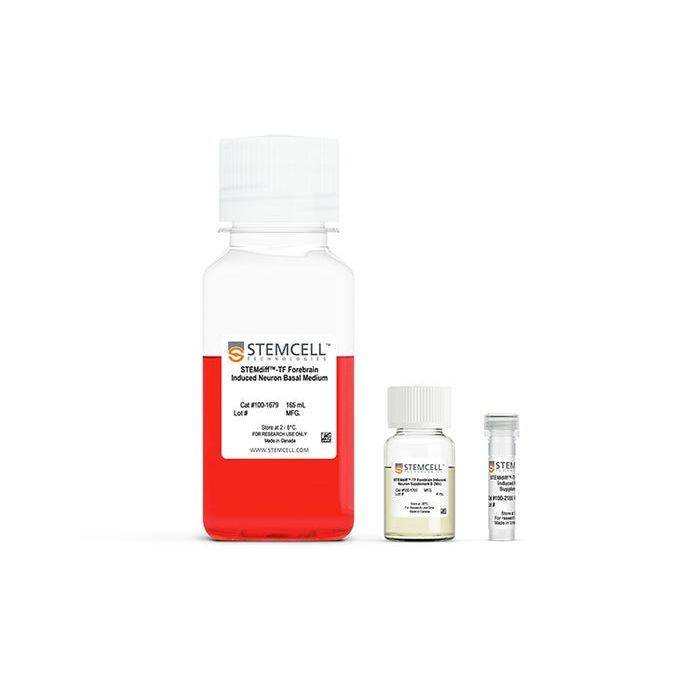
  • STEMdiff™-TF前脑诱导神经元基础培养基,165 mL
  • STEMdiff™-TF前脑诱导神经元补充剂A,230 µL
  • STEMdiff™-TF前脑诱导神经元补充剂B,4 mL
专为您的实验方案打造的产品
要查看实验方案所需的所有配套产品,请参阅《实验方案与技术文档》

总览

借助STEMdiff™-TF前脑诱导神经元分化试剂盒,仅需五天即可从人多能干细胞(hPSC)快速高效地生成前脑神经元。该正向编程试剂盒采用转录因子(TF)介导的分化策略,通过脂质纳米颗粒(LNP)递送非整合型Neurogenin-2 (NGN2) mRNA,从而过表达TF,最终生成具有前脑特性的高纯度兴奋性谷酸能神经元。

生成的前脑神经元可使用STEMdiff™前脑神经元成熟试剂盒(产品号 #08605)进一步成熟。该正向编程系统已在多个hPSC系中测试过一致性,可生成功能性人源神经元,适用于体外神经系统疾病机制建模,从而减少对动物模型的依赖。这些神经元还提供了一个用途广泛且可重复的人体生理相关系统,适用于纳入新方法学 (NAM) 中以用于药物发现流程。对于寻求在干细胞工作流程中以更高发育保真度模拟中间神经发育阶段的研究人员,STEMdiff™前脑神经元分化试剂盒(产品号 #08600)提供了一种基于定向分化的逐步分化方案作为替代,用于生成hPSC衍生神经元。


分类
专用培养基
 
细胞类型
PSC衍生的神经细胞、神经干/祖细胞
 
应用方向
细胞培养、分化
 
品牌
STEMdiff
 
研究领域
疾病建模、药物发现和毒性测试、神经科学
 
配方
无血清
 

实验数据

Workflow diagram for the generation of forebrain neurons with STEMdiff™-TF Forebrain Induced Neuron Differentiation Kit.

Figure 1. Schematic for STEMdiff™-TF Forebrain Induced Neuron Differentiation Kit Protocol for Generating Excitatory Glutamatergic Forebrain Neurons

Excitatory glutamatergic forebrain neurons are generated from hPSCs within five days using STEMdiff™-TF Forebrain Induced Neuron Differentiation Kit. This forward programming protocol employs a synthetic mRNA-based system to deliver the transcription factor NGN2, without the use of viral vectors or genomic integration. PluriSIn-1 (Catalog #72822) is used to selectively induce apoptosis in any residual undifferentiated hPSCs within the culture. The resulting highly pure neurons can be further matured using STEMdiff™ Forebrain Neuron Maturation Kit (Catalog #08605). All components of STEMdiff™-TF Forebrain Induced Neuron Differentiation Kit are indicated in teal. hPSCs = human pluripotent stem cells; NGN2 = Neurogenin 2. Scale bar = 100 μm.

Table comparing forebrain neuron differentiation approaches.

Figure 2. Practical Comparison of Forebrain Neuron Differentiation Approaches

This table compares three commonly used methods for generating forebrain neurons: DIY forward programming, STEMdiff™-TF Forebrain Induced Neuron Differentiation Kit, and directed differentiation. The data represent general performance characteristics derived from published protocols and typical laboratory experience. Qualitative descriptors (e.g., Low, Moderate, High) are based on internal benchmarking and published literature. Actual outcomes may vary depending on the hPSC line used, assay conditions, and level of protocol optimization. DIY = Do It Yourself; hPSC = human pluripotent stem cell; HTS = high throughput screening.

Immunocytochemistry images of neurons generated with STEMdiff™-TF Forebrain Induced Neuron Differentiation Kit and related quantification showing expression of TUBB3, MAP2, and SYN1 markers.

Figure 3. Highly Pure Neuron Cultures Are Generated Using STEMdiff™-TF Forebrain Induced Neuron Differentiation Kit

(A) Representative ICC images of neurons differentiated from H9 hESC and Healthy Control Human iPSC Line, Female, SCTi003-A (Catalog #200-0511) on Day 5 of neuronal differentiation with STEMdiff™-TF Forebrain Induced Neuron Kit show widespread neuronal induction, with cells stained for TUBB3 (green), MAP2 (magenta), SYN1 (red), and nuclei labeled with DAPI (blue). Scale bars = 100 µm. (B) Quantification of ICC data of pan-neuronal markers on Days 5 and 21. Neurons generated with the STEMdiff™-TF Forebrain Induced Neuron Kit exhibit high expression of TUBB3 at Day 5 and increasing expression of intermediate/maturing (MAP2), and pre-synaptic (SYN1) markers by Day 21, consistent with progressive neuronal maturation. Data was collected from four hPSC lines, with 4 - 8 replicates per line. Bar graphs show mean ± SD. ICC = immunocytochemistry; hPSC = human pluripotent stem cell.

Immunocytochemistry images, MEA activity recordings, and MEA raster plots of a co-culture of neurons generated with STEMdiff™-TF Forebrain Induced Neuron Differentiation Kit and astrocytes.

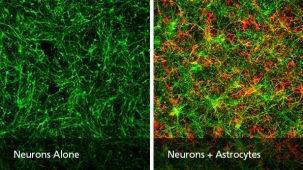
Figure 4. Neurons Generated Using STEMdiff™-TF Forebrain Induced Neuron Differentiation Kit Can Be Co-Cultured with Astrocytes to Model Cell–Cell Interactions and Enhance Neuronal Activity In Vitro

(A) Representative ICC images of neurons derived from Healthy Control Human iPSC Line, Female, SCTi003-A (Catalog #200-0511) using STEMdiff™-TF Forebrain Induced Neuron Differentiation Kit, co-cultured with Human iPSC-Derived Astrocytes (Catalog #200-0980), and maintained in STEMdiff™ Forebrain Neuron Maturation Kit (Catalog #08605). Cells were stained for MAP2 (magenta; neuronal dendritic marker), GFAP (green, astrocyte marker), and DAPI (blue, nuclei). GFAP-positive astrocytes exhibited uniform distribution and characteristic morphology, distributed across the neuronal network. MAP2-positive neurons together with GFAP-positive astrocytes demonstrates successful co-culture. (B) MEA recordings demonstrate that neurons generated using STEMdiff™-TF Forebrain Induced Neuron Differentiation Kit exhibit spontaneous spiking activity one week after transitioning to STEMdiff™ Forebrain Neuron Maturation Medium. Activity metrics—including mean firing rate, number of active electrodes, network bursts, and synchrony index—increase steadily over the five-week recording period. Co-culture with Human iPSC-Derived Astrocytes (magenta) significantly enhances neuronal function, with higher spike frequency and more synchronized bursting activity compared to neurons cultured alone (grey). These results indicate accelerated and more robust neuronal maturation in the presence of astrocytes. Data are presented as mean ± SD (n = 6 wells per group). (C) Representative MEA raster plots comparing neuron-only cultures and neuron–astrocyte co-cultures at Weeks 2, 3, and 5 in STEMdiff™ Forebrain Neuron Maturation Media. Neuron-astrocyte co-cultures exhibit earlier onset and greater intensity of network activity, with more prominent and synchronized bursts emerging as early as Week 1 and peaking by Week 5. These patterns indicate enhanced network formation and functional synapse development supported by neuron-astrocyte co-culture. Raster plots display detected spikes (black lines), single channel bursts (blue lines; a collection of at least 5 spikes, each separated by an ISI of no more than 100 ms), and network bursts (pink boxes; a collection of at least 50 spikes from a minimum of 35% of participating electrodes, each separated by an ISI of no more than 100 ms). hPSCs = human pluripotent stem cells; ICC = immunocytochemistry; MEA = multielectrode array; ISI = inter-spike interval.

Immunocytochemistry images of a tri-culture of neurons generated with STEMdiff™-TF Forebrain Induced Neuron Differentiation Kit astrocytes, and microglia.

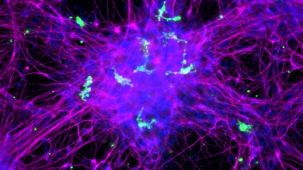
Figure 5. Neurons Generated Using STEMdiff™-TF Forebrain Induced Neuron Differentiation Kit Can Be Tri-Cultured with Astrocytes and Microglia to Model Cell–Cell Interactions In Vitro

Representative ICC images show neurons derived from Healthy Control Human iPSC Line, Female, SCTi003-A (Catalog #200-0511) using STEMdiff™-TF Forebrain Induced Neuron Differentiation Kit, tri-cultured with Human iPSC-Derived Astrocytes (Catalog #200-0980) and microglia generated using STEMdiff™ Microglia Differentiation Kit (100-0019). Cells were stained for GFAP (green, astrocyte marker), MAP2 (Magenta, neuronal dendritic marker), IBA1 (cyan, microglia marker), and DAPI (gray, nuclei). The presence of MAP2-positive neurons, GFAP-positive astrocytes, and IBA1-positive microglia confirms the successful establishment of a tri-culture system, demonstrating compatibility and integration of all three cell types in a shared in vitro environment. Scale bar = 100 μm; ICC = immunocytochemistry; iPSC = induced pluripotent stem cell; hPSC = human pluripotent stem cell.

MEA activity recordings of co-cultured neurons generated with STEMdiff™-TF Forebrain Induced Neuron Differentiation Kit and astrocytes treated with 4-AP or GABA.

Figure 6. Functional Pharmacological Assessment Using MEA Reveals Reversible Modulation of Neuronal Activity by 4-AP and GABA in Co-Cultures Generated Using STEMdiff™-TF Forebrain Induced Neuron Differentiation Kit and Astrocytes

Quantitative analysis of neuronal activity in neurons derived from H9 hPSCs (black) or Healthy Control Human iPSC Line, Female, SCTi003-A (Catalog #200-0511) using STEMdiff™-TF Forebrain Induced Neuron Differentiation Kit, co-cultured with Human iPSC-Derived Astrocytes (Catalog #200-0980), and maintained in STEMdiff™ Forebrain Neuron Maturation Kit (Catalog #08605) assessed using the Maestro MEA™ System (Catalog #200-0887). Cultures were treated with either 50 or 100 µM 4-AP (Potassium channel blocker), or DMSO vehicle control, or 3 or 30 µM GABA (inhibitory neurotransmitter) or water vehicle control. Cultures were incubated with compounds for 1 hour, after which neuronal activity was recorded (Treatment; grey bars). Following treatment, cultures were washed and fed with fresh maturation medium, and spontaneous activity was recorded 24 hours later (Recovery; teal bars). (A) 4-AP treatment significantly increased mean firing rate and network bursting, both of which recovered upon washout. (B) GABA treatment significantly reduced mean firing rate, network bursting, and synchrony index, all of which recovered upon washout. Data were normalized to each culture’s baseline activity, defined as spontaneous activity recorded immediately prior to treatment. Dots represent technical replicates. n = 1 – 2 cell lines. MEA = multielectrode array; 4-AP = 4-aminopyridine.

PCA plot and heatmap of bulk RNA sequencing data showing temporal gene expression profiles of neurons generated with STEMdiff™-TF Forebrain Induced Neuron Differentiation Kit.

Figure 7. Temporal Gene Expression Profile of Neurons Generated Using STEMdiff™-TF Forebrain Induced Neuron Differentiation Kit Reveals Loss of Pluripotency and Progressive Acquisition of Neuronal Identity and Maturity

(A) PCA of bulk RNA sequencing data from three hPSC lines (SCTi003-A, H9, and SCTi004-A) collected across six time points (Days 0 – 5 and 21) throughout differentiation using STEMdiff™-TF Forebrain Induced Neuron Differentiation Kit highlighting distinct transcriptomic shifts from pluripotency to mature neuronal identity. Symbols indicate cell lines (circle: SCTi003-A, square: H9, diamond: SCTi004-A). Tight clustering of samples at each time point across all lines indicates reproducible and consistent neuronal programming. (B) Heatmap shows transcript levels of selected genes across stages of differentiation (Days 0 – 5 and Day 21) using STEMdiff™-TF Forebrain Induced Neuron Differentiation Kit. Pluripotency-associated genes (POU5F1/OCT4, NANOG, SOX2) were rapidly down-regulated upon induction, confirming the loss of stem cell identity. NGN2 target genes (NEUROG2, NEUROD1, DCX) were up-regulated during early programming stages (Days 1 – 3), reflecting activation of neuronal lineage specification. Pan-neuronal markers (TUBB3, MAP2, POU3F2) and synaptic genes (SYN1, VAMP2, DLG4) increased progressively, with peak expression by Day 21, indicating neuronal commitment. Late-stage up-regulation of post-synaptic genes (GRIN1, GRIA1/3) and glutamatergic neuron markers (SLC17A7, SATB2, CAMK2A, TBR1, SYT1) on Day 21 highlights advanced maturation and forebrain glutamatergic identity. Expression values are normalized and color-coded from low (blue) to high (red), capturing the dynamic transcriptional changes that underlie neuronal differentiation and maturation. PCA = principal component analysis; hPSC = human pluripotent stem cell; NGN2 = Neurogenin 2.

UMAPs and violin plots of single-cell RNA sequencing data showing the progressive transcriptional transition from pluripotent to neuronal states of neurons generated with STEMdiff™-TF Forebrain Induced Neuron Differentiation Kit.

Figure 8. Single-Cell Transcriptomics Confirms Differentiation From Pluripotency To Excitatory Glutamatergic Neurons Using STEMdiff™-TF Forebrain Induced Neuron Differentiation Kit

(A) UMAP visualization of single-cell RNA sequencing data from hPSCs (Day 0) and neurons at Day 5 and Day 21 generated using STEMdiff™-TF Forebrain Induced Neuron Differentiation Kit. Distinct clustering shows the progressive transcriptional transition from pluripotent to neuronal states. UMAPs highlight decreased expression of pluripotency markers (OCT4/POU5F1, NANOG) by Day 5, accompanied by induction of neuronal lineage markers (TUBB3, MAP2, SYP), which become uniformly expressed by Day 21. (B) Violin plots and UMAP projections from Day 21 neurons confirm enrichment of the excitatory glutamatergic lineage which predominantly express markers SLC17A6 (vGLUT2) and GLS. In contrast, markers of alternative neuronal subtypes show minimal or absent expression: GABAergic (GAD1, DLX2, PVALB), dopaminergic (TH, NR4A2, SLC6A3), and serotonergic (TPH2, SLC6A4, FEV). Low-level expression of cholinergic markers (CHAT, PHOX2B, ACHE) was detected. hPSCs = human pluripotent stem cells.

产品说明书及文档

请在《产品说明书》中查找相关支持信息和使用说明,或浏览下方更多实验方案。

Document Type
Product Name
Catalog #
Lot #
Language
Catalog #
100-1678
Lot #
All
Language
English
Document Type
Safety Data Sheet 1
Catalog #
100-1678
Lot #
All
Language
English
Document Type
Safety Data Sheet 2
Catalog #
100-1678
Lot #
All
Language
English
Document Type
Safety Data Sheet 3
Catalog #
100-1678
Lot #
All
Language
English

相关材料与文献

技术资料 (24)

On-Demand Training

更多信息

更多信息
配方 无血清

法律声明:

Disclaimer: This product was developed under a license to intellectual property owned by the TriLink BioTechnologies, LLC. This product is sold for Research Use Only (whether the buyer is an academic or for-profit entity) under a non-transferable, limited-use license. Purchase of this product does not include the right to sell, use or otherwise transfer this product for commercial purposes (i.e. any activity undertaken for consideration, such as use of this product for resale of this product or any materials made using this product, or use of this product or any materials made using this product to provide services or, in collaboration with, a for-profit entity, for purposes other than research applications). For clarity, research applications include disease modeling, drug screening, and toxicology testing. 


质量声明:

本产品仅供研究使用,除非另有说明,否则不可用于人或动物的诊断或治疗用途。如需了解STEMCELL质量相关的更多信息,请参阅 WWW.STEMCELL.CN/COMPLIANCE


安全声明:

CA WARNING: This product can expose you to chemicals including Ethyl Alcohol, that are known to the State of California to cause cancer and birth defects or other reproductive harm. For more information go to www.P65Warnings.ca.gov

Copyright © 2025 by STEMCELL Technologies. All rights reserved.

在线联系