若您需要咨询产品或有任何技术问题,请通过官方电话 400 885 9050 或邮箱 info.cn@stemcell.com 与我们联系。

STEMdiff™胰腺祖细胞试剂盒

人胚胎干细胞和iPS细胞向胰腺祖细胞分化的无血清培养基

只有 %1
¥16,652.00

产品号 #(选择产品)

产品号 #05120

人胚胎干细胞和iPS细胞向胰腺祖细胞分化的无血清培养基

产品优势

  • 生成功能性胰腺祖细胞,用于移植到动物模型中或进一步成熟为产生胰岛素的β细胞;
  • 多种hPSC细胞系向表达PDX-1、NKX6.1和SOX9的胰腺祖细胞的高效、可重复分化无血清培养基;
  • 与mTeSR™1或mTeSR™Plus中维持的多种人类ES和iPS细胞系兼容

产品组分包括

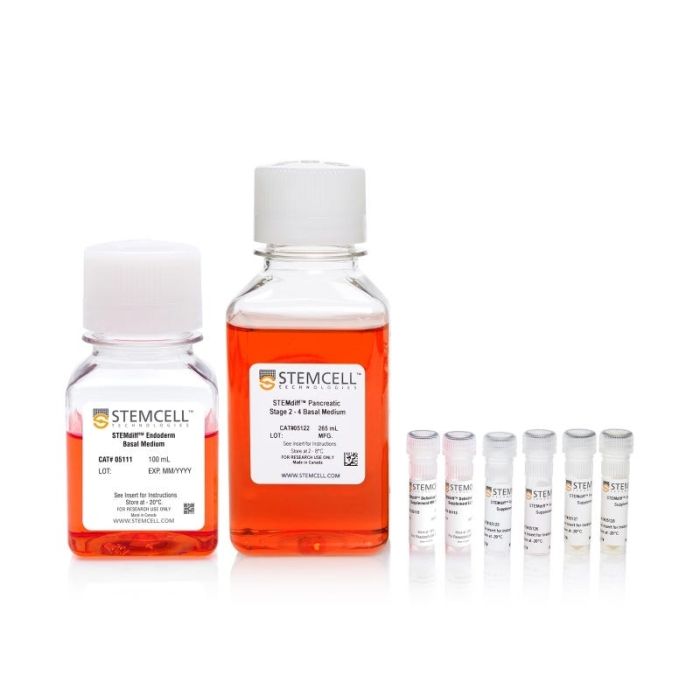
  • STEMdiff™内胚层基础培养基,100 mL
  • STEMdiff™胰腺2 - 4期基础培养基,265 mL
  • STEMdiff™最终内胚层补充 MR (100X), 350µL
  • STEMdiff™最终内胚层补充 CJ (100X), 1.1 mL
  • STEMdiff™胰腺补充物 2A, 240µL
  • STEMdiff™胰腺补充物 2B, 720µL
  • STEMdiff™胰腺补充物 3, 720µL
  • STEMdiff™胰腺补充物4, 1.2 mL
Need a high-quality cell source? Use the hiPSC SCTi003-A (female) or SCTi004-A (male) control lines, manufactured with mTeSR™ Plus.
专为您的实验方案打造的产品
要查看实验方案所需的所有配套产品,请参阅《实验方案与技术文档》

总览

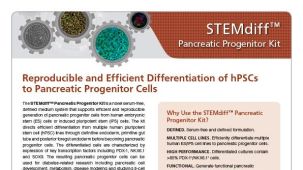
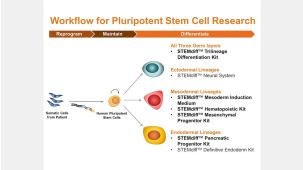
STEMdiff™胰腺祖细胞试剂盒是一种无血清培养基,支持从人多能干细胞(hPSCs)高效、可重复地生成胰腺祖细胞。细胞的分化分为四个阶段:1)终末内胚层,2)原始肠管,3)后前肠内胚层,4)胰腺祖细胞。分化后的细胞表达胰腺祖细胞关键标志物PDX-1、NKX6.1和SOX9,并上调胰岛素和胰高血糖素。由此产生的胰腺祖细胞可以进一步分化为产生胰岛素的β细胞或其他内分泌和外分泌胰腺细胞。STEMdiff™胰腺祖细胞试剂盒已经过优化,用于mTeSR™1(目录#85850)或mTeSR™Plus(目录#100-0276)中维持的细胞分化。

分类
专用培养基
 
细胞类型
胰腺细胞,多能干细胞
 
种属

 
应用
细胞培养,分化
 
品牌
STEMdiff
 
研究领域
癌症,疾病建模,上皮细胞研究,干细胞生物学
 
制剂类别
无血清
 

实验数据

Pancreatic Differentiation of Progenitor Cells into Mature Endocrine and Exocrine Cells

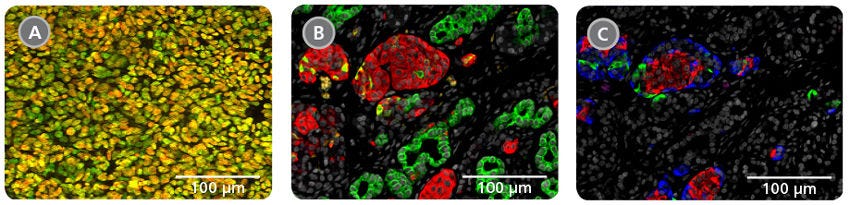
Figure 1. Pancreatic Progenitor Cells can Mature into Endocrine and Exocrine Cells

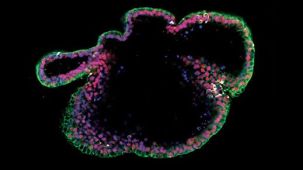
A) Representative image showing pancreatic progenitor cells expressing PDX-1 (red) and NKX6.1 (green). Yellow staining indicates co‑expression of both markers in the majority of cells as is observed in the developing human pancreas.1 (B, C) Cells transplanted into mice can mature into endocrine and exocrine cells.
B) shows endocrine clusters expressing synaptophysin (red) surrounded by ductal structures expressing CK-19 (green).
C) Shows islet-like structures containing monohormonal cells that individually express insulin (red), glucagon (green) or somatostatin (blue). Data in (B, C) are from the laboratory of Dr. Timothy J. Kieffer (University of British Columbia, Vancouver, Canada).

A. The STEMdiff™ Pancreatic Progenitor Kit Functions Efficiently Across Multiple hPSC Lines
B. The STEMdiff™ Pancreatic Progenitor Kit Functions Efficiently Across Multiple hPSC Lines

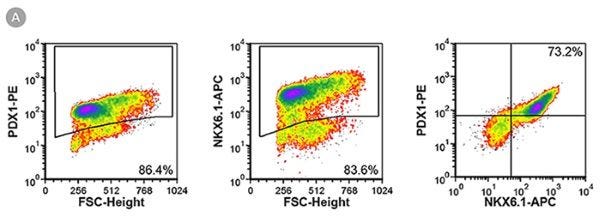
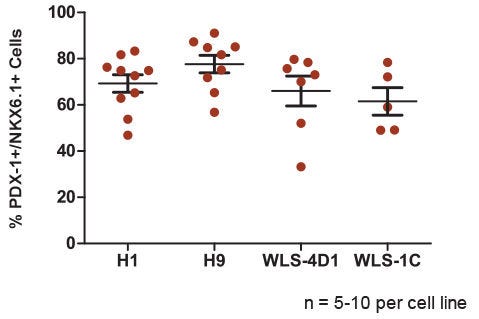
Figure 2. The STEMdiff™ Pancreatic Progenitor Kit Functions Efficiently Across Multiple hPSC Lines

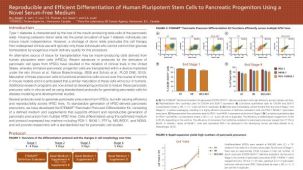
PDX-1 and NKX6.1 expression measured in pancreatic progenitor cells derived from four different hPSC lines (H1, H9, WLS-4D1 and WLS-1C) at the end of Stage 4. (A) Representative flow cytometry plots show PDX-1 and NKX6.1 co-expression in differentiated H9 cells. (B) Quantitative data for PDX-1/NKX6.1 co-expression in two human ES (H1 and H9) and two human iPS (WLS-4D1 and WLS-1C) cell lines (n = 5-10 per cell line). Data are plotted as individual points representing the mean of duplicates within a single experiment. The horizontal line represents the mean of all experiments, with error bars indicating the standard error of the mean (SEM). The average efficiency of pancreatic progenitor differentiation ranges from 61.5% to 77.7% depending on the cell line.

Gene Expression Profile is Indicative of Transition to Pancreatic Progenitor Cells

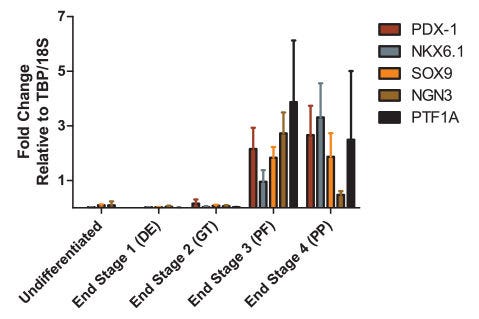
Figure 3. Gene Expression Profile is Indicative of Transition to Pancreatic Progenitor Cells

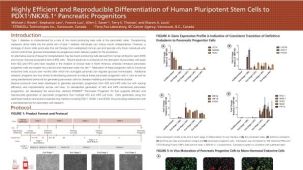
Gene expression profile at the end of each stage of differentiation for key markers of pancreatic progenitor cells. Expression was normalized to 18S ribosomal RNA and TATA Binding Protein (TBP). Data are the mean ± SEM for 3 - 5 experiments. Expression pattern is consistent with published data.²
 
1. Riedel M et al. (2012) Immunohistochemical characterization of cells co-producing insulin and glucagon in the developing human pancreas. Diabetologia 55(2): 372-81.
2. Rezania A et al. (2014) Reversal of diabetes with insulin-producing cells derived in vitro from human pluripotent stem cells. Nat Biotechnol 32(11): 1121-33.

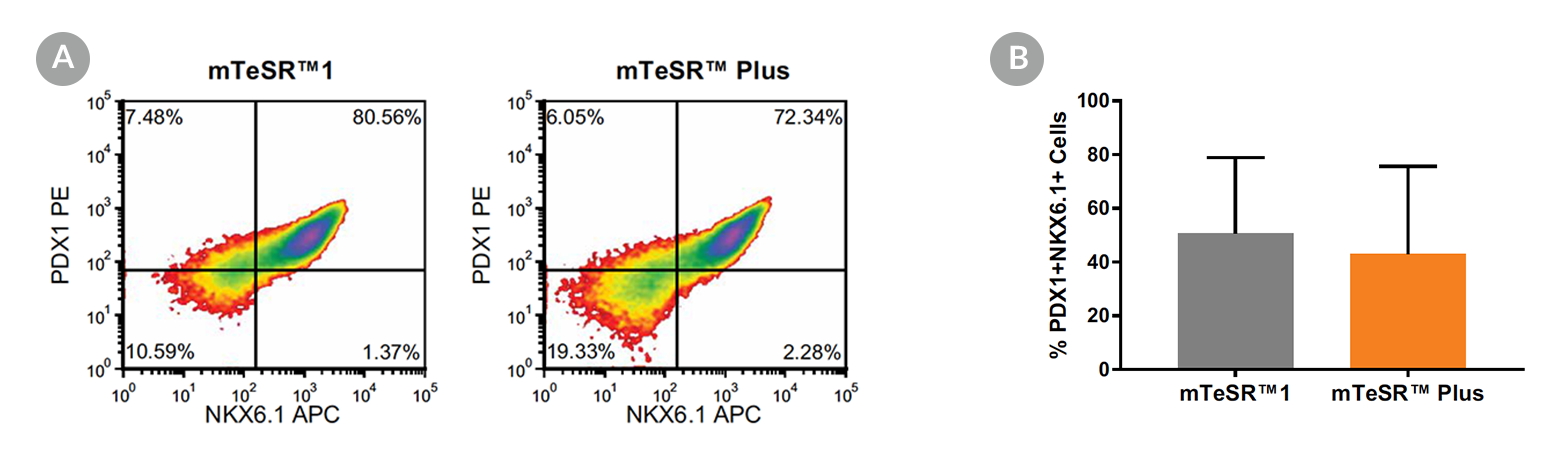
Density plots and quantitative analysis showing PDX-1 and NKX6.1 expression in cells cultured in mTeSR™1 or mTeSR™ Plus, following 5 days of differentiation using the STEMdiff™ Pancreatic Progenitor Kit.

Figure 4. Generation of Pancreatic Progenitors from hPSCs Maintained in mTeSR™ Plus

(A) Representative density plots showing PDX-1 and NKX6.1 expression in cells cultured in mTeSR™1 (daily feeds) or mTeSR™ Plus (restricted feeds), following differentiation using the STEMdiff™ Pancreatic Progenitor Kit. (B) Quantitative analysis of pancreatic progenitor formation in multiple hPS (H9, STiPS-M001, WLS-1C) cell lines maintained with mTeSR™1 or mTeSR™ Plus as measured by co-expression of PDX-1 and NKX6.1. Data are expressed as the mean percentage of cells (± SEM) expressing both markers; n=3.

产品说明书及文档

请在《产品说明书》中查找相关支持信息和使用说明,或浏览下方更多实验方案。

Document Type
Product Name
Catalog #
Lot #
Language
Catalog #
05120
Lot #
All
Language
English
Document Type
Safety Data Sheet 1
Catalog #
05120
Lot #
All
Language
English
Document Type
Safety Data Sheet 2
Catalog #
05120
Lot #
All
Language
English
Document Type
Safety Data Sheet 3
Catalog #
05120
Lot #
All
Language
English
Document Type
Safety Data Sheet 4
Catalog #
05120
Lot #
All
Language
English
Document Type
Safety Data Sheet 5
Catalog #
05120
Lot #
All
Language
English
Document Type
Safety Data Sheet 6
Catalog #
05120
Lot #
All
Language
English
Document Type
Safety Data Sheet 7
Catalog #
05120
Lot #
All
Language
English
Document Type
Safety Data Sheet 8
Catalog #
05120
Lot #
All
Language
English

应用领域

本产品专为以下研究领域设计,适用于工作流程中的高亮阶段。探索这些工作流程,了解更多我们为各研究领域提供的其他配套产品。

相关材料与文献

技术资料 (11)

We get a really great efficiency of differentiation in several pluripotent stem cell lines determined by expression of key markers: upregulation of PDX1, SOX9, FOXA2 and GATA4, and down-regulation of Sox17. We can generate these pancreatic progenitor cells reproducibly and efficiently; variability within the protocol is low.

Drs. Jamie Trott and Ray Dunn, A*STAR Institute of Medical Biology (IMB), Singapore

文献 (4)

A perfect islet: reviewing recent protocol developments and proposing strategies for stem cell derived functional pancreatic islets S. Sali et al. Stem Cell Research & Therapy 2025 Mar

Abstract

The search for an effective cell replacement therapy for diabetes has driven the development of “perfect” pancreatic islets from human pluripotent stem cells (hPSCs). These hPSC-derived pancreatic islet-like β cells can overcome the limitations for disease modelling, drug development and transplantation therapies in diabetes. Nevertheless, challenges remain in generating fully functional and mature β cells from hPSCs. This review underscores the significant efforts made by researchers to optimize various differentiation protocols aimed at enhancing the efficiency and quality of hPSC-derived pancreatic islets and proposes methods for their improvement. By emulating the natural developmental processes of pancreatic embryogenesis, specific growth factors, signaling molecules and culture conditions are employed to guide hPSCs towards the formation of mature β cells capable of secreting insulin in response to glucose. However, the efficiency of these protocols varies greatly among different human embryonic stem cell (hESC) and induced pluripotent stem cell (hiPSC) lines. This variability poses a particular challenge for generating patient-specific β cells. Despite recent advancements, the ultimate goal remains to develop a highly efficient directed differentiation protocol that is applicable across all genetic backgrounds of hPSCs. Although progress has been made, further research is required to optimize the protocols and characterization methods that could ensure the safety and efficacy of hPSC-derived pancreatic islets before they can be utilized in clinical settings.
HELLS is required for maintaining proper DNA modification at human satellite repeats Genome Biology 2025 Jul

Abstract

DNA methylation regulation involves multi-layered chromatin interactions that require remodeling proteins like the helicase, lymphoid-specific (HELLS). Here, we generate HELLS and DNA methyltransferase 3A and B (DNMT3A/B) knockout human pluripotent stem cells and report telomere-to-telomere maps of whole genome bisulfite sequencing data combined with ATAC-sequencing. Disrupting HELLS induces a global loss of DNA methylation that is distinct from the DNMTs, in particular over peri/centromeric satellite repeats as defined in the telomere-to-telomere genome assembly. However, HELLS appears dispensable for local enhancer remodeling and the potential to differentiate into the three embryonic germ layers. Taken together, our results further clarify the genomic targets and role of HELLS in human cells.Supplementary InformationThe online version contains supplementary material available at 10.1186/s13059-025-03681-9.
Atelocollagen supports three-dimensional culture of human induced pluripotent stem cells Y. Nakashima et al. Molecular Therapy. Methods & Clinical Development 2024 Jul

Abstract

As autologous induced pluripotent stem cell (iPSC) therapy requires a custom-made small-lot cell production line, and the cell production method differs significantly from the existing processes for producing allogeneic iPSC stocks for clinical use. Specifically, mass culture to produce stock is no longer necessary; instead, a series of operations from iPSC production to induction of differentiation of therapeutic cells must be performed continuously. A three-dimensional (3D) culture method using small, closed-cell manufacturing devices is suitable for autologous iPSC therapy. The use of such devices avoids the need to handle many patient-derived specimens in a single clean room; handling of cell cultures in an open system in a cell processing facility increases the risk of infection. In this study, atelocollagen beads were evaluated as a 3D biomaterial to assist 3D culture in the establishment, expansion culture, and induction of differentiation of iPSCs. It was found that iPSCs can be handled in a closed-cell device with the same ease as use of a two-dimensional (2D) culture when laminin-511 is added to the medium. In conclusion, atelocollagen beads enable 3D culture of iPSCs, and the quality of the obtained cells is at the same level as those derived from 2D culture.

更多信息

更多信息
物种 人类
配方 无血清
PRODUCTS ARE FOR RESEARCH USE ONLY AND NOT INTENDED FOR HUMAN OR ANIMAL DIAGNOSTIC OR THERAPEUTIC USES UNLESS OTHERWISE STATED.
Copyright © 2025 by STEMCELL Technologies. All rights reserved.

在线联系