若您需要咨询产品或有任何技术问题,请通过官方电话 400 885 9050 或邮箱 info.cn@stemcell.com 与我们联系。

STEMdiff™ 间充质祖细胞试剂盒

用于分化和扩增间充质祖细胞的成分明确的培养试剂盒
只有 %1
¥11,168.00

产品号 #(选择产品)

产品号 #05240_C

用于分化和扩增间充质祖细胞的成分明确的培养试剂盒

产品优势

  • 无血清、无动物成分的配方
  • 可高效且重复性良好地从人胚胎干细胞(ES)和诱导多能干细胞(iPS)系中生成间充质祖细胞(MPCs)
  • 3 周内快速诱导生成 MPCs
  • 所生成的 MPCs 可长期扩增,并具备向脂肪细胞、成骨细胞和软骨细胞分化的能力

产品组分包括

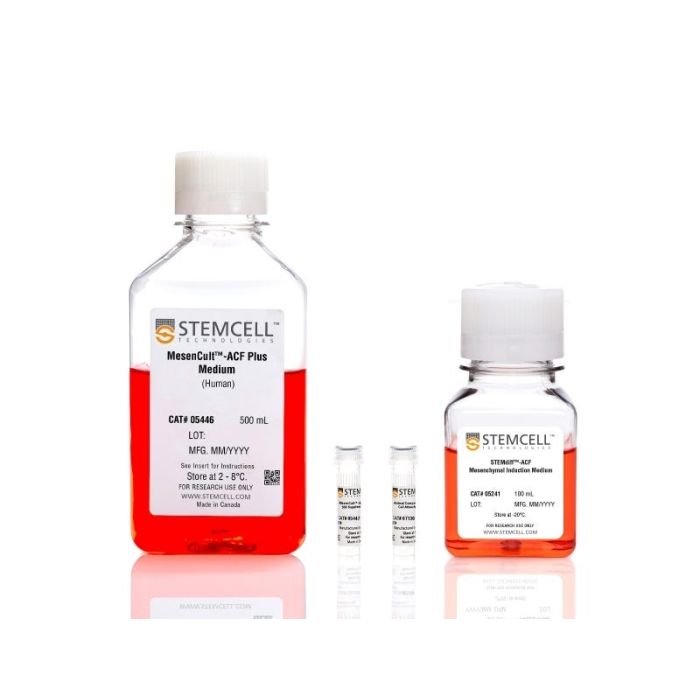
  • STEMdiff™-ACF 间充质诱导培养基,100 mL
  • MesenCult™-ACF Plus 培养基,500 mL
  • MesenCult™-ACF Plus 500X 补充剂,1 mL
  • 无动物成分细胞附着基质,1 mL
Need a high-quality cell source? Use the hiPSC SCTi003-A (female) or SCTi004-A (male) control lines, manufactured with mTeSR™ Plus.
专为您的实验方案打造的产品
要查看实验方案所需的所有配套产品,请参阅《实验方案与技术文档》

总览

STEMdiff™ 间充质祖细胞试剂盒是一款成分明确的培养试剂盒,包含无动物成分 (ACF) 诱导培养基、扩增培养基和贴壁基质。该试剂盒经过优化,适用于从人胚胎干细胞 (ES) 或诱导多能干细胞 (iPS) 中诱导获得具有间充质祖细胞 (MPC) 样特性的细胞。该试剂盒提供完整的工作流程,包含用于诱导和扩增人ES或iPS衍生 MPC 的成分明确的试剂。CollPlant是细胞贴壁基质中 rhCollagen 成分的制造商。

本产品仅供研究使用。如有任何临床或商业应用需求,请联系 STEMCELL。

分类
专用培养基
 
细胞类型
间充质细胞,PSC衍生
 
种属

 
应用
细胞培养,分化
 
品牌
STEMdiff
 
研究领域
干细胞生物学
 
制剂类别
不含动物成分,无血清
 

实验数据

Human ES- and iPS-derived MPCs Can Be Further Differentiated Into Adipogenic, Chondrogenic and Osteogenic Lineages

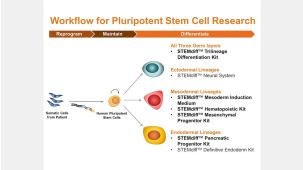
Figure 1. Schematic of Differentiation Protocol and Timeline

In Phase 1, human ES or iPS cells are cultured in mTeSR™1 or TeSR™-E8™ medium. On Day 0 (Phase 2) of the protocol, cells are ready for induction into early mesoderm progenitor cells by replacing TeSR™ medium with STEMdiff™ Mesenchymal Induction Medium. By Day 4 (Phase 3), STEMdiff™ Mesenchymal Induction Medium is replaced with MesenCult™-ACF Medium to derive early mesenchymal progenitor cells (MPCs). On Day 6, cells are passaged onto cultureware precoated with MesenCult™-ACF Attachment Substrate in MesenCult™-ACF Medium. By Day 21, human ES- or iPS-derived MPCs exhibit the suggested MPC characteristics.

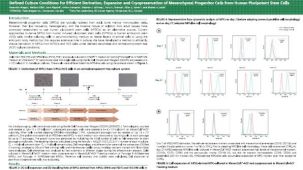
Cell Expansion and Doubling Rate of MPCs Derived from Human ES (H9) and iPS (STiPS-F016 and -F031) Cells in MesenCult™-ACF Medium

Figure 2. Cell Expansion and Doubling Rate of MPCs Derived from Human ES (H9) and iPS (STiPS-F016 and -F031) Cells in MesenCult™-ACF Medium

(A) The average cell expansion per passage over 17 passages for MPCs derived from human ES and iPS cell lines are approximately 9 and 10 fold. (B) Days to double cell number for human ES- and iPS-derived MPCs range from 1.1 to 1.4 days.

A Representative Flow Cytometric Analysis of STiPS-F016-derived MPCs Expressing Mesenchymal Surface Markers By Day 21

Figure 3. A Representative Flow Cytometric Analysis of STiPS-F016-derived MPCs Expressing Mesenchymal Surface Markers By Day 21

Human iPS-derived MPCs, generated using the STEMdiff™ Mesenchymal Progenitor Kit, express high levels of mesenchymal surface markers (CD73, CD90 and CD105) and the perivascular marker, CD146. MPCs do not express hematopoietic (CD34, CD45) and endothelial (CD144) surface markers. Human ES-derived MPCs express the same phenotype (data not shown).

Human ES- and iPS-derived MPCs Can Be Further Differentiated Into Adipogenic, Chondrogenic and Osteogenic Lineages

Figure 4. Human ES- and iPS-derived MPCs Can Be Further Differentiated Into Adipogenic, Chondrogenic and Osteogenic Lineages

(A) MPCs generated from the 3 week protocol (described in Figure 1) and subsequently cultured in MesenCult™-ACF Medium develop MPC-like morphology (40X magnification). MPCs can be differentiated to (B) adipocytes (Oil Red O staining), 400X magnification; (C) chondrocytes (Alcian Blue staining), 100X magnification; and (D) osteoblasts (Fast Red and Silver Nitrate staining), 100X magnification.

产品说明书及文档

请在《产品说明书》中查找相关支持信息和使用说明,或浏览下方更多实验方案。

Document Type
Product Name
Catalog #
Lot #
Language
Catalog #
05240
Lot #
All
Language
English
Document Type
Safety Data Sheet 1
Catalog #
05240
Lot #
All
Language
English
Document Type
Safety Data Sheet 2
Catalog #
05240
Lot #
All
Language
English
Document Type
Safety Data Sheet 3
Catalog #
05240
Lot #
All
Language
English
Document Type
Safety Data Sheet 4
Catalog #
05240
Lot #
All
Language
English

应用领域

本产品专为以下研究领域设计,适用于工作流程中的高亮阶段。探索这些工作流程,了解更多我们为各研究领域提供的其他配套产品。

相关材料与文献

技术资料 (8)

文献 (11)

Autologous iPSC- and MSC-derived chondrocyte implants for cartilage repair in a miniature pig model Lee et al. Stem Cell Research & Therapy 2025 Feb

Abstract

Induced pluripotent stem cell (iPSC)-derived mesenchymal stem cells (iMSCs) have greater potential for generating chondrocytes without hypertrophic and fibrotic phenotypes compared to bone marrow-derived mesenchymal stem/stromal cells (BMSCs). However, there is a lack of research demonstrating the use of autologous iMSCs for repairing articular chondral lesions in large animal models. In this study, we aimed to evaluate the effectiveness of autologous miniature pig (minipig) iMSC-chondrocyte (iMSC-Ch)-laden implants in comparison to autologous BMSC-chondrocyte (BMSC-Ch)-laden implants for cartilage repair in porcine femoral condyles. iMSCs and BMSCs were seeded into fibrin glue/nanofiber constructs and cultured with chondrogenic induction media for 7 days before implantation. To assess the regenerative capacity of the cells, 19 skeletally mature Yucatan minipigs were randomly divided into microfracture control, acellular scaffold, iMSC, and BMSC subgroups. A cylindrical defect measuring 7 mm in diameter and 0.6 mm in depth was created on the articular cartilage surface without violating the subchondral bone. The defects were then left untreated or treated with acellular or cellular implants. Both cellular implant-treated groups exhibited enhanced joint repair compared to the microfracture and acellular control groups. Immunofluorescence analysis yielded significant findings, showing that cartilage treated with iMSC-Ch implants exhibited higher expression of COL2A1 and minimal to no expression of COL1A1 and COL10A1, in contrast to the BMSC-Ch-treated group. This indicates that the iMSC-Ch implants generated more hyaline cartilage-like tissue compared to the BMSC-Ch implants. Our findings contribute to filling the knowledge gap regarding the use of autologous iPSC derivatives for cartilage repair in a translational animal model. Moreover, these results highlight their potential as a safe and effective therapeutic strategy. The online version contains supplementary material available at 10.1186/s13287-025-04215-7.
Tracing genomic instability in induced mesenchymal stromal cell manufacture: an integration-free transfection approach Experimental & Molecular Medicine 2025 Apr

Abstract

Here we systematically investigated genomic alterations from the initiation of induced pluripotent stem (iPS) cell generation to induced mesenchymal stromal/stem cell differentiation. We observed a total of ten copy number alterations (CNAs) and five single-nucleotide variations (SNVs) during the phases of reprogramming, differentiation and passaging. We identified a higher frequency of CNAs and SNVs in iPS cells generated using the Sendai virus (SV) method compared with those generated with episomal vectors (Epi). Specifically, all SV-iPS cell lines exhibited CNAs during the reprogramming phase, while only 40% of Epi-iPS cells showed such alterations. Additionally, SNVs were observed exclusively in SV-derived cells during passaging and differentiation, with no SNVs detected in Epi-derived lines. Gene expression analysis revealed upregulation of chromosomal instability-related genes in late-passage SV-iPSCs, further indicating increased genomic instability. Notably, TP53 mutations were identified, underscoring the vulnerability of the gene and the critical need for careful genomic scrutiny when preparing iPS cells and derived cell lines. Genomic instability in induced pluripotent stem cells revealedThis study explores the potential of using induced pluripotent stem (iPS) cells to create mesenchymal stem (MS) cells for medical treatments. iPS cells can be reprogrammed from regular cells and can become any cell type, including MS cells, which are important for tissue repair. However, a concern is that iPS cells might develop genetic changes that could affect their safety. Here researchers investigated these genetic changes during the creation and growth of iPS cells and their transformation into MS cells using advanced techniques such as chromosomal microarray and next-generation sequencing, alongside conventional methods. The study found that iPS cells often develop genetic alterations, which can persist as they are turned into MS cells. The results suggest that while iPS cells hold promise for regenerative medicine, careful monitoring of genetic stability is crucial. Future research should focus on improving methods to ensure safety of iPS cell-derived therapies.This summary was initially drafted using artificial intelligence, then revised and fact-checked by the author.
Mesenchymal Stem Cells Derived from Human Urine-Derived iPSCs Exhibit Low Immunogenicity and Reduced Immunomodulatory Profile International Journal of Molecular Sciences 2024 Sep

Abstract

Human-induced pluripotent stem cell (iPSC)-derived mesenchymal stem cells (iMSCs) represent a promising and renewable cell source for therapeutic applications. A systematic evaluation of the immunological properties and engraftment potential of iMSCs generated from urine-derived iPSCs is lacking, which has impeded their broader application. In this study, we differentiated urine-derived iPSCs into iMSCs and assessed their fundamental MSC characteristics, immunogenicity, immunomodulatory capacity and in vivo engraftment. Compared to umbilical cord-derived MSCs (UCMSCs), iMSCs demonstrated an enhanced proliferative capacity, a higher level of regenerative gene expression, and lower immunogenicity, strengthening resistance to apoptosis induced by allogeneic peripheral blood mononuclear cells (PBMCs) and the NK-92 cell line. In addition, iMSCs exhibited a diminished ability to inhibit T cell proliferation and activation compared with UCMSCs. Transcriptomic analyses further revealed the decreased expression of immune regulatory factors in iMSCs. After transfusion into mouse models, iMSCs engrafted in the lungs, liver, and spleen and exhibited the ability to migrate to tumor tissues. Our results indicated that iMSCs generated from urine-derived iPSCs have a significant replicative capacity, low immunogenicity and unique immunomodulatory properties, and hence offer obvious advantages in immune privilege and allogenic therapeutic application prospects.

更多信息

更多信息
物种 人类
配方 不含动物成分, 无血清
质量保证:

产品仅供研究使用,不用于针对人或动物的诊断或治疗。 欲获悉更多关于STEMCELL的质控信息,请访问 STEMCELL.CN/COMPLIANCE.
Copyright © 2025 by STEMCELL Technologies. All rights reserved.

在线联系