Bhatia M et al. (AUG 1997)
The Journal of experimental medicine 186 4 619--24
Quantitative analysis reveals expansion of human hematopoietic repopulating cells after short-term ex vivo culture.
Ex vivo culture of human hematopoietic cells is a crucial component of many therapeutic applications. Although current culture conditions have been optimized using quantitative in vitro progenitor assays,knowledge of the conditions that permit maintenance of primitive human repopulating cells is lacking. We report that primitive human cells capable of repopulating nonobese diabetic (NOD)/severe combined immunodeficiency (SCID) mice (SCID-repopulating cells; SRC) can be maintained and/or modestly increased after culture of CD34+CD38- cord blood cells in serum-free conditions. Quantitative analysis demonstrated a 4- and 10-fold increase in the number of CD34+CD38- cells and colony-forming cells,respectively,as well as a 2- to 4-fold increase in SRC after 4 d of culture. However,after 9 d of culture,all SRC were lost,despite further increases in total cells,CFC content,and CD34+ cells. These studies indicate that caution must be exercised in extending the duration of ex vivo cultures used for transplantation,and demonstrate the importance of the SRC assay in the development of culture conditions that support primitive cells.
View Publication
产品号#:
02690
02696
02697
09300
09500
09600
09650
09850
产品名:
StemSpan™ CC100
StemSpan™巨核细胞扩增添加物 (100X)
StemSpan™ CC110
含有10% 牛血清白蛋白(BSA)的 Iscove's MDM
BIT 9500血清替代物
StemSpan™ SFEM
StemSpan™ SFEM
Conneally E et al. (SEP 1997)
Proceedings of the National Academy of Sciences of the United States of America 94 18 9836--41
Expansion in vitro of transplantable human cord blood stem cells demonstrated using a quantitative assay of their lympho-myeloid repopulating activity in nonobese diabetic-scid/scid mice.
Human hematopoiesis originates in a population of stem cells with transplantable lympho-myeloid reconstituting potential,but a method for quantitating such cells has not been available. We now describe a simple assay that meets this need. It is based on the ability of sublethally irradiated immunodeficient nonobese diabetic-scid/scid (NOD/SCID) mice to be engrafted by intravenously injected human hematopoietic cells and uses limiting dilution analysis to measure the frequency of human cells that produce both CD34(-)CD19(+) (B-lymphoid) and CD34(+) (myeloid) colony-forming cell progeny in the marrow of such recipients 6 to 8 weeks post-transplant. Human cord blood (CB) contains approximately 5 of these competitive repopulating units (CRU) per ml that have a similar distribution between the CD38(-) and CD38(+) subsets of CD34(+) CB cells as long-term culture-initiating cells (LTC-IC) (4:1 vs. 2:1). Incubation of purified CD34(+)CD38(-) human CB cells in serum-free medium containing flt-3 ligand,Steel factor,interleukin 3,interleukin 6,and granulocyte colony-stimulating factor for 5-8 days resulted in a 100-fold expansion of colony-forming cells,a 4-fold expansion of LTC-IC,and a 2-fold (but significant,P textless 0.02) increase in CRU. The culture-derived CRU,like the original CB CRU,generated pluripotent,erythroid,granulopoietic,megakaryopoietic,and pre-B cell progeny upon transplantation into NOD/SCID mice. These findings demonstrate an equivalent phenotypic heterogeneity amongst human CB cells detectable as CRU and LTC-IC. In addition,their similarly modest response to stimulation by a combination of cytokines that extensively amplify LTC-IC from normal adult marrow underscores the importance of ontogeny-dependent changes in human hematopoietic stem cell proliferation and self-renewal.
View Publication
产品号#:
28600
产品名:
L-Calc™有限稀释软件
Naka K et al. (AUG 1997)
Differentiation 61 5 313--20
Growth inhibition of cultured human gastric cancer cells by 9-cis-retinoic acid with induction of cdk inhibitor Waf1/Cip1/Sdi1/p21 protein.
The effect of 9-cis-retinoic acid (9-cis-RA) on the growth of eight gastric cancer cell lines was related to their transcription levels of mRNAs for retinoid receptors. Northern blot analysis showed that seven (TMK-1,MKN-1,-28,-45,-74,HSC-39,KATO-III) out of eight gastric cancer cell lines synthesized mRNAs for retinoic acid receptors (RARs) and retinoid X receptor-alpha (RXR-alpha). MKN-7 cells did not transcribe either RARs or RXR-alpha at the mRNA level although they appeared to have no alterations at the gene level. The growth of all of the cell lines except for MKN-7 cells was inhibited by 1 x 10(-6) M 9-cis-RA. Cell cycle distribution analysis revealed that G0-G1 arrest was not induced by exposure to 9-cis-RA in the sensitive TMK-1 and KATO-III cells or the resistant MKN-7 cells. Interestingly,9-cis-RA temporarily increased the amount of the cyclin dependent kinase (cdk) inhibitor,Waf1/Cip1/Sdi1/p21 protein,and also reduced the amount of cdk-7,epidermal growth factor receptor (EGFR) and cyclin D1 proteins,followed by reduction in phosphorylation of the product of the retinoblastoma tumor suppressor gene (Rb) in the sensitive TMK-1 cells,but not in the resistant MKN-7 cells. These results suggest that 9-cis-RA has a cytostatic effect on gastric cancer cells that synthesize the receptor molecules through cell cycle regulatory machinery.
View Publication
产品号#:
72382
72384
产品名:
9-顺式视黄酸
Bertolini F et al. (OCT 1997)
Blood 90 8 3027--36
Multilineage long-term engraftment potential of drug-resistant hematopoietic progenitors.
Peripheral blood progenitor cells (PBPCs) are increasingly used instead of bone marrow for autologous or allogeneic transplantation. In this study PBPCs mobilized in cancer patients by chemotherapy and granulocyte-colony stimulating factor were collected by apheresis and first enriched by immunoaffinity removal of lineage positive cells. When these cells were exposed to both cyclophosphamide and taxol or cultured for 7 days in the presence of 5-fluorouracil,stem cell factor,and interleukin-3,88% to 93% of the enriched PBPCs were killed and short-term clonogenic capacity in methylcellulose assays was lost,but week-5 cobblestone area-forming cell (CAFC) enrichment was higher than 10-fold in comparison to enriched PBPCs and higher than 700-fold in comparison to unmanipulated apheresis cells. After drug exposure,most of the progenitors displayed a CD34+,CD38-,multidrug-resistance (MDR+),Rhodamine 123 low,Hoechst 33342 low phenotype,and as few as 180 of these drug-resistant cells were able to generate a stable multilineage human hematopoiesis in sublethally irradiated immunodeficient mice. In these animals,the level of human hematopoietic engraftment was significantly increased by cotransplantation of irradiated cells from the human L87/4 stromal cell line. These observations are consistent with the functional isolation of a population of very early hematopoietic progenitors and might help to design new protocols for the removal of neoplastic cells from autografts.
View Publication
产品号#:
05150
05350
产品名:
MyeloCult™ H5100
Tatsumi M et al. (DEC 1997)
European journal of pharmacology 340 2-3 249--58
Pharmacological profile of antidepressants and related compounds at human monoamine transporters.
Using radioligand binding assays,we determined the equilibrium dissociation constants (KD's) for 37 antidepressants,three of their metabolites (desmethylcitalopram,desmethylsertraline,and norfluoxetine),some mood stabilizers,and assorted other compounds (some antiepileptics,Ca2+ channel antagonists,benzodiazepines,psychostimulants,antihistamines,and monoamines) for the human serotonin,norepinephrine,and dopamine transporters. Among the compounds that we tested,mazindol was the most potent at the human norepinephrine and dopamine transporters with KD's of 0.45 +/- 0.03 nM and 8.1 +/- 0.4 nM,respectively. Sertraline (KD = 25 +/- 2 nM) and nomifensine (56 +/- 3 nM) were the two most potent antidepressants at the human dopamine transporter. We showed significant correlations for antidepressant affinities at binding to serotonin (R = 0.93),norepinephrine (R = 0.97),and dopamine (R = 0.87) transporters in comparison to their respective values for inhibiting uptake of monoamines into rat brain synaptosomes. These data are useful in predicting some possible adverse effects and drug-drug interactions of antidepressants and related compounds.
View Publication
产品号#:
73142
73144
产品名:
Gray NS et al. (JUL 1998)
Science (New York,N.Y.) 281 5376 533--8
Exploiting chemical libraries, structure, and genomics in the search for kinase inhibitors.
Selective protein kinase inhibitors were developed on the basis of the unexpected binding mode of 2,6,9-trisubstituted purines to the adenosine triphosphate-binding site of the human cyclin-dependent kinase 2 (CDK2). By iterating chemical library synthesis and biological screening,potent inhibitors of the human CDK2-cyclin A kinase complex and of Saccharomyces cerevisiae Cdc28p were identified. The structural basis for the binding affinity and selectivity was determined by analysis of a three-dimensional crystal structure of a CDK2-inhibitor complex. The cellular effects of these compounds were characterized in mammalian cells and yeast. In the latter case the effects were characterized on a genome-wide scale by monitoring changes in messenger RNA levels in treated cells with high-density oligonucleotide probe arrays. Purine libraries could provide useful tools for analyzing a variety of signaling and regulatory pathways and may lead to the development of new therapeutics.
View Publication
产品号#:
73774
产品名:
Jiang BH et al. (NOV 1998)
Proceedings of the National Academy of Sciences of the United States of America 95 24 14179--83
An essential role of phosphatidylinositol 3-kinase in myogenic differentiation.
The oncogene p3k,coding for a constitutively active form of phosphatidylinositol 3-kinase (PI 3-kinase; EC 2.7.1.137),strongly enhances myogenic differentiation in cultures of chicken-embryo myoblasts. It increases the size of the myotubes and induces elevated levels of the muscle-specific proteins MyoD,myosin heavy chain,creatine kinase,and desmin. Inhibition of PI 3-kinase activity with LY294002 or with dominant-negative mutants of PI 3-kinase interferes with myogenic differentiation and with the induction of muscle-specific genes. PI 3-kinase is therefore an upstream mediator for the expression of the muscle-specific genes and is both necessary and rate-limiting for the process of myogenesis.
View Publication
产品号#:
72152
72154
产品名:
LY294002
LY294002
Fox T et al. (NOV 1998)
Protein science 7 11 2249--55
A single amino acid substitution makes ERK2 susceptible to pyridinyl imidazole inhibitors of p38 MAP kinase.
Mitogen-activated protein (MAP) kinases are serine/threonine kinases that mediate intracellular signal transduction pathways. Pyridinyl imidazole compounds block pro-inflammatory cytokine production and are specific p38 kinase inhibitors. ERK2 is related to p38 in sequence and structure,but is not inhibited by pyridinyl imidazole inhibitors. Crystal structures of two pyridinyl imidazoles complexed with p38 revealed these compounds bind in the ATP site. Mutagenesis data suggested a single residue difference at threonine 106 between p38 and other MAP kinases is sufficient to confer selectivity of pyridinyl imidazoles. We have changed the equivalent residue in human ERK2,Q105,into threonine and alanine,and substituted four additional ATP binding site residues. The single residue change Q105A in ERK2 enhances the binding of SB202190 at least 25,000-fold compared to wild-type ERK2. We report enzymatic analyses of wild-type ERK2 and the mutant proteins,and the crystal structure of a pyridinyl imidazole,SB203580,bound to an ERK2 pentamutant,I103L,Q105T,D106H,E109G. T110A. These ATP binding site substitutions induce low nanomolar sensitivity to pyridinyl imidazoles. Furthermore,we identified 5-iodotubercidin as a potent ERK2 inhibitor,which may help reveal the role of ERK2 in cell proliferation.
View Publication


 EasySep™小鼠TIL(CD45)正选试剂盒




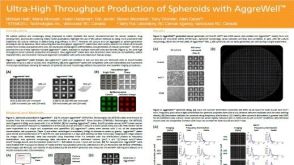 科学海报Ultra-High Throughput Production of Spheroids with AggreWell™
 沪公网安备31010102008431号