Chen YYY et al. (MAY 2007)
Cancer Research 67 10 4924--32
Armed antibodies targeting the mucin repeats of the ovarian cancer antigen, MUC16, are highly efficacious in animal tumor models.
MUC16 is a well-validated cell surface marker for serous adenocarcinomas of the ovary and other gynecologic malignancies that is distinguished by highly repetitive sequences (mucin repeats") in the extracellular domain (ECD). We produced and compared two monoclonal antibodies: one (11D10) recognizing a unique�
View Publication
产品号#:
03800
03801
03802
03803
03804
03805
03806
产品名:
ClonaCell™-HY杂交瘤试剂盒
ClonaCell™-HY培养基A
ClonaCell™-HY 培养基 B
ClonaCell™-HY 培养基 C
ClonaCell™-HY 培养基 D
ClonaCell™-HY 培养基 E
ClonaCell™-HY PEG
Mellick AS et al. (SEP 2010)
Cancer research 70 18 7273--82
Using the transcription factor inhibitor of DNA binding 1 to selectively target endothelial progenitor cells offers novel strategies to inhibit tumor angiogenesis and growth.
Tumor angiogenesis is essential for malignant growth and metastasis. Bone marrow (BM)-derived endothelial progenitor cells (EPC) contribute to angiogenesis-mediated tumor growth. EPC ablation can reduce tumor growth; however,the lack of a marker that can track EPCs from the BM to tumor neovasculature has impeded progress in understanding the molecular mechanisms underlying EPC biology. Here,we report the use of transgenic mouse and lentiviral models to monitor the BM-derived compartment of the tumor stroma; this approach exploits the selectivity of the transcription factor inhibitor of DNA binding 1 (Id1) for EPCs to track EPCs in the BM,blood,and tumor stroma,as well as mature EPCs. Acute ablation of BM-derived EPCs using Id1-directed delivery of a suicide gene reduced circulating EPCs and yielded significant defects in angiogenesis-mediated tumor growth. Additionally,use of the Id1 proximal promoter to express microRNA-30-based short hairpin RNA inhibited the expression of critical EPC-intrinsic factors,confirming that signaling through vascular endothelial growth factor receptor 2 is required for EPC-mediated tumor biology. By exploiting the selectivity of Id1 gene expression in EPCs,our results establish a strategy to track and target EPCs in vivo,clarifying the significant role that EPCs play in BM-mediated tumor angiogenesis.
View Publication
产品号#:
09600
09650
产品名:
StemSpan™ SFEM
StemSpan™ SFEM
Krishnamurthy S et al. (DEC 2010)
Cancer research 70 23 9969--78
Endothelial cell-initiated signaling promotes the survival and self-renewal of cancer stem cells.
Recent studies have demonstrated that cancer stem cells play an important role in the pathobiology of head and neck squamous cell carcinomas (HNSCC). However,little is known about functional interactions between head and neck cancer stem-like cells (CSC) and surrounding stromal cells. Here,we used aldehyde dehydrogenase activity and CD44 expression to sort putative stem cells from primary human HNSCC. Implantation of 1,000 CSC (ALDH+CD44+Lin-) led to tumors in 13 (out of 15) mice,whereas 10,000 noncancer stem cells (ALDH-CD44-Lin-) resulted in 2 tumors in 15 mice. These data demonstrated that ALDH and CD44 select a subpopulation of cells that are highly tumorigenic. The ability to self-renew was confirmed by the observation that ALDH+CD44+Lin- cells sorted from human HNSCC formed more spheroids (orospheres) in 3-D agarose matrices or ultra-low attachment plates than controls and were serially passaged in vivo. We observed that approximately 80% of the CSC were located in close proximity (within 100-μm radius) of blood vessels in human tumors,suggesting the existence of perivascular niches in HNSCC. In vitro studies demonstrated that endothelial cell-secreted factors promoted self-renewal of CSC,as demonstrated by the upregulation of Bmi-1 expression and the increase in the number of orospheres as compared with controls. Notably,selective ablation of tumor-associated endothelial cells stably transduced with a caspase-based artificial death switch (iCaspase-9) caused a marked reduction in the fraction of CSC in xenograft tumors. Collectively,these findings indicate that endothelial cell-initiated signaling can enhance the survival and self-renewal of head and neck CSC.
View Publication
产品号#:
01700
01705
01702
产品名:
ALDEFLUOR™ 试剂盒
ALDEFLUOR™ DEAB试剂, 1.5 mM, 1 mL
ALDEFLUOR™检测缓冲液
Casazza A et al. (APR 2011)
Arteriosclerosis,thrombosis,and vascular biology 31 4 741--9
Systemic and targeted delivery of semaphorin 3A inhibits tumor angiogenesis and progression in mouse tumor models.
OBJECTIVE: The role of semaphorins in tumor progression is still poorly understood. In this study,we aimed at elucidating the regulatory role of semaphorin 3A (SEMA3A) in primary tumor growth and metastatic dissemination. METHODS AND RESULTS: We used 3 different experimental approaches in mouse tumor models: (1) overexpression of SEMA3A in tumor cells,(2) systemic expression of SEMA3A following liver gene transfer in mice,and (3) tumor-targeted release of SEMA3A using gene modified Tie2-expressing monocytes as delivery vehicles. In each of these experimental settings,SEMA3A efficiently inhibited tumor growth by inhibiting vessel function and increasing tumor hypoxia and necrosis,without promoting metastasis. We further show that the expression of the receptor neuropilin-1 in tumor cells is required for SEMA3A-dependent inhibition of tumor cell migration in vitro and metastatic spreading in vivo. CONCLUSIONS: In sum,both systemic and tumor-targeted delivery of SEMA3A inhibits tumor angiogenesis and tumor growth in multiple mouse models; moreover,SEMA3A inhibits the metastatic spreading from primary tumors. These data support the rationale for further investigation of SEMA3A as an anticancer molecule.
View Publication
产品号#:
09600
09650
19756
19756RF
产品名:
StemSpan™ SFEM
StemSpan™ SFEM
Kryczek I et al. (JAN 2012)
International journal of cancer. Journal international du cancer 130 1 29--39
Expression of aldehyde dehydrogenase and CD133 defines ovarian cancer stem cells.
Identification of cancer stem cells is crucial for advancing cancer biology and therapy. Several markers including CD24,CD44,CD117,CD133,the G subfamily of ATP-binding cassette transporters (ABCG),epithelial specific antigen (ESA) and aldehyde dehydrogenase (ALDH) are used to identify and investigate human epithelial cancer stem cells in the literature. We have now systemically analyzed and compared the expression of these markers in fresh ovarian epithelial carcinomas. Although the expression levels of these markers were unexpectedly variable and partially overlapping in fresh ovarian cancer cells from different donors,we reliably detected important levels of CD133 and ALDH in the majority of fresh ovarian cancer. Furthermore,most of these stem cell markers including CD133 and ALDH were gradually lost following in vitro passage of primary tumor cells. However,the expression of ALDH and CD133,but not CD24,CD44 and CD117,could be partially rescued by the in vitro serum-free and sphere cultures and by the in vivo passage in the immune-deficient xenografts. ALDH+ and CD133+ cells formed three-dimensional spheres more efficiently than their negative counterparts. These sphere-forming cells expressed high levels of stem cell core gene transcripts and could be expanded and form additional spheres in long-term culture. ALDH+,CD133+ and ALDH+ CD133+ cells from fresh tumors developed larger tumors more rapidly than their negative counterparts. This property was preserved in the xenografted tumors. Altogether,the data suggest that ALDH+ and CD133+ cells are enriched with ovarian cancer-initiating (stem) cells and that ALDH and CD133 may be widely used as reliable markers to investigate ovarian cancer stem cell biology.
View Publication
产品号#:
01700
01705
01701
01702
18555
18555RF
18551
18551RF
18561
产品名:
ALDEFLUOR™ 试剂盒
ALDEFLUOR™ DEAB试剂, 1.5 mM, 1 mL
ALDEFLUOR™检测缓冲液
Silva IA et al. (JUN 2011)
Cancer research 71 11 3991--4001
Aldehyde dehydrogenase in combination with CD133 defines angiogenic ovarian cancer stem cells that portend poor patient survival.
Markers that reliably identify cancer stem cells (CSC) in ovarian cancer could assist prognosis and improve strategies for therapy. CD133 is a reported marker of ovarian CSC. Aldehyde dehydrogenase (ALDH) activity is a reported CSC marker in several solid tumors,but it has not been studied in ovarian CSC. Here we report that dual positivity of CD133 and ALDH defines a compelling marker set in ovarian CSC. All human ovarian tumors and cell lines displayed ALDH activity. ALDH(+) cells isolated from ovarian cancer cell lines were chemoresistant and preferentially grew tumors,compared with ALDH(-) cells,validating ALDH as a marker of ovarian CSC in cell lines. Notably,as few as 1,000 ALDH(+) cells isolated directly from CD133(-) human ovarian tumors were sufficient to generate tumors in immunocompromised mice,whereas 50,000 ALDH(-) cells were unable to initiate tumors. Using ALDH in combination with CD133 to analyze ovarian cancer cell lines,we observed even greater growth in the ALDH(+)CD133(+) cells compared with ALDH(+)CD133(-) cells,suggesting a further enrichment of ovarian CSC in ALDH(+)CD133(+) cells. Strikingly,as few as 11 ALDH(+)CD133(+) cells isolated directly from human tumors were sufficient to initiate tumors in mice. Like other CSC,ovarian CSC exhibited increased angiogenic capacity compared with bulk tumor cells. Finally,the presence of ALDH(+)CD133(+) cells in debulked primary tumor specimens correlated with reduced disease-free and overall survival in ovarian cancer patients. Taken together,our findings define ALDH and CD133 as a functionally significant set of markers to identify ovarian CSCs.
View Publication
产品号#:
01700
01705
01702
产品名:
ALDEFLUOR™ 试剂盒
ALDEFLUOR™ DEAB试剂, 1.5 mM, 1 mL
ALDEFLUOR™检测缓冲液
Wang H et al. (JAN 2012)
Journal of translational medicine 10 1 167
Oncolytic vaccinia virus GLV-1h68 strain shows enhanced replication in human breast cancer stem-like cells in comparison to breast cancer cells.
BACKGROUND: Recent data suggest that cancer stem cells (CSCs) play an important role in cancer,as these cells possess enhanced tumor-forming capabilities and are responsible for relapses after apparently curative therapies have been undertaken. Hence,novel cancer therapies will be needed to test for both tumor regression and CSC targeting. The use of oncolytic vaccinia virus (VACV) represents an attractive anti-tumor approach and is currently under evaluation in clinical trials. The purpose of this study was to demonstrate whether VACV does kill CSCs that are resistant to irradiation and chemotherapy. METHODS: Cancer stem-like cells were identified and separated from the human breast cancer cell line GI-101A by virtue of increased aldehyde dehydrogenase 1 (ALDH1) activity as assessed by the ALDEFLUOR assay and cancer stem cell-like features such as chemo-resistance,irradiation-resistance and tumor-initiating were confirmed in cell culture and in animal models. VACV treatments were applied to both ALDEFLUOR-positive cells in cell culture and in xenograft tumors derived from these cells. Moreover,we identified and isolated CD44(+)CD24(+)ESA(+) cells from GI-101A upon an epithelial-mesenchymal transition (EMT). These cells were similarly characterized both in cell culture and in animal models. RESULTS: We demonstrated for the first time that the oncolytic VACV GLV-1h68 strain replicated more efficiently in cells with higher ALDH1 activity that possessed stem cell-like features than in cells with lower ALDH1 activity. GLV-1h68 selectively colonized and eventually eradicated xenograft tumors originating from cells with higher ALDH1 activity. Furthermore,GLV-1h68 also showed preferential replication in CD44(+)CD24(+)ESA(+) cells derived from GI-101A upon an EMT induction as well as in xenograft tumors originating from these cells that were more tumorigenic than CD44(+)CD24(-)ESA(+) cells. CONCLUSIONS: Taken together,our findings indicate that GLV-1h68 efficiently replicates and kills cancer stem-like cells. Thus,GLV-1h68 may become a promising agent for eradicating both primary and metastatic tumors,especially tumors harboring cancer stem-like cells that are resistant to chemo and/or radiotherapy and may be responsible for recurrence of tumors.
View Publication
产品号#:
01700
01705
05620
01702
产品名:
ALDEFLUOR™ 试剂盒
ALDEFLUOR™ DEAB试剂, 1.5 mM, 1 mL
MammoCult™ 人源培养基套装
ALDEFLUOR™检测缓冲液
Esplugues E et al. (MAY 2003)
The Journal of experimental medicine 197 9 1093--106
Enhanced antitumor immunity in mice deficient in CD69.
We investigated the in vivo role of CD69 by analyzing the susceptibility of CD69-/- mice to tumors. CD69-/- mice challenged with MHC class I- tumors (RMA-S and RM-1) showed greatly reduced tumor growth and prolonged survival compared with wild-type (WT) mice. The enhanced anti-tumor response was NK cell and T lymphocyte-mediated,and was due,at least in part,to an increase in local lymphocytes. Resistance of CD69-/- mice to MHC class I- tumor growth was also associated with increased production of the chemokine MCP-1,diminished TGF-beta production,and decreased lymphocyte apoptosis. Moreover,the in vivo blockade of TGF-beta in WT mice resulted in enhanced anti-tumor response. In addition,CD69 engagement induced NK and T cell production of TGF-beta,directly linking CD69 signaling to TGF-beta regulation. Furthermore,anti-CD69 antibody treatment in WT mice induced a specific down-regulation in CD69 expression that resulted in augmented anti-tumor response. These data unmask a novel role for CD69 as a negative regulator of anti-tumor responses and show the possibility of a novel approach for the therapy of tumors.
View Publication
GRP-78 secreted by tumor cells blocks the antiangiogenic activity of bortezomib.
Antiangiogenic effects of the proteasome inhibitor bortezomib were analyzed on tumor xenografts in vivo. Bortezomib strongly inhibited angiogenesis and vascularization in the chicken chorioallantoic membrane. Bortezomib's inhibitory effects on chorioallantoic membrane vascularization were abrogated in the presence of distinct tumor xenografts,thanks to a soluble factor secreted by tumor cells. Through size-exclusion and ion-exchange chromatography as well as mass spectroscopy,we identified GRP-78,a chaperone protein of the unfolded protein response,as being responsible for bortezomib resistance. Indeed,a variety of bortezomib-resistant solid tumor cell lines (PC-3,HRT-18),but not myeloma cell lines (U266,OPM-2),were able to secrete high amounts of GRP-78. Recombinant GRP-78 conferred bortezomib resistance to endothelial cells and OPM-2 myeloma cells. Knockdown of GRP78 gene expression in tumor cells and immunodepletion of GRP-78 protein from tumor cell supernatants restored bortezomib sensitivity. GRP-78 did not bind or complex bortezomib but induced prosurvival signals by phosphorylation of extracellular signal-related kinase and inhibited p53-mediated expression of proapoptotic Bok and Noxa proteins in endothelial cells. From our data,we conclude that distinct solid tumor cells are able to secrete GRP-78 into the tumor microenvironment,thus demonstrating a hitherto unknown mechanism of resistance to bortezomib.
View Publication
产品号#:
03814
产品名:
ClonaCell™-TCS 培养基
Su Y et al. (FEB 2010)
Cancer epidemiology,biomarkers & prevention : a publication of the American Association for Cancer Research,cosponsored by the American Society of Preventive Oncology 19 2 327--37
Aldehyde dehydrogenase 1 A1-positive cell population is enriched in tumor-initiating cells and associated with progression of bladder cancer.
Aldehyde dehydrogenase 1 A1 (ALDH1A1) has recently been suggested as a marker for cancer stem or stem-like cancer cells of some human malignancies. The purpose of this study was to investigate the stem cell-related function and clinical significance of the ALDH1A1 in bladder urothelial cell carcinoma. Aldefluor assay was used to isolate ALDH1A1+ cells from bladder cancer cells. Stem cell characteristics of the ALDH1A1+ cells were then investigated by in vitro and in vivo approaches. Immunohistochemistry was done for evaluating ALDH1A1 expression on 22 normal bladder tissues and 216 bladder tumor specimens of different stage and grade. The ALDH1A1+ cancer cells displayed higher in vitro tumorigenicity compared with isogenic ALDH1A1- cells. The ALDH1A1+ cancer cells could generate xenograft tumors that resembled the histopathologic characteristics and heterogeneity of the parental cells. High ALDH1A1 expression was found in 26% (56 of 216) of human bladder tumor specimens and significantly related to advanced pathologic stage,high histologic grade,recurrence and progression,and metastasis of bladder urothelial cell carcinomas (all P textless 0.05). Furthermore,ALDH1A1 expression was inversely associated with cancer-specific and overall survivals of the patients (P = 0.027 and 0.030,respectively). Therefore,ALDH1A1+ cell population could be enriched in tumor-initiating cells. ALDH1A1 may serve as a useful marker for monitoring the progression of bladder tumor and identifying bladder cancer patients with poor prognosis who might benefit from adjuvant and effective treatments.
View Publication


 EasySep™小鼠TIL(CD45)正选试剂盒




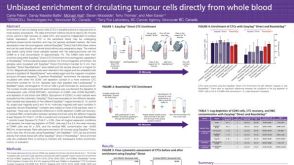 科学海报Unbiased Enrichment of Circulating Tumour Cells Directly from Whole Blood

 沪公网安备31010102008431号