Li X et al. (AUG 2012)
Journal of thoracic oncology : official publication of the International Association for the Study of Lung Cancer 7 8 1235--45
Aldehyde dehydrogenase 1A1 possesses stem-like properties and predicts lung cancer patient outcome.
INTRODUCTION: Lung cancer contains a small population of cancer stem cells that contribute to its initiation and progression. We investigated the biological function and clinical significance of aldehyde dehydrogenase 1A1 (ALDH1A1) in non-small-cell lung carcinoma (NSCLC). METHODS: ALDH1A1 assay or small interfering RNA transfection was employed to isolate ALDH1A1+ cells or knock down ALDH1A1 expression in H2087 cells,respectively. Biological functions of ALDH1A1+ and ALDH1A1 silenced cells were investigated using in vitro and in vivo methods. ALDH1A1 expression was analyzed using immunohistochemistry on tissue microarrays with 179 lung cancer tissues and 26 normal lung tissues. RESULTS: The abilities of clone formation,proliferation,cell growth,and migration were increased in ALDH1A1+ and ALDH1A1 silenced cells. ALDH1A1+ lung cancer cells initiated tumors that resembled the histopathologic characteristics and heterogeneity of the parental lung cancer cells in mice. The silencing of ALDH1A1 expression in H2087 lung cancer cells inhibited cell proliferation and migration significantly. ALDH1A1 was expressed in 42% of normal lung tissues (11 of 26),with strong expression in the basal cells and globular cells of the normal bronchus and weak expression in the alveolar epithelial cells. Compared with normal lung tissues,45% of NSCLC samples (81 of 179) were read as positive for ALDH1A1. Positive ALDH1A1 expression was correlated with patients' smoking status (p = 0.022),lymph-node metastasis (p = 0.006),clinical stage (p = 0.004),and a decreased overall survival time (p textless 0.001). Positive ALDH1A1 expression in lung cancer tissues was an independent prognostic factor for NSCLC (odds ratio = 5.232,p textless 0.001). CONCLUSION: Elucidating the biological functions of ALDH1A1 could be helpful in studying lung tumorigenesis and for developing new therapeutic approaches.
View Publication
SnapShot: GI Tract Development
Overview of gastrointestinal tract specification signals and summary of pancreatic cellular hierarchy and cell markers
Ahmadi S et al. ( 2017)
npj Genomic Medicine 2 1 12
Phenotypic profiling of CFTR modulators in patient-derived respiratory epithelia
Pulmonary disease is the major cause of morbidity and mortality in patients with cystic fibrosis,a disease caused by mutations in the Cystic Fibrosis Transmembrane conductance Regulator (CFTR) gene. Heterogeneity in CFTR genotype-phenotype relationships in affected individuals plus the escalation of drug discovery targeting specific mutations highlights the need to develop robust in vitro platforms with which to stratify therapeutic options using relevant tissue. Toward this goal,we adapted a fluorescence plate reader assay of apical CFTR-mediated chloride conductance to enable profiling of a panel of modulators on primary nasal epithelial cultures derived from patients bearing different CFTR mutations. This platform faithfully recapitulated patient-specific responses previously observed in the gold-standard but relatively low-throughput Ussing chamber. Moreover using this approach we identified a novel strategy with which to augment the response to an approved drug in specific patients. In proof of concept studies we also validated the use of this platform in measuring drug responses in lung cultures differentiated from cystic fibrosis iPS cells. Taken together we show that this medium throughput assay of CFTR activity has the potential to stratify cystic fibrosis patient-specific responses to approved drugs and investigational compounds in vitro in primary and iPS cell-derived airway cultures.
View Publication
产品号#:
05001
05021
05022
产品名:
PneumaCult™-ALI 培养基
PneumaCult™-ALI 培养基含12 mm Transwell®插件
PneumaCult™-ALI 培养基含6.5 mm Transwell®插件
Nikoli&cacute et al. ( 2017)
eLife 6 1--33
Human embryonic lung epithelial tips are multipotent progenitors that can be expanded in vitro as long-term self-renewing organoids
The embryonic mouse lung is a widely used substitute for human lung development. For example,attempts to differentiate human pluripotent stem cells to lung epithelium rely on passing through progenitor states that have only been described in mouse. The tip epithelium of the branching mouse lung is a multipotent progenitor pool that self-renews and produces differentiating descendants. We hypothesized that the human distal tip epithelium is an analogous progenitor population and tested this by examining morphology,gene expression and in vitro self-renewal and differentiation capacity of human tips. These experiments confirm that human and mouse tips are analogous and identify signalling pathways that are sufficient for long-term self-renewal of human tips as differentiation-competent organoids. Moreover,we identify mouse-human differences,including markers that define progenitor states and signalling requirements for long-term self-renewal. Our organoid system provides a genetically-tractable tool that will allow these human-specific features of lung development to be investigated.
View Publication
产品号#:
05001
05021
05022
产品名:
PneumaCult™-ALI 培养基
PneumaCult™-ALI 培养基含12 mm Transwell®插件
PneumaCult™-ALI 培养基含6.5 mm Transwell®插件
Shirato K et al. ( 2017)
Virology November 0--1
Wild-type human coronaviruses prefer cell-surface TMPRSS2 to endosomal cathepsins for cell entry
Human coronaviruses (HCoVs) enter cells via two distinct pathways: the endosomal pathway using cathepsins to activate spike protein and the cell-surface or early endosome pathway using extracellular proteases such as transmembrane protease serine 2 (TMPRSS2). We previously reported that clinical isolates of HCoV-229E preferred cell-surface TMPRSS2 to endosomal cathepsin for cell entry,and that they acquired the ability to use cathepsin L by repeated passage in cultured cells and were then able to enter cells via the endosomal pathway. Here,we show that clinical isolates of HCoV-OC43 and -HKU1 preferred the cell-surface TMRRSS2 to endosomal cathepsins for cell entry,similar to HCoV-229E. In addition,the cell-culture-adapted HCoV-OC43 lost the ability to infect and replicate in air-liquid interface cultures of human bronchial tracheal epithelial cells. These results suggest that circulating HCoVs in the field generally use cell-surface TMPRSS2 for cell entry,not endosomal cathepsins,in human airway epithelial cells.
View Publication
产品号#:
05001
05021
05022
05008
产品名:
PneumaCult™-ALI 培养基
PneumaCult™-ALI 培养基含12 mm Transwell®插件
PneumaCult™-ALI 培养基含6.5 mm Transwell®插件
PneumaCult™-Ex 培养基
Aufderheide M and Emura M (JUL 2017)
Experimental and toxicologic pathology : official journal of the Gesellschaft fur Toxikologische Pathologie 69 6 393--401
Phenotypical changes in a differentiating immortalized bronchial epithelial cell line after exposure to mainstream cigarette smoke and e-cigarette vapor.
3D constructs composed of differentiated immortalized primary normal human bronchial epithelial (NHBE) cells (CL-1548) were repeatedly exposed at the air-liquid interface to non-lethal concentrations of mainstream cigarette smoke (4 cigarettes a day,5days/week,8 repetitions in total) and e-cigarette vapor (50 puffs a day,5 days/week,8 repetitions in total) to build up a permanent burden on the cells. Samples were taken after 4,6 and 8 times of repeated smoke exposure and the cultures were investigated using histopathological methods Compared to the clean air-exposed cultures (process control) and incubator control,the aerosol-exposed cultures showed a reduction of ciliated,mucus-producing and club cells. At the end of the exposure phase,we even found metaplastic areas positive for CK13 antibody in the cultures exposed to mainstream cigarette smoke and e-liquid vapor,commonly seen in squamous cells as a marker for non-cornified squamous epithelium. The control cultures (incubator cells) showed no comparable phenotypical changes. In conclusion,our in vitro model presents a valuable tool to study the induction of phenotypical changes after exposure to hazardous airborne material.
View Publication
产品号#:
05001
05021
05022
产品名:
PneumaCult™-ALI 培养基
PneumaCult™-ALI 培养基含12 mm Transwell®插件
PneumaCult™-ALI 培养基含6.5 mm Transwell®插件
Aumiller V et al. ( 2017)
Scientific reports 7 1 149
Comparative analysis of lysyl oxidase (like) family members in pulmonary fibrosis.
Extracellular matrix (ECM) composition and stiffness are major driving forces for the development and persistence of fibrotic diseases. Lysyl oxidase (LOX) and LOX-like (LOXL) proteins play crucial roles in ECM remodeling due to their collagen crosslinking and intracellular functions. Here,we systematically investigated LOX/L expression in primary fibroblasts and epithelial cells under fibrotic conditions,Bleomycin (BLM) induced lung fibrosis and in human IPF tissue. Basal expression of all LOX/L family members was detected in epithelial cells and at higher levels in fibroblasts. Various pro-fibrotic stimuli broadly induced LOX/L expression in fibroblasts,whereas specific induction of LOXL2 and partially LOX was observed in epithelial cells. Immunohistochemical analysis of lung tissue from 14 IPF patients and healthy donors revealed strong induction of LOX and LOXL2 in bronchial and alveolar epithelium as well as fibroblastic foci. Using siRNA experiments we observed that LOXL2 and LOXL3 were crucial for fibroblast-to-myofibroblast transition (FMT). As FMT could only be reconstituted with an enzymatically active LOXL2 variant,we conclude that LOXL2 enzymatic function is crucial for fibroblast transdifferentiation. In summary,our study provides a comprehensive analysis of the LOX/L family in fibrotic lung disease and indicates prominent roles for LOXL2/3 in fibroblast activation and LOX/LOXL2 in IPF.
View Publication
产品号#:
05001
05021
05022
产品名:
PneumaCult™-ALI 培养基
PneumaCult™-ALI 培养基含12 mm Transwell®插件
PneumaCult™-ALI 培养基含6.5 mm Transwell®插件
H. Cao et al. (JUN 2018)
Human gene therapy 29 6 643--652
Transducing Airway Basal Cells with a Helper-Dependent Adenoviral Vector for Lung Gene Therapy.
A major challenge in developing gene-based therapies for airway diseases such as cystic fibrosis (CF) is sustaining therapeutic levels of transgene expression over time. This is largely due to airway epithelial cell turnover and the host immunogenicity to gene delivery vectors. Modern gene editing tools and delivery vehicles hold great potential for overcoming this challenge. There is currently not much known about how to deliver genes into airway stem cells,of which basal cells are the major type in human airways. In this study,helper-dependent adenoviral (HD-Ad) vectors were delivered to mouse and pig airways via intranasal delivery,and direct bronchoscopic instillation,respectively. Vector transduction was assessed by immunostaining of lung tissue sections,which revealed that airway basal cells of mice and pigs can be targeted in vivo. In addition,efficient transduction of primary human airway basal cells was verified with an HD-Ad vector expressing green fluorescent protein. Furthermore,we successfully delivered the human CFTR gene to airway basal cells from CF patients,and demonstrated restoration of CFTR channel activity following cell differentiation in air-liquid interface culture. Our results provide a strong rationale for utilizing HD-Ad vectors to target airway basal cells for permanent gene correction of genetic airway diseases.
View Publication


 EasySep™小鼠TIL(CD45)正选试剂盒




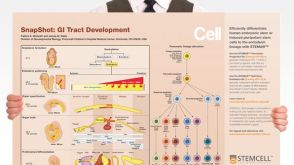 挂图SnapShot: GI Tract Development Overview of gastrointestinal tract specification signals and summary of pancreatic cellular hierarchy and cell markers
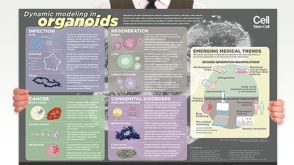 挂图Dynamic Modeling in Organoids Learn more about organoid applications for studying human health

 沪公网安备31010102008431号