Yu Z et al. ( 2017)
Toxicology in Vitro 42 April 319--328
Prediction of delivery of organic aerosols onto air-liquid interface cells in vitro using an electrostatic precipitator
To better characterize biological responses to atmospheric organic aerosols,the efficient delivery of aerosol to in vitro lung cells is necessary. In this study,chamber generated secondary organic aerosol (SOA) entered the commercialized exposure chamber (CULTEX® Radial Flow System Compact) where it interfaced with an electrostatic precipitator (ESP) (CULTEX® Electrical Deposition Device) and then deposited on a particle collection plate. This plate contained human lung cells (BEAS-2B) that were cultured on a membrane insert to produce an air-liquid interface (ALI). To augment in vitro assessment using the ESP exposure device,the particle dose was predicted for various sampling parameters such as particle size,ESP deposition voltage,and sampling flowrate. The dose model was evaluated against the experimental measured mass of collected airborne particles. The high flowrate used in this study increased aerosol dose but failed to achieve cell stability. For example,RNA in the ALI BEAS-2B cells in vitro was stable at 0.15 L/minute but decayed at high flowrates. The ESP device and the resulting model were applied to in vitro studies (i.e.,viability and IL-8 expression) of toluene SOA using ALI BEAS-2B cells with a flowrate of 0.15 L/minute,and no cellular RNA decay occurred.
View Publication
产品号#:
05001
05021
05022
05008
产品名:
PneumaCult™-ALI 培养基
PneumaCult™-ALI 培养基含12 mm Transwell®插件
PneumaCult™-ALI 培养基含6.5 mm Transwell®插件
PneumaCult™-Ex 培养基
Stevenson C et al. (AUG 2017)
Inflammation research : official journal of the European Histamine Research Society ... [et al.] 66 8 691--700
OBJECTIVE To evaluate the effects of MUC18 on IL-13-mediated airway inflammatory responses in human airway epithelial cells and in mice. MATERIALS Primary normal human tracheobronchial epithelial (HTBE) cells,wild-type (WT) and Muc18 knockout (KO) mice,and mouse tracheal epithelial cells (mTECs) were utilized. TREATMENT Cultured HTBE cells treated with MUC18 siRNA or MUC18 expressing lentivirus were incubated with IL-13 (10 ng/mL) for 24 h. Mice were intranasally instilled with 500 ng of IL-13 for 3 days. mTECs were treated with IL-13 (10 ng/mL) for 3 days. METHODS PCR was used to measure mRNA expression. Western Blot and ELISAs were used to quantify protein expression. Cytospins of bronchoalveolar lavage (BAL) cells were used to obtain leukocyte differentials. RESULTS MUC18 siRNA reduced IL-13-mediated eotaxin-3 (183 ± 44 vs. 380 ± 59 pg/mL,p < 0.05),while MUC18 overexpression increased IL-13-mediated eotaxin-3 (95 ± 3 vs. 58 ± 3 pg/mL,p < 0.05) in HTBE cells. IL-13-treated Muc18 KO mice had a lower percentage of neutrophils in BAL than WT mice (25 ± 3 vs. 35 ± 3%,p = 0.0565). CONCLUSIONS These results implicate MUC18 as a potential enhancer of airway inflammation in a type 2 cytokine (e.g.,IL-13) milieu.
View Publication
产品号#:
05001
05021
05022
产品名:
PneumaCult™-ALI 培养基
PneumaCult™-ALI 培养基含12 mm Transwell®插件
PneumaCult™-ALI 培养基含6.5 mm Transwell®插件
Wu Q et al. (NOV 2017)
American journal of physiology. Lung cellular and molecular physiology 30-Nov ajplung003242017
Over-production of growth differentiation factor 15 (GDF15) promotes human rhinovirus infection and virus-induced inflammation in the lung.
Human rhinovirus (HRV) is the most common virus contributing to acute exacerbations of chronic obstructive pulmonary disease (COPD) nearly year-round,but the mechanisms have not been well elucidated. Recent clinical studies suggest that high levels of growth differentiation factor 15 (GDF15) protein in the blood are associated with an increased yearly rate of all-cause COPD exacerbations. Therefore,in the current study,we investigated whether GDF15 promotes HRV infection and virus-induced lung inflammation. We first examined the role of GDF15 in regulating host defense and HRV-induced inflammation using human GDF15 transgenic mice and cultured human GDF15 transgenic mouse tracheal epithelial cells. Next,we determined the effect of GDF15 on viral replication,antiviral responses,and inflammation in human airway epithelial cells with GDF15 knockdown and HRV infection. Finally,we explored the signaling pathways involved in airway epithelial responses to HRV infection in the context of GDF15. Human GDF15 protein over-expression in mice led to exaggerated inflammatory responses to HRV,increased infectious particle release,and decreased IFN-λ2/3 (IL-28A/B) mRNA expression in the lung. Moreover,GDF15 facilitated HRV replication and inflammation via inhibiting IFN-λ1/IL-29 protein production in human airway epithelial cells. Lastly,Smad1 cooperated with interferon regulatory factor 7 (IRF7) to regulate airway epithelial responses to HRV infection partly via GDF15 signaling. Our results reveal a novel function of GDF15 in promoting lung HRV infection and virus-induced inflammation,which may be a new mechanism for the increased susceptibility and severity of respiratory viral (i.e.,HRV) infection in cigarette smoke-exposed airways with GDF15 over-production.
View Publication
产品号#:
05001
05021
05022
产品名:
PneumaCult™-ALI 培养基
PneumaCult™-ALI 培养基含12 mm Transwell®插件
PneumaCult™-ALI 培养基含6.5 mm Transwell®插件
Molinski SV et al. ( 2017)
EMBO Molecular Medicine 9 9 1224--1243
Orkambi® and amplifier co-therapy improves function from a rare CFTR mutation in gene edited cells and patient tissue
The combination therapy of lumacaftor and ivacaftor (Orkambi®) is approved for patients bearing the major cystic fibrosis (CF) mutation: ΔF508 It has been predicted that Orkambi® could treat patients with rarer mutations of similar theratype"; however a standardized approach confirming efficacy in these cohorts has not been reported. Here we demonstrate that patients bearing the rare mutation: c.3700 A>G causing protein misprocessing and altered channel function-similar to ΔF508-CFTR are unlikely to yield a robust Orkambi® response. While in silico and biochemical studies confirmed that this mutation could be corrected and potentiated by lumacaftor and ivacaftor respectively this combination led to a minor in vitro response in patient-derived tissue. A CRISPR/Cas9-edited bronchial epithelial cell line bearing this mutation enabled studies showing that an "amplifier" compound effective in increasing the levels of immature CFTR protein augmented the Orkambi® response. Importantly this "amplifier" effect was recapitulated in patient-derived nasal cultures-providing the first evidence for its efficacy in augmenting Orkambi® in tissues harboring a rare CF-causing mutation. We propose that this multi-disciplinary approach including creation of CRISPR/Cas9-edited cells to profile modulators together with validation using primary tissue will facilitate therapy development for patients with rare CF mutations.
View Publication
Development of a primary human co-culture model of inflamed airway mucosa
Neutrophil breach of the mucosal surface is a common pathological consequence of infection. We present an advanced co-culture model to explore neutrophil transepithelial migration utilizing airway mucosal barriers differentiated from primary human airway basal cells and examined by advanced imaging. Human airway basal cells were differentiated and cultured at air-liquid interface (ALI) on the underside of 3 μm pore-sized transwells,compatible with the study of transmigrating neutrophils. Inverted ALIs exhibit beating cilia and mucus production,consistent with conventional ALIs,as visualized by micro-optical coherence tomography (μOCT). μOCT is a recently developed imaging modality with the capacity for real time two- A nd three-dimensional analysis of cellular events in marked detail,including neutrophil transmigratory dynamics. Further,the newly devised and imaged primary co-culture model recapitulates key molecular mechanisms that underlie bacteria-induced neutrophil transepithelial migration previously characterized using cell line-based models. Neutrophils respond to imposed chemotactic gradients,and migrate in response to Pseudomonas aeruginosa infection of primary ALI barriers through a hepoxilin A3-directed mechanism. This primary cell-based co-culture system combined with μOCT imaging offers significant opportunity to probe,in great detail,micro-anatomical and mechanistic features of bacteria-induced neutrophil transepithelial migration and other important immunological and physiological processes at the mucosal surface.
View Publication


 EasySep™小鼠TIL(CD45)正选试剂盒




 44:40
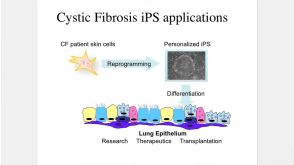
线上讲座Making Lung Cells from Pluripotent Stem Cells: Disease Modeling and Future Therapies发布日期: 08/12/2016
44:40
线上讲座Making Lung Cells from Pluripotent Stem Cells: Disease Modeling and Future Therapies发布日期: 08/12/2016



 沪公网安备31010102008431号