Maricque BB et al. (FEB 2017)
Nucleic acids research 45 4 e16
A genome-integrated massively parallel reporter assay reveals DNA sequence determinants of cis-regulatory activity in neural cells.
Recent large-scale genomics efforts to characterize the cis-regulatory sequences that orchestrate genome-wide expression patterns have produced impressive catalogues of putative regulatory elements. Most of these sequences have not been functionally tested,and our limited understanding of the non-coding genome prevents us from predicting which sequences are bona fide cis-regulatory elements. Recently,massively parallel reporter assays (MPRAs) have been deployed to measure the activity of putative cis-regulatory sequences in several biological contexts,each with specific advantages and distinct limitations. We developed LV-MPRA,a novel lentiviral-based,massively parallel reporter gene assay,to study the function of genome-integrated regulatory elements in any mammalian cell type; thus,making it possible to apply MPRAs in more biologically relevant contexts. We measured the activity of 2,600 sequences in U87 glioblastoma cells and human neural progenitor cells (hNPCs) and explored how regulatory activity is encoded in DNA sequence. We demonstrate that LV-MPRA can be applied to estimate the effects of local DNA sequence and regional chromatin on regulatory activity. Our data reveal that primary DNA sequence features,such as GC content and dinucleotide composition,accurately distinguish sequences with high activity from sequences with low activity in a full chromosomal context,and may also function in combination with different transcription factor binding sites to determine cell type specificity. We conclude that LV-MPRA will be an important tool for identifying cis-regulatory elements and stimulating new understanding about how the non-coding genome encodes information.
View Publication
Xu X et al. (MAR 2017)
Stem Cell Reports 8 3 619--633
Reversal of Phenotypic Abnormalities by CRISPR/Cas9-Mediated Gene Correction in Huntington Disease Patient-Derived Induced Pluripotent Stem Cells
Huntington disease (HD) is a dominant neurodegenerative disorder caused by a CAG repeat expansion in HTT. Here we report correction of HD human induced pluripotent stem cells (hiPSCs) using a CRISPR-Cas9 and piggyBac transposon-based approach. We show that both HD and corrected isogenic hiPSCs can be differentiated into excitable,synaptically active forebrain neurons. We further demonstrate that phenotypic abnormalities in HD hiPSC-derived neural cells,including impaired neural rosette formation,increased susceptibility to growth factor withdrawal,and deficits in mitochondrial respiration,are rescued in isogenic controls. Importantly,using genome-wide expression analysis,we show that a number of apparent gene expression differences detected between HD and non-related healthy control lines are absent between HD and corrected lines,suggesting that these differences are likely related to genetic background rather than HD-specific effects. Our study demonstrates correction of HD hiPSCs and associated phenotypic abnormalities,and the importance of isogenic controls for disease modeling using hiPSCs.
View Publication


 EasySep™小鼠TIL(CD45)正选试剂盒





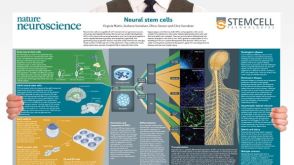 挂图Neural Stem Cells Overview of the types of NSCs and their potential use as therapeutic agents for disease


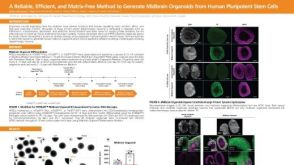 科学海报A Reliable, Efficient, and Matrix-Free Method to Generate Midbrain Organoids from Human Pluripotent Stem Cells

 沪公网安备31010102008431号