HIV infection and antiretroviral therapy lead to unfolded protein response activation
BACKGROUND: The unfolded protein response (UPR) is one of the pathways triggered to ensure quality control of the proteins assembled in the endoplasmic reticulum (ER) when cell homeostasis is compromised. This mechanism is primarily composed of three transmembrane proteins serving as stress sensors: PKR-like ER kinase (PERK),activating transcription factor 6 (ATF6),and inositol-requiring enzyme 1 (IRE1). These three proteins' synergic action elicits translation and transcriptional downstream pathways,leading to less protein production and activating genes that encode important proteins in folding processes,including chaperones. Previous reports showed that viruses have evolved mechanisms to curtail or customize this UPR signaling for their own benefit. However,HIV infection's effect on the UPR has scarcely been investigated. METHODS: This work investigated UPR modulation by HIV infection by assessing UPR-related protein expression under in vitro and in vivo conditions via Western blotting. Antiretroviral (ARV) drugs' influence on this stress response was also considered. RESULTS: In in vitro and in vivo analyses,our results confirm that HIV infection activates stress-response components and that ARV therapy contributes to changes in the UPR's activation profile. CONCLUSIONS: This is the first report showing UPR-related protein expression in HIV target cells derived directly from HIV-infected patients receiving different ARV therapies. Thus,two mechanisms may occur simultaneously: interference by HIV itself and the ARV drugs' pharmacological effects as UPR activators. New evidence of how HIV modulates the UPR to enhance its own replication and secure infection success is also presented.
View Publication
产品号#:
15022
15062
15028
15068
产品名:
RosetteSep™人CD4+ T细胞富集抗体混合物
RosetteSep™人CD4+ T细胞富集抗体混合物
RosetteSep™人单核细胞富集抗体混合物
RosetteSep™人单核细胞富集抗体混合物
Gonzalez-Velasquez FJ and Moss MA (JAN 2008)
Journal of neurochemistry 104 2 500--13
Soluble aggregates of the amyloid-beta protein activate endothelial monolayers for adhesion and subsequent transmigration of monocyte cells.
Increasing evidence suggests that the deposition of amyloid plaques,composed primarily of the amyloid-beta protein (Abeta),within the cerebrovasculature is a frequent occurrence in Alzheimer's disease and may play a significant role in disease progression. Accordingly,the pathogenic mechanisms by which Abeta can alter vascular function may have therapeutic implications. Despite observations that Abeta elicits a number of physiological responses in endothelial cells,ranging from alteration of protein expression to cell death,the Abeta species accountable for these responses remains unexplored. In the current study,we show that isolated soluble Abeta aggregation intermediates activate human brain microvascular endothelial cells for both adhesion and subsequent transmigration of monocyte cells in the absence of endothelial cell death and monolayer disruption. In contrast,unaggregated Abeta monomer and mature Abeta fibril fail to induce any change in endothelial adhesion or transmigration. Correlations between average Abeta aggregate size and observed increases in adhesion illustrate that smaller soluble aggregates are more potent activators of endothelium. These results support previous studies demonstrating heightened neuronal activity of soluble Abeta aggregates,including Abeta-derived diffusible ligands,oligomers,and protofibrils,and further show that soluble aggregates also selectively exhibit activity in a vascular cell model.
View Publication
产品号#:
70034
200-0167
200-0166
产品名:
冻存的人外周血单核细胞
人外周血单核细胞,冷冻
人外周血单核细胞,冷冻
Currie KS et al. (MAY 2014)
Journal of medicinal chemistry 57 9 3856--73
Discovery of GS-9973, a selective and orally efficacious inhibitor of spleen tyrosine kinase.
Spleen tyrosine kinase (Syk) is an attractive drug target in autoimmune,inflammatory,and oncology disease indications. The most advanced Syk inhibitor,R406,1 (or its prodrug form fostamatinib,2),has shown efficacy in multiple therapeutic indications,but its clinical progress has been hampered by dose-limiting adverse effects that have been attributed,at least in part,to the off-target activities of 1. It is expected that a more selective Syk inhibitor would provide a greater therapeutic window. Herein we report the discovery and optimization of a novel series of imidazo[1,2-a]pyrazine Syk inhibitors. This work culminated in the identification of GS-9973,68,a highly selective and orally efficacious Syk inhibitor which is currently undergoing clinical evaluation for autoimmune and oncology indications.
View Publication
产品号#:
70034
70023
70023.1
200-0167
200-0166
产品名:
冻存的人外周血单核细胞
冻存的人外周血B细胞
冻存的人外周血B细胞
人外周血单核细胞,冷冻
人外周血单核细胞,冷冻
Newman SL et al. (FEB 2006)
Journal of immunology (Baltimore,Md. : 1950) 176 3 1806--13
Human macrophages do not require phagosome acidification to mediate fungistatic/fungicidal activity against Histoplasma capsulatum.
Histoplasma capsulatum (Hc) is a facultative intracellular fungus that modulates the intraphagosomal environment to survive within macrophages (Mphi). In the present study,we sought to quantify the intraphagosomal pH under conditions in which Hc yeasts replicated or were killed. Human Mphi that had ingested both viable and heat-killed or fixed yeasts maintained an intraphagosomal pH of approximately 6.4-6.5 over a period of several hours. These results were obtained using a fluorescent ratio technique and by electron microscopy using the 3-(2,4-dinitroanilo)-3'-amino-N-methyldipropylamine reagent. Mphi that had ingested Saccharomyces cerevisae,a nonpathogenic yeast that is rapidly killed and degraded by Mphi,also maintained an intraphagosomal pH of approximately 6.5 over a period of several hours. Stimulation of human Mphi fungicidal activity by coculture with chloroquine or by adherence to type 1 collagen matrices was not reversed by bafilomycin,an inhibitor of the vacuolar ATPase. Human Mphi cultured in the presence of bafilomycin also completely degraded heat-killed Hc yeasts,whereas mouse peritoneal Mphi digestion of yeasts was completely reversed in the presence of bafilomycin. However,bafilomycin did not inhibit mouse Mphi fungistatic activity induced by IFN-gamma. Thus,human Mphi do not require phagosomal acidification to kill and degrade Hc yeasts,whereas mouse Mphi do require acidification for fungicidal but not fungistatic activity.
View Publication


 EasySep™小鼠TIL(CD45)正选试剂盒





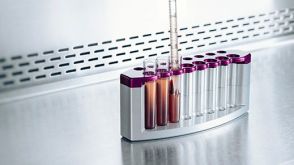 技术公告Simplify Your PBMC Isolations with the EasySep™ Direct Human PBMC Isolation Kit
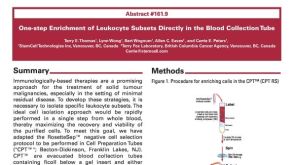 科学海报One-Step Enrichment of Leukocyte Subsets Directly in the Blood Collection Tube



 沪公网安备31010102008431号