Role of innate lymphoid cells and dendritic cells in intradermal immunization of the enterovirus antigen.
Enterovirus type 71 (EV71) and coxsackievirus A 16 (CA16) are the major pathogens of human hand,foot,and mouth disease (HFMD). In our previous study,intramuscular immunization with the inactivated EV71 vaccine elicited effective immunity,while immunization with the inactivated CA16 vaccine did not. In this report,we focused on innate immune responses elicited by inactivated EV71 and CA16 antigens administered intradermally or intramuscularly. The distributions of the EV71 and CA16 antigens administered intradermally or intramuscularly were not obviously different,but the antigens were detected for a shorter period of time when administered intradermally. The expression levels of NF-kappaB pathway signaling molecules,which were identified as being capable of activating DCs,ILCs,and T cells,were higher in the intradermal group than in the intramuscular group. Antibodies for the EV71 and CA16 antigens colocalized with ILCs and DCs in skin and muscle tissues under fluorescence microscopy. Interestingly,ILC colocalization decreased over time,while DC colocalization increased over time. ELISpot analysis showed that coordination between DCs and ILCs contributed to successful adaptive immunity against vaccine antigens in the skin. EV71 and/or CA16 antigen immunization via the intradermal route was more capable of significantly increasing neutralizing antibody titers and activating specific T cell responses than immunization via the intramuscular route. Furthermore,neonatal mice born to mothers immunized with the EV71 and CA16 antigens were 100{\%} protected against wild-type EV71 or CA16 viral challenge. Together,our results provide new insights into the development of vaccines for HFMD.
View Publication
Allergic asthma is a complex and chronic inflammatory disorder that is associated with airway hyperreactivity (AHR) and driven by Th2 cytokine secretion. Type 2 innate lymphoid cells (ILC2s) produce large amounts of Th2 cytokines and contribute to the development of AHR. Here,we show that ILC2s express the $\alpha$7-nicotinic acetylcholine receptor ($\alpha$7nAChR),which is thought to have an anti-inflammatory role in several inflammatory diseases. We show that engagement of a specific agonist with $\alpha$7nAChR on ILC2s reduces ILC2 effector function and represses ILC2-dependent AHR,while decreasing expression of ILC2 key transcription factor GATA-3 and critical inflammatory modulator NF-$\kappa$B,and reducing phosphorylation of upstream kinase IKK$\alpha$/$\beta$. Additionally,the specific $\alpha$7nAChR agonist reduces cytokine production and AHR in a humanized ILC2 mouse model. Collectively,our data suggest that $\alpha$7nAChR expressed by ILC2s is a potential therapeutic target for the treatment of ILC2-mediated asthma.
View Publication


 EasySep™小鼠TIL(CD45)正选试剂盒







 技术窍门组织解离方法指南
 电子书血液样本制备
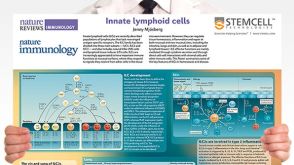 挂图Innate Lymphoid Cells Overview of innate lymphoid cells (ILCs) development, classification, plasticity and functional diversity

 沪公网安备31010102008431号