Heinonen KM et al. (FEB 2006)
Proceedings of the National Academy of Sciences of the United States of America 103 8 2776--81
Protein tyrosine phosphatase 1B negatively regulates macrophage development through CSF-1 signaling.
Protein tyrosine phosphatase 1B (PTP-1B) is a ubiquitously expressed cytosolic phosphatase with the ability to dephosphorylate JAK2 and TYK2,and thereby down-regulate cytokine receptor signaling. Furthermore,PTP-1B levels are up-regulated in certain chronic myelogenous leukemia patients,which points to a potential role for PTP-1B in myeloid development. The results presented here show that the absence of PTP-1B affects murine myelopoiesis by modifying the ratio of monocytes to granulocytes in vivo. This bias toward monocytic development is at least in part due to a decreased threshold of response to CSF-1,because the PTP-1B -/- bone marrow presents no abnormalities at the granulocyte-monocyte progenitor level but produces significantly more monocytic colonies in the presence of CSF-1. This phenomenon is not due to an increase in receptor levels but rather to enhanced phosphorylation of the activation loop tyrosine. PTP-1B -/- cells display increased inflammatory activity in vitro and in vivo through the constitutive up-regulation of activation markers as well as increased sensitivity to endotoxin. Collectively,our data indicate that PTP-1B is an important modulator of myeloid differentiation and macrophage activation in vivo and provide a demonstration of a physiological role for PTP-1B in immune regulation.
View Publication
产品号#:
03231
03434
03444
产品名:
MethoCult™ M3231
MethoCult™ GF M3434
MethoCult™ GF M3434
Verma AH et al. (APR 2016)
Mucosal immunology April 1--11
Eosinophils subvert host resistance to an intracellular pathogen by instigating non-protective IL-4 in CCR2(-/-) mice.
Eosinophils contribute to type II immune responses in helminth infections and allergic diseases; however,their influence on intracellular pathogens is less clear. We previously reported that CCR2(-/-) mice exposed to the intracellular fungal pathogen Histoplasma capsulatum exhibit dampened immunity caused by an early exaggerated interleukin (IL)-4 response. We sought to identify the cellular source promulgating IL-4 in infected mutant animals. Eosinophils were the principal instigators of non-protective IL-4 and depleting this granulocyte population improved fungal clearance in CCR2(-/-) animals. The deleterious impact of eosinophilia on mycosis was also recapitulated in transgenic animals overexpressing eosinophils. Mechanistic examination of IL-4 induction revealed that phagocytosis of H. capsulatum via the pattern recognition receptor complement receptor (CR) 3 triggered the heightened IL-4 response in murine eosinophils. This phenomenon was conserved in human eosinophils; exposure of cells to the fungal pathogen elicited a robust IL-4 response. Thus,our findings elucidate a detrimental attribute of eosinophil biology in fungal infections that could potentially trigger a collapse in host defenses by instigating type II immunity.Mucosal Immunology advance online publication,6 April 2016; doi:10.1038/mi.2016.26.
View Publication
产品号#:
19256
19256RF
产品名:
Smalls-Mantey A et al. ( 2013)
PloS one 8 9 e74858
Comparative efficiency of HIV-1-infected T cell killing by NK cells, monocytes and neutrophils.
HIV-1 infected cells are eliminated in infected individuals by a variety of cellular mechanisms,the best characterized of which are cytotoxic T cell and NK cell-mediated killing. An additional antiviral mechanism is antibody-dependent cellular cytotoxicity. Here we use primary CD4(+) T cells infected with the BaL clone of HIV-1 as target cells and autologous NK cells,monocytes,and neutrophils as effector cells,to quantify the cytotoxicity mediated by the different effectors. This was carried out in the presence or absence of HIV-1-specific antiserum to assess antibody-dependent cellular cytotoxicity. We show that at the same effector to target ratio,NK cells and monocytes mediate similar levels of both antibody-dependent and antibody-independent killing of HIV-1-infected T cells. Neutrophils mediated significant antibody-dependent killing of targets,but were less effective than monocytes or NK cells. These data have implications for acquisition and control of HIV-1 in natural infection and in the context of vaccination.
View Publication
产品号#:
19257
19257RF
19055
19055RF
19059
19059RF
产品名:
EasySep™人NK细胞富集试剂盒
RoboSep™ 人NK细胞富集试剂盒含滤芯吸头
EasySep™人单核细胞富集试剂盒
RoboSep™ 人单核细胞富集试剂盒含滤芯吸头
Tan W et al. (MAY 2006)
Journal of immunology (Baltimore,Md. : 1950) 176 10 6186--93
IL-17 receptor knockout mice have enhanced myelotoxicity and impaired hemopoietic recovery following gamma irradiation.
IL-17A is a T cell-derived proinflammatory cytokine required for microbial host defense. In vivo expression profoundly stimulates granulopoiesis. At baseline,the hemopoietic system of IL-17R knockout mice (IL-17Ra(-/-)) is,with the exception of increased splenic progenitor numbers,indistinguishable from normal control mice. However,when challenged with gamma irradiation,hemopoietic toxicity is significantly more pronounced in IL-17Ra(-/-) animals,with the gamma irradiation-associated LD(50) being reduced by 150 rad. In spleen-derived T cells,gamma irradiation induces significant murine IL-17A expression in vivo but not in vitro. After sublethal radiation injury (500 rad),the infusion of purified CD4(+) T cells enhances hemopoietic recovery. This recovery is significantly impaired in IL-17Ra(-/-) animals or after in vivo blockade of IL-17Ra in normal mice,resulting in a reduction of hemopoietic precursors by 50% and of neutrophils by 43%. Following sublethal radiation-induced myelosuppression,in vivo overexpression of murine IL-17A in normal mice substantially enhanced granulopoietic restoration in mice with a 4-fold increase in neutrophils and splenic precursors on day 8 (CFU-granulocyte-macrophage/granulocyte-erythrocyte-megakaryocyte-monocyte,CFU-high proliferative potential),as well as 2- and 3-fold increases of bone marrow precursors,respectively. This establishes IL-17A as a hemopoietic response cytokine to radiation injury in mice and an inducible mechanism that is required for recovery of granulopoiesis after radiation injury.
View Publication
产品号#:
03434
03444
产品名:
MethoCult™ GF M3434
MethoCult™ GF M3434
Fiedler K et al. (JAN 2011)
Blood 117 4 1329--39
Neutrophil development and function critically depend on Bruton tyrosine kinase in a mouse model of X-linked agammaglobulinemia.
Bruton tyrosine kinase (Btk) is essential for B cell development and function and also appears to be important for myeloid cells. The bone marrow of Btk-deficient mice shows enhanced granulopoiesis compared with that of wild-type mice. In purified granulocyte-monocyte-progenitors (GMP) from Btk-deficient mice,the development of granulocytes is favored at the expense of monocytes. However,Btk-deficient neutrophils are impaired in maturation and function. Using bone marrow chimeras,we show that this defect is cell-intrinsic to neutrophils. In GMP and neutrophils,Btk plays a role in GM-CSF- and Toll-like receptor-induced differentiation. Molecular analyses revealed that expression of the lineage-determining transcription factors C/EBPα,C/EBPβ,and PU.1,depends on Btk. In addition,expression of several granule proteins,including myeloperoxidase,neutrophilic granule protein,gelatinase and neutrophil elastase,is Btk-dependent. In the Arthus reaction,an acute inflammatory response,neutrophil migration into tissues,edema formation,and hemorrhage are significantly reduced in Btk-deficient animals. Together,our findings implicate Btk as an important regulator of neutrophilic granulocyte maturation and function in vivo.
View Publication
产品号#:
03231
产品名:
MethoCult™ M3231
Costantini C et al. (OCT 2010)
International immunology 22 10 827--38
Neutrophil activation and survival are modulated by interaction with NK cells.
It is increasingly evident that neutrophils are able to cross-talk with other leukocytes to shape ongoing inflammatory and immune responses. In this study,we analyzed whether human NK cells may influence the survival and activation of neutrophils under co-culture conditions. We report that NK cells exposed to either IL-15 or IL-18 alone strongly protect the survival of neutrophils via the release of IFNγ and granulocyte macrophage colony-stimulating factor (GM-CSF) plus IFNγ,respectively,and cause a slight up-regulation of neutrophil CD64 and CD11b expression. In comparison,NK cells exposed to both IL-15 and IL-18 show a lesser ability to increase the survival of neutrophils but can more potently up-regulate CD64 and CD11b expression,as well as induce the de novo surface expression of CD69,in neutrophils. Analysis of the events occurring in neutrophil/NK co-cultures exposed to IL-15 plus IL-18 revealed that (i) neutrophil survival is positively affected by NK-derived GM-CSF but negatively influenced by a CD18-dependent neutrophil/NK contact,(ii) NK-derived IFNγ is almost entirely responsible for the induction of CD64,(iii) both soluble factors (primarily GM-CSF) and direct cell-cell contact up-regulate CD11b and CD69 and (iv) NK-derived GM-CSF induces the expression of biologically active heparin-binding EGF-like growth factor (HB-EGF) in neutrophils. Finally,we demonstrate that NK cells can also express HB-EGF when stimulated with either IL-2 or IL-15,yet independently of endogenous GM-CSF. Altogether,our results define a novel interaction within the innate immune system whereby NK cells,by directly modulating neutrophil functions,might contribute to the pathogenesis of inflammatory diseases.
View Publication
产品号#:
19257
19257RF
19055
19055RF
产品名:
EasySep™人NK细胞富集试剂盒
RoboSep™ 人NK细胞富集试剂盒含滤芯吸头
Balasubramaniam V et al. (MAR 2010)
American journal of physiology. Lung cellular and molecular physiology 298 3 L315--23
Bone marrow-derived angiogenic cells restore lung alveolar and vascular structure after neonatal hyperoxia in infant mice.
Neonatal hyperoxia impairs vascular and alveolar growth in mice and decreases endothelial progenitor cells. To determine the role of bone marrow-derived cells in restoration of neonatal lung structure after injury,we studied a novel bone marrow myeloid progenitor cell population from Tie2-green fluorescent protein (GFP) transgenic mice (bone marrow-derived angiogenic cells; BMDAC). We hypothesized that treatment with BMDAC would restore normal lung structure in infant mice during recovery from neonatal hyperoxia. Neonatal mice (1-day-old) were exposed to 80% oxygen for 10 days. BMDACs (1 x 10(5)),embryonic endothelial progenitor cells,mouse embryonic fibroblasts (control),or saline were then injected into the pulmonary circulation. At 21 days of age,saline-treated mice had enlarged alveoli,reduced septation,and a reduction in vascular density. In contrast,mice treated with BMDAC had complete restoration of lung structure that was indistinguishable from room air controls. BMDAC comprised 12% of distal lung cells localized to pulmonary vessels or alveolar type II (AT2) cells and persist (8.8%) for 8 wk postinjection. Coculture of AT2 cells or lung endothelial cells (luEC) with BMDAC augmented AT2 and luEC cell growth in vitro. We conclude that treatment with BMDAC after neonatal hyperoxia restores lung structure in this model of bronchopulmonary dysplasia.
View Publication
Enforced expression of CUL-4A interferes with granulocytic differentiation and exit from the cell cycle.
The cullin family of proteins is involved in the ubiquitin-mediated degradation of cell cycle regulators. Relatively little is known about the function of the CUL-4A cullin,but its overexpression in breast cancer suggests CUL-4A might also regulate the cell cycle. In addition,since other cullins are required for normal development,we hypothesized that CUL-4A is involved in regulating cell cycle progression during differentiation. We observed that CUL-4A mRNA and protein levels decline 2.5-fold during the differentiation of PLB-985 myeloid cells into granulocytes. To examine the significance of this observation,we overexpressed CUL-4A in these cells and found that modest (textless 2-fold),enforced expression of CUL-4A attenuates terminal granulocytic differentiation and instead promotes proliferation. This overexpression similarly affects the differentiation of these cells into macrophages. We recently reported that nearly one half of CUL-4A+/- mice are nonviable,and in this report,we show that the viable heterozygous mice,which have reduced CUL-4A expression,have dramatically fewer erythroid and multipotential progenitors than normal controls. Together these results indicate that appropriate CUL-4A expression is essential for embryonic development and for cell cycle regulation during granulocytic differentiation and suggest this gene plays a broader role in hematopoiesis. Since enforced CUL-4A expression does not alter the cell cycle distribution of uninduced cells but dramatically increases the proportion of induced cells that remains in S-phase and reduces the proportion that accumulates in G0/G1,our results show that this CUL-4A regulatory function is interconnected with differentiation,a novel finding for mammalian cullins.
View Publication


 EasySep™小鼠TIL(CD45)正选试剂盒




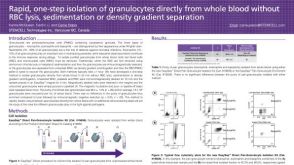 科学海报Rapid, one-step isolation of granulocytes directly from whole blood without RBC lysis, sedimentation or density spearation
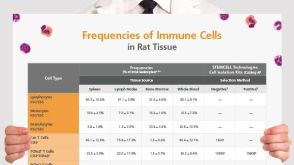 挂图Frequencies of Immune Cells in Rat Tissue Lists the estimated frequencies of more than 15 immune cell types in Sprague Dawley rats

 沪公网安备31010102008431号