Pecci A et al. (NOV 2005)
Human molecular genetics 14 21 3169--78
Pathogenetic mechanisms of hematological abnormalities of patients with MYH9 mutations.
Mutations of MYH9,the gene for non-muscle myosin heavy chain IIA (NMMHC-IIA),cause a complex clinical phenotype characterized by macrothrombocytopenia and granulocyte inclusion bodies,often associated with deafness,cataracts and/or glomerulonephritis. The pathogenetic mechanisms of these defects are either completely unknown or controversial. In particular,it is a matter of debate whether haploinsufficiency or a dominant-negative effect of mutant allele is responsible for hematological abnormalities. We investigated 11 patients from six pedigrees with different MYH9 mutations. We evaluated NMMHC-IIA levels in platelets and granulocytes isolated from peripheral blood and in megakaryocytes (Mks) cultured from circulating progenitors. NMMHC-IIA distribution in Mks and granulocytes was also assessed. We demonstrated that all the investigated patients had a 50% reduction of NMMHC-IIA expression in platelets and that a similar defect was present also in Mks. In subjects with R1933X and E1945X mutations,the whole NMMHC-IIA of platelets and Mks was wild-type. No NMMHC-IIA inclusions were observed at any time of Mk maturation. In granulocytes,the extent of NMMHC-IIA reduction in patients with respect to control cells was significantly greater than that measured in platelets and Mks,and we found that wild-type protein was sequestered within most of the NMMHC-IIA inclusions. Altogether these results indicate that haploinsufficiency of NMMHC-IIA in megakaryocytic lineage is the mechanism of macrothrombocytopenia consequent to MYH9 mutations,whereas in granulocytes a dominant-negative effect of mutant allele is involved in the formation of inclusion bodies. The finding that the same mutations act through different mechanisms in different cells is surprising and requires further investigation.
View Publication
Yang K et al. (JAN 2018)
Biosensors & bioelectronics 99 259--267
Mkit: A cell migration assay based on microfluidic device and smartphone.
Mobile sensing based on the integration of microfluidic device and smartphone,so-called MS2 technology,has enabled many applications over recent years,and continues to stimulate growing interest in both research communities and industries. In particular,it has been envisioned that MS2 technology can be developed for various cell functional assays to enable basic research and clinical applications. Toward this direction,in this paper,we describe the development of a MS2-based cell functional assay for testing cell migration (the Mkit). The system is constructed as an integrated test kit,which includes microfluidic chips,a smartphone-based imaging platform,the phone apps for image capturing and data analysis,and a set of reagent and accessories for performing the cell migration assay. We demonstrated that the Mkit can effectively measure purified neutrophil and cancer cell chemotaxis. Furthermore,neutrophil chemotaxis can be tested from a drop of whole blood using the Mkit with red blood cell (RBC) lysis. The effects of chemoattractant dose and gradient profile on neutrophil chemotaxis were also tested using the Mkit. In addition to research applications,we demonstrated the effective use of the Mkit for on-site test at the hospital and for testing clinical samples from chronic obstructive pulmonary disease patient. Thus,this developed Mkit provides an easy and integrated experimental platform for cell migration related research and potential medical diagnostic applications.
View Publication
产品号#:
19666
100-0404
产品名:
EasySep™ Direct人中性粒细胞分选试剂盒
RoboSep™ 人中性粒细胞分选试剂盒
Verma AH et al. (APR 2016)
Mucosal immunology April 1--11
Eosinophils subvert host resistance to an intracellular pathogen by instigating non-protective IL-4 in CCR2(-/-) mice.
Eosinophils contribute to type II immune responses in helminth infections and allergic diseases; however,their influence on intracellular pathogens is less clear. We previously reported that CCR2(-/-) mice exposed to the intracellular fungal pathogen Histoplasma capsulatum exhibit dampened immunity caused by an early exaggerated interleukin (IL)-4 response. We sought to identify the cellular source promulgating IL-4 in infected mutant animals. Eosinophils were the principal instigators of non-protective IL-4 and depleting this granulocyte population improved fungal clearance in CCR2(-/-) animals. The deleterious impact of eosinophilia on mycosis was also recapitulated in transgenic animals overexpressing eosinophils. Mechanistic examination of IL-4 induction revealed that phagocytosis of H. capsulatum via the pattern recognition receptor complement receptor (CR) 3 triggered the heightened IL-4 response in murine eosinophils. This phenomenon was conserved in human eosinophils; exposure of cells to the fungal pathogen elicited a robust IL-4 response. Thus,our findings elucidate a detrimental attribute of eosinophil biology in fungal infections that could potentially trigger a collapse in host defenses by instigating type II immunity.Mucosal Immunology advance online publication,6 April 2016; doi:10.1038/mi.2016.26.
View Publication
Imhof BA et al. (AUG 2016)
Proceedings of the National Academy of Sciences of the United States of America
CCN1/CYR61-mediated meticulous patrolling by Ly6Clow monocytes fuels vascular inflammation.
Inflammation is characterized by the recruitment of leukocytes from the bloodstream. The rapid arrival of neutrophils is followed by a wave of inflammatory lymphocyte antigen 6 complex (Ly6C)-positive monocytes. In contrast Ly6C(low) monocytes survey the endothelium in the steady state,but their role in inflammation is still unclear. Here,using confocal intravital microscopy,we show that upon Toll-like receptor 7/8 (TLR7/8)-mediated inflammation of mesenteric veins,platelet activation drives the rapid mobilization of Ly6C(low) monocytes to the luminal side of the endothelium. After repeatedly interacting with platelets,Ly6C(low) monocytes commit to a meticulous patrolling of the endothelial wall and orchestrate the subsequent arrival and extravasation of neutrophils through the production of proinflammatory cytokines and chemokines. At a molecular level,we show that cysteine-rich protein 61 (CYR61)/CYR61 connective tissue growth factor nephroblastoma overexpressed 1 (CCN1) protein is released by activated platelets and enables the recruitment of Ly6C(low) monocytes upon vascular inflammation. In addition endothelium-bound CCN1 sustains the adequate patrolling of Ly6C(low) monocytes both in the steady state and under inflammatory conditions. Blocking CCN1 or platelets with specific antibodies impaired the early arrival of Ly6C(low) monocytes and abolished the recruitment of neutrophils. These results refine the leukocyte recruitment cascade model by introducing endothelium-bound CCN1 as an inflammation mediator and by demonstrating a role for platelets and patrolling Ly6C(low) monocytes in acute vascular inflammation.
View Publication
产品号#:
19762
19762RF
产品名:
EasySep™小鼠中性粒细胞富集试剂盒
RoboSep™ 小鼠中性粒细胞富集试剂盒含滤芯吸头
Grzywacz B et al. (MAR 2011)
Blood 117 13 3548--58
Natural killer-cell differentiation by myeloid progenitors.
Because lymphoid progenitors can give rise to natural killer (NK) cells,NK ontogeny has been considered to be exclusively lymphoid. Here,we show that rare human CD34(+) hematopoietic progenitors develop into NK cells in vitro in the presence of cytokines (interleukin-7,interleukin-15,stem cell factor,and fms-like tyrosine kinase-3 ligand). Adding hydrocortisone and stromal cells greatly increases the frequency of progenitor cells that give rise to NK cells through the recruitment of myeloid precursors,including common myeloid progenitors and granulocytic-monocytic precursors to the NK-cell lineage. WNT signaling was involved in this effect. Cells at more advanced stages of myeloid differentiation (with increasing expression of CD13 and macrophage colony-stimulating factor receptor [M-CSFR]) could also differentiate into NK cells in the presence of cytokines,stroma,and hydrocortisone. NK cells derived from myeloid precursors (CD56(-)CD117(+)M-CSFR(+)) showed more expression of killer immunoglobulin-like receptors,a fraction of killer immunoglobulin-like receptor-positive-expressing cells that lacked NKG2A,a higher cytotoxicity compared with CD56(-)CD117(+)M-CSFR(-) precursor-derived NK cells and thus resemble the CD56(dim) subset of NK cells. Collectively,these studies show that NK cells can be derived from the myeloid lineage.
View Publication
产品号#:
04435
04445
84435
84445
产品名:
MethoCult™ H4435 Enriched
MethoCult™ H4435 Enriched
Tan W et al. (MAY 2006)
Journal of immunology (Baltimore,Md. : 1950) 176 10 6186--93
IL-17 receptor knockout mice have enhanced myelotoxicity and impaired hemopoietic recovery following gamma irradiation.
IL-17A is a T cell-derived proinflammatory cytokine required for microbial host defense. In vivo expression profoundly stimulates granulopoiesis. At baseline,the hemopoietic system of IL-17R knockout mice (IL-17Ra(-/-)) is,with the exception of increased splenic progenitor numbers,indistinguishable from normal control mice. However,when challenged with gamma irradiation,hemopoietic toxicity is significantly more pronounced in IL-17Ra(-/-) animals,with the gamma irradiation-associated LD(50) being reduced by 150 rad. In spleen-derived T cells,gamma irradiation induces significant murine IL-17A expression in vivo but not in vitro. After sublethal radiation injury (500 rad),the infusion of purified CD4(+) T cells enhances hemopoietic recovery. This recovery is significantly impaired in IL-17Ra(-/-) animals or after in vivo blockade of IL-17Ra in normal mice,resulting in a reduction of hemopoietic precursors by 50% and of neutrophils by 43%. Following sublethal radiation-induced myelosuppression,in vivo overexpression of murine IL-17A in normal mice substantially enhanced granulopoietic restoration in mice with a 4-fold increase in neutrophils and splenic precursors on day 8 (CFU-granulocyte-macrophage/granulocyte-erythrocyte-megakaryocyte-monocyte,CFU-high proliferative potential),as well as 2- and 3-fold increases of bone marrow precursors,respectively. This establishes IL-17A as a hemopoietic response cytokine to radiation injury in mice and an inducible mechanism that is required for recovery of granulopoiesis after radiation injury.
View Publication
产品号#:
03434
03444
产品名:
MethoCult™ GF M3434
MethoCult™ GF M3434
Qyang Y et al. (MAY 2004)
Biochemistry 43 18 5352--9
Myeloproliferative disease in mice with reduced presenilin gene dosage: effect of gamma-secretase blockage.
Mammalian presenilins (PS) consist of two highly homologous proteins,PS1 and PS2. Because of their indispensable activity in the gamma-secretase cleavage of amyloid precursor protein to generate Abeta peptides,inhibition of PS gamma-secretase activity is considered a potential therapy for Abeta blockage and Alzheimer's disease intervention. However,a variety of other substrates are also subject to PS-dependent processing,and it is thus imperative to understand the consequences of PS inactivation in vivo. Here we report a pivotal role of PS in hematopoiesis. Mice heterozygous for PS1 and homozygous for PS2 (PS1(+/)(-)PS2(-)(/)(-)) developed splenomegaly with severe granulocyte infiltration. This was preceded by an overrepresentation of granulocytic cells in the bone marrow and a greatly increased multipotent granulocyte-monocyte progenitor in the spleen. In contrast,hematopoietic stem cells and T- and B-lymphocytes were not affected. Importantly,treatment of wild-type splenocytes with a gamma-secretase inhibitor directly promoted the granulocyte-macrophage colony-forming unit (GM-CFU). These results establish a critical role of PS in myelopoiesis. Our finding that this activity can be directly modulated by its gamma-secretase activity has important safety implications concerning these inhibitors.
View Publication
产品号#:
03234
产品名:
MethoCult™ M3234
Levesque J-P et al. (JUL 2004)
Blood 104 1 65--72
Characterization of hematopoietic progenitor mobilization in protease-deficient mice.
Recent evidence suggests that protease release by neutrophils in the bone marrow may contribute to hematopoietic progenitor cell (HPC) mobilization. Matrix metalloproteinase-9 (MMP-9),neutrophil elastase (NE),and cathepsin G (CG) accumulate in the bone marrow during granulocyte colony-stimulating factor (G-CSF) treatment,where they are thought to degrade key substrates including vascular cell adhesion molecule-1 (VCAM-1) and CXCL12. To test this hypothesis,HPC mobilization was characterized in transgenic mice deficient in one or more hematopoietic proteases. Surprisingly,HPC mobilization by G-CSF was normal in MMP-9-deficient mice,NE x CG-deficient mice,or mice lacking dipeptidyl peptidase I,an enzyme required for the functional activation of many hematopoietic serine proteases. Moreover,combined inhibition of neutrophil serine proteases and metalloproteinases had no significant effect on HPC mobilization. VCAM-1 expression on bone marrow stromal cells decreased during G-CSF treatment of wild-type mice but not NE x CG-deficient mice,indicating that VCAM-1 cleavage is not required for efficient HPC mobilization. G-CSF induced a significant decrease in CXCL12 alpha protein expression in the bone marrow of Ne x CG-deficient mice,indicating that these proteases are not required to down-regulate CXCL12 expression. Collectively,these data suggest a complex model in which both protease-dependent and -independent pathways may contribute to HPC mobilization.
View Publication
产品号#:
03434
03444
产品名:
MethoCult™ GF M3434
MethoCult™ GF M3434
Sommer G et al. (MAY 2003)
Proceedings of the National Academy of Sciences of the United States of America 100 11 6706--11
Gastrointestinal stromal tumors in a mouse model by targeted mutation of the Kit receptor tyrosine kinase.
Oncogenic Kit mutations are found in somatic gastrointestinal (GI) stromal tumors (GISTs) and mastocytosis. A mouse model for the study of constitutive activation of Kit in oncogenesis has been produced by a knock-in strategy introducing a Kit exon 11-activating mutation into the mouse genome based on a mutation found in a case of human familial GIST syndrome. Heterozygous mutant KitV558Delta/+ mice develop symptoms of disease and eventually die from pathology in the GI tract. Patchy hyperplasia of Kit-positive cells is evident within the myenteric plexus of the entire GI tract. Neoplastic lesions indistinguishable from human GISTs were observed in the cecum of the mutant mice with high penetrance. In addition,mast cell numbers in the dorsal skin were increased. Therefore KitV558Delta/+ mice reproduce human familial GISTs,and they may be used as a model for the study of the role and mechanisms of Kit in neoplasia. Importantly,these results demonstrate that constitutive Kit signaling is critical and sufficient for induction of GIST and hyperplasia of interstitial cells of Cajal.
View Publication
产品号#:
09600
09650
产品名:
StemSpan™ SFEM
StemSpan™ SFEM
El Ouriaghli F et al. (MAR 2003)
Blood 101 5 1752--8
Neutrophil elastase enzymatically antagonizes the in vitro action of G-CSF: implications for the regulation of granulopoiesis.
There is evidence that neutrophil production is a balance between the proliferative action of granulocyte-colony-stimulating factor (G-CSF) and a negative feedback from mature neutrophils (the chalone). Two neutrophil serine proteases have been implicated in granulopoietic regulation: pro-proteinase 3 inhibits granulocyte macrophage-colony-forming unit (CFU-GM) growth,and elastase mutations cause cyclic and congenital neutropenia. We further studied the action of the neutrophil serine proteases (proteinase 3,elastase,azurocidin,and cathepsin G) on granulopoiesis in vitro. Elastase inhibited CFU-GM in methylcellulose culture. In serum-free suspension cultures of CD34+ cells,elastase completely abrogated the proliferation induced by G-CSF but not that of GM-CSF or stem cell factor (SCF). The blocking effect of elastase was prevented by inhibition of its enzymatic activity with phenylmethylsulfonyl fluoride (PMSF) or heat treatment. When exposed to enzymatically active elastase,G-CSF,but not GM-CSF or SCF,was rapidly cleaved and rendered inactive. These results support a role for neutrophil elastase in providing negative feedback to granulopoiesis by direct antagonism of G-CSF.
View Publication


 EasySep™小鼠TIL(CD45)正选试剂盒




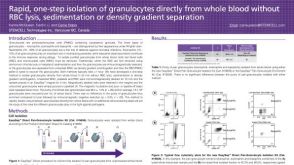 科学海报Rapid, one-step isolation of granulocytes directly from whole blood without RBC lysis, sedimentation or density spearation
 沪公网安备31010102008431号