Imhof BA et al. (AUG 2016)
Proceedings of the National Academy of Sciences of the United States of America
CCN1/CYR61-mediated meticulous patrolling by Ly6Clow monocytes fuels vascular inflammation.
Inflammation is characterized by the recruitment of leukocytes from the bloodstream. The rapid arrival of neutrophils is followed by a wave of inflammatory lymphocyte antigen 6 complex (Ly6C)-positive monocytes. In contrast Ly6C(low) monocytes survey the endothelium in the steady state,but their role in inflammation is still unclear. Here,using confocal intravital microscopy,we show that upon Toll-like receptor 7/8 (TLR7/8)-mediated inflammation of mesenteric veins,platelet activation drives the rapid mobilization of Ly6C(low) monocytes to the luminal side of the endothelium. After repeatedly interacting with platelets,Ly6C(low) monocytes commit to a meticulous patrolling of the endothelial wall and orchestrate the subsequent arrival and extravasation of neutrophils through the production of proinflammatory cytokines and chemokines. At a molecular level,we show that cysteine-rich protein 61 (CYR61)/CYR61 connective tissue growth factor nephroblastoma overexpressed 1 (CCN1) protein is released by activated platelets and enables the recruitment of Ly6C(low) monocytes upon vascular inflammation. In addition endothelium-bound CCN1 sustains the adequate patrolling of Ly6C(low) monocytes both in the steady state and under inflammatory conditions. Blocking CCN1 or platelets with specific antibodies impaired the early arrival of Ly6C(low) monocytes and abolished the recruitment of neutrophils. These results refine the leukocyte recruitment cascade model by introducing endothelium-bound CCN1 as an inflammation mediator and by demonstrating a role for platelets and patrolling Ly6C(low) monocytes in acute vascular inflammation.
View Publication
产品号#:
19762
19762RF
产品名:
EasySep™小鼠中性粒细胞富集试剂盒
RoboSep™ 小鼠中性粒细胞富集试剂盒含滤芯吸头
Li B et al. (MAR 2003)
Blood 101 5 1769--76
Enforced expression of CUL-4A interferes with granulocytic differentiation and exit from the cell cycle.
The cullin family of proteins is involved in the ubiquitin-mediated degradation of cell cycle regulators. Relatively little is known about the function of the CUL-4A cullin,but its overexpression in breast cancer suggests CUL-4A might also regulate the cell cycle. In addition,since other cullins are required for normal development,we hypothesized that CUL-4A is involved in regulating cell cycle progression during differentiation. We observed that CUL-4A mRNA and protein levels decline 2.5-fold during the differentiation of PLB-985 myeloid cells into granulocytes. To examine the significance of this observation,we overexpressed CUL-4A in these cells and found that modest (textless 2-fold),enforced expression of CUL-4A attenuates terminal granulocytic differentiation and instead promotes proliferation. This overexpression similarly affects the differentiation of these cells into macrophages. We recently reported that nearly one half of CUL-4A+/- mice are nonviable,and in this report,we show that the viable heterozygous mice,which have reduced CUL-4A expression,have dramatically fewer erythroid and multipotential progenitors than normal controls. Together these results indicate that appropriate CUL-4A expression is essential for embryonic development and for cell cycle regulation during granulocytic differentiation and suggest this gene plays a broader role in hematopoiesis. Since enforced CUL-4A expression does not alter the cell cycle distribution of uninduced cells but dramatically increases the proportion of induced cells that remains in S-phase and reduces the proportion that accumulates in G0/G1,our results show that this CUL-4A regulatory function is interconnected with differentiation,a novel finding for mammalian cullins.
View Publication
产品号#:
03134
产品名:
MethoCult™ M3134
Tan W et al. (MAY 2006)
Journal of immunology (Baltimore,Md. : 1950) 176 10 6186--93
IL-17 receptor knockout mice have enhanced myelotoxicity and impaired hemopoietic recovery following gamma irradiation.
IL-17A is a T cell-derived proinflammatory cytokine required for microbial host defense. In vivo expression profoundly stimulates granulopoiesis. At baseline,the hemopoietic system of IL-17R knockout mice (IL-17Ra(-/-)) is,with the exception of increased splenic progenitor numbers,indistinguishable from normal control mice. However,when challenged with gamma irradiation,hemopoietic toxicity is significantly more pronounced in IL-17Ra(-/-) animals,with the gamma irradiation-associated LD(50) being reduced by 150 rad. In spleen-derived T cells,gamma irradiation induces significant murine IL-17A expression in vivo but not in vitro. After sublethal radiation injury (500 rad),the infusion of purified CD4(+) T cells enhances hemopoietic recovery. This recovery is significantly impaired in IL-17Ra(-/-) animals or after in vivo blockade of IL-17Ra in normal mice,resulting in a reduction of hemopoietic precursors by 50% and of neutrophils by 43%. Following sublethal radiation-induced myelosuppression,in vivo overexpression of murine IL-17A in normal mice substantially enhanced granulopoietic restoration in mice with a 4-fold increase in neutrophils and splenic precursors on day 8 (CFU-granulocyte-macrophage/granulocyte-erythrocyte-megakaryocyte-monocyte,CFU-high proliferative potential),as well as 2- and 3-fold increases of bone marrow precursors,respectively. This establishes IL-17A as a hemopoietic response cytokine to radiation injury in mice and an inducible mechanism that is required for recovery of granulopoiesis after radiation injury.
View Publication
产品号#:
03434
03444
产品名:
MethoCult™ GF M3434
MethoCult™ GF M3434
Yang K et al. (JAN 2018)
Biosensors & bioelectronics 99 259--267
Mkit: A cell migration assay based on microfluidic device and smartphone.
Mobile sensing based on the integration of microfluidic device and smartphone,so-called MS2 technology,has enabled many applications over recent years,and continues to stimulate growing interest in both research communities and industries. In particular,it has been envisioned that MS2 technology can be developed for various cell functional assays to enable basic research and clinical applications. Toward this direction,in this paper,we describe the development of a MS2-based cell functional assay for testing cell migration (the Mkit). The system is constructed as an integrated test kit,which includes microfluidic chips,a smartphone-based imaging platform,the phone apps for image capturing and data analysis,and a set of reagent and accessories for performing the cell migration assay. We demonstrated that the Mkit can effectively measure purified neutrophil and cancer cell chemotaxis. Furthermore,neutrophil chemotaxis can be tested from a drop of whole blood using the Mkit with red blood cell (RBC) lysis. The effects of chemoattractant dose and gradient profile on neutrophil chemotaxis were also tested using the Mkit. In addition to research applications,we demonstrated the effective use of the Mkit for on-site test at the hospital and for testing clinical samples from chronic obstructive pulmonary disease patient. Thus,this developed Mkit provides an easy and integrated experimental platform for cell migration related research and potential medical diagnostic applications.
View Publication
产品号#:
19666
100-0404
产品名:
EasySep™ Direct人中性粒细胞分选试剂盒
RoboSep™ 人中性粒细胞分选试剂盒
Verma AH et al. (APR 2016)
Mucosal immunology April 1--11
Eosinophils subvert host resistance to an intracellular pathogen by instigating non-protective IL-4 in CCR2(-/-) mice.
Eosinophils contribute to type II immune responses in helminth infections and allergic diseases; however,their influence on intracellular pathogens is less clear. We previously reported that CCR2(-/-) mice exposed to the intracellular fungal pathogen Histoplasma capsulatum exhibit dampened immunity caused by an early exaggerated interleukin (IL)-4 response. We sought to identify the cellular source promulgating IL-4 in infected mutant animals. Eosinophils were the principal instigators of non-protective IL-4 and depleting this granulocyte population improved fungal clearance in CCR2(-/-) animals. The deleterious impact of eosinophilia on mycosis was also recapitulated in transgenic animals overexpressing eosinophils. Mechanistic examination of IL-4 induction revealed that phagocytosis of H. capsulatum via the pattern recognition receptor complement receptor (CR) 3 triggered the heightened IL-4 response in murine eosinophils. This phenomenon was conserved in human eosinophils; exposure of cells to the fungal pathogen elicited a robust IL-4 response. Thus,our findings elucidate a detrimental attribute of eosinophil biology in fungal infections that could potentially trigger a collapse in host defenses by instigating type II immunity.Mucosal Immunology advance online publication,6 April 2016; doi:10.1038/mi.2016.26.
View Publication
产品号#:
19256
19256RF
产品名:
Surdziel E et al. (APR 2011)
Blood 117 16 4338--48
Enforced expression of miR-125b affects myelopoiesis by targeting multiple signaling pathways.
MicroRNAs (miRNAs) are small,noncoding RNAs that regulate gene expression by sequence-specific targeting of multiple mRNAs. Although lineage-,maturation-,and disease-specific miRNA expression has been described,miRNA-dependent phenotypes and miRNA-regulated signaling in hematopoietic cells are largely unknown. Combining functional genomics,biochemical analysis,and unbiased and hypothesis-driven miRNA target prediction,we show that lentivirally over-expressed miR-125b blocks G-CSF-induced granulocytic differentiation and enables G-CSF-dependent proliferation of murine 32D cells. In primary lineage-negative cells,miR-125b over-expression enhances colony-formation in vitro and promotes myelopoiesis in mouse bone marrow chimeras. We identified Stat3 and confirmed Bak1 as miR-125b target genes with approximately 30% and 50% reduction in protein expression,respectively. However,gene-specific RNAi reveals that this reduction,alone and in combination,is not sufficient to block G-CSF-dependent differentiation. STAT3 protein expression,DNA-binding,and transcriptional activity but not induction of tyrosine-phosphorylation and nuclear translocation are reduced upon enforced miR-125b expression,indicating miR-125b-mediated reduction of one or more STAT3 cofactors. Indeed,we identified c-Jun and Jund as potential miR-125b targets and demonstrated reduced protein expression in 32D/miR-125b cells. Interestingly,gene-specific silencing of JUND but not c-JUN partially mimics the miR-125b over-expression phenotype. These data demonstrate coordinated regulation of several signaling pathways by miR-125b linked to distinct phenotypes in myeloid cells.
View Publication
产品号#:
03234
03434
03444
09600
09650
产品名:
MethoCult™ M3234
MethoCult™ GF M3434
MethoCult™ GF M3434
StemSpan™ SFEM
StemSpan™ SFEM
Grzywacz B et al. (MAR 2011)
Blood 117 13 3548--58
Natural killer-cell differentiation by myeloid progenitors.
Because lymphoid progenitors can give rise to natural killer (NK) cells,NK ontogeny has been considered to be exclusively lymphoid. Here,we show that rare human CD34(+) hematopoietic progenitors develop into NK cells in vitro in the presence of cytokines (interleukin-7,interleukin-15,stem cell factor,and fms-like tyrosine kinase-3 ligand). Adding hydrocortisone and stromal cells greatly increases the frequency of progenitor cells that give rise to NK cells through the recruitment of myeloid precursors,including common myeloid progenitors and granulocytic-monocytic precursors to the NK-cell lineage. WNT signaling was involved in this effect. Cells at more advanced stages of myeloid differentiation (with increasing expression of CD13 and macrophage colony-stimulating factor receptor [M-CSFR]) could also differentiate into NK cells in the presence of cytokines,stroma,and hydrocortisone. NK cells derived from myeloid precursors (CD56(-)CD117(+)M-CSFR(+)) showed more expression of killer immunoglobulin-like receptors,a fraction of killer immunoglobulin-like receptor-positive-expressing cells that lacked NKG2A,a higher cytotoxicity compared with CD56(-)CD117(+)M-CSFR(-) precursor-derived NK cells and thus resemble the CD56(dim) subset of NK cells. Collectively,these studies show that NK cells can be derived from the myeloid lineage.
View Publication


 EasySep™小鼠TIL(CD45)正选试剂盒




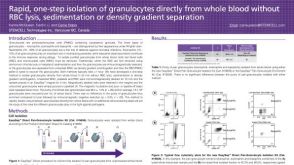 科学海报Rapid, one-step isolation of granulocytes directly from whole blood without RBC lysis, sedimentation or density spearation
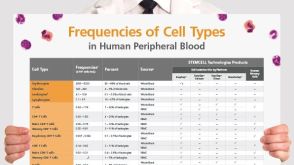 挂图血液相关来源中人细胞类型的比例 List of the frequencies of over 35 cell types in normal human blood-related sources.

 沪公网安备31010102008431号