Harry RA et al. (NOV 2010)
Annals of the rheumatic diseases 69 11 2042--50
Generation and characterisation of therapeutic tolerogenic dendritic cells for rheumatoid arthritis.
OBJECTIVES: Tolerogenic dendritic cells (tolDCs) constitute a promising experimental treatment for targeting autoreactive T cells in autoimmune diseases,including rheumatoid arthritis (RA). The authors' goal is to bring tolDC therapy for RA to the clinic. Here the authors address key translational issues related to the manufacturing of tolDCs from RA patients with current good manufacturing practice (cGMP)-compliant reagents,the stability of tolDCs,and the selection of suitable quality control markers. METHODS: Human monocyte-derived tolDCs were established from RA patients and healthy controls (HCs) using the immunosuppressive drugs dexamethasone and vitamin D₃,and the cGMP-grade immunomodulator,monophosphoryl lipid A,in the cGMP-compliant medium,CellGroDC. The functionality of tolDCs and tolDC-modulated autologous CD4 T cells was determined by flow cytometry,[³H]thymidine incorporation and ELISA. RESULTS: Clinical-grade tolDCs established from patients with RA exhibit a typical tolerogenic phenotype of reduced costimulatory molecules,low production of proinflammatory cytokines and impaired stimulation of autologous antigen-specific T cells,comparable to HC tolDCs. Toll-like receptor 2 (TLR-2) was highly expressed by tolDCs but not mature DCs. Furthermore,tolDCs suppressed mature DC-induced T cell proliferation,interferon γ and interleukin 17 production,and rendered T cells hyporesponsive to further stimulation. Importantly,tolDCs were phenotypically stable in the absence of immunosuppressive drugs and were refractory to further challenge with proinflammatory mediators. CONCLUSIONS: tolDCs established from patients with RA are comparable to those derived from healthy donors. TLR-2 was identified as an ideal marker for quality control of tolDCs. Potently tolerogenic and highly stable,these tolDCs are a promising cellular therapeutic for tailored immunomodulation in the treatment of RA.
View Publication
Diversification of human plasmacytoid predendritic cells in response to a single stimulus.
Innate immune cells adjust to microbial and inflammatory stimuli through a process termed environmental plasticity,which links a given individual stimulus to a unique activated state. Here,we report that activation of human plasmacytoid predendritic cells (pDCs) with a single microbial or cytokine stimulus triggers cell diversification into three stable subpopulations (P1-P3). P1-pDCs (PD-L1+CD80-) displayed a plasmacytoid morphology and specialization for type I interferon production. P3-pDCs (PD-L1-CD80+) adopted a dendritic morphology and adaptive immune functions. P2-pDCs (PD-L1+CD80+) displayed both innate and adaptive functions. Each subpopulation expressed a specific coding- and long-noncoding-RNA signature and was stable after secondary stimulation. P1-pDCs were detected in samples from patients with lupus or psoriasis. pDC diversification was independent of cell divisions or preexisting heterogeneity within steady-state pDCs but was controlled by a TNF autocrine and/or paracrine communication loop. Our findings reveal a novel mechanism for diversity and division of labor in innate immune cells.
View Publication
产品号#:
19062
19062RF
19251
19251RF
产品名:
EasySep™人浆细胞样DC富集试剂盒
RoboSep™ 人浆细胞样DC富集试剂盒含滤芯吸头
EasySep™人Pan-DC预富集试剂盒
RoboSep™ 人Pan-DC预富集试剂盒含滤芯吸头
Gill MA et al. (SEP 2017)
The Journal of allergy and clinical immunology
Enhanced plasmacytoid dendritic cell antiviral responses after omalizumab.
BACKGROUND Atopy and viral respiratory tract infections synergistically promote asthma exacerbations. IgE cross-linking inhibits critical virus-induced IFN-α responses of plasmacytoid dendritic cells (pDCs),which can be deficient in patients with allergic asthma. OBJECTIVE We sought to determine whether reducing IgE levels in vivo with omalizumab treatment increases pDC antiviral IFN-α responses in inner-city children with asthma. METHODS PBMCs and pDCs isolated from children with exacerbation-prone asthma before and during omalizumab treatment were stimulated ex vivo with rhinovirus and influenza in the presence or absence of IgE cross-linking. IFN-α levels were measured in supernatants,and mRNA expression of IFN-α pathway genes was determined by using quantitative RT-PCR (qRT-PCR) in cell pellets. FcεRIα protein levels and mRNA expression were measured in unstimulated cells by using flow cytometry and qRT-PCR,respectively. Changes in these outcomes and associations with clinical outcomes were analyzed,and statistical modeling was used to identify risk factors for asthma exacerbations. RESULTS Omalizumab treatment increased rhinovirus- and influenza-induced PBMC and rhinovirus-induced pDC IFN-α responses in the presence of IgE cross-linking and reduced pDC surface FcεRIα expression. Omalizumab-induced reductions in pDC FcεRIα levels were significantly associated with a lower asthma exacerbation rate during the outcome period and correlated with increases in PBMC IFN-α responses. PBMC FcεRIα mRNA expression measured on study entry significantly improved an existing model of exacerbation prediction. CONCLUSIONS These findings indicate that omalizumab treatment augments pDC IFN-α responses and attenuates pDC FcεRIα protein expression and provide evidence that these effects are related. These results support a potential mechanism underlying clinical observations that allergic sensitization is associated with increased susceptibility to virus-induced asthma exacerbations.
View Publication
Role of innate lymphoid cells and dendritic cells in intradermal immunization of the enterovirus antigen.
Enterovirus type 71 (EV71) and coxsackievirus A 16 (CA16) are the major pathogens of human hand,foot,and mouth disease (HFMD). In our previous study,intramuscular immunization with the inactivated EV71 vaccine elicited effective immunity,while immunization with the inactivated CA16 vaccine did not. In this report,we focused on innate immune responses elicited by inactivated EV71 and CA16 antigens administered intradermally or intramuscularly. The distributions of the EV71 and CA16 antigens administered intradermally or intramuscularly were not obviously different,but the antigens were detected for a shorter period of time when administered intradermally. The expression levels of NF-kappaB pathway signaling molecules,which were identified as being capable of activating DCs,ILCs,and T cells,were higher in the intradermal group than in the intramuscular group. Antibodies for the EV71 and CA16 antigens colocalized with ILCs and DCs in skin and muscle tissues under fluorescence microscopy. Interestingly,ILC colocalization decreased over time,while DC colocalization increased over time. ELISpot analysis showed that coordination between DCs and ILCs contributed to successful adaptive immunity against vaccine antigens in the skin. EV71 and/or CA16 antigen immunization via the intradermal route was more capable of significantly increasing neutralizing antibody titers and activating specific T cell responses than immunization via the intramuscular route. Furthermore,neonatal mice born to mothers immunized with the EV71 and CA16 antigens were 100{\%} protected against wild-type EV71 or CA16 viral challenge. Together,our results provide new insights into the development of vaccines for HFMD.
View Publication
Machmach K et al. (APR 2012)
Journal of virology 86 8 4245--52
Plasmacytoid dendritic cells reduce HIV production in elite controllers.
HIV elite controllers (EC) are a rare group of HIV-infected patients who are able to maintain undetectable viral loads during a long period of time in the absence of antiretroviral treatment. Adaptive immunity and host genetic factors,although implicated,do not entirely explain this phenomenon. On the other hand,plasmacytoid dendritic cells (pDCs) are the principal type I interferon (IFN) producers in response to viral infection,and it is unknown whether pDCs are involved in the control of HIV infection in EC. In our study,we analyzed peripheral pDC levels and IFN-α production by peripheral blood mononuclear cells (PBMCs) in EC compared to other groups of HIV-infected patients,the ability of pDCs to reduce HIV production in vitro,and the mechanisms potentially involved. We showed preserved pDC counts and IFN-α production in EC. We also observed a higher capacity of pDCs from EC to reduce HIV production and to induce T cell apoptosis,whereas pDCs from viremic patients barely responded without previous Toll-like receptor 9 (TLR-9) stimulus. The preserved functionality of pDCs from EC to reduce viral production may be one of the mechanisms involved in the control of HIV viremia in these subjects. These results demonstrate the importance of innate immunity in HIV pathogenesis,and an understanding of pDC mechanisms would be helpful for the design of new therapies.
View Publication
产品号#:
15022
15062
19062
19062RF
17977
17977RF
产品名:
RosetteSep™人CD4+ T细胞富集抗体混合物
RosetteSep™人CD4+ T细胞富集抗体混合物
EasySep™人浆细胞样DC富集试剂盒
RoboSep™ 人浆细胞样DC富集试剂盒含滤芯吸头
EasySep™人浆细胞样DC分选试剂盒
RoboSep™ 人浆细胞样DC分选试剂盒
Kovats S et al. (NOV 2016)
Clinical and experimental immunology 186 2 214--226
West Nile virus-infected human dendritic cells fail to fully activate invariant natural killer T cells.
West Nile virus (WNV) infection is a mosquito-borne zoonosis with increasing prevalence in the United States. WNV infection begins in the skin,and the virus replicates initially in keratinocytes and dendritic cells (DCs). In the skin and cutaneous lymph nodes,infected DCs are likely to interact with invariant natural killer T cells (iNKTs). Bidirectional interactions between DCs and iNKTs amplify the innate immune response to viral infections,thus controlling viral load and regulating adaptive immunity. iNKTs are stimulated by CD1d-bound lipid antigens or activated indirectly by inflammatory cytokines. We exposed human monocyte-derived DCs to WNV Kunjin and determined their ability to activate isolated blood iNKTs. DCs became infected as judged by synthesis of viral mRNA and Envelope and NS-1 proteins,but did not undergo significant apoptosis. Infected DCs up-regulated the co-stimulatory molecules CD86 and CD40,but showed decreased expression of CD1d. WNV infection induced DC secretion of type I interferon (IFN),but no or minimal interleukin (IL)-12,IL-23,IL-18 or IL-10. Unexpectedly,we found that the WNV-infected DCs stimulated human iNKTs to up-regulate CD69 and produce low amounts of IL-10,but not proinflammatory cytokines such as IFN-γ or tumour necrosis factor (TNF)-α. Both CD1d and IFNAR blockade partially abrogated this iNKT response,suggesting involvement of a T cell receptor (TCR)-CD1d interaction and type I interferon receptor (IFNAR) signalling. Thus,WNV infection interferes with DC-iNKT interactions by preventing the production of proinflammatory cytokines. iNKTs may be a source of IL-10 observed in human flavivirus infections and initiate an anti-inflammatory innate response that limits adaptive immunity and immune pathology upon WNV infection.
View Publication


 EasySep™小鼠TIL(CD45)正选试剂盒





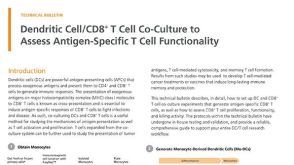 技术公告Dendritic Cell/CD8+ T Cell Co-Culture to Assess Antigen-Specific T Cell Functionality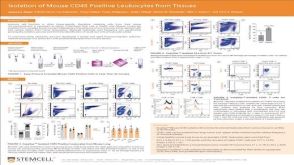



 沪公网安备31010102008431号