S. Morla et al. (Jan 2023)
Journal of medicinal chemistry 66 1321-1338
Designing Synthetic, Sulfated Glycosaminoglycan Mimetics That Are Orally Bioavailable and Exhibiting In Vivo Anticancer Activity.
Sulfated glycosaminoglycans (GAGs),or synthetic mimetics thereof,are not favorably viewed as orally bioavailable drugs owing to their high number of anionic sulfate groups. Devising an approach for oral delivery of such highly sulfated molecules would be very useful. This work presents the concept that conjugating cholesterol to synthetic sulfated GAG mimetics enables oral delivery. A focused library of sulfated GAG mimetics was synthesized and found to inhibit the growth of a colorectal cancer cell line under spheroid conditions with a wide range of potencies ( 0.8 to 46). Specific analogues containing cholesterol,either alone or in combination with clinical utilized drugs,exhibited pronounced in vivo anticancer potential with intraperitoneal as well as oral administration,as assessed by ex vivo tertiary and quaternary spheroid growth,cancer stem cell (CSC) markers,and/or self-renewal factors. Overall,cholesterol derivatization of highly sulfated GAG mimetics affords an excellent approach for engineering oral activity.
View Publication
C. Bouffi et al. (Jun 2023)
Nature biotechnology 41 824-831
In vivo development of immune tissue in human intestinal organoids transplanted into humanized mice.
Human intestinal organoids (HIOs) derived from pluripotent stem cells provide a valuable model for investigating human intestinal organogenesis and physiology,but they lack the immune components required to fully recapitulate the complexity of human intestinal biology and diseases. To address this issue and to begin to decipher human intestinal-immune crosstalk during development,we generated HIOs containing immune cells by transplanting HIOs under the kidney capsule of mice with a humanized immune system. We found that human immune cells temporally migrate to the mucosa and form cellular aggregates that resemble human intestinal lymphoid follicles. Moreover,after microbial exposure,epithelial microfold cells are increased in number,leading to immune cell activation determined by the secretion of IgA antibodies in the HIO lumen. This in vivo HIO system with human immune cells provides a framework for future studies on infection- or allergen-driven intestinal diseases.
View Publication
产品号#:
06010
产品名:
IntestiCult™ 类器官生长培养基 (人)
Z. Wang et al. (Apr 2023)
Redox biology 60 102618
FUT2-dependent fucosylation of HYOU1 protects intestinal stem cells against inflammatory injury by regulating unfolded protein response.
The intestinal epithelial repair after injury is coordinated by intestinal stem cells (ISCs). Fucosylation catalyzed by fucosyltransferase 2 (FUT2) of the intestinal epithelium is beneficial to mucosal healing but poorly defined is the influence on ISCs. The dextran sulfate sodium (DSS) and lipopolysaccharide (LPS) model were used to assess the role of FUT2 on ISCs after injury. The apoptosis,function,and stemness of ISCs were analyzed using intestinal organoids from WT and Fut2?ISC (ISC-specific Fut2 knockout) mice incubated with LPS and fucose. N-glycoproteomics,UEA-1 chromatography,and site-directed mutagenesis were monitored to dissect the regulatory mechanism,identify the target fucosylated protein and the corresponding modification site. Fucose could alleviate intestinal epithelial damage via upregulating FUT2 and ?-1,2-fucosylation of ISCs. Oxidative stress,mitochondrial dysfunction,and cell apoptosis were impeded by fucose. Meanwhile,fucose sustained the growth and proliferation capacity of intestinal organoids treated with LPS. Contrarily,FUT2 depletion in ISCs aggravated the epithelial damage and disrupted the growth and proliferation capacity of ISCs via escalating LPS-induced endoplasmic reticulum (ER) stress and initiating the IRE1/TRAF2/ASK1/JNK branch of unfolded protein response (UPR). Fucosylation of the chaperone protein HYOU1 at the N-glycosylation site of asparagine (Asn) 862 mediated by FUT2 was identified to facilitate ISCs survival and self-renewal,and improve ISCs resistance to ER stress and inflammatory injury. Our study highlights a fucosylation-dependent protective mechanism of ISCs against inflammation,which may provide a fascinating strategy for treating intestinal injury disorders.
View Publication


 EasySep™小鼠TIL(CD45)正选试剂盒




 技术窍门组织解离方法指南
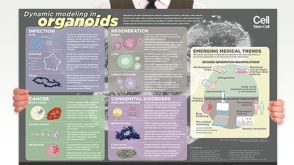 挂图Dynamic Modeling in Organoids Learn more about organoid applications for studying human health

 沪公网安备31010102008431号