Hepatocyte growth factor favors monocyte differentiation into regulatory interleukin (IL)-10++IL-12low/neg accessory cells with dendritic-cell features.
Several hematopoietic growth factors,including interleukin-10 (IL-10) and transforming growth factor-beta1 (TGF-beta1),promote the differentiation of tolerogenic dendritic cells (DCs). Hepatocyte growth factor (HGF) is a pleiotropic cytokine whose effects on human DC differentiation and function have not been investigated. Monocytes cultured with HGF (HGFMo) differentiated into accessory cells with DC-like morphology,released low amounts of IL-12p70 and up-regulated IL-10 both at the mRNA and at the protein level. Upon activation with HGFMo,allogeneic CD4+CD25- T cells expressed the T regulatory (Treg)-associated transcription factor FoxP3,proliferated poorly,and released high levels of IL-10. Interestingly,blockade of surface immunoglobulin-like transcript 3 (ILT3) on HGFMo or neutralization of secreted IL-10 translated into partial restoration of T-cell proliferation. Secondary stimulation of HGFMo-primed CD4+ T cells with immunogenic DCs differentiated with granulocyte-macrophage colony-stimulating factor (GM-CSF) and IL-4 from monocytes of the same donor resulted in measurable T-cell proliferation. HGFMo-primed CD4+ T cells significantly inhibited the proliferation of naive CD4+CD25- T cells in a cell-contact-dependent manner. Finally,DNA microarray analysis revealed a unique gene-expression profile of HGF-activated monocytes. Collectively,our findings point to a novel role for HGF in the regulation of monocyte/DC functions that might be exploited therapeutically.
View Publication
产品号#:
09500
产品名:
BIT 9500血清替代物
Limó et al. (NOV 1997)
Blood 90 9 3316--21
High-titer retroviral vectors containing the enhanced green fluorescent protein gene for efficient expression in hematopoietic cells.
Retroviral vectors constitute the most efficient system to deliver and integrate foreign genes into mammalian cells. We have developed a producer cell line that yields high titers of amphotropic retroviral vectors carrying the enhanced green fluorescent protein (EGFP) gene,a codon humanized,red-shifted variant of the green fluorescent protein (GFP) gene,which can be used as a selectable marker. We have used a hybrid vector that has been shown to efficiently drive gene expression in hematopoietic cells. Virtually all murine and human cell lines and primary human hematopoietic cells tested were transduced with varying efficiency after incubation with vector-containing supernatants. Human CD34(+) cells obtained from cord blood or aphereses products were transduced using a protocol that involves daily addition of vector-containing supernatants for 6 consecutive days. At day 6,up to 16% of the cells expressed EGFP,as assessed by flow cytometry. Sorted EGFP-expressing cells were able to produce fluorescent hematopoietic colonies. EGFP's main advantages are its fast flow cytometry determination and the possibility of cell sorting and simultaneous evaluation of the transduction efficiency along with other phenotypic markers.
View Publication
产品号#:
04034
04044
产品名:
MethoCult™ H4034 Optimum
MethoCult™ H4034 Optimum
Eminli S et al. (SEP 2009)
Nature genetics 41 9 968--76
Differentiation stage determines potential of hematopoietic cells for reprogramming into induced pluripotent stem cells.
The reprogramming of somatic cells into induced pluripotent stem (iPS) cells upon overexpression of the transcription factors Oct4,Sox2,Klf4 and cMyc is inefficient. It has been assumed that the somatic differentiation state provides a barrier for efficient reprogramming; however,direct evidence for this notion is lacking. Here,we tested the potential of mouse hematopoietic cells at different stages of differentiation to be reprogrammed into iPS cells. We show that hematopoietic stem and progenitor cells give rise to iPS cells up to 300 times more efficiently than terminally differentiated B and T cells do,yielding reprogramming efficiencies of up to 28%. Our data provide evidence that the differentiation stage of the starting cell has a critical influence on the efficiency of reprogramming into iPS cells. Moreover,we identify hematopoietic progenitors as an attractive cell type for applications of iPS cell technology in research and therapy.
View Publication
产品号#:
02690
05850
05857
05870
05875
09600
09650
85850
85857
85870
85875
70008
70008.1
70008.2
70008.3
70008.4
70008.5
70008.6
200-0002
200-0001
200-0000
产品名:
StemSpan™ CC100
StemSpan™ SFEM
StemSpan™ SFEM
mTeSR™1
mTeSR™1
冻存的人脐带血CD34+细胞
冻存的人脐带血CD34+细胞
冻存的人脐带血CD34+细胞
冻存的人脐带血CD34+细胞
冻存的人脐带血CD34+细胞
冻存的人脐带血CD34+细胞
冻存的人脐带血CD34+细胞
冻存的人脐带血CD34+细胞
冻存的人脐带血CD34+细胞
Thomson AW and Horne CH (NOV 1975)
Transplantation 20 5 435--7
Failure of carrageenan to affect graft-versus-host reactivity in the rat.
Fanconi anemia (FA) is an inherited recessive DNA repair disorder mainly characterized by bone marrow failure and cancer predisposition. Studies in mosaic FA patients have shown that reversion of one inherited germ-line mutation resulting in a functional allele in one or a few hematopoietic stem cells (HSCs) can lead to the proliferation advantage of corrected cells,thus over time normalizing the hematologic status of the patient. In contrast to these observations,it is still unclear whether ex vivo genetic correction of FA HSCs also provides a similar proliferation advantage to FA HSCs. Using an FA mouse model with a marked hematopoietic phenotype,the FA-D1 (Brca2(Delta27/Delta27)) mice,we demonstrate that the lentivirus-mediated gene therapy of FA HSCs results in the progressive expansion of genetically corrected clones in mild-conditioned FA-D1 recipients. Consistent with these data,hematopoietic progenitors from FA recipients progressively became mitomycin C resistant and their chromosomal instability was reverted. No evidence of myelodysplasia,leukemias,or abnormal clonal repopulation was observed at multiple time points in primary or secondary recipients. Our results demonstrate that ectopic expression of BRCA2 confers a beneficial in vivo proliferation advantage to FA-D1 HSCs that enables the full hematopoietic repopulation of FA recipients with genetically corrected cells.
View Publication
产品号#:
03534
产品名:
MethoCult™ GF M3534
Griswold IJ et al. (AUG 2006)
Molecular and cellular biology 26 16 6082--93
Kinase domain mutants of Bcr-Abl exhibit altered transformation potency, kinase activity, and substrate utilization, irrespective of sensitivity to imatinib.
Kinase domain (KD) mutations of Bcr-Abl interfering with imatinib binding are the major mechanism of acquired imatinib resistance in patients with Philadelphia chromosome-positive leukemia. Mutations of the ATP binding loop (p-loop) have been associated with a poor prognosis. We compared the transformation potency of five common KD mutants in various biological assays. Relative to unmutated (native) Bcr-Abl,the ATP binding loop mutants Y253F and E255K exhibited increased transformation potency,M351T and H396P were less potent,and the performance of T315I was assay dependent. The transformation potency of Y253F and M351T correlated with intrinsic Bcr-Abl kinase activity,whereas the kinase activity of E255K,H396P,and T315I did not correlate with transforming capabilities,suggesting that additional factors influence transformation potency. Analysis of the phosphotyrosine proteome by mass spectroscopy showed differential phosphorylation among the mutants,a finding consistent with altered substrate specificity and pathway activation. Mutations in the KD of Bcr-Abl influence kinase activity and signaling in a complex fashion,leading to gain- or loss-of-function variants. The drug resistance and transformation potency of mutants may determine the outcome of patients on therapy with Abl kinase inhibitors.
View Publication
产品号#:
03236
产品名:
MethoCult™ SF M3236
Senatus PB et al. (JAN 2006)
Molecular cancer therapeutics 5 1 20--8
Restoration of p53 function for selective Fas-mediated apoptosis in human and rat glioma cells in vitro and in vivo by a p53 COOH-terminal peptide.
We have shown that a COOH-terminal peptide of p53 (amino acids 361-382,p53p),linked to the truncated homeobox domain of Antennapedia (Ant) as a carrier for transduction,induced rapid apoptosis in human premalignant and malignant cell lines. Here,we report that human and rat glioma lines containing endogenous mutant p53 or wild-type (WT) p53 were induced into apoptosis by exposure to this peptide called p53p-Ant. The peptide was comparatively nontoxic to proliferating nonmalignant human and rat glial cell lines containing WT p53 and proliferating normal human peripheral marrow blood stem cells. Degree of sensitivity to the peptide correlated directly with the level of endogenous p53 expression and mutant p53 conformation. Apoptosis induction by p53p-Ant was quantitated by terminal deoxynucleotidyl transferase-mediated dUTP nick end labeling assay and Annexin V staining in human glioma cells in vitro and in a syngeneic orthotopic 9L glioma rat model using convection-enhanced delivery in vivo. The mechanism of cell death by this peptide was solely through the Fas extrinsic apoptotic pathway. p53p-Ant induced a 3-fold increase in extracellular membrane Fas expression in glioma cells but no significant increase in nonmalignant glial cells. These data suggest that p53 function for inducing Fas-mediated apoptosis in gliomas,which express sufficient quantities of endogenous mutant or WT p53,may be restored or activated,respectively,by a cell-permeable peptide derived from the p53 COOH-terminal regulatory domain (p53p-Ant). p53p-Ant may serve as a prototypic model for the development of new anticancer agents with unique selectivity for glioma cancer cells and it can be successfully delivered in vivo into a brain tumor by a convection-enhanced delivery system,which circumvents the blood-brain barrier.
View Publication
产品号#:
04434
04444
产品名:
MethoCult™ H4434 Classic
MethoCult™ H4434 Classic
Vauchez K et al. (NOV 2009)
Molecular therapy : the journal of the American Society of Gene Therapy 17 11 1948--58
Aldehyde dehydrogenase activity identifies a population of human skeletal muscle cells with high myogenic capacities.
Aldehyde dehydrogenase 1A1 (ALDH) activity is one hallmark of human bone marrow (BM),umbilical cord blood (UCB),and peripheral blood (PB) primitive progenitors presenting high reconstitution capacities in vivo. In this study,we have identified ALDH(+) cells within human skeletal muscles,and have analyzed their phenotypical and functional characteristics. Immunohistofluorescence analysis of human muscle tissue sections revealed rare endomysial cells. Flow cytometry analysis using the fluorescent substrate of ALDH,Aldefluor,identified brightly stained (ALDH(br)) cells with low side scatter (SSC(lo)),in enzymatically dissociated muscle biopsies,thereafter abbreviated as SMALD(+) (for skeletal muscle ALDH(+)) cells. Phenotypical analysis discriminated two sub-populations according to CD34 expression: SMALD(+)/CD34(-) and SMALD(+)/CD34(+) cells. These sub-populations did not initially express endothelial (CD31),hematopoietic (CD45),and myogenic (CD56) markers. Upon sorting,however,whereas SMALD(+)/CD34(+) cells developed in vitro as a heterogeneous population of CD56(-) cells able to differentiate in adipoblasts,the SMALD(+)/CD34(-) fraction developed in vitro as a highly enriched population of CD56(+) myoblasts able to form myotubes. Moreover,only the SMALD(+)/CD34(-) population maintained a strong myogenic potential in vivo upon intramuscular transplantation. Our results suggest that ALDH activity is a novel marker for a population of new human skeletal muscle progenitors presenting a potential for cell biology and cell therapy.
View Publication
产品号#:
01700
01705
01701
01702
产品名:
ALDEFLUOR™ 试剂盒
ALDEFLUOR™ DEAB试剂, 1.5 mM, 1 mL
ALDEFLUOR™检测缓冲液
Cohen-Haguenauer O et al. (FEB 2006)
Proceedings of the National Academy of Sciences of the United States of America 103 7 2340--5
In vivo repopulation ability of genetically corrected bone marrow cells from Fanconi anemia patients.
Fanconi anemia (FA) is a rare inherited genomic instability syndrome representing one of the best examples of hematopoietic stem cell deficiency. Although FA might be an excellent candidate for bone marrow (BM) genetic correction ex vivo,knockout animal models are not sufficient to guide preclinical steps,and gene therapy attempts have proven disappointing so far. Contributing to these poor results is a characteristic and dramatic early BM-cells die-off when placed in culture. We show here that human primary FA BM cell survival can be ameliorated by using specific culture conditions that limit oxidative stress. When coupled with retrovirus-mediated transfer of the main complementation group FANCA-cDNA,we could achieve long-term reconstitution of the stem cell compartment both in vitro and in vivo. Gene-corrected BM cultures grew for textgreater120 days,and after cultured cell transplantation into NOD/SCID mice,clonogenic human cells carrying the FANCA transgene could be detected 6 months after transduction. By comparison,untransduced cells died in culture by 15 days. Of necessity for ethical reasons,experiments were conducted on a very limited number of primary BM cells. By using low cytokine regimen and conditions matching regulatory requirements,a contingent of gene-corrected cells slowly emerges with an unmet potential for in vivo engraftment. Future therapeutic applications of stem cells might be expanding from these data. In addition,we provide a model of gene-corrected human primary cell growth that carries the potential to better delineate the combined role of both DNA damage and oxidative stress in the pathogenesis of FA.
View Publication
产品号#:
04436
产品名:
MethoCult™ SF H4436
Steiner LA et al. (OCT 2009)
Molecular and cellular biology 29 20 5399--412
Chromatin architecture and transcription factor binding regulate expression of erythrocyte membrane protein genes.
Erythrocyte membrane protein genes serve as excellent models of complex gene locus structure and function,but their study has been complicated by both their large size and their complexity. To begin to understand the intricate interplay of transcription,dynamic chromatin architecture,transcription factor binding,and genomic organization in regulation of erythrocyte membrane protein genes,we performed chromatin immunoprecipitation (ChIP) coupled with microarray analysis and ChIP coupled with massively parallel DNA sequencing in both erythroid and nonerythroid cells. Unexpectedly,most regions of GATA-1 and NF-E2 binding were remote from gene promoters and transcriptional start sites,located primarily in introns. Cooccupancy with FOG-1,SCL,and MTA-2 was found at all regions of GATA-1 binding,with cooccupancy of SCL and MTA-2 also found at regions of NF-E2 binding. Cooccupancy of GATA-1 and NF-E2 was found frequently. A common signature of histone H3 trimethylation at lysine 4,GATA-1,NF-E2,FOG-1,SCL,and MTA-2 binding and consensus GATA-1-E-box binding motifs located 34 to 90 bp away from NF-E2 binding motifs was found frequently in erythroid cell-expressed genes. These results provide insights into our understanding of membrane protein gene regulation in erythropoiesis and the regulation of complex genetic loci in erythroid and nonerythroid cells and identify numerous candidate regions for mutations associated with membrane-linked hemolytic anemia.
View Publication


 EasySep™小鼠TIL(CD45)正选试剂盒




 技术公告Identification of ALDH-Expressing Cancer Stem Cells Using ALDEFLUOR™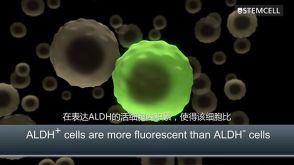

 沪公网安备31010102008431号