Vanneaux V et al. (JAN 2010)
Cell transplantation 19 9 1143--55
In vitro and in vivo analysis of endothelial progenitor cells from cryopreserved umbilical cord blood: are we ready for clinical application?
Umbilical cord blood (CB) represents a main source of circulating endothelial progenitor cells (cEPCs). In view of their clinical use,in either the autologous or allogeneic setting,cEPCs should likely be expanded from CB kept frozen in CB banks. In this study,we compared the expansion,functional features,senescence pattern over culture,and in vivo angiogenic potential of cEPCs isolated from fresh or cryopreserved CB (cryoCB). cEPCs could be isolated in only 59% of cryoCB compared to 94% for fresh CB,while CB units were matched in terms of initial volume,nucleated and CD34(+) cell number. Moreover,the number of endothelial colony-forming cells was significantly decreased when using cryoCB. Once cEPCs culture was established,the proliferation,migration,tube formation,and acetylated-LDL uptake potentials were similar in both groups. In addition,cEPCs derived from cryoCB displayed the same senescence status and telomeres length as that of cEPCs derived from fresh CB. Karyotypic aberrations were found in cells obtained from both fresh and cryoCB. In vivo,in a hind limb ischemia murine model,cEPCs from fresh and cryoCB were equally efficient to induce neovascularization. Thus,cEPCs isolated from cryoCB exhibited similar properties to those of fresh CB in vitro and in vivo. However,the low frequency of cEPCs colony formation after cryopreservation shed light on the need for specific freezing conditions adapted to cEPCs in view of their future clinical use.
View Publication
产品号#:
15026
15066
产品名:
RosetteSep™人造血祖细胞富集抗体混合物
RosetteSep™人造血祖细胞富集抗体混合物
Nakagawa M et al. (NOV 2006)
Blood 108 10 3329--34
AML1/Runx1 rescues Notch1-null mutation-induced deficiency of para-aortic splanchnopleural hematopoiesis.
The Notch1-RBP-Jkappa and the transcription factor Runx1 pathways have been independently shown to be indispensable for the establishment of definitive hematopoiesis. Importantly,expression of Runx1 is down-regulated in the para-aortic splanchnopleural (P-Sp) region of Notch1- and Rbpsuh-null mice. Here we demonstrate that Notch1 up-regulates Runx1 expression and that the defective hematopoietic potential of Notch1-null P-Sp cells is successfully rescued in the OP9 culture system by retroviral transfer of Runx1. We also show that Hes1,a known effector of Notch signaling,potentiates Runx1-mediated transactivation. Together with the recent findings in zebrafish,Runx1 is postulated to be a cardinal down-stream mediator of Notch signaling in hematopoietic development throughout vertebrates. Our findings also suggest that Notch signaling may modulate both expression and transcriptional activity of Runx1.
View Publication
产品号#:
03434
03444
产品名:
MethoCult™ GF M3434
MethoCult™ GF M3434
Esensten JH et al. (JUL 2009)
Journal of immunology (Baltimore,Md. : 1950) 183 1 75--82
T-bet-deficient NOD mice are protected from diabetes due to defects in both T cell and innate immune system function.
The transcription factor T-bet (Tbx21) is critical for Th1 polarization of CD4(+) T cells. Genetic deletion of Tbx21 can cause either exacerbation or attenuation of different autoimmune diseases in animal models. In the nonobese diabetic (NOD) mouse,genetic deletion of the Ifng or the Il12b (IL-12p40) genes,which are both critical Th1 cytokines,does not reduce the incidence of autoimmune diabetes. These results suggest that autoimmune diabetes in the NOD may not be a Th1-driven disease. However,we report that Tbx21 deficiency in the NOD mouse completely blocks insulitis and diabetes due to defects both in the initiation of the anti-islet immune response and in the function of CD4(+) effector T cells. We find defective priming of naive islet-reactive T cells by the innate immune system in Tbx21(-/-) animals. By contrast to naive cells,activated islet-reactive BDC2.5 TCR-transgenic T cells do not require Tbx21 in recipient animals for efficient adoptive transfer of diabetes. However,when these BDC2.5 TCR-transgenic effector cells lack Tbx21,they are less effective at entering the pancreas and promoting diabetes than Tbx21(+/+) cells. Tbx21(-/-) regulatory T cells function normally in vitro and diabetes can be restored in Tbx21(-/-) mice by reducing regulatory T cell numbers. Thus,the absence of diabetes in the NOD.Tbx21(-/-) is due to intrinsic defects in both T cells and cells of the innate immune system paired with the relative preservation of regulatory T cell function.
View Publication
产品号#:
21000
20119
20155
19752
19752RF
产品名:
RoboSep™- S
RoboSep™ 吸头组件抛光剂
RoboSep™分选管套装(9个塑料管)
Kurita R et al. (SEP 2006)
Stem cells (Dayton,Ohio) 24 9 2014--22
Tal1/Scl gene transduction using a lentiviral vector stimulates highly efficient hematopoietic cell differentiation from common marmoset (Callithrix jacchus) embryonic stem cells.
The development of embryonic stem cell (ESC) therapies requires the establishment of efficient methods to differentiate ESCs into specific cell lineages. Here,we report the in vitro differentiation of common marmoset (CM) (Callithrix jacchus) ESCs into hematopoietic cells after exogenous gene transfer using vesicular stomatitis virus-glycoprotein-pseudotyped lentiviral vectors. We transduced hematopoietic genes,including tal1/scl,gata1,gata2,hoxB4,and lhx2,into CM ESCs. By immunochemical and morphological analyses,we demonstrated that overexpression of tal1/scl,but not the remaining genes,dramatically increased hematopoiesis of CM ESCs,resulting in multiple blood-cell lineages. Furthermore,flow cytometric analysis demonstrated that CD34,a hematopoietic stem/progenitor cell marker,was highly expressed in tal1/scl-overexpressing embryoid body cells. Similar results were obtained from three independent CM ESC lines. These results suggest that transduction of exogenous tal1/scl cDNA into ESCs is a promising method to induce the efficient differentiation of CM ESCs into hematopoietic stem/progenitor cells.
View Publication
产品号#:
03434
03444
04435
04445
产品名:
MethoCult™ GF M3434
MethoCult™ GF M3434
MethoCult™ H4435 Enriched
MethoCult™ H4435 Enriched
Nakazawa G et al. (JAN 2010)
JACC. Cardiovascular interventions 3 1 68--75
Anti-CD34 antibodies immobilized on the surface of sirolimus-eluting stents enhance stent endothelialization.
OBJECTIVES: In this study,we hypothesized that an antihuman-CD34 antibody immobilized on the surface of commercially available sirolimus-eluting stents (SES) could enhance re-endothelialization compared with SES alone. BACKGROUND: Previous experience with antihuman-CD34 antibody surface modified Genous stents (GS) (OrbusNeich Medical,Fort Lauderdale,Florida) has shown enhanced stent endothelialization in vivo. METHODS: In the phase 1 study,stents were deployed in 21 pig coronary arteries for single stenting (9 vessels: 3 GS,3 SES,and 3 bare-metal stents) and overlapping stenting with various combinations (12 vessels: 4 GS+GS,4 SES+SES,and 4 GS+SES) and harvested at 14 days for scanning electron and confocal microscopy. In phase 2,immobilized anti-CD34 antibody coating was applied on commercially available SES (SES-anti-CD34,n = 7) and compared with GS (n = 8) and SES (n = 7) and examined at 3 and 14 days by scanning electron/confocal microscopy analysis. RESULTS: In phase 1,single stent implantation showed greatest endothelialization in GS (99%) and in bare-metal stent (99%) compared with SES (55%,p = 0.048). In overlapping stents,endothelialization at the overlapping zone was significantly greater in GS+GS (95 +/- 6%) and GS+SES (79 +/- 5%) compared with the SES+SES (36 +/- 14%) group (p = 0.007). In phase 2,SES-anti-CD34 resulted in increased endothelialization compared with SES alone at 3 days (SES-anti-CD34 36 +/- 26%; SES 7 +/- 3%; and GS 76 +/- 8%; p = 0.01),and 14 days (SES-anti-CD34 82 +/- 8%; SES 53 +/- 20%; and GS 98 +/- 2%; p = 0.009). CONCLUSIONS: Immobilization of anti-CD34 antibody on SES enhances endothelialization and may potentially be an effective therapeutic alternative to improve currently available drug-eluting stents.
View Publication
产品号#:
02690
产品名:
StemSpan™ CC100
Kriz V et al. (NOV 2006)
The Journal of biological chemistry 281 45 34484--91
The SHB adapter protein is required for normal maturation of mesoderm during in vitro differentiation of embryonic stem cells.
Definitive mesoderm arises from a bipotent mesendodermal population,and to study processes controlling its development at this stage,embryonic stem (ES) cells can be employed. SHB (Src homology 2 protein in beta-cells) is an adapter protein previously found to be involved in ES cell differentiation to mesoderm. To further study the role of SHB in this context,we have established ES cell lines deficient for one (SHB+/-) or both SHB alleles (SHB-/-). Differentiating embryoid bodies (EBs) derived from these ES cell lines were used for gene expression analysis. Alternatively,EBs were stained for the blood vessel marker CD31. For hematopoietic differentiation,EBs were differentiated in methylcellulose. SHB-/- EBs exhibited delayed down-regulation of the early mesodermal marker Brachyury. Later mesodermal markers relatively specific for the hematopoietic,vascular,and cardiac lineages were expressed at lower levels on day 6 or 8 of differentiation in EBs lacking SHB. The expression of vascular endothelial growth factor receptor-2 and fibroblast growth factor receptor-1 was also reduced in SHB-/- EBs. SHB-/- EBs demonstrated impaired blood vessel formation after vascular endothelial growth factor stimulation. In addition,the SHB-/- ES cells formed fewer blood cell colonies than SHB+/+ ES cells. It is concluded that SHB is required for appropriate hematopoietic and vascular differentiation and that delayed down-regulation of Brachyury expression may play a role in this context.
View Publication
产品号#:
03434
03444
产品名:
MethoCult™ GF M3434
MethoCult™ GF M3434
Griswold IJ et al. (AUG 2006)
Molecular and cellular biology 26 16 6082--93
Kinase domain mutants of Bcr-Abl exhibit altered transformation potency, kinase activity, and substrate utilization, irrespective of sensitivity to imatinib.
Kinase domain (KD) mutations of Bcr-Abl interfering with imatinib binding are the major mechanism of acquired imatinib resistance in patients with Philadelphia chromosome-positive leukemia. Mutations of the ATP binding loop (p-loop) have been associated with a poor prognosis. We compared the transformation potency of five common KD mutants in various biological assays. Relative to unmutated (native) Bcr-Abl,the ATP binding loop mutants Y253F and E255K exhibited increased transformation potency,M351T and H396P were less potent,and the performance of T315I was assay dependent. The transformation potency of Y253F and M351T correlated with intrinsic Bcr-Abl kinase activity,whereas the kinase activity of E255K,H396P,and T315I did not correlate with transforming capabilities,suggesting that additional factors influence transformation potency. Analysis of the phosphotyrosine proteome by mass spectroscopy showed differential phosphorylation among the mutants,a finding consistent with altered substrate specificity and pathway activation. Mutations in the KD of Bcr-Abl influence kinase activity and signaling in a complex fashion,leading to gain- or loss-of-function variants. The drug resistance and transformation potency of mutants may determine the outcome of patients on therapy with Abl kinase inhibitors.
View Publication
产品号#:
03236
产品名:
MethoCult™ SF M3236
Lassailly F et al. (JUL 2010)
Blood 115 26 5347--54
Microenvironmental contaminations" induced by fluorescent lipophilic dyes used for noninvasive in vitro and in vivo cell tracking."
Determining how normal and leukemic stem cells behave in vivo,in a dynamic and noninvasive way,remains a major challenge. Most optical tracking technologies rely on the use of fluorescent or bioluminescent reporter genes,which need to be stably expressed in the cells of interest. Because gene transfer in primary leukemia samples represents a major risk to impair their capability to engraft in a xenogenic context,we evaluated the possibility to use gene transfer-free labeling technologies. The lipophilic dye 3,3,3',3' tetramethylindotricarbocyanine iodide (DiR) was selected among 4 near-infrared (NIR) staining technologies. Unfortunately we report here a massive transfer of the dye occurring toward the neighbor cells both in vivo and in vitro. We further demonstrate that all lipophilic dyes tested in this study (1,1'-dioctadecyl-3,3,3',3'-tetramethylindotricarbocyanine perchlorate [DiI],DiD,DiR,and PKH26) can give rise to microenvironmental contamination,including when used in suboptimal concentration,after extensive washing procedures and in the absence of phagocytosis or marked cell death. This was observed from all cell types tested. Eventually,we show that this microenvironmental contamination is mediated by both direct cell-cell contacts and diffusible microparticles. We conclude that tracking of labeled cells using non-genetically encoded markers should always be accompanied by drastic cross validation using multimodality approaches.
View Publication
产品号#:
09600
09650
19756
19756RF
产品名:
StemSpan™ SFEM
StemSpan™ SFEM
Randrianarison-Huetz V et al. (APR 2010)
Blood 115 14 2784--95
Gfi-1B controls human erythroid and megakaryocytic differentiation by regulating TGF-beta signaling at the bipotent erythro-megakaryocytic progenitor stage.
Growth factor independence-1B (Gfi-1B) is a transcriptional repressor essential for erythropoiesis and megakaryopoiesis. Targeted gene disruption of GFI1B in mice leads to embryonic lethality resulting from failure to produce definitive erythrocytes,hindering the study of Gfi-1B function in adult hematopoiesis. We here show that,in humans,Gfi-1B controls the development of erythrocytes and megakaryocytes by regulating the proliferation and differentiation of bipotent erythro-megakaryocytic progenitors. We further identify in this cell population the type III transforming growth factor-beta receptor gene,TGFBR3,as a direct target of Gfi-1B. Knockdown of Gfi-1B results in altered transforming growth factor-beta (TGF-beta) signaling as shown by the increase in Smad2 phosphorylation and its inability to associate to the transcription intermediary factor 1-gamma (TIF1-gamma). Because the Smad2/TIF1-gamma complex is known to specifically regulate erythroid differentiation,we propose that,by repressing TGF-beta type III receptor (TbetaRIotaII) expression,Gfi-1B favors the Smad2/TIF1-gamma interaction downstream of TGF-beta signaling,allowing immature progenitors to differentiate toward the erythroid lineage.
View Publication


 EasySep™小鼠TIL(CD45)正选试剂盒




 技术公告Identification of ALDH-Expressing Cancer Stem Cells Using ALDEFLUOR™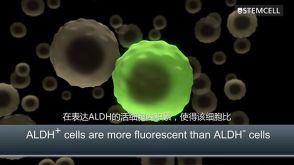

 沪公网安备31010102008431号