Sengupta A et al. (JUN 2011)
Proceedings of the National Academy of Sciences of the United States of America 108 24 9957--62
Atypical protein kinase C (aPKCzeta and aPKClambda) is dispensable for mammalian hematopoietic stem cell activity and blood formation.
The stem-cell pool is considered to be maintained by a balance between symmetric and asymmetric division of stem cells. The cell polarity model proposes that the facultative use of symmetric and asymmetric cell division is orchestrated by a polarity complex consisting of partitioning-defective proteins Par3 and Par6,and atypical protein kinase C (aPKCζ and aPKCλ),which regulates planar symmetry of dividing stem cells with respect to the signaling microenvironment. However,the role of the polarity complex is unexplored in mammalian adult stem-cell functions. Here we report that,in contrast to accepted paradigms,polarization and activity of adult hematopoietic stem cell (HSC) do not depend on either aPKCζ or aPKCλ or both in vivo. Mice,having constitutive and hematopoietic-specific (Vav1-Cre) deletion of aPKCζ and aPKCλ,respectively,have normal hematopoiesis,including normal HSC self-renewal,engraftment,differentiation,and interaction with the bone marrow microenvironment. Furthermore,inducible complete deletion of aPKCλ (Mx1-Cre) in aPKCζ(-/-) HSC does not affect HSC polarization,self-renewal,engraftment,or lineage repopulation. In addition,aPKCζ- and aPKCλ-deficient HSCs elicited a normal pattern of hematopoietic recovery secondary to myeloablative stress. Taken together,the expression of aPKCζ,aPKCλ,or both are dispensable for primitive and adult HSC fate determination in steady-state and stress hematopoiesis,contrary to the hypothesis of a unique,evolutionary conserved aPKCζ/λ-directed cell polarity signaling mechanism in mammalian HSC fate determination.
View Publication
产品号#:
03434
03444
产品名:
MethoCult™ GF M3434
MethoCult™ GF M3434
Yang Y et al. (JUN 2011)
Experimental biology and medicine (Maywood,N.J.) 236 6 729--35
Protective effect of dammarane sapogenins against chemotherapy-induced myelosuppression in mice.
Chemotherapy is the most common way to treat malignancies,but myelosuppression,one of its common side-effects,is a formidable problem. The present study described the protective role of dammarane sapogenins (DS),an active fraction from oriental ginseng,on myelosuppression induced by cyclophosphamide (CP) in mice. DS was orally administered at different dosages (37.5,75,and 150 mg/kg) for 10 d after CP administration (200 mg/kg intraperitoneally). The results showed that DS increased the number of white blood cells (WBC) on day 3 and day 7 (P textless 0.05),such that WBC levels were increased by 105.7 ± 29.5% at 75 mg/kg of DS on day 3 (P textless 0.05,compared with the CP group). Similar results were observed in red blood cells and platelets in DS-treated groups. The colony-forming assay demonstrated that the depressed numbers of CFU-GM (colony-forming unit-granulocyte and macrophage),CFU-E (colony-forming unit-erythroid),BFU-E (burst-forming unit-erythroid),CFU-Meg (colony-forming unit-megakaryocyte) and CFU-GEMM (colony-forming unit-granulocyte,-erythrocyte,-monocyte and -megakaryocyte) induced by CP were significantly reversed after DS treatment. Moreover,the ameliorative effect of DS on myelosuppression was also observed in the femur by hematoxylin/eosin staining. In DS-treated groups,ConA-induced splenocyte proliferation was enhanced significantly at all the doses (37.5,75,150 mg/kg) on day 3 at the rate of 50.3 ± 8.0%,77.6 ± 8.5% and 44.5 ± 8.4%,respectively,while lipopolysaccharide-induced proliferation was increased mainly on day 7 (P textless 0.01),with an increased rate of 39.8 ± 5.6%,34.9 ± 6.6% and 38.3 ± 7.3%,respectively. The thymus index was also markedly increased by 70.4% and 36.6% at 75 mg/kg on days 3 and 7,respectively,as compared with the CP group. In summary,DS has a protective function against CP-induced myelosuppression. Its mechanism might be related to stimulating hematopoiesis recovery,as well as enhancing the immunological function.
View Publication
Richie Ehrlich LI et al. (MAR 2011)
Blood 117 9 2618--24
In vitro assays misrepresent in vivo lineage potentials of murine lymphoid progenitors.
The identity of T-cell progenitors that seed the thymus has remained controversial,largely because many studies differ over whether these progenitors retain myeloid potential. Contradictory reports diverge in their use of various in vitro and in vivo assays. To consolidate these discordant findings,we compared the myeloid potential of 2 putative thymus seeding populations,common lymphoid progenitors (CLPs) and multipotent progenitors (MPPs),and the earliest intrathymic progenitor (DN1),using 2 in vitro assays and in vivo readouts. These assays gave contradictory results: CLP and DN1 displayed surprisingly robust myeloid potential on OP9-DL1 in vitro stromal cocultures but displayed little myeloid potential in vivo,as well as in methylcellulose cultures. MPP,on the other hand,displayed robust myeloid potential in all settings. We conclude that stromal cocultures reveal cryptic,but nonphysiologic,myeloid potentials of lymphoid progenitors,providing an explanation for contradictory findings in the field and underscoring the importance of using in vivo assays for the determination of physiologic lineage potentials.
View Publication
产品号#:
03231
产品名:
MethoCult™ M3231
Yu S et al. (FEB 2011)
Blood 117 7 2166--78
GABP controls a critical transcription regulatory module that is essential for maintenance and differentiation of hematopoietic stem/progenitor cells.
Maintaining a steady pool of self-renewing hematopoietic stem cells (HSCs) is critical for sustained production of multiple blood lineages. Many transcription factors and molecules involved in chromatin and epigenetic modifications have been found to be critical for HSC self-renewal and differentiation; however,their interplay is less understood. The transcription factor GA binding protein (GABP),consisting of DNA-binding subunit GABPα and transactivating subunit GABPβ,is essential for lymphopoiesis as shown in our previous studies. Here we demonstrate cell-intrinsic,absolute dependence on GABPα for maintenance and differentiation of hematopoietic stem/progenitor cells. Through genome-wide mapping of GABPα binding and transcriptomic analysis of GABPα-deficient HSCs,we identified Zfx and Etv6 transcription factors and prosurvival Bcl-2 family members including Bcl-2,Bcl-X(L),and Mcl-1 as direct GABP target genes,underlying its pivotal role in HSC survival. GABP also directly regulates Foxo3 and Pten and hence sustains HSC quiescence. Furthermore,GABP activates transcription of DNA methyltransferases and histone acetylases including p300,contributing to regulation of HSC self-renewal and differentiation. These systematic analyses revealed a GABP-controlled gene regulatory module that programs multiple aspects of HSC biology. Our studies thus constitute a critical first step in decoding how transcription factors are orchestrated to regulate maintenance and multipotency of HSCs.
View Publication
产品号#:
03434
03444
产品名:
MethoCult™ GF M3434
MethoCult™ GF M3434
Nishimura K et al. (FEB 2011)
The Journal of biological chemistry 286 6 4760--71
Development of defective and persistent Sendai virus vector: a unique gene delivery/expression system ideal for cell reprogramming.
The ectopic expression of transcription factors can reprogram differentiated tissue cells into induced pluripotent stem cells. However,this is a slow and inefficient process,depending on the simultaneous delivery of multiple genes encoding essential reprogramming factors and on their sustained expression in target cells. Moreover,once cell reprogramming is accomplished,these exogenous reprogramming factors should be replaced with their endogenous counterparts for establishing autoregulated pluripotency. Complete and designed removal of the exogenous genes from the reprogrammed cells would be an ideal option for satisfying this latter requisite as well as for minimizing the risk of malignant cell transformation. However,no single gene delivery/expression system has ever been equipped with these contradictory characteristics. Here we report the development of a novel replication-defective and persistent Sendai virus (SeVdp) vector based on a noncytopathic variant virus,which fulfills all of these requirements for cell reprogramming. The SeVdp vector could accommodate up to four exogenous genes,deliver them efficiently into various mammalian cells (including primary tissue cells and human hematopoietic stem cells) and express them stably in the cytoplasm at a prefixed balance. Furthermore,interfering with viral transcription/replication using siRNA could erase the genomic RNA of SeVdp vector from the target cells quickly and thoroughly. A SeVdp vector installed with Oct4/Sox2/Klf4/c-Myc could reprogram mouse primary fibroblasts quite efficiently; ∼1% of the cells were reprogrammed to Nanog-positive induced pluripotent stem cells without chromosomal gene integration. Thus,this SeVdp vector has potential as a tool for advanced cell reprogramming and for stem cell research.
View Publication
产品号#:
产品名:
Malara A et al. (FEB 2011)
Blood 117 8 2476--83
Megakaryocyte-matrix interaction within bone marrow: new roles for fibronectin and factor XIII-A.
The mechanisms by which megakaryocytes (MKs) differentiate and release platelets into the circulation are not well understood. However,growing evidence indicates that a complex regulatory mechanism involving MK-matrix interactions may contribute to the quiescent or permissive microenvironment related to platelet release within bone marrow. To address this hypothesis,in this study we demonstrate that human MKs express and synthesize cellular fibronectin (cFN) and transglutaminase factor XIII-A (FXIII-A). We proposed that these 2 molecules are involved in a new regulatory mechanism of MK-type I collagen interaction in the osteoblastic niche. In particular,we demonstrate that MK adhesion to type I collagen promotes MK spreading and inhibits pro-platelet formation through the release and relocation to the plasma membrane of cFN. This regulatory mechanism is dependent on the engagement of FN receptors at the MK plasma membrane and on transglutaminase FXIII-A activity. Consistently,the same mechanism regulated the assembly of plasma FN (pFN) by adherent MKs to type I collagen. In conclusion,our data extend the knowledge of the mechanisms that regulate MK-matrix interactions within the bone marrow environment and could serve as an important step for inquiring into the origins of diseases such as myelofibrosis and congenital thrombocytopenias that are still poorly understood.
View Publication
产品号#:
09600
09650
09850
产品名:
StemSpan™ SFEM
StemSpan™ SFEM
Fenouille N et al. (DEC 2010)
Cancer research 70 23 9659--70
Persistent activation of the Fyn/ERK kinase signaling axis mediates imatinib resistance in chronic myelogenous leukemia cells through upregulation of intracellular SPARC.
SPARC is an extracellular matrix protein that exerts pleiotropic effects on extracellular matrix organization,growth factor availability,cell adhesion,differentiation,and immunity in cancer. Chronic myelogenous leukemia (CML) cells resistant to the BCR-ABL inhibitor imatinib (IM-R cells) were found to overexpress SPARC mRNA. In this study,we show that imatinib triggers SPARC accumulation in a variety of tyrosine kinase inhibitor (TKI)-resistant CML cell lines. SPARC silencing in IM-R cells restored imatinib sensitivity,whereas enforced SPARC expression in imatinib-sensitive cells promoted viability as well as protection against imatinib-mediated apoptosis. Notably,we found that the protective effect of SPARC required intracellular retention inside cells. Accordingly,SPARC was not secreted into the culture medium of IM-R cells. Increased SPARC expression was intimately linked to persistent activation of the Fyn/ERK kinase signaling axis. Pharmacologic inhibition of this pathway or siRNA-mediated knockdown of Fyn kinase resensitized IM-R cells to imatinib. In support of our findings,increased levels of SPARC mRNA were documented in blood cells from CML patients after 1 year of imatinib therapy compared with initial diagnosis. Taken together,our results highlight an important role for the Fyn/ERK signaling pathway in imatinib-resistant cells that is driven by accumulation of intracellular SPARC.
View Publication
产品号#:
04100
产品名:
MethoCult™ H4100
Stumpf M et al. (DEC 2010)
Proceedings of the National Academy of Sciences of the United States of America 107 50 21541--6
Specific erythroid-lineage defect in mice conditionally deficient for Mediator subunit Med1.
The Mediator complex forms the bridge between transcriptional activators and the RNA polymerase II. Med1 (also known as PBP or TRAP220) is a key component of Mediator that interacts with nuclear hormone receptors and GATA transcription factors. Here,we show dynamic recruitment of GATA-1,TFIIB,Mediator,and RNA polymerase II to the β-globin locus in induced mouse erythroid leukemia cells and in an erythropoietin-inducible hematopoietic progenitor cell line. Using Med1 conditional knockout mice,we demonstrate a specific block in erythroid development but not in myeloid or lymphoid development,highlighted by the complete absence of β-globin gene expression. Thus,Mediator subunit Med1 plays a pivotal role in erythroid development and in β-globin gene activation.
View Publication
TC-PTP-deficient bone marrow stromal cells fail to support normal B lymphopoiesis due to abnormal secretion of interferon-gamma.
The T-cell protein tyrosine phosphatase (TC-PTP) is a negative regulator of the Jak/Stat cytokine signaling pathway. Our study shows that the absence of TC-PTP leads to an early bone marrow B-cell deficiency characterized by hindered transition from the pre-B cell to immature B-cell stage. This phenotype is intrinsic to the B cells but most importantly due to bone marrow stroma abnormalities. We found that bone marrow stromal cells from TC-PTP(-/-) mice have the unique property of secreting 232-890 pg/mL IFN-gamma. These high levels of IFN-gamma result in 2-fold reduction in mitotic index on IL-7 stimulation of TC-PTP(-/-) pre-B cells and lower responsiveness of IL-7 receptor downstream Jak/Stat signaling molecules. Moreover,we noted constitutive phosphorylation of Stat1 in those pre-B cells and demonstrated that this was due to soluble IFN-gamma secreted by TC-PTP(-/-) bone marrow stromal cells. Interestingly,culturing murine early pre-B leukemic cells within a TC-PTP-deficient bone marrow stroma environment leads to a 40% increase in apoptosis in these malignant cells. Our results unraveled a new role for TC-PTP in normal B lymphopoiesis and suggest that modulation of bone marrow microenvironment is a potential therapeutic approach for selected B-cell leukemia.
View Publication
产品号#:
03630
03434
03444
产品名:
MethoCult™ M3630
MethoCult™ GF M3434
MethoCult™ GF M3434
Cammenga J et al. (JAN 2007)
Cancer research 67 2 537--45
Mutations in the RUNX1 gene are found at high frequencies in minimally differentiated acute myelogenous leukemia. In addition to null mutations,many of the mutations generate Runx1 DNA-binding (RDB) mutants. To determine if these mutants antagonize wild-type protein activity,cDNAs were transduced into murine bone marrow or human cord blood cells using retroviral vectors. Significantly,the RDB mutants did not act in a transdominant fashion in vivo to disrupt Runx1 activity in either T-cell or platelet development,which are highly sensitive to Runx1 dosage. However,RDB mutant expression impaired expansion and differentiation of the erythroid compartment in which Runx1 expression is normally down-regulated,showing that a RDB-independent function is incompatible with erythroid differentiation. Significantly,both bone marrow progenitors expressing RDB mutants or deficient for Runx1 showed increased replating efficiencies in vitro,accompanied by the accumulation of myeloblasts and dysplastic progenitors,but the effect was more pronounced in RDB cultures. Disruption of the interface that binds CBFbeta,an important cofactor of Runx1,did not impair RDB mutant replating activity,arguing against inactivation of Runx1 function by CBFbeta sequestration. We propose that RDB mutants antagonize Runx1 function in early progenitors by disrupting a critical balance between DNA-binding-independent and DNA-binding-dependent signaling.
View Publication


 EasySep™小鼠TIL(CD45)正选试剂盒




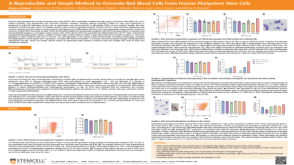 科学海报A Reproducible and Simple Method to Generate Red Blood Cells From Human Pluripotent Stem Cells
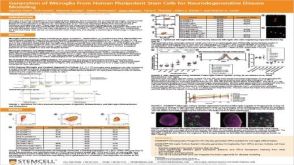 科学海报Generation of Microglia From Human Pluripotent Stem Cells for Neurodegenerative Disease Modeling
 沪公网安备31010102008431号