Opalinska JB et al. (DEC 2010)
Blood 116 23 e128--38
MicroRNA expression in maturing murine megakaryocytes.
MicroRNAs are small noncoding RNAs that regulate cellular development by interfering with mRNA stability and translation. We examined global microRNA expression during the differentiation of murine hematopoietic progenitors into megakaryocytes. Of 435 miRNAs analyzed,13 were up-regulated and 81 were down-regulated. Many of these changes are consistent with miRNA profiling studies of human megakaryocytes and platelets,although new patterns also emerged. Among 7 conserved miRNAs that were up-regulated most strongly in murine megakaryocytes,6 were also induced in the related erythroid lineage. MiR-146a was strongly up-regulated during mouse and human megakaryopoiesis but not erythropoiesis. However,overexpression of miR-146a in mouse bone marrow hematopoietic progenitor populations produced no detectable alterations in megakaryocyte development or platelet production in vivo or in colony assays. Our findings extend the repertoire of differentially regulated miRNAs during murine megakaryopoiesis and provide a useful new dataset for hematopoiesis research. In addition,we show that enforced hematopoietic expression of miR-146a has minimal effects on megakaryopoiesis. These results are compatible with prior studies indicating that miR-146a inhibits megakaryocyte production indirectly by suppressing inflammatory cytokine production from innate immune cells,but cast doubt on a different study,which suggests that this miRNA inhibits megakaryopoiesis cell-autonomously.
View Publication
产品号#:
09600
09650
产品名:
StemSpan™ SFEM
StemSpan™ SFEM
Griswold IJ et al. (AUG 2006)
Molecular and cellular biology 26 16 6082--93
Kinase domain mutants of Bcr-Abl exhibit altered transformation potency, kinase activity, and substrate utilization, irrespective of sensitivity to imatinib.
Kinase domain (KD) mutations of Bcr-Abl interfering with imatinib binding are the major mechanism of acquired imatinib resistance in patients with Philadelphia chromosome-positive leukemia. Mutations of the ATP binding loop (p-loop) have been associated with a poor prognosis. We compared the transformation potency of five common KD mutants in various biological assays. Relative to unmutated (native) Bcr-Abl,the ATP binding loop mutants Y253F and E255K exhibited increased transformation potency,M351T and H396P were less potent,and the performance of T315I was assay dependent. The transformation potency of Y253F and M351T correlated with intrinsic Bcr-Abl kinase activity,whereas the kinase activity of E255K,H396P,and T315I did not correlate with transforming capabilities,suggesting that additional factors influence transformation potency. Analysis of the phosphotyrosine proteome by mass spectroscopy showed differential phosphorylation among the mutants,a finding consistent with altered substrate specificity and pathway activation. Mutations in the KD of Bcr-Abl influence kinase activity and signaling in a complex fashion,leading to gain- or loss-of-function variants. The drug resistance and transformation potency of mutants may determine the outcome of patients on therapy with Abl kinase inhibitors.
View Publication
产品号#:
03236
产品名:
MethoCult™ SF M3236
Sumitomo A et al. (OCT 2010)
Molecular and cellular biology 30 20 4818--27
The transcriptional mediator subunit MED1/TRAP220 in stromal cells is involved in hematopoietic stem/progenitor cell support through osteopontin expression.
MED1/TRAP220,a subunit of the transcriptional Mediator/TRAP complex,is crucial for various biological events through its interaction with distinct activators,such as nuclear receptors and GATA family activators. In hematopoiesis,MED1 plays a pivotal role in optimal nuclear receptor-mediated myelomonopoiesis and GATA-1-induced erythropoiesis. In this study,we present evidence that MED1 in stromal cells is involved in supporting hematopoietic stem and/or progenitor cells (HSPCs) through osteopontin (OPN) expression. We found that the proliferation of bone marrow (BM) cells cocultured with MED1 knockout (Med1(-/-)) mouse embryonic fibroblasts (MEFs) was significantly suppressed compared to the control. Furthermore,the number of long-term culture-initiating cells (LTC-ICs) was attenuated for BM cells cocultured with Med1(-/-) MEFs. The vitamin D receptor (VDR)- and Runx2-mediated expression of OPN,as well as Mediator recruitment to the Opn promoter,was specifically attenuated in the Med1(-/-) MEFs. Addition of OPN to these MEFs restored the growth of cocultured BM cells and the number of LTC-ICs,both of which were attenuated by the addition of the anti-OPN antibody to Med1(+/+) MEFs and to BM stromal cells. Consequently,MED1 in niche appears to play an important role in supporting HSPCs by upregulating VDR- and Runx2-mediated transcription on the Opn promoter.
View Publication
产品号#:
03334
03434
03444
05350
09500
产品名:
MethoCult™ M3334
MethoCult™ GF M3434
MethoCult™ GF M3434
BIT 9500血清替代物
Takemura T et al. (FEB 2010)
The Journal of biological chemistry 285 9 6585--94
Reduction of Raf kinase inhibitor protein expression by Bcr-Abl contributes to chronic myelogenous leukemia proliferation.
Chronic myelogenous leukemia (CML) is characterized by a reciprocal chromosomal translocation (9;22) that generates the Bcr-Abl fusion gene. The Ras/Raf-1/MEK/ERK pathway is constitutively activated in Bcr-Abl-transformed cells,and Ras activity enhances the oncogenic ability of Bcr-Abl. However,the mechanism by which Bcr-Abl activates the Ras pathway is not completely understood. Raf kinase inhibitor protein (RKIP) inhibits activation of MEK by Raf-1 and its downstream signal transduction,resulting in blocking the MAP kinase pathway. In the present study,we found that RKIP was depleted in CML cells. We investigated the interaction between RKIP and Bcr-Abl in CML cell lines and Bcr-Abl(+) progenitor cells from CML patients. The Abl kinase inhibitors and depletion of Bcr-Abl induced the expression of RKIP and reduced the pERK1/2 status,resulting in inhibited proliferation of CML cells. Moreover,RKIP up-regulated cell cycle regulator FoxM1 expression,resulting in G(1) arrest via p27(Kip1) and p21(Cip1) accumulation. In colony-forming unit granulocyte,erythroid,macrophage,megakaryocyte,colony-forming unit-granulocyte macrophage,and burst-forming unit erythroid,treatment with the Abl kinase inhibitors and depletion of Bcr-Abl induced RKIP and reduced FoxM1 expressions,and inhibited colony formation of Bcr-Abl(+) progenitor cells,whereas depletion of RKIP weakened the inhibition of colony formation activity by the Abl kinase inhibitors in Bcr-Abl(+) progenitor cells. Thus,Bcr-Abl represses the expression of RKIP,continuously activates pERK1/2,and suppresses FoxM1 expression,resulting in proliferation of CML cells.
View Publication
产品号#:
01700
01705
04435
04445
01702
产品名:
ALDEFLUOR™ 试剂盒
ALDEFLUOR™ DEAB试剂, 1.5 mM, 1 mL
MethoCult™ H4435 Enriched
MethoCult™ H4435 Enriched
ALDEFLUOR™检测缓冲液
Kurita R et al. (SEP 2006)
Stem cells (Dayton,Ohio) 24 9 2014--22
Tal1/Scl gene transduction using a lentiviral vector stimulates highly efficient hematopoietic cell differentiation from common marmoset (Callithrix jacchus) embryonic stem cells.
The development of embryonic stem cell (ESC) therapies requires the establishment of efficient methods to differentiate ESCs into specific cell lineages. Here,we report the in vitro differentiation of common marmoset (CM) (Callithrix jacchus) ESCs into hematopoietic cells after exogenous gene transfer using vesicular stomatitis virus-glycoprotein-pseudotyped lentiviral vectors. We transduced hematopoietic genes,including tal1/scl,gata1,gata2,hoxB4,and lhx2,into CM ESCs. By immunochemical and morphological analyses,we demonstrated that overexpression of tal1/scl,but not the remaining genes,dramatically increased hematopoiesis of CM ESCs,resulting in multiple blood-cell lineages. Furthermore,flow cytometric analysis demonstrated that CD34,a hematopoietic stem/progenitor cell marker,was highly expressed in tal1/scl-overexpressing embryoid body cells. Similar results were obtained from three independent CM ESC lines. These results suggest that transduction of exogenous tal1/scl cDNA into ESCs is a promising method to induce the efficient differentiation of CM ESCs into hematopoietic stem/progenitor cells.
View Publication
产品号#:
03434
03444
04435
04445
产品名:
MethoCult™ GF M3434
MethoCult™ GF M3434
MethoCult™ H4435 Enriched
MethoCult™ H4435 Enriched
Baba Y et al. (AUG 2006)
Journal of immunology (Baltimore,Md. : 1950) 177 4 2294--303
Constitutively active beta-catenin promotes expansion of multipotent hematopoietic progenitors in culture.
This study was designed to investigate one component of the Wnt/beta-catenin signaling pathway that has been implicated in stem cell self-renewal. Retroviral-mediated introduction of stable beta-catenin to primitive murine bone marrow cells allowed the expansion of multipotential c-Kit(low)Sca-1(low/-)CD19(-) CD11b/Mac-1(-)Flk-2(-)CD43(+)AA4.1(+)NK1.1(-)CD3(-)CD11c(-)Gr-1(-)CD45R/B220(+) cells in the presence of stromal cells and cytokines. They generated myeloid,T,and B lineage lymphoid cells in culture,but had no T lymphopoietic potential when transplanted. Stem cell factor and IL-6 were found to be minimal requirements for long-term,stromal-free propagation,and a beta-catenin-transduced cell line was maintained for 5 mo with these defined conditions. Although multipotential and responsive to many normal stimuli in culture,it was unable to engraft several types of irradiated recipients. These findings support previous studies that have implicated the canonical Wnt pathway signaling in regulation of multipotent progenitors. In addition,we demonstrate how it may be experimentally manipulated to generate valuable cell lines.
View Publication
产品号#:
03434
03444
产品名:
MethoCult™ GF M3434
MethoCult™ GF M3434
Ohmori T et al. (OCT 2010)
The Journal of biological chemistry 285 41 31763--73
Vinculin is indispensable for repopulation by hematopoietic stem cells, independent of integrin function.
Vinculin is a highly conserved actin-binding protein that is localized in integrin-mediated focal adhesion complexes. Although critical roles have been proposed for integrins in hematopoietic stem cell (HSC) function,little is known about the involvement of intracellular focal adhesion proteins in HSC functions. This study showed that the ability of c-Kit(+)Sca1(+)Lin(-) HSCs to support reconstitution of hematopoiesis after competitive transplantation was severely impaired by lentiviral transduction with short hairpin RNA sequences for vinculin. The potential of these HSCs to differentiate into granulocytic and monocytic lineages,to migrate toward stromal cell-derived factor 1α,and to home to the bone marrow in vivo were not inhibited by the loss of vinculin. However,the capacities to form long term culture-initiating cells and cobblestone-like areas were abolished in vinculin-silenced c-Kit(+)Sca1(+)Lin(-) HSCs. In contrast,adhesion to the extracellular matrix was inhibited by silencing of talin-1,but not of vinculin. Whole body in vivo luminescence analyses to detect transduced HSCs confirmed the role of vinculin in long term HSC reconstitution. Our results suggest that vinculin is an indispensable factor determining HSC repopulation capacity,independent of integrin functions.
View Publication
产品号#:
03231
03434
03444
05350
产品名:
MethoCult™ M3231
MethoCult™ GF M3434
MethoCult™ GF M3434
Nakagawa M et al. (NOV 2006)
Blood 108 10 3329--34
AML1/Runx1 rescues Notch1-null mutation-induced deficiency of para-aortic splanchnopleural hematopoiesis.
The Notch1-RBP-Jkappa and the transcription factor Runx1 pathways have been independently shown to be indispensable for the establishment of definitive hematopoiesis. Importantly,expression of Runx1 is down-regulated in the para-aortic splanchnopleural (P-Sp) region of Notch1- and Rbpsuh-null mice. Here we demonstrate that Notch1 up-regulates Runx1 expression and that the defective hematopoietic potential of Notch1-null P-Sp cells is successfully rescued in the OP9 culture system by retroviral transfer of Runx1. We also show that Hes1,a known effector of Notch signaling,potentiates Runx1-mediated transactivation. Together with the recent findings in zebrafish,Runx1 is postulated to be a cardinal down-stream mediator of Notch signaling in hematopoietic development throughout vertebrates. Our findings also suggest that Notch signaling may modulate both expression and transcriptional activity of Runx1.
View Publication
产品号#:
03434
03444
产品名:
MethoCult™ GF M3434
MethoCult™ GF M3434
Ramadan A et al. (SEP 2010)
Genes to cells : devoted to molecular & cellular mechanisms 15 9 983--94
Cells with hematopoietic activity in the mouse placenta reside in side population.
The discovery of a major hematopoietic stem cell pool in midgestation mouse embryo has defined the placenta as an important hematopoietic anatomical site. In this study,we examined the flow cytometric pattern of mouse placenta cells on embryonic days (E) 10.5 to E15.5,in view of CD45 and c-Kit expression. We also determined which population of these cells shows differentiation potential toward multiple hematopoietic lineages by performing coculture with OP9 stromal cells and colony-forming assay in methylcellulose. Only CD45(+)c-Kit(+) population showed the ability to form hematopoietic colonies including multiple lineages. To distinguish which fraction of placenta cells have the hematopoietic activity,we used GFP transgenic mice in which the fetal part of the placenta is GFP positive and the maternal part is GFP negative. E11.5 and E13.5 CD45(+)c-Kit(+) placental cells that have ability to form hematopoietic colonies are the fetal GFP positive placental cells. E11.5 and E13.5 CD45(+)c-Kit(+) placental cells that have an ability to form hematopoietic colonies mainly reside in Hoechst dye-effluxing side population area (SP). Taken together,in the placenta of mouse embryo,we conclude that SP cells in the CD45(+)c-Kit(+) fetal placental cells have the ability to form hematopoietic colonies.
View Publication


 EasySep™小鼠TIL(CD45)正选试剂盒




 技术公告Identification of ALDH-Expressing Cancer Stem Cells Using ALDEFLUOR™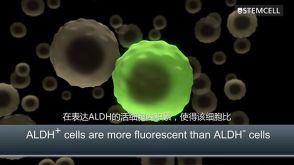

 沪公网安备31010102008431号