Properties of CD34+ CML stem/progenitor cells that correlate with different clinical responses to imatinib mesylate.
Imatinib mesylate (IM) induces clinical remissions in chronic-phase chronic myeloid leukemia (CML) patients but IM resistance remains a problem. We recently identified several features of CML CD34(+) stem/progenitor cells expected to confer resistance to BCR-ABL-targeted therapeutics. From a study of 25 initially chronic-phase patients,we now demonstrate that some,but not all,of these parameters correlate with subsequent clinical response to IM therapy. CD34(+) cells from the 14 IM nonresponders demonstrated greater resistance to IM than the 11 IM responders in colony-forming cell assays in vitro (P textless .001) and direct sequencing of cloned transcripts from CD34(+) cells further revealed a higher incidence of BCR-ABL kinase domain mutations in the IM nonresponders (10%-40% vs 0%-20% in IM responders,P textless .003). In contrast,CD34(+) cells from IM nonresponders and IM responders were not distinguished by differences in BCR-ABL or transporter gene expression. Interestingly,one BCR-ABL mutation (V304D),predicted to destabilize the interaction between p210(BCR-ABL) and IM,was detectable in 14 of 20 patients. T315I mutant CD34(+) cells found before IM treatment in 2 of 20 patients examined were preferentially amplified after IM treatment. Thus,2 properties of pretreatment CML stem/progenitor cells correlate with subsequent response to IM therapy. Prospective assessment of these properties may allow improved patient management.
View Publication
产品号#:
18056
18056RF
产品名:
Pirson L et al. (JUL 2006)
Stem cells (Dayton,Ohio) 24 7 1814--21
Despite inhibition of hematopoietic progenitor cell growth in vitro, the tyrosine kinase inhibitor imatinib does not impair engraftment of human CD133+ cells into NOD/SCIDbeta2mNull mice.
There is potential interest for combining allogeneic hematopoietic cell transplantation (HCT),and particularly allogeneic HCT with a nonmyeloablative regimen,to the tyrosine kinase inhibitor imatinib (Glivec; Novartis,Basel,Switzerland,http://www.novartis.com) in order to maximize anti-leukemic activity against Philadelphia chromosome-positive leukemias. However,because imatinib inhibits c-kit,the stem cell factor receptor,it could interfere with bone marrow engraftment. In this study,we examined the impact of imatinib on normal progenitor cell function. Imatinib decreased the colony-forming capacity of mobilized peripheral blood human CD133(+) cells but not that of long-term culture-initiating cells. Imatinib also decreased the proliferation of cytokine-stimulated CD133(+) cells but did not induce apoptosis of these cells. Expression of very late antigen (VLA)-4,VLA-5,and CXCR4 of CD133(+) cells was not modified by imatinib,but imatinib decreased the ability of CD133(+) cells to migrate. Finally,imatinib did not decrease engraftment of CD133(+) cells into irradiated nonobese diabetic/severe combined immunodeficient/beta2m(null) mice conditioned with 3 or 1 Gy total body irradiation. In summary,our results suggest that,despite inhibition of hematopoietic progenitor cell growth in vitro,imatinib does not interfere with hematopoietic stem cell engraftment.
View Publication
产品号#:
05150
04435
04445
04960
04902
04900
04961
04901
04963
04962
04970
04971
产品名:
MyeloCult™ H5100
MethoCult™ H4435 Enriched
MethoCult™ H4435 Enriched
MegaCult™-C胶原和无细胞因子培养基
胶原蛋白溶液
MegaCult™-C无细胞因子培养基
MegaCult™-C胶原和含细胞因子培养基
MegaCult™-C含细胞因子培养基
双室载玻片套件
MegaCult™-C CFU-Mk染色试剂盒
MegaCult™-C无细胞因子全套试剂盒
MegaCult™-C含细胞因子全套试剂盒
Ma Y et al. (OCT 2006)
Blood 108 8 2726--35
SALL4, a novel oncogene, is constitutively expressed in human acute myeloid leukemia (AML) and induces AML in transgenic mice.
SALL4,a human homolog to Drosophila spalt,is a novel zinc finger transcriptional factor essential for development. We cloned SALL4 and its isoforms (SALL4A and SALL4B). Through immunohistochemistry and real-time reverse-transcription-polymerase chain reaction (RT-PCR),we demonstrated that SALL4 was constitutively expressed in human primary acute myeloid leukemia (AML,n = 81),and directly tested the leukemogenic potential of constitutive expression of SALL4 in a murine model. SALL4B transgenic mice developed myelodysplastic syndrome (MDS)-like features and subsequently AML that was transplantable. Increased apoptosis associated with dysmyelopoiesis was evident in transgenic mouse marrow and colony-formation (CFU) assays. Both isoforms could bind to beta-catenin and synergistically enhanced the Wnt/beta-catenin signaling pathway. Our data suggest that the constitutive expression of SALL4 causes MDS/AML,most likely through the Wnt/beta-catenin pathway. Our murine model provides a useful platform to study human MDS/AML transformation,as well as the Wnt/beta-catenin pathway's role in the pathogenesis of leukemia stem cells.
View Publication
产品号#:
03434
03444
产品名:
MethoCult™ GF M3434
MethoCult™ GF M3434
Zhao Z et al. (JUL 2010)
Genes & development 24 13 1389--402
p53 loss promotes acute myeloid leukemia by enabling aberrant self-renewal.
The p53 tumor suppressor limits proliferation in response to cellular stress through several mechanisms. Here,we test whether the recently described ability of p53 to limit stem cell self-renewal suppresses tumorigenesis in acute myeloid leukemia (AML),an aggressive cancer in which p53 mutations are associated with drug resistance and adverse outcome. Our approach combined mosaic mouse models,Cre-lox technology,and in vivo RNAi to disable p53 and simultaneously activate endogenous Kras(G12D)-a common AML lesion that promotes proliferation but not self-renewal. We show that p53 inactivation strongly cooperates with oncogenic Kras(G12D) to induce aggressive AML,while both lesions on their own induce T-cell malignancies with long latency. This synergy is based on a pivotal role of p53 in limiting aberrant self-renewal of myeloid progenitor cells,such that loss of p53 counters the deleterious effects of oncogenic Kras on these cells and enables them to self-renew indefinitely. Consequently,myeloid progenitor cells expressing oncogenic Kras and lacking p53 become leukemia-initiating cells,resembling cancer stem cells capable of maintaining AML in vivo. Our results establish an efficient new strategy for interrogating oncogene cooperation,and provide strong evidence that the ability of p53 to limit aberrant self-renewal contributes to its tumor suppressor activity.
View Publication
产品号#:
03534
09600
09650
产品名:
MethoCult™ GF M3534
StemSpan™ SFEM
StemSpan™ SFEM
Nakazawa G et al. (JAN 2010)
JACC. Cardiovascular interventions 3 1 68--75
Anti-CD34 antibodies immobilized on the surface of sirolimus-eluting stents enhance stent endothelialization.
OBJECTIVES: In this study,we hypothesized that an antihuman-CD34 antibody immobilized on the surface of commercially available sirolimus-eluting stents (SES) could enhance re-endothelialization compared with SES alone. BACKGROUND: Previous experience with antihuman-CD34 antibody surface modified Genous stents (GS) (OrbusNeich Medical,Fort Lauderdale,Florida) has shown enhanced stent endothelialization in vivo. METHODS: In the phase 1 study,stents were deployed in 21 pig coronary arteries for single stenting (9 vessels: 3 GS,3 SES,and 3 bare-metal stents) and overlapping stenting with various combinations (12 vessels: 4 GS+GS,4 SES+SES,and 4 GS+SES) and harvested at 14 days for scanning electron and confocal microscopy. In phase 2,immobilized anti-CD34 antibody coating was applied on commercially available SES (SES-anti-CD34,n = 7) and compared with GS (n = 8) and SES (n = 7) and examined at 3 and 14 days by scanning electron/confocal microscopy analysis. RESULTS: In phase 1,single stent implantation showed greatest endothelialization in GS (99%) and in bare-metal stent (99%) compared with SES (55%,p = 0.048). In overlapping stents,endothelialization at the overlapping zone was significantly greater in GS+GS (95 +/- 6%) and GS+SES (79 +/- 5%) compared with the SES+SES (36 +/- 14%) group (p = 0.007). In phase 2,SES-anti-CD34 resulted in increased endothelialization compared with SES alone at 3 days (SES-anti-CD34 36 +/- 26%; SES 7 +/- 3%; and GS 76 +/- 8%; p = 0.01),and 14 days (SES-anti-CD34 82 +/- 8%; SES 53 +/- 20%; and GS 98 +/- 2%; p = 0.009). CONCLUSIONS: Immobilization of anti-CD34 antibody on SES enhances endothelialization and may potentially be an effective therapeutic alternative to improve currently available drug-eluting stents.
View Publication
产品号#:
02690
产品名:
StemSpan™ CC100
Cohen-Haguenauer O et al. (FEB 2006)
Proceedings of the National Academy of Sciences of the United States of America 103 7 2340--5
In vivo repopulation ability of genetically corrected bone marrow cells from Fanconi anemia patients.
Fanconi anemia (FA) is a rare inherited genomic instability syndrome representing one of the best examples of hematopoietic stem cell deficiency. Although FA might be an excellent candidate for bone marrow (BM) genetic correction ex vivo,knockout animal models are not sufficient to guide preclinical steps,and gene therapy attempts have proven disappointing so far. Contributing to these poor results is a characteristic and dramatic early BM-cells die-off when placed in culture. We show here that human primary FA BM cell survival can be ameliorated by using specific culture conditions that limit oxidative stress. When coupled with retrovirus-mediated transfer of the main complementation group FANCA-cDNA,we could achieve long-term reconstitution of the stem cell compartment both in vitro and in vivo. Gene-corrected BM cultures grew for textgreater120 days,and after cultured cell transplantation into NOD/SCID mice,clonogenic human cells carrying the FANCA transgene could be detected 6 months after transduction. By comparison,untransduced cells died in culture by 15 days. Of necessity for ethical reasons,experiments were conducted on a very limited number of primary BM cells. By using low cytokine regimen and conditions matching regulatory requirements,a contingent of gene-corrected cells slowly emerges with an unmet potential for in vivo engraftment. Future therapeutic applications of stem cells might be expanding from these data. In addition,we provide a model of gene-corrected human primary cell growth that carries the potential to better delineate the combined role of both DNA damage and oxidative stress in the pathogenesis of FA.
View Publication
产品号#:
04436
产品名:
MethoCult™ SF H4436
Sauer AV et al. (OCT 2009)
Blood 114 15 3216--26
ADA-deficient SCID is associated with a specific microenvironment and bone phenotype characterized by RANKL/OPG imbalance and osteoblast insufficiency.
Adenosine deaminase (ADA) deficiency is a disorder of the purine metabolism leading to combined immunodeficiency and systemic alterations,including skeletal abnormalities. We report that ADA deficiency in mice causes a specific bone phenotype characterized by alterations of structural properties and impaired mechanical competence. These alterations are the combined result of an imbalanced receptor activator of nuclear factor-kappaB ligand (RANKL)/osteoprotegerin axis,causing decreased osteoclastogenesis and an intrinsic defect of osteoblast function with subsequent low bone formation. In vitro,osteoblasts lacking ADA displayed an altered transcriptional profile and growth reduction. Furthermore,the bone marrow microenvironment of ADA-deficient mice showed a reduced capacity to support in vitro and in vivo hematopoiesis. Treatment of ADA-deficient neonatal mice with enzyme replacement therapy,bone marrow transplantation,or gene therapy resulted in full recovery of the altered bone parameters. Remarkably,untreated ADA-severe combined immunodeficiency patients showed a similar imbalance in RANKL/osteoprotegerin levels alongside severe growth retardation. Gene therapy with ADA-transduced hematopoietic stem cells increased serum RANKL levels and children's growth. Our results indicate that the ADA metabolism represents a crucial modulatory factor of bone cell activities and remodeling.
View Publication
产品号#:
13056
产品名:
Eminli S et al. (SEP 2009)
Nature genetics 41 9 968--76
Differentiation stage determines potential of hematopoietic cells for reprogramming into induced pluripotent stem cells.
The reprogramming of somatic cells into induced pluripotent stem (iPS) cells upon overexpression of the transcription factors Oct4,Sox2,Klf4 and cMyc is inefficient. It has been assumed that the somatic differentiation state provides a barrier for efficient reprogramming; however,direct evidence for this notion is lacking. Here,we tested the potential of mouse hematopoietic cells at different stages of differentiation to be reprogrammed into iPS cells. We show that hematopoietic stem and progenitor cells give rise to iPS cells up to 300 times more efficiently than terminally differentiated B and T cells do,yielding reprogramming efficiencies of up to 28%. Our data provide evidence that the differentiation stage of the starting cell has a critical influence on the efficiency of reprogramming into iPS cells. Moreover,we identify hematopoietic progenitors as an attractive cell type for applications of iPS cell technology in research and therapy.
View Publication
产品号#:
02690
05850
05857
05870
05875
09600
09650
85850
85857
85870
85875
70008
70008.1
70008.2
70008.3
70008.4
70008.5
70008.6
200-0002
200-0001
200-0000
产品名:
StemSpan™ CC100
StemSpan™ SFEM
StemSpan™ SFEM
mTeSR™1
mTeSR™1
冻存的人脐带血CD34+细胞
冻存的人脐带血CD34+细胞
冻存的人脐带血CD34+细胞
冻存的人脐带血CD34+细胞
冻存的人脐带血CD34+细胞
冻存的人脐带血CD34+细胞
冻存的人脐带血CD34+细胞
冻存的人脐带血CD34+细胞
冻存的人脐带血CD34+细胞
Capoccia BJ et al. (MAY 2009)
Blood 113 21 5340--51
Revascularization of ischemic limbs after transplantation of human bone marrow cells with high aldehyde dehydrogenase activity.
The development of cell therapies to treat peripheral vascular disease has proven difficult because of the contribution of multiple cell types that coordinate revascularization. We characterized the vascular regenerative potential of transplanted human bone marrow (BM) cells purified by high aldehyde dehydrogenase (ALDH(hi)) activity,a progenitor cell function conserved between several lineages. BM ALDH(hi) cells were enriched for myelo-erythroid progenitors that produced multipotent hematopoietic reconstitution after transplantation and contained nonhematopoietic precursors that established colonies in mesenchymal-stromal and endothelial culture conditions. The regenerative capacity of human ALDH(hi) cells was assessed by intravenous transplantation into immune-deficient mice with limb ischemia induced by femoral artery ligation/transection. Compared with recipients injected with unpurified nucleated cells containing the equivalent of 2- to 4-fold more ALDH(hi) cells,mice transplanted with purified ALDH(hi) cells showed augmented recovery of perfusion and increased blood vessel density in ischemic limbs. ALDH(hi) cells transiently recruited to ischemic regions but did not significantly integrate into ischemic tissue,suggesting that transient ALDH(hi) cell engraftment stimulated endogenous revascularization. Thus,human BM ALDH(hi) cells represent a progenitor-enriched population of several cell lineages that improves perfusion in ischemic limbs after transplantation. These clinically relevant cells may prove useful in the treatment of critical ischemia in humans.
View Publication


 EasySep™小鼠TIL(CD45)正选试剂盒




 技术公告Identification of ALDH-Expressing Cancer Stem Cells Using ALDEFLUOR™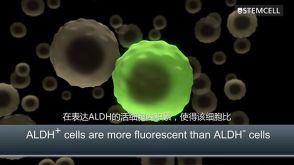

 沪公网安备31010102008431号