Long T et al. (MAR 2014)
Biomaterials 35 9 2752--9
The effect of mesenchymal stem cell sheets on structural allograft healing of critical sized femoral defects in mice.
Structural bone allografts are widely used in the clinic to treat critical sized bone defects,despite lacking the osteoinductive characteristics of live autografts. To address this,we generated revitalized structural allografts wrapped with mesenchymal stem/progenitor cell (MSC) sheets,which were produced by expanding primary syngenic bone marrow derived cells on temperature-responsive plates,as a tissue-engineered periosteum. In vitro assays demonstrated maintenance of the MSC phenotype in the sheets,suggesting that short-term culturing of MSC sheets is not detrimental. To test their efficacy in vivo,allografts wrapped with MSC sheets were transplanted into 4-mm murine femoral defects and compared to allografts with direct seeding of MSCs and allografts without cells. Evaluations consisted of X-ray plain radiography,3D microCT,histology,and biomechanical testing at 4- and 6-weeks post-surgery. Our findings demonstrate that MSC sheets induce prolonged cartilage formation at the graft-host junction and enhanced bone callus formation,as well as graft-host osteointegration. Moreover,a large periosteal callus was observed spanning the allografts with MSC sheets,which partially mimics live autograft healing. Finally,biomechanical testing showed a significant increase in the structural and functional properties of MSC sheet grafted femurs. Taken together,MSC sheets exhibit enhanced osteogenicity during critical sized bone defect repair,demonstrating the feasibility of this tissue engineering solution for massive allograft healing.
View Publication
产品号#:
19771
产品名:
EasySep™ 小鼠间充质干/祖细胞富集试剂盒
Zhou Y et al. (NOV 2014)
Scientific reports 4 6978
Trend of telomerase activity change during human iPSC self-renewal and differentiation revealed by a quartz crystal microbalance based assay.
Telomerase plays an important role in governing the life span of cells for its capacity to extend telomeres. As high activity of telomerase has been found in stem cells and cancer cells specifically,various methods have been developed for the evaluation of telomerase activity. To overcome the time-consuming procedures and complicated manipulations of existing methods,we developed a novel method named Telomeric Repeat Elongation Assay based on Quartz crystal microbalance (TREAQ) to monitor telomerase activity during the self-renewal and differentiation of human induced pluripotent stem cells (hiPSCs). TREAQ results indicated hiPSCs possess invariable telomerase activity for 11 passages on Matrigel and a steady decline of telomerase activity when differentiated for different periods,which is confirmed with existing golden standard method. The pluripotency of hiPSCs during differentiation could be estimated through monitoring telomerase activity and compared with the expression levels of markers of pluripotency gene via quantitative real time PCR. Regular assessment for factors associated with pluripotency or stemness was expensive and requires excessive sample consuming,thus TREAQ could be a promising alternative technology for routine monitoring of telomerase activity and estimate the pluripotency of stem cells.
View Publication
Derivation of mesenchymal stromal cells from pluripotent stem cells through a neural crest lineage using small molecule compounds with defined media
Neural crest cells (NCCs) are an embryonic migratory cell population with the ability to differentiate into a wide variety of cell types that contribute to the craniofacial skeleton,cornea,peripheral nervous system,and skin pigmentation. This ability suggests the promising role of NCCs as a source for cell-based therapy. Although several methods have been used to induce human NCCs (hNCCs) from human pluripotent stem cells (hPSCs),such as embryonic stem cells (ESCs) and induced pluripotent stem cells (iPSCs),further modifications are required to improve the robustness,efficacy,and simplicity of these methods. Chemically defined medium (CDM) was used as the basal medium in the induction and maintenance steps. By optimizing the culture conditions,the combination of the GSK3β inhibitor and TGFβ inhibitor with a minimum growth factor (insulin) very efficiently induced hNCCs (70-80%) from hPSCs. The induced hNCCs expressed cranial NCC-related genes and stably proliferated in CDM supplemented with EGF and FGF2 up to at least 10 passages without changes being observed in the major gene expression profiles. Differentiation properties were confirmed for peripheral neurons,glia,melanocytes,and corneal endothelial cells. In addition,cells with differentiation characteristics similar to multipotent mesenchymal stromal cells (MSCs) were induced from hNCCs using CDM specific for human MSCs. Our simple and robust induction protocol using small molecule compounds with defined media enabled the generation of hNCCs as an intermediate material producing terminally differentiated cells for cell-based innovative medicine.
View Publication
SnapShot: Adipocyte Life Cycle
Overview of the adipocyte life cycle, including a list of molecules involved in adipose stem cell proliferation, adipocyte differentiation, turnover and obesigenic expansion
Differentiation of osteoblasts and in vitro bone formation from murine embryonic stem cells.
Pluripotent embryonic stem (ES) cells have the potential to differentiate to all fetal and adult cell types and might represent a useful cell source for tissue engineering and repair. Here we show that differentiation of ES cells toward the osteoblast lineage can be enhanced by supplementing serum-containing media with ascorbic acid,beta-glycerophosphate,and/or dexamethasone/retinoic acid or by co-culture with fetal murine osteoblasts. ES cell differentiation into osteoblasts was characterized by the formation of discrete mineralized bone nodules that consisted of 50-100 cells within an extracellular matrix of collagen-1 and osteocalcin. Dexamethasone in combination with ascorbic acid and beta-glycerophosphate induced the greatest number of bone nodules and was dependent on time of stimulation with a sevenfold increase when added to ES cultures after,but not before,14 days. Co-culture with fetal osteoblasts also provided a potent stimulus for osteogenic differentiation inducing a fivefold increase in nodule number relative to ES cells cultured alone. These data demonstrate the application of a quantitative assay for the derivation of osteoblast lineage progenitors from pluripotent ES cells. This could be applied to obtain purified osteoblasts to analyze mechanisms of osteogenesis and for use of ES cells in skeletal tissue repair.
View Publication
产品号#:
06902
06952
00321
00322
00323
00324
00325
产品名:
Ikebe C and Suzuki K ( 2014)
BioMed research international 2014 951512
Mesenchymal stem cells for regenerative therapy: optimization of cell preparation protocols.
Administration of bone marrow-derived mesenchymal stem cells (MSCs) is an innovative approach for the treatment of a range of diseases that are not curable by current therapies including heart failure. A number of clinical trials have been completed and many others are ongoing; more than 2,000 patients worldwide have been administered with culture-expanded allogeneic or autologous MSCs for the treatment of various diseases,showing feasibility and safety (and some efficacy) of this approach. However,protocols for isolation and expansion of donor MSCs vary widely between these trials,which could affect the efficacy of the therapy. It is therefore important to develop international standards of MSC production,which should be evidence-based,regulatory authority-compliant,of good medical practice grade,cost-effective,and clinically practical,so that this innovative approach becomes an established widely adopted treatment. This review article summarizes protocols to isolate and expand bone marrow-derived MSCs in 47 recent clinical trials of MSC-based therapy,which were published after 2007 onwards and provided sufficient methodological information. Identified issues and possible solutions associated with the MSC production methods,including materials and protocols for isolation and expansion,are discussed with reference to relevant experimental evidence with aim of future clinical success of MSC-based therapy.
View Publication


 EasySep™小鼠TIL(CD45)正选试剂盒




 实验方案How to Prepare and Plate Semi-Solid Methylcellulose Medium for Cell Culture
 技术公告Extracellular Vesicle Generation from Mesenchymal Stromal Cells Using MesenCult™-ACF Plus
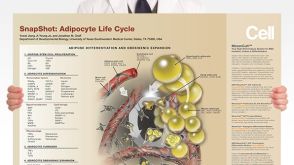 挂图SnapShot: Adipocyte Life Cycle Overview of the adipocyte life cycle, including a list of molecules involved in adipose stem cell proliferation, adipocyte differentiation, turnover and obesigenic expansion

 沪公网安备31010102008431号