Fang F et al. (APR 2014)
Journal of cell science 127 Pt 7 1428--40
The role of Hath6, a newly identified shear-stress-responsive transcription factor, in endothelial cell differentiation and function.
The key regulators of endothelial differentiation that is induced by shear stress are mostly unclear. Human atonal homolog 6 (Hath6 or ATOH8) is an endothelial-selective and shear-stress-responsive transcription factor. In this study,we sought to elucidate the role of Hath6 in the endothelial specification of embryonic stem cells. In a stepwise human embryonic stem cell to endothelial cell (hESC-EC) induction system,Hath6 mRNA was upregulated synchronously with endothelial determination. Subsequently,gain-of-function and loss-of-function studies of Hath6 were performed using the hESC-EC induction model and endothelial cell lines. The overexpression of Hath6,which mimics shear stress treatment,resulted in an increased CD45(-)CD31(+)KDR(+) population,a higher tubular-structure-formation capacity and increased endothelial-specific gene expression. By contrast,the knockdown of Hath6 mRNA markedly decreased endothelial differentiation. Hath6 also facilitated the maturation of endothelial cells in terms of endothelial gene expression,tubular-structure formation and cell migration. We further demonstrated that the gene encoding eNOS is a direct target of Hath6 through a reporter system assay and western blot analysis,and that the inhibition of eNOS diminishes hESC-EC differentiation. These results suggest that eNOS plays a key role in linking Hath6 to the endothelial phenotype. Further in situ hybridization studies in zebrafish and mouse embryos indicated that homologs of Hath6 are involved in vasculogenesis and angiogenesis. This study provides the first confirmation of the positive impact of Hath6 on human embryonic endothelial differentiation and function. Moreover,we present a potential signaling pathway through which shear stress stimulates endothelial differentiation.
View Publication
产品号#:
05850
05857
05870
05875
85850
85857
85870
85875
产品名:
mTeSR™1
mTeSR™1
Loh KM et al. (JAN 2014)
Cell Stem Cell 14 2 237--252
Efficient endoderm induction from human pluripotent stem cells by logically directing signals controlling lineage bifurcations
Human pluripotent stem cell (hPSC) differentiation typically yields heterogeneous populations. Knowledge of signals controlling embryonic lineage bifurcations could efficiently yield desired cell types through exclusion of alternate fates. Therefore,we revisited signals driving induction and anterior-posterior patterning of definitive endoderm to generate a coherent roadmap for endoderm differentiation. With striking temporal dynamics,BMP and Wnt initially specified anterior primitive streak (progenitor to endoderm),yet,24 hr later,suppressed endoderm and induced mesoderm. At lineage bifurcations,cross-repressive signals separated mutually exclusive fates; TGF-?? and BMP/MAPK respectively induced pancreas versus liver from endoderm by suppressing the alternate lineage. We systematically blockaded alternate fates throughout multiple consecutive bifurcations,thereby efficiently differentiating multiple hPSC lines exclusively into endoderm and its derivatives. Comprehensive transcriptional and chromatin mapping of highly pure endodermal populations revealed that endodermal enhancers existed in a surprising diversity of pre-enhancer" states before activation�
View Publication
产品号#:
05850
05857
05870
05875
85850
85857
85870
85875
产品名:
mTeSR™1
mTeSR™1
Gasimli L et al. (JUN 2014)
Biochimica et Biophysica Acta (BBA) - General Subjects 1840 6 1993--2003
Changes in glycosaminoglycan structure on differentiation of human embryonic stem cells towards mesoderm and endoderm lineages
Background Proteoglycans are found on the cell surface and in the extracellular matrix,and serve as prime sites for interaction with signaling molecules. Proteoglycans help regulate pathways that control stem cell fate,and therefore represent an excellent tool to manipulate these pathways. Despite their importance,there is a dearth of data linking glycosaminoglycan structure within proteoglycans with stem cell differentiation. Methods Human embryonic stem cell line WA09 (H9) was differentiated into early mesoderm and endoderm lineages,and the glycosaminoglycanomic changes accompanying these transitions were studied using transcript analysis,immunoblotting,immunofluorescence and disaccharide analysis. Results Pluripotent H9 cell lumican had no glycosaminoglycan chains whereas in splanchnic mesoderm lumican was glycosaminoglycanated. H9 cells have primarily non-sulfated heparan sulfate chains. On differentiation towards splanchnic mesoderm and hepatic lineages N-sulfo group content increases. Differences in transcript expression of NDST1,HS6ST2 and HS6ST3,three heparan sulfate biosynthetic enzymes,within splanchnic mesoderm cells compared to H9 cells correlate to changes in glycosaminoglycan structure. Conclusions Differentiation of embryonic stem cells markedly changes the proteoglycanome. General significance The glycosaminoglycan biosynthetic pathway is complex and highly regulated,and therefore,understanding the details of this pathway should enable better control with the aim of directing stem cell differentiation. ?? 2014 Elsevier B.V. All rights reserved.
View Publication
产品号#:
05850
05857
05870
05875
85850
85857
85870
85875
产品名:
mTeSR™1
mTeSR™1
Lippmann ES et al. (APR 2014)
Stem Cells 32 4 1032--1042
Defined human pluripotent stem cell culture enables highly efficient neuroepithelium derivation without small molecule inhibitors.
The embryonic neuroepithelium gives rise to the entire central nervous system in vivo,making it an important tissue for developmental studies and a prospective cell source for regenerative applications. Current protocols for deriving homogenous neuroepithelial cultures from human pluripotent stem cells (hPSCs) consist of either embryoid body-mediated neuralization followed by a manual isolation step or adherent differentiation using small molecule inhibitors. Here,we report that hPSCs maintained under chemically defined,feeder-independent,and xeno-free conditions can be directly differentiated into pure neuroepithelial cultures ([mt]90% Pax6(+)/N-cadherin(+) with widespread rosette formation) within 6 days under adherent conditions,without small molecule inhibitors,and using only minimalistic medium consisting of Dulbecco's modified Eagle's medium/F-12,sodium bicarbonate,selenium,ascorbic acid,transferrin,and insulin (i.e.,E6 medium). Furthermore,we provide evidence that the defined culture conditions enable this high level of neural conversion in contrast to hPSCs maintained on mouse embryonic fibroblasts (MEFs). In addition,hPSCs previously maintained on MEFs could be rapidly converted to a neural compliant state upon transfer to these defined conditions while still maintaining their ability to generate all three germ layers. Overall,this fully defined and scalable protocol should be broadly useful for generating therapeutic neural cells for regenerative applications.
View Publication
产品号#:
05850
05857
05870
05875
85850
85857
85870
85875
产品名:
mTeSR™1
mTeSR™1
Ou W et al. (NOV 2013)
PLoS ONE 8 11 e81131
Targeting of Herpes Simplex Virus 1 Thymidine Kinase Gene Sequences into the OCT4 Locus of Human Induced Pluripotent Stem Cells
The in vitro differentiation of human induced pluripotent stem cells (hiPSC) to generate specific types of cells is inefficient,and the remaining undifferentiated cells may form teratomas. This raises safety concerns for clinical applications of hiPSC-derived cellular products. To improve the safety of hiPSC,we attempted to site-specifically insert a herpes simplex virus 1 thymidine kinase (HSV1-TK) suicide gene at the endogenous OCT4 (POU5F1) locus of hiPSC. Since the endogenous OCT4 promoter is active in undifferentiated cells only,we speculated that the HSV1-TK suicide gene will be transcribed in undifferentiated cells only and that the remaining undifferentiated cells can be depleted by treating them with the prodrug ganciclovir (GCV) prior to transplantation. To insert the HSV1-TK gene at the OCT4 locus,we cotransfected hiPSC with a pair of plasmids encoding an OCT4-specific zinc finger nuclease (ZFN) and a donor plasmid harboring a promoter-less transgene cassette consisting of HSV1-TK and puromycin resistance gene sequences,flanked by OCT4 gene sequences. Puromycin resistant clones were established and characterized regarding their sensitivity to GCV and the site of integration of the HSV1-TK/puromycin resistance gene cassette. Of the nine puromycin-resistant iPSC clones analyzed,three contained the HSV1-TK transgene at the OCT4 locus,but they were not sensitive to GCV. The other six clones were GCV-sensitive,but the TK gene was located at off-target sites. These TK-expressing hiPSC clones remained GCV sensitive for up to 90 days,indicating that TK transgene expression was stable. Possible reasons for our failed attempt to selectively target the OCT4 locus are discussed.
View Publication
产品号#:
05850
05857
05870
05875
73342
73344
85850
85857
85870
85875
产品名:
嘌呤霉素 (Dihydrochloride)
嘌呤霉素 (Dihydrochloride)
mTeSR™1
mTeSR™1
Yamashita J et al. (NOV 2000)
Nature 408 6808 92--6
Flk1-positive cells derived from embryonic stem cells serve as vascular progenitors.
Interaction between endothelial cells and mural cells (pericytes and vascular smooth muscle) is essential for vascular development and maintenance. Endothelial cells arise from Flk1-expressing (Flk1+) mesoderm cells,whereas mural cells are believed to derive from mesoderm,neural crest or epicardial cells and migrate to form the vessel wall. Difficulty in preparing pure populations of these lineages has hampered dissection of the mechanisms underlying vascular formation. Here we show that Flk1+ cells derived from embryonic stem cells can differentiate into both endothelial and mural cells and can reproduce the vascular organization process. Vascular endothelial growth factor promotes endothelial cell differentiation,whereas mural cells are induced by platelet-derived growth factor-BB. Vascular cells derived from Flk1+ cells can organize into vessel-like structures consisting of endothelial tubes supported by mural cells in three-dimensional culture. Injection of Flk1+ cells into chick embryos showed that they can incorporate as endothelial and mural cells and contribute to the developing vasculature in vivo. Our findings indicate that Flk1+ cells can act as 'vascular progenitor cells' to form mature vessels and thus offer potential for tissue engineering of the vascular system.
View Publication
产品号#:
06902
06952
00321
00322
00323
00324
00325
产品名:
Cheng Y et al. ( 2013)
BMC cell biology 14 1 44
Physiological β-catenin signaling controls self-renewal networks and generation of stem-like cells from nasopharyngeal carcinoma.
BACKGROUND: A few reports suggested that low levels of Wnt signaling might drive cell reprogramming,but these studies could not establish a clear relationship between Wnt signaling and self-renewal networks. There are ongoing debates as to whether and how the Wnt/β-catenin signaling is involved in the control of pluripotency gene networks. Additionally,whether physiological β-catenin signaling generates stem-like cells through interactions with other pathways is as yet unclear. The nasopharyngeal carcinoma HONE1 cells have low expression of β-catenin and wild-type expression of p53,which provided a possibility to study regulatory mechanism of stemness networks induced by physiological levels of Wnt signaling in these cells.backslashnbackslashnRESULTS: Introduction of increased β-catenin signaling,haploid expression of β-catenin under control by its natural regulators in transferred chromosome 3,resulted in activation of Wnt/β-catenin networks and dedifferentiation in HONE1 hybrid cell lines,but not in esophageal carcinoma SLMT1 hybrid cells that had high levels of endogenous β-catenin expression. HONE1 hybrid cells displayed stem cell-like properties,including enhancement of CD24(+) and CD44(+) populations and generation of spheres that were not observed in parental HONE1 cells. Signaling cascades were detected in HONE1 hybrid cells,including activation of p53- and RB1-mediated tumor suppressor pathways,up-regulation of Nanog-,Oct4-,Sox2-,and Klf4-mediated pluripotency networks,and altered E-cadherin expression in both in vitro and in vivo assays. qPCR array analyses further revealed interactions of physiological Wnt/β-catenin signaling with other pathways such as epithelial-mesenchymal transition,TGF-β,Activin,BMPR,FGFR2,and LIFR- and IL6ST-mediated cell self-renewal networks. Using β-catenin shRNA inhibitory assays,a dominant role for β-catenin in these cellular network activities was observed. The expression of cell surface markers such as CD9,CD24,CD44,CD90,and CD133 in generated spheres was progressively up-regulated compared to HONE1 hybrid cells. Thirty-four up-regulated components of the Wnt pathway were identified in these spheres.backslashnbackslashnCONCLUSIONS: Wnt/β-catenin signaling regulates self-renewal networks and plays a central role in the control of pluripotency genes,tumor suppressive pathways and expression of cancer stem cell markers. This current study provides a novel platform to investigate the interaction of physiological Wnt/β-catenin signaling with stemness transition networks.
View Publication
产品号#:
05850
05857
05870
05875
85850
85857
85870
85875
产品名:
mTeSR™1
mTeSR™1
Huber BC et al. (NOV 2013)
STEM CELLS 31 11 2354--2363
Costimulation-adhesion blockade is superior to Cyclosporine A and prednisone immunosuppressive therapy for preventing rejection of differentiated human embryonic stem cells following transplantation
RATIONALE: Human embryonic stem cell (hESC) derivatives are attractive candidates for therapeutic use. The engraftment and survival of hESC derivatives as xenografts or allografts require effective immunosuppression to prevent immune cell infiltration and graft destruction.backslashnbackslashnOBJECTIVE: To test the hypothesis that a short-course,dual-agent regimen of two costimulation-adhesion blockade agents can induce better engraftment of hESC derivatives compared to current immunosuppressive agents.backslashnbackslashnMETHODS AND RESULTS: We transduced hESCs with a double fusion reporter gene construct expressing firefly luciferase (Fluc) and enhanced green fluorescent protein,and differentiated these cells to endothelial cells (hESC-ECs). Reporter gene expression enabled longitudinal assessment of cell engraftment by bioluminescence imaging. Costimulation-adhesion therapy resulted in superior hESC-EC and mouse EC engraftment compared to cyclosporine therapy in a hind limb model. Costimulation-adhesion therapy also promoted robust hESC-EC and hESC-derived cardiomyocyte survival in an ischemic myocardial injury model. Improved hESC-EC engraftment had a cardioprotective effect after myocardial injury,as assessed by magnetic resonance imaging. Mechanistically,costimulation-adhesion therapy is associated with systemic and intragraft upregulation of T-cell immunoglobulin and mucin domain 3 (TIM3) and a reduced proinflammatory cytokine profile.backslashnbackslashnCONCLUSIONS: Costimulation-adhesion therapy is a superior alternative to current clinical immunosuppressive strategies for preventing the post-transplant rejection of hESC derivatives. By extending the window for cellular engraftment,costimulation-adhesion therapy enhances functional preservation following ischemic injury. This regimen may function through a TIM3-dependent mechanism.
View Publication
产品号#:
05850
05857
05870
05875
85850
85857
85870
85875
产品名:
mTeSR™1
mTeSR™1
Ban K et al. (OCT 2013)
Circulation 128 17 1897--1909
Purification of cardiomyocytes from differentiating pluripotent stem cells using molecular beacons that target cardiomyocyte-specific mRNA
BACKGROUND: Although methods for generating cardiomyocytes from pluripotent stem cells have been reported,current methods produce heterogeneous mixtures of cardiomyocytes and noncardiomyocyte cells. Here,we report an entirely novel system in which pluripotent stem cell-derived cardiomyocytes are purified by cardiomyocyte-specific molecular beacons (MBs). MBs are nanoscale probes that emit a fluorescence signal when hybridized to target mRNAs.backslashnbackslashnMETHOD AND RESULTS: Five MBs targeting mRNAs of either cardiac troponin T or myosin heavy chain 6/7 were generated. Among 5 MBs,an MB that targeted myosin heavy chain 6/7 mRNA (MHC1-MB) identified up to 99% of HL-1 cardiomyocytes,a mouse cardiomyocyte cell line,but textless3% of 4 noncardiomyocyte cell types in flow cytometry analysis,which indicates that MHC1-MB is specific for identifying cardiomyocytes. We delivered MHC1-MB into cardiomyogenically differentiated pluripotent stem cells through nucleofection. The detection rate of cardiomyocytes was similar to the percentages of cardiac troponin T- or cardiac troponin I-positive cardiomyocytes,which supports the specificity of MBs. Finally,MHC1-MB-positive cells were sorted by fluorescence-activated cell sorter from mouse and human pluripotent stem cell differentiating cultures,and ≈97% cells expressed cardiac troponin T or cardiac troponin I as determined by flow cytometry. These MB-based sorted cells maintained their cardiomyocyte characteristics,which was verified by spontaneous beating,electrophysiological studies,and expression of cardiac proteins. When transplanted in a myocardial infarction model,MB-based purified cardiomyocytes improved cardiac function and demonstrated significant engraftment for 4 weeks without forming tumors.backslashnbackslashnCONCLUSIONS: We developed a novel cardiomyocyte selection system that allows production of highly purified cardiomyocytes. These purified cardiomyocytes and this system can be valuable for cell therapy and drug discovery.
View Publication
Biophysical regulation of epigenetic state and cell reprogramming
Biochemical factors can help reprogram somatic cells into pluripotent stem cells,yet the role of biophysical factors during reprogramming is unknown. Here,we show that biophysical cues,in the form of parallel microgrooves on the surface of cell-adhesive substrates,can replace the effects of small-molecule epigenetic modifiers and significantly improve reprogramming efficiency. The mechanism relies on the mechanomodulation of the cells' epigenetic state. Specifically,decreased histone deacetylase activity and upregulation of the expression of WD repeat domain 5 (WDR5)—a subunit of H3 methyltranferase—by microgrooved surfaces lead to increased histone H3 acetylation and methylation. We also show that microtopography promotes a mesenchymal-to-epithelial transition in adult fibroblasts. Nanofibrous scaffolds with aligned fibre orientation produce effects similar to those produced by microgrooves,suggesting that changes in cell morphology may be responsible for modulation of the epigenetic state. These findings have important implications in cell biology and in the optimization of biomaterials for cell-engineering applications.
View Publication


 EasySep™小鼠TIL(CD45)正选试剂盒




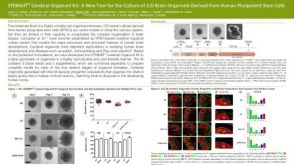 科学海报STEMdiff™ Cerebral Organoid Kit: A New Tool for the Culture of 3D Brain Organoids Derived from hPSCs

 沪公网安备31010102008431号