Lowe A et al. (MAY 2016)
Stem Cell Reports 6 5 743--756
Intercellular Adhesion-Dependent Cell Survival and ROCK-Regulated Actomyosin-Driven Forces Mediate Self-Formation of a Retinal Organoid
In this study we dissected retinal organoid morphogenesis in human embryonic stem cell (hESC)-derived cultures and established a convenient method for isolating large quantities of retinal organoids for modeling human retinal development and disease. Epithelialized cysts were generated via floating culture of clumps of Matrigel/hESCs. Upon spontaneous attachment and spreading of the cysts,patterned retinal monolayers with tight junctions formed. Dispase-mediated detachment of the monolayers and subsequent floating culture led to self-formation of retinal organoids comprising patterned neuroretina,ciliary margin,and retinal pigment epithelium. Intercellular adhesion-dependent cell survival and ROCK-regulated actomyosin-driven forces are required for the self-organization. Our data supports a hypothesis that newly specified neuroretina progenitors form characteristic structures in equilibrium through minimization of cell surface tension. In long-term culture,the retinal organoids autonomously generated stratified retinal tissues,including photoreceptors with ultrastructure of outer segments. Our system requires minimal manual manipulation,has been validated in two lines of human pluripotent stem cells,and provides insight into optic cup invagination in vivo.
View Publication
McKinney-Freeman SL et al. (MAY 2008)
Blood 111 10 4944--53
Modulation of murine embryonic stem cell-derived CD41+c-kit+ hematopoietic progenitors by ectopic expression of Cdx genes.
Cdx1,Cdx2,and Cdx4 comprise the caudal-like Cdx gene family in mammals,whose homologues regulate hematopoietic development in zebrafish. Previously,we reported that overexpression of Cdx4 enhances hematopoietic potential from murine embryonic stem cells (ESCs). Here we compare the effect of ectopic Cdx1,Cdx2,and Cdx4 on the differentiation of murine ESC-derived hematopoietic progenitors. The 3 Cdx genes differentially influence the formation and differentiation of hematopoietic progenitors within a CD41(+)c-kit(+) population of embryoid body (EB)-derived cells. Cdx1 and Cdx4 enhance,whereas Cdx2 strongly inhibits,the hematopoietic potential of CD41(+)ckit(+) EB-derived cells,changes that are reflected by effects on hematopoietic lineage-specific and Hox gene expression. When we subject stromal cell and colony assay cultures of EB-derived hematopoietic progenitors to ectopic expression of Cdx genes,Cdx4 dramatically enhances,whereas Cdx1 and Cdx2 both inhibit hematopoietic activity,probably by blocking progenitor differentiation. These data demonstrate distinct effects of Cdx genes on hematopoietic progenitor formation and differentiation,insights that we are using to facilitate efforts at in vitro culture of hematopoietic progenitors from ESC. The behavior of Cdx genes in vitro suggests how derangement of these developmental regulators might contribute to leukemogenesis.
View Publication
产品号#:
06902
06952
00321
00322
00323
00324
00325
产品名:
Park I-H et al. (JAN 2008)
Nature 451 7175 141--6
Reprogramming of human somatic cells to pluripotency with defined factors.
Pluripotency pertains to the cells of early embryos that can generate all of the tissues in the organism. Embryonic stem cells are embryo-derived cell lines that retain pluripotency and represent invaluable tools for research into the mechanisms of tissue formation. Recently,murine fibroblasts have been reprogrammed directly to pluripotency by ectopic expression of four transcription factors (Oct4,Sox2,Klf4 and Myc) to yield induced pluripotent stem (iPS) cells. Using these same factors,we have derived iPS cells from fetal,neonatal and adult human primary cells,including dermal fibroblasts isolated from a skin biopsy of a healthy research subject. Human iPS cells resemble embryonic stem cells in morphology and gene expression and in the capacity to form teratomas in immune-deficient mice. These data demonstrate that defined factors can reprogramme human cells to pluripotency,and establish a method whereby patient-specific cells might be established in culture.
View Publication
产品号#:
04434
04444
05860
05880
05850
05857
05870
05875
85850
85857
85870
85875
产品名:
MethoCult™ H4434 Classic
MethoCult™ H4434 Classic
mTeSR™1
mTeSR™1
Kimbrel EA et al. (JUL 2014)
Stem Cells and Development 23 14 1611--1624
Mesenchymal Stem Cell Population Derived from Human Pluripotent Stem Cells Displays Potent Immunomodulatory and Therapeutic Properties
Mesenchymal stem cells (MSCs) are being tested in a wide range of human diseases; however,loss of potency and inconsistent quality severely limit their use. To overcome these issues,we have utilized a developmental precursor called the hemangioblast as an intermediate cell type in the derivation of a highly potent and replenishable population of MSCs from human embryonic stem cells (hESCs). This method circumvents the need for labor-intensive hand-picking,scraping,and sorting that other hESC-MSC derivation methods require. Moreover,unlike previous reports on hESC-MSCs,we have systematically evaluated their immunomodulatory properties and in vivo potency. As expected,they dynamically secrete a range of bioactive factors,display enzymatic activity,and suppress T-cell proliferation that is induced by either allogeneic cells or mitogenic stimuli. However,they also display unique immunophenotypic properties,as well as a smaller size and textgreater30,000-fold proliferative capacity than bone marrow-derived MSCs. In addition,this is the first report which demonstrates that hESC-MSCs can inhibit CD83 up-regulation and IL-12p70 secretion from dendritic cells and enhance regulatory T-cell populations induced by interleukin 2 (IL-2). This is also the first report which shows that hESC-MSCs have therapeutic efficacy in two different autoimmune disorder models,including a marked increase in survival of lupus-prone mice and a reduction of symptoms in an autoimmune model of uveitis. Our data suggest that this novel and therapeutically active population of MSCs could overcome many of the obstacles that plague the use of MSCs in regenerative medicine and serve as a scalable alternative to current MSC sources.
View Publication
产品号#:
05850
05857
05870
05875
85850
85857
85870
85875
产品名:
mTeSR™1
mTeSR™1
Martins-Taylor K and Xu R-H (JAN 2010)
Journal of cellular biochemistry 109 1 16--25
Determinants of pluripotency: from avian, rodents, to primates.
Since mouse embryonic stem (ES) cells was first derived in 1981,the ability of this unprecedented cell type to self-renew and differentiate without limit has revolutionized the discovery tools that are used to study gene functions and development. Furthermore,they have inspired others to hunt for similar cells from other species. The derivation of human ES cells in 1998 has accelerated these discoveries and has also widely provoked public interest,due to both the scientific significance of these cells for human tissue regeneration and the ethical disputes over the use of donated early human embryos. However,this is no longer a barrier,with the recent discovery of methods that can convert differentiated somatic cells into ES-like cells or induced pluripotent stem (iPS) cells,by using defined reprogramming factors. This review attempts to summarize the progresses in the derivation of ES cells (as well as other embryo-derived pluripotent cells) and iPS cells from various species. We will focus on the molecular and biological features of the cells,as well as the different determinants identified thus far to sustain their pluripotency.
View Publication


 EasySep™小鼠TIL(CD45)正选试剂盒




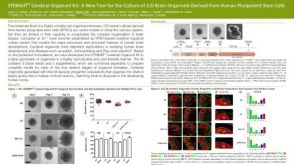 科学海报STEMdiff™ Cerebral Organoid Kit: A New Tool for the Culture of 3D Brain Organoids Derived from hPSCs


 沪公网安备31010102008431号