Caiazzo M et al. (MAR 2016)
Nature Materials 15 3 344--352
Defined three-dimensional microenvironments boost induction of pluripotency
Since the discovery of induced pluripotent stem cells (iPSCs),numerous approaches have been explored to improve the original protocol,which is based on a two-dimensional (2D) cell-culture system. Surprisingly,nothing is known about the effect of a more biologically faithful 3D environment on somatic-cell reprogramming. Here,we report a systematic analysis of how reprogramming of somatic cells occurs within engineered 3D extracellular matrices. By modulating microenvironmental stiffness,degradability and biochemical composition,we have identified a previously unknown role for biophysical effectors in the promotion of iPSC generation. We find that the physical cell confinement imposed by the 3D microenvironment boosts reprogramming through an accelerated mesenchymal-to-epithelial transition and increased epigenetic remodelling. We conclude that 3D microenvironmental signals act synergistically with reprogramming transcription factors to increase somatic plasticity.
View Publication
产品号#:
05850
05857
05870
05875
05872
05873
85850
85857
85870
85875
100-0483
100-0484
产品名:
mTeSR™1
mTeSR™1
Hausser Scientificᵀᴹ 明线血球计数板
ReLeSR™
Yap MS et al. (DEC 2016)
Virology journal 13 1 5
Pluripotent Human embryonic stem cell derived neural lineages for in vitro modelling of enterovirus 71 infection and therapy.
BACKGROUND The incidence of neurological complications and fatalities associated with Hand,Foot & Mouth disease has increased over recent years,due to emergence of newly-evolved strains of Enterovirus 71 (EV71). In the search for new antiviral therapeutics against EV71,accurate and sensitive in vitro cellular models for preliminary studies of EV71 pathogenesis is an essential prerequisite,before progressing to expensive and time-consuming live animal studies and clinical trials. METHODS This study thus investigated whether neural lineages derived from pluripotent human embryonic stem cells (hESC) can fulfil this purpose. EV71 infection of hESC-derived neural stem cells (NSC) and mature neurons (MN) was carried out in vitro,in comparison with RD and SH-SY5Y cell lines. RESULTS Upon assessment of post-infection survivability and EV71 production by the various types,it was observed that NSC were significantly more susceptible to EV71 infection compared to MN,RD (rhabdomyosarcoma) and SH-SY5Y cells,which was consistent with previous studies on mice. The SP81 peptide had significantly greater inhibitory effect on EV71 production by NSC and MN compared to the cancer-derived RD and SH-SY5Y cell lines. CONCLUSIONS Hence,this study demonstrates that hESC-derived neural lineages can be utilized as in vitro models for studying EV71 pathogenesis and for screening of antiviral therapeutics.
View Publication
产品号#:
05850
05857
05870
05875
85850
85857
85870
85875
产品名:
mTeSR™1
mTeSR™1
Venkatesh P et al. (JAN 2016)
International Journal of Molecular Sciences 17 1 58
Effect of chromatin structure on the extent and distribution of DNA double strand breaks produced by ionizing radiation; comparative study of hESC and differentiated cells lines
Chromatin structure affects the extent of DNA damage and repair. Thus,it has been shown that heterochromatin is more protective against DNA double strand breaks (DSB) formation by ionizing radiation (IR); and that DNA DSB repair may proceed differently in hetero- and euchromatin regions. Human embryonic stem cells (hESC) have a more open chromatin structure than differentiated cells. Here,we study the effect of chromatin structure in hESC on initial DSB formation and subsequent DSB repair. DSB were scored by comet assay; and DSB repair was assessed by repair foci formation via 53BP1 antibody staining. We found that in hESC,heterochromatin is confined to distinct regions,while in differentiated cells it is distributed more evenly within the nuclei. The same dose of ionizing radiation produced considerably more DSB in hESC than in differentiated derivatives,normal human fibroblasts; and one cancer cell line. At the same time,the number of DNA repair foci were not statistically different among these cells. We showed that in hESC,DNA repair foci localized almost exclusively outside the heterochromatin regions. We also noticed that exposure to ionizing radiation resulted in an increase in heterochromatin marker H3K9me3 in cancer HT1080 cells,and to a lesser extent in IMR90 normal fibroblasts,but not in hESCs. These results demonstrate the importance of chromatin conformation for DNA protection and DNA damage repair; and indicate the difference of these processes in hESC.
View Publication
产品号#:
05850
05857
05870
05875
36254
78001
78001.1
78001.2
78001.3
85850
85857
85870
85875
产品名:
DMEM/F-12 with 15 mM HEPES
重组人/小鼠激活素A
重组人/小鼠激活素A
重组人/小鼠激活素A
重组人/小鼠激活素A
mTeSR™1
mTeSR™1
Lian R-L et al. (FEB 2016)
Molecular and cellular biochemistry 413 1-2 69--85
Effects of induced pluripotent stem cells-derived conditioned medium on the proliferation and anti-apoptosis of human adipose-derived stem cells.
Human adipose-derived stem cells (hASCs) become an appealing source for regenerative medicine. However,with the multi-passage or cryopreservation for large-scale growth procedures in terms of preclinical and clinical purposes,hASCs often reveal defective cell viability,which is a major obstacle for cell therapy. In our study,the effects of induced pluripotent stem cells-derived conditioned medium (iPS-CM) on the proliferation and anti-apoptosis in hASCs were investigated. hASCs at passage 1 were identified by the analysis of typical surface antigens with flow cytometry assay and adipogenic and osteogenic differentiation. The effect of iPS-CM on the proliferation in hASCs was analyzed by cell cycle assay and Ki67/P27 quantitative polymerase chain reaction analysis. The effect of iPS-CM on the anti-apoptosis of hASCs irradiated by 468 J/m(2) of ultraviolet C was investigated by annexin v/propidium iodide analysis,mitochondrial membrane potential assay,intracellular reactive oxygen species assay,Western blotting and caspase activity assays. The effect of iPS-CM on the surface antigen expressions of hASCs was analyzed using flow cytometry assay. The levels of Activin A and bFGF in culture supernatant of hASCs with different treatments were also detected by enzyme-linked immunosorbent assay. iPS-CM promoted proliferation and inhibited apoptosis of hASCs. This discovery demonstrates that iPS-CM might be used as one of the available means to overcome the propagation obstacle for hASCs and make for large-scale growth procedures in terms of preclinical and clinical purposes.
View Publication
产品号#:
05850
05857
05870
05875
85850
85857
85870
85875
产品名:
mTeSR™1
mTeSR™1
Ignatius Irudayam J et al. (DEC 2015)
Data in Brief 5 871--878
Profile of Inflammation-associated genes during Hepatic Differentiation of Human Pluripotent Stem Cells
Expression of genes associated with inflammation was analyzed during differentiation of human pluripotent stem cells (PSCs) to hepatic cells. Messenger RNA transcript profiles of differentiated endoderm (day 5),hepatoblast (day 15) and hepatocyte-like cells (day 21) were obtained by RNA sequencing analysis. When compared to endoderm cells an immature cell type,the hepatic cells (days 15 and 21) had significantly higher expression of acute phase protein genes including complement factors,coagulation factors,serum amyloid A and serpins. Furthermore,hepatic phase of cells expressed proinflammatory cytokines IL18 and IL32 as well as cytokine receptors IL18R1,IL1R1,IL1RAP,IL2RG,IL6R,IL6ST and IL10RB. These cells also produced CCL14,CCL15,and CXCL- 1,2,3,16 and 17 chemokines. Endoderm cells had higher levels of chemokine receptors,CXCR4 and CXCR7,than that of hepatic cells. Sirtuin family of genes involved in aging,inflammation and metabolism were differentially regulated in endoderm and hepatic phase cells. Ligands and receptors of the tumor necrosis factor (TNF) family as well as downstream signaling factors TRAF2,TRAF4,FADD,NFKB1 and NFKBIB were differentially expressed during hepatic differentiation.
View Publication
产品号#:
05850
05857
05870
05875
85850
85857
85870
85875
产品名:
mTeSR™1
mTeSR™1
Grandy RA et al. (FEB 2015)
Molecular and Cellular Biology 36 December MCB.00877--15
Genome-wide Studies Reveal that H3K4me3 Modification in Bivalent Genes is Dynamically Regulated During the Pluripotent Cell Cycle and Stabilized Upon Differentiation
textlessptextgreaterStem cell phenotypes are reflected by post-translational histone modifications,and this chromatin-related memory must be mitotically inherited to maintain cell identity through proliferative expansion. In human embryonic stem cells (hESCs),bivalent genes with both activating (H3K4me3) and repressive (H3K27me3) histone modifications are essential to sustain pluripotency. Yet the molecular mechanisms by which this epigenetic landscape is transferred to progeny cells remains to be established. By mapping genomic enrichment of H3K4me3/H3K27me3 in pure populations of hESCs in G2,mitotic,and G1 phases of the cell cycle,we found striking variations in the levels of H3K4me3 through the G2-M-G1 transition. Analysis of a representative set of bivalent genes revealed that chromatin modifiers involved in H3K4 methylation/demethylation are recruited to bivalent gene promoters in a cell cycle–dependent fashion. Interestingly,bivalent genes enriched with H3K4me3 exclusively during mitosis undergo the strongest upregulation after induction of differentiation. Furthermore,the histone-modification signature of genes that remain bivalent in differentiated cells resolves into a cell cycle–independent pattern after lineage commitment. These results establish a new dimension of chromatin regulation important in maintenance of pluripotency.textless/ptextgreater
View Publication
产品号#:
05850
05857
05870
05875
85850
85857
85870
85875
产品名:
mTeSR™1
mTeSR™1
Koh S and Piedrahita JA ( 2015)
1330 69--78
Generation of induced pluripotent stem cells (iPSCs) from adult canine fibroblasts
Induced pluripotent stem cells hold great potential in regenerative medicine as it enables to generate pluripotent stem cells from any available cell types. Ectopic expression of four transcription factors (Oct4,Sox2,Klf4,and c-Myc) can reprogram fibroblasts directly to pluripotency as shown in multiple species. Here,we describe detailed protocols for generation of iPSCs from adult canine fibroblasts. Robust canine iPSCs will provide powerful tools not only to study human diseases,but also for the development of therapeutic approaches.
View Publication
产品号#:
05850
05857
05870
05875
85850
85857
85870
85875
产品名:
mTeSR™1
mTeSR™1
Tamaki S et al. ( 2015)
PLoS ONE 10 11 e0142991
SS18-SSX, the oncogenic fusion protein in synovial sarcoma, is a cellular context-dependent epigenetic modifier
The prevalence and specificity of unique fusion oncogenes are high in a number of soft tissue sarcomas (STSs). The close relationship between fusion genes and clinicopathological features suggests that a correlation may exist between the function of fusion proteins and cellular context of the cell-of-origin of each tumor. However,most STSs are origin-unknown tumors and this issue has not yet been investigated in detail. In the present study,we examined the effects of the cellular context on the function of the synovial sarcoma (SS)-specific fusion protein,SS18-SSX,using human pluripotent stem cells (hPSCs) containing the drug-inducible SS18-SSX gene. We selected the neural crest cell (NCC) lineage for the first trial of this system,induced SS18-SSX at various differentiation stages from PSCs to NCC-derived mesenchymal stromal cells (MSCs),and compared its biological effects on each cell type. We found that the expression of FZD10,identified as an SS-specific gene,was induced by SS18-SSX at the PSC and NCC stages,but not at the MSC stage. This stage-specific induction of FZD10 correlated with stage-specific changes in histone marks associated with the FZD10 locus and also with the loss of the BAF47 protein,a member of the SWI/SNF chromatin-remodeling complex. Furthermore,the global gene expression profile of hPSC-derived NCCs was the closest to that of SS cell lines after the induction of SS18-SSX. These results clearly demonstrated that the cellular context is an important factor in the function of SS18-SSX as an epigenetic modifier.
View Publication
Wiedemann A et al. (DEC 2012)
Cellular reprogramming 14 6 485--496
Induced pluripotent stem cells generated from adult bone marrow-derived cells of the nonhuman primate (Callithrix jacchus) using a novel quad-cistronic and excisable lentiviral vector.
Regenerative medicine is in need of solid,large animal models as a link between rodents and humans to evaluate the functionality,immunogenicity,and clinical safety of stem cell-derived cell types. The common marmoset (Callithrix jacchus) is an excellent large animal model,genetically close to humans and readily used worldwide in clinical research. Until now,only two groups showed the generation of induced pluripotent stem cells (iPSCs) from the common marmoset using integrating retroviral vectors. Therefore,we reprogrammed bone marrow-derived mesenchymal cells (MSCs) of adult marmosets in the presence of TAV,SB431542,PD0325901,and ascorbic acid via a novel,excisable lentiviral spleen focus-forming virus (SFFV)-driven quad-cistronic vector system (OCT3/4,KLF4,SOX2,C-MYC). Endogenous pluripotency markers like OCT3/4,KLF4,SOX2,C-MYC,LIN28,NANOG,and strong alkaline phosphatase signals were detected. Exogenous genes were silenced and additionally the cassette was removed with a retroviral Gag precursor system. The cell line could be cultured in absence of leukemia inhibitory factor (LIF) and basic fibroblast growth factor (bFGF) and could be successfully differentiated into embryoid bodies and teratomas with presence of all three germ layers. Directed differentiation generated neural progenitors,megakaryocytes,adipocytes,chondrocytes,and osteogenic cells. Thus,all criteria for fully reprogrammed bone marrow-MSCs of a nonhuman primate with a genetically sophisticated construct could be demonstrated. These cells will be a promising tool for future autologous transplantations.
View Publication
产品号#:
05850
05857
05870
05875
85850
85857
85870
85875
产品名:
mTeSR™1
mTeSR™1
Krug AK et al. (JAN 2013)
Archives of Toxicology 87 1 123--143
Human embryonic stem cell-derived test systems for developmental neurotoxicity: A transcriptomics approach
Developmental neurotoxicity (DNT) and many forms of reproductive toxicity (RT) often manifest themselves in functional deficits that are not necessarily based on cell death,but rather on minor changes relating to cell differentiation or communication. The fields of DNT/RT would greatly benefit from in vitro tests that allow the identification of toxicant-induced changes of the cellular proteostasis,or of its underlying transcriptome network. Therefore,the ‘human embryonic stem cell (hESC)-derived novel alternative test systems (ESNATS)' European commission research project established RT tests based on defined differentiation protocols of hESC and their progeny. Valproic acid (VPA) and methylmercury (MeHg) were used as positive control compounds to address the following fundamental questions: (1) Does transcriptome analysis allow discrimination of the two compounds? (2) How does analysis of enriched transcription factor binding sites (TFBS) and of individual probe sets (PS) distinguish between test systems? (3) Can batch effects be controlled? (4) How many DNA microarrays are needed? (5) Is the highest non-cytotoxic concentration optimal and relevant for the study of transcriptome changes? VPA triggered vast transcriptional changes,whereas MeHg altered fewer transcripts. To attenuate batch effects,analysis has been focused on the 500 PS with highest variability. The test systems differed significantly in their responses (backslashtextless20 % overlap). Moreover,within one test system,little overlap between the PS changed by the two compounds has been observed. However,using TFBS enrichment,a relatively large ‘common response' to VPA and MeHg could be distinguished from ‘compound-specific' responses. In conclusion,the ESNATS assay battery allows classification of human DNT/RT toxicants on the basis of their transcriptome profiles.
View Publication


 EasySep™小鼠TIL(CD45)正选试剂盒




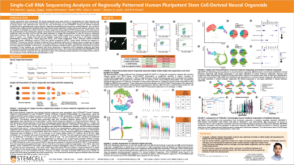 科学海报Single-Cell RNA Sequencing Analysis of Regionally Patterned Human Pluripotent Stem Cell-Derived Neural Organoids
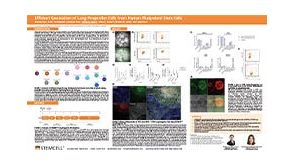 科学海报Efficient Generation of Lung Progenitor Cells From Human Pluripotent Stem Cells
 沪公网安备31010102008431号