Induction of pluripotent stem cells from adult human fibroblasts by defined factors.
Successful reprogramming of differentiated human somatic cells into a pluripotent state would allow creation of patient- and disease-specific stem cells. We previously reported generation of induced pluripotent stem (iPS) cells,capable of germline transmission,from mouse somatic cells by transduction of four defined transcription factors. Here,we demonstrate the generation of iPS cells from adult human dermal fibroblasts with the same four factors: Oct3/4,Sox2,Klf4,and c-Myc. Human iPS cells were similar to human embryonic stem (ES) cells in morphology,proliferation,surface antigens,gene expression,epigenetic status of pluripotent cell-specific genes,and telomerase activity. Furthermore,these cells could differentiate into cell types of the three germ layers in vitro and in teratomas. These findings demonstrate that iPS cells can be generated from adult human fibroblasts.
View Publication
Marchetti S et al. (MAY 2002)
Journal of cell science 115 Pt 10 2075--85
Endothelial cells genetically selected from differentiating mouse embryonic stem cells incorporate at sites of neovascularization in vivo.
Large scale purification of endothelial cells is of great interest as it could improve tissue transplantation,reperfusion of ischemic tissues and treatment of pathologies in which an endothelial cell dysfunction exists. In this study,we describe a novel genetic approach that selects for endothelial cells from differentiating embryonic stem (ES) cells. Our strategy is based on the establishment of ES-cell clones that carry an integrated puromycin resistance gene under the control of a vascular endothelium-specific promoter,tie-1. Using EGFP as a reporter gene,we first confirmed the endothelial specificity of the tie-1 promoter in the embryoid body model and in cells differentiated in 2D cultures. Subsequently,tie-1-EGFP ES cells were used as recipients for the tie-1-driven puror transgene. The resulting stable clones were expanded and differentiated for seven days in the presence of VEGF before puromycin selection. As expected,puromycin-resistant cells were positive for EGFP and also expressed several endothelial markers,including CD31,CD34,VEGFR-1,VEGFR-2,Tie-1,VE-cadherin and ICAM-2. Release from the puromycin selection resulted in the appearance of alpha-smooth muscle actin-positive cells. Such cells became more numerous when the population was cultured on laminin-1 or in the presence of TGF-beta1,two known inducers of smooth muscle cell differentiation. The hypothesis that endothelial cells or their progenitors may differentiate towards a smooth muscle cell phenotype was further supported by the presence of cells expressing both CD31 and alpha-smooth muscle actin markers. Finally,we show that purified endothelial cells can incorporate into the neovasculature of transplanted tumors in nude mice. Taken together,these results suggest that application of endothelial lineage selection to differentiating ES cells may become a useful approach for future pro-angiogenic and endothelial cell replacement therapies.
View Publication
产品号#:
06902
06952
00321
00322
00323
00324
00325
产品名:
Lin H et al. (JAN 2003)
Stem cells (Dayton,Ohio) 21 2 152--61
Multilineage potential of homozygous stem cells derived from metaphase II oocytes.
Human stem cells derived from human fertilized oocytes,fetal primordial germ cells,umbilical cord blood,and adult tissues provide potential cell-based therapies for repair of degenerating or damaged tissues. However,the diversity of major histocompatibility complex (MHC) antigens in the general population and the resultant risk of immune-mediated rejection complicates the allogenic use of established stem cells. We assessed an alternative approach,employing chemical activation of nonfertilized metaphase II oocytes for producing stem cells homozygous for MHC. By using F1 hybrid mice (H-2-B/D),we established stem cell lines homozygous for H-2-B and H-2-D,respectively. The undifferentiated cells retained a normal karyotype,expressed stage-specific embryonic antigen-1 and Oct4,and were positive for alkaline phosphatase and telomerase. Teratomatous growth of these cells displayed the development of a variety of tissue types encompassing all three germ layers. In addition,these cells demonstrated the potential for in vitro differentiation into endoderm,neuronal,and hematopoietic lineages. We also evaluated this homozygous stem cell approach in human tissue. Five unfertilized blastocysts were derived from a total of 25 human oocytes,and cells from one of the five hatched blastocysts proliferated and survived beyond two passages. Our studies demonstrate a plausible homozygous stem cell" approach for deriving pluripotent stem cells that can overcome the immune-mediated rejection response common in allotransplantation�
View Publication


 EasySep™小鼠TIL(CD45)正选试剂盒




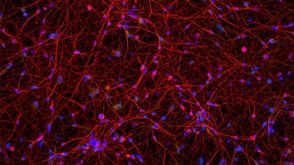 实验方案How to Culture Human Pluripotent Stem Cell (hPSC)-Derived Forebrain Neurons for MEA Analysis Using the Maestro MEA™ System


 沪公网安备31010102008431号