Regulatory T Cells
Overview of the development, phenotype and functions of regulatory T cells
S. Bhatia et al. (may 2019)
Cancer research 79 10 2722--2735
Inhibition of EphB4-Ephrin-B2 Signaling Reprograms the Tumor Immune Microenvironment in Head and Neck Cancers.
Identifying targets present in the tumor microenvironment that contribute to immune evasion has become an important area of research. In this study,we identified EphB4-ephrin-B2 signaling as a regulator of both innate and adaptive components of the immune system. EphB4 belongs to receptor tyrosine kinase family that interacts with ephrin-B2 ligand at sites of cell-cell contact,resulting in bidirectional signaling. We found that EphB4-ephrin-B2 inhibition alone or in combination with radiation (RT) reduced intratumoral regulatory T cells (Tregs) and increased activation of both CD8+ and CD4+Foxp3- T cells compared with the control group in an orthotopic head and neck squamous cell carcinoma (HNSCC) model. We also compared the effect of EphB4-ephrin-B2 inhibition combined with RT with combined anti-PDL1 and RT and observed similar tumor growth suppression,particularly at early time-points. A patient-derived xenograft model showed reduction of tumor-associated M2 macrophages and favored polarization towards an antitumoral M1 phenotype following EphB4-ephrin-B2 inhibition with RT. In vitro,EphB4 signaling inhibition decreased Ki67-expressing Tregs and Treg activation compared with the control group. Overall,our study is the first to implicate the role of EphB4-ephrin-B2 in tumor immune response. Moreover,our findings suggest that EphB4-ephrin-B2 inhibition combined with RT represents a potential alternative for patients with HNSCC and could be particularly beneficial for patients who are ineligible to receive or cannot tolerate anti-PDL1 therapy. SIGNIFICANCE: These findings present EphB4-ephrin-B2 inhibition as an alternative to anti-PDL1 therapeutics that can be used in combination with radiation to induce an effective antitumor immune response in patients with HNSCC.
View Publication
产品号#:
17952
17952RF
100-0696
产品名:
EasySep™人CD4+ T细胞分选试剂盒
RoboSep™ 人CD4+ T细胞分选试剂盒
EasySep™人CD4+ T细胞分离试剂盒
B. L. Jamison et al. (jul 2019)
Journal of immunology (Baltimore,Md. : 1950) 203 1 48--57
Nanoparticles Containing an Insulin-ChgA Hybrid Peptide Protect from Transfer of Autoimmune Diabetes by Shifting the Balance between Effector T Cells and Regulatory T Cells.
CD4 T cells play a critical role in promoting the development of autoimmunity in type 1 diabetes. The diabetogenic CD4 T cell clone BDC-2.5,originally isolated from a NOD mouse,has been widely used to study the contribution of autoreactive CD4 T cells and relevant Ags to autoimmune diabetes. Recent work from our laboratory has shown that the Ag for BDC-2.5 T cells is a hybrid insulin peptide (2.5HIP) consisting of an insulin C-peptide fragment fused to a peptide from chromogranin A (ChgA) and that endogenous 2.5HIP-reactive T cells are major contributors to autoimmune pathology in NOD mice. The objective of this study was to determine if poly(lactide-co-glycolide) (PLG) nanoparticles (NPs) loaded with the 2.5HIP Ag (2.5HIP-coupled PLG NPs) can tolerize BDC-2.5 T cells. Infusion of 2.5HIP-coupled PLG NPs was found to prevent diabetes in an adoptive transfer model by impairing the ability of BDC-2.5 T cells to produce proinflammatory cytokines through induction of anergy,leading to an increase in the ratio of Foxp3+ regulatory T cells to IFN-gamma+ effector T cells. To our knowledge,this work is the first to use a hybrid insulin peptide,or any neoepitope,to re-educate diabetogenic T cells and may have significant implications for the development of an Ag-specific therapy for type 1 diabetes patients.
View Publication
Antunes I et al. (DEC 2010)
Journal of virology 84 24 12564--75
Suppression of innate immune pathology by regulatory T cells during Influenza A virus infection of immunodeficient mice.
The viral infection of higher vertebrates elicits potent innate and adaptive host immunity. However,an excessive or inappropriate immune response also may lead to host pathology that often is more severe than the direct effects of viral replication. Therefore,several mechanisms exist that regulate the magnitude and class of the immune response. Here,we have examined the potential involvement of regulatory T (Treg) cells in limiting pathology induced by influenza A virus (IAV) infection. Using lymphocyte-deficient mice as hosts,we showed that Treg cell reconstitution resulted in a significant delay in weight loss and prolonged survival following infection. The adoptively transferred Treg cells did not affect the high rate of IAV replication in the lungs of lymphocyte-deficient hosts,and therefore their disease-ameliorating effect was mediated through the suppression of innate immune pathology. Mechanistically,Treg cells reduced the accumulation and altered the distribution of monocytes/macrophages in the lungs of IAV-infected hosts. This reduction in lung monocytosis was associated with a specific delay in monocyte chemotactic protein-2 (MCP-2) induction in the infected lungs. Nevertheless,Treg cells failed to prevent the eventual development of severe disease in lymphocyte-deficient hosts,which likely was caused by the ongoing IAV replication. Indeed,using T-cell-deficient mice,which mounted a T-cell-independent B cell response to IAV,we further showed that the combination of virus-neutralizing antibodies and transferred Treg cells led to the complete prevention of clinical disease following IAV infection. Taken together,these results suggested that innate immune pathology and virus-induced pathology are the two main contributors to pathogenesis during IAV infection.
View Publication
A major role of TGF-beta1 in the homing capacities of murine hematopoietic stem cell/progenitors.
Transforming growth factor-beta1 (TGF-beta1) is a pleiotropic cytokine with major in vitro effects on hematopoietic stem cells (HSCs) and lymphocyte development. Little is known about hematopoiesis from mice with constitutive TGF-beta1 inactivation largely because of important embryonic lethality and development of a lethal inflammatory disorder in TGF-beta1(-/-) pups,making these studies difficult. Here,we show that no sign of the inflammatory disorder was detectable in 8- to 10-day-old TGF-beta1(-/-) neonates as judged by both the number of T-activated and T-regulator cells in secondary lymphoid organs and the level of inflammatory cytokines in sera. After T-cell depletion,the inflammatory disease was not transplantable in recipient mice. Bone marrow cells from 8- to 10-day-old TGF-beta1(-/-) neonates showed strikingly impaired short- and long-term reconstitutive activity associated with a parallel decreased in vivo homing capacity of lineage negative (Lin(-)) cells. In addition an in vitro-reduced survival of immature progenitors (Lin(-) Kit(+) Sca(+)) was observed. Similar defects were found in liver cells from TGF-beta1(-/-) embryos on day 14 after vaginal plug. These data indicate that TGF-beta1 is a critical regulator for in vivo homeostasis of the HSCs,especially for their homing potential.
View Publication
产品号#:
03234
09600
09650
产品名:
MethoCult™ M3234
StemSpan™ SFEM
StemSpan™ SFEM
Feng T et al. (NOV 2010)
Journal of immunology (Baltimore,Md. : 1950) 185 10 5915--25
Generation of mucosal dendritic cells from bone marrow reveals a critical role of retinoic acid.
It is unknown how dendritic cells (DCs) become specialized as mucosal DCs and maintain intestinal homeostasis. We report that a subset of bone marrow cells freshly isolated from C57BL/6 mice express the retinoic acid (RA)-synthesizing enzyme aldehyde dehydrogenase family 1,subfamily A2 (ALDH1a2) and are capable of providing RA to DC precursors in the bone marrow microenvironment. RA induced bone marrow-derived DCs to express CCR9 and ALDH1a2 and conferred upon them mucosal DC functions,including induction of Foxp3(+) regulatory T cells,IgA-secreting B cells,and gut-homing molecules. This response of DCs to RA was dependent on a narrow time window and stringent dose effect. RA promoted bone marrow-derived DC production of bioactive TGF-β by inhibiting suppressor of cytokine signaling 3 expression and thereby enhancing STAT3 activation. These RA effects were evident in vivo,in that mucosal DCs from vitamin A-deficient mice had reduced mucosal DC function,namely failure to induce Foxp3(+) regulatory T cells. Furthermore,MyD88 signaling enhanced RA-educated DC ALDH1a2 expression and was required for optimal TGF-β production. These data indicate that RA plays a critical role in the generation of mucosal DCs from bone marrow and in their functional activity.
View Publication
产品号#:
01700
01705
01702
产品名:
ALDEFLUOR™ 试剂盒
ALDEFLUOR™ DEAB试剂, 1.5 mM, 1 mL
ALDEFLUOR™检测缓冲液
Nettenstrom L et al. (JAN 2013)
Journal of immunological methods 387 2-Jan 81--8
An optimized multi-parameter flow cytometry protocol for human T regulatory cell analysis on fresh and viably frozen cells, correlation with epigenetic analysis, and comparison of cord and adult blood.
Multi-parameter flow cytometry analysis of T regulatory (Treg) cells is a widely used approach in basic and translational research studies. This approach has been complicated by a lack of specific markers for Treg cells and lack of uniformity in the quantification of Treg cells. Given the central role of Treg cells in the inception and perpetuation of diverse immune responses as well as its target as a therapeutic,it is imperative to have established methodologies for Treg cell analysis that are robust and usable for studies with multiple subjects as well as multicenter studies. In this study,we describe an optimized multi-parameter flow cytometry protocol for the quantification of human Treg cells from freshly obtained and viably frozen samples and correlations with epigenetic Treg cell analysis (TSDR demethylation). We apply these two methodologies to characterize Treg cell differences between cord blood and adult peripheral blood. In summary,the optimized protocol appears to be robust for Treg cell quantification from freshly isolated or viably frozen cells and the multi-parameter flow cytometry findings are strongly positively correlated with TSDR demethylation thus providing several options for the characterization of Treg cell frequency and function in large translational or clinical studies.
View Publication
产品号#:
07930
07931
07940
07955
07956
07959
07954
100-1061
07952
产品名:
CryoStor® CS10
CryoStor® CS10
CryoStor® CS10
CryoStor® CS10
CryoStor® CS10
CryoStor® CS10
CryoStor® CS10
Zizzari IG et al. ( 2015)
PLoS One 10 7 e0132617
The Macrophage Galactose-Type C-Type Lectin (MGL) Modulates Regulatory T Cell Functions
Regulatory T cells (Tregs) are physiologically designed to prevent autoimmune disease and maintain self-tolerance. In tumour microenvironments,their presence is related to a poor prognosis,and they influence the therapeutic outcome due to their capacity to suppress the immune response by cell-cell contact and to release immunosuppressive cytokines. In this study,we demonstrate that Treg immunosuppressive activity can be modulated by the cross-linking between the CD45RA expressed by Tregs and the C-type lectin MGL. This specific interaction strongly decreases the immunosuppressive activity of Tregs,restoring the proliferative capacity of co-cultured T lymphocytes. This effect can be attributed to changes in CD45RA and TCR signalling through the inhibition of Lck and inactivation of Zap-70,an increase in the Foxp3 methylation status and,ultimately,the reduced production of suppressive cytokines. These results indicate a role of MGL as an immunomodulator within the tumour microenvironment interfering with Treg functions,suggesting its possible use in the design of anticancer vaccines.
View Publication


 EasySep™小鼠TIL(CD45)正选试剂盒




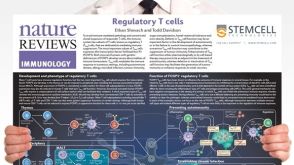 挂图Regulatory T Cells Overview of the development, phenotype and functions of regulatory T cells
 实验方案Optimizing Delivery Efficiency with Fluorescent Dextran Using the CellPore™ Transfection System
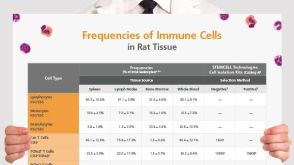 挂图Frequencies of Immune Cells in Rat Tissue Lists the estimated frequencies of more than 15 immune cell types in Sprague Dawley rats

 沪公网安备31010102008431号