INTRODUCTION Hirschsprung's disease is characterized by a developmental arrest of neural crest cell migration,causing distal aganglionosis. Transplanted cells derived from the neural crest may regenerate enteric ganglia in this condition. We investigated the potential of skin-derived precursor cells (SKPs) to engraft and to differentiate into enteric ganglia in aganglionic rat intestine in vivo. METHODS Adult Lewis rat jejunal segments were separated from intestinal continuity and treated with benzalkonium chloride to induce aganglionosis. Ganglia were identified via immunohistochemical stains for S100 and β-III tubulin (TUJ1). SKPs were procured from neonatal Lewis rats expressing enhanced green fluorescent protein (GFP) and cultured in neuroglial-selective media. SKP cell line expansion was quantified,and immunophenotypes were assessed by immunocytochemistry. Aganglionic segments underwent SKP transplantation 21-79days after benzalkonium chloride treatment. The presence of GFP+cells,mature neurons,and mature glia was evaluated at posttransplant days 1,6,and 9. RESULTS Benzalkonium chloride-induced aganglionosis persisted for at least 85days. Prior to differentiation,SKPs expressed S100,denoting neural crest lineage,and nestin,a marker of neuronal precursors. Differentiated SKPs in vitro expressed GFAP,a marker of glial differentiation,as well as TUJ1 and several enteric neurotransmitters. After transplantation,GFP+structures resembling ganglia were identified between longitudinal and circular smooth muscle layers. CONCLUSION SKPs are capable of engraftment,migration,and differentiation within aganglionic rodent intestine in vivo. Differentiated SKPs generate structures that resemble enteric ganglia. Our observations suggest that SKPs represent a potential gangliogenic therapeutic agent for Hirschsprung's disease.
View Publication
产品号#:
05771
产品名:
Chesnokova V et al. (AUG 2013)
Proceedings of the National Academy of Sciences 110 35 E3331--E3339
Growth hormone is a cellular senescence target in pituitary and nonpituitary cells
Premature proliferative arrest in benign or early-stage tumors induced by oncoproteins,chromosomal instability,or DNA damage is associated with p53/p21 activation,culminating in either senescence or apoptosis,depending on cell context. Growth hormone (GH) elicits direct peripheral metabolic actions as well as growth effects mediated by insulin-like growth factor 1 (IGF1). Locally produced peripheral tissue GH,in contrast to circulating pituitary-derived endocrine GH,has been proposed to be both proapoptotic and prooncogenic. Pituitary adenomas expressing and secreting GH are invariably benign and exhibit DNA damage and a senescent phenotype. We therefore tested effects of nutlin-induced p53-mediated senescence in rat and human pituitary cells. We show that DNA damage senescence induced by nutlin triggers the p53/p21 senescent pathway,with subsequent marked induction of intracellular pituitary GH in vitro. In contrast,GH is not induced in cells devoid of p53. Furthermore we show that p53 binds specific GH promoter motifs and enhances GH transcription and secretion in senescent pituitary adenoma cells and also in nonpituitary (human breast and colon) cells. In vivo,treatment with nutlin results in up-regulation of both p53 and GH in the pituitary gland,as well as increased GH expression in nonpituitary tissues (lung and liver). Intracrine GH acts in pituitary cells as an apoptosis switch for p53-mediated senescence,likely protecting the pituitary adenoma from progression to malignancy. Unlike in the pituitary,in nonpituitary cells GH exerts antiapoptotic properties. Thus,the results show that GH is a direct p53 transcriptional target and fulfills criteria as a p53 target gene. Induced GH is a readily measurable cell marker for p53-mediated cellular senescence.
View Publication
Lee S-HH et al. (JUN 2000)
Nature biotechnology 18 6 675--9
Efficient generation of midbrain and hindbrain neurons from mouse embryonic stem cells.
Embryonic stem (ES) cells are clonal cell lines derived from the inner cell mass of the developing blastocyst that can proliferate extensively in vitro and are capable of adopting all the cell fates in a developing embryo. Clinical interest in the use of ES cells has been stimulated by studies showing that isolated human cells with ES properties from the inner cell mass or developing germ cells can provide a source of somatic precursors. Previous studies have defined in vitro conditions for promoting the development of specific somatic fates,specifically,hematopoietic,mesodermal,and neurectodermal. In this study,we present a method for obtaining dopaminergic (DA) and serotonergic neurons in high yield from mouse ES cells in vitro. Furthermore,we demonstrate that the ES cells can be obtained in unlimited numbers and that these neuron types are generated efficiently. We generated CNS progenitor populations from ES cells,expanded these cells and promoted their differentiation into dopaminergic and serotonergic neurons in the presence of mitogen and specific signaling molecules. The differentiation and maturation of neuronal cells was completed after mitogen withdrawal from the growth medium. This experimental system provides a powerful tool for analyzing the molecular mechanisms controlling the functions of these neurons in vitro and in vivo,and potentially for understanding and treating neurodegenerative and psychiatric diseases.
View Publication
产品号#:
06902
06952
07152
07157
00321
00322
00323
00324
00325
产品名:
N2 添加物-A
Yang Z-J et al. (AUG 2008)
Cancer cell 14 2 135--45
Medulloblastoma can be initiated by deletion of Patched in lineage-restricted progenitors or stem cells.
Medulloblastoma is the most common malignant brain tumor in children,but the cells from which it arises remain unclear. Here we examine the origin of medulloblastoma resulting from mutations in the Sonic hedgehog (Shh) pathway. We show that activation of Shh signaling in neuronal progenitors causes medulloblastoma by 3 months of age. Shh pathway activation in stem cells promotes stem cell proliferation but only causes tumors after commitment to-and expansion of-the neuronal lineage. Notably,tumors initiated in stem cells develop more rapidly than those initiated in progenitors,with all animals succumbing by 3-4 weeks. These studies suggest that medulloblastoma can be initiated in progenitors or stem cells but that Shh-induced tumorigenesis is associated with neuronal lineage commitment.
View Publication
产品号#:
05700
05701
05702
05703
05704
产品名:
NeuroCult™ 基础培养基(小鼠和大鼠)
NeuroCult™ 扩增添加物(小鼠和大鼠)
NeuroCult™扩增试剂盒(小鼠和大鼠)
NeuroCult™ 分化添加物(小鼠和大鼠)
NeuroCult™ 分化试剂盒(小鼠和大鼠)
Harris MA et al. (DEC 2008)
Cancer research 68 24 10051--9
Cancer stem cells are enriched in the side population cells in a mouse model of glioma.
The recent identification of cancer stem cells (CSCs) in multiple human cancers provides a new inroad to understanding tumorigenesis at the cellular level. CSCs are defined by their characteristics of self-renewal,multipotentiality,and tumor initiation upon transplantation. By testing for these defining characteristics,we provide evidence for the existence of CSCs in a transgenic mouse model of glioma,S100beta-verbB;Trp53. In this glioma model,CSCs are enriched in the side population (SP) cells. These SP cells have enhanced tumor-initiating capacity,self-renewal,and multipotentiality compared with non-SP cells from the same tumors. Furthermore,gene expression analysis comparing fluorescence-activated cell sorting-sorted cancer SP cells to non-SP cancer cells and normal neural SP cells identified 45 candidate genes that are differentially expressed in glioma stem cells. We validated the expression of two genes from this list (S100a4 and S100a6) in primary mouse gliomas and human glioma samples. Analyses of xenografted human glioblastoma multiforme cell lines and primary human glioma tissues show that S100A4 and S100A6 are expressed in a small subset of cancer cells and that their abundance is positively correlated to tumor grade. In conclusion,this study shows that CSCs exist in a mouse glioma model,suggesting that this model can be used to study the molecular and cellular characteristics of CSCs in vivo and to further test the CSC hypothesis.
View Publication
产品号#:
05703
05704
产品名:
NeuroCult™ 分化添加物(小鼠和大鼠)
NeuroCult™ 分化试剂盒(小鼠和大鼠)
Lathia JD et al. (DEC 2008)
The Journal of neuroscience : the official journal of the Society for Neuroscience 28 51 13978--84
Toll-like receptor 3 is a negative regulator of embryonic neural progenitor cell proliferation.
Toll-like receptors (TLRs) play important roles in innate immunity. Several TLR family members have recently been shown to be expressed by neurons and glial cells in the adult brain,and may mediate responses of these cells to injury and infection. To address the possibility that TLRs play a functional role in development of the nervous system,we analyzed the expression of TLRs during different stages of mouse brain development and assessed the role of TLRs in cell proliferation. TLR3 protein is present in brain cells in early embryonic stages of development,and in cultured neural stem/progenitor cells (NPC). NPC from TLR3-deficient embryos formed greater numbers of neurospheres compared with neurospheres from wild-type embryos. Numbers of proliferating cells,as assessed by phospho histone H3 and proliferating cell nuclear antigen labeling,were also increased in the developing cortex of TLR3-deficient mice compared with wild-type mice in vivo. Treatment of cultured embryonic cortical neurospheres with a TLR3 ligand (polyIC) significantly reduced proliferating (BrdU-labeled) cells and neurosphere formation in wild type but not TLR3(-/-)-derived NPCs. Our findings reveal a novel role for TLR3 in the negative regulation of NPC proliferation in the developing brain.
View Publication
产品号#:
05707
产品名:
NeuroCult™化学解离试剂盒(小鼠)
Gallia GL et al. (FEB 2009)
Molecular cancer therapeutics 8 2 386--93
Inhibition of Akt inhibits growth of glioblastoma and glioblastoma stem-like cells.
A commonly activated signaling cascade in many human malignancies,including glioblastoma multiforme,is the Akt pathway. This pathway can be activated via numerous upstream alterations including genomic amplification of epidermal growth factor receptor,PTEN deletion,or PIK3CA mutations. In this study,we screened phosphatidylinositol 3-kinase/Akt small-molecule inhibitors in an isogenic cell culture system with an activated Akt pathway secondary to a PIK3CA mutation. One small molecule,A-443654,showed the greatest selective inhibition of cells with the mutant phenotype. Based on these findings,this inhibitor was screened in vitro against a panel of glioblastoma multiforme cell lines. All cell lines tested were sensitive to A-443654 with a mean IC(50) of approximately 150 nmol/L. An analogue of A-443654,methylated at a region that blocks Akt binding,was on average 36-fold less active. Caspase assays and dual flow cytometric analysis showed an apoptotic mechanism of cell death. A-443654 was further tested in a rat intracranial model of glioblastoma multiforme. Animals treated intracranially with polymers containing A-443654 had significantly extended survival compared with control animals; animals survived 79% and 43% longer than controls when A-443654-containing polymers were implanted simultaneously or in a delayed fashion,respectively. This small molecule also inhibited glioblastoma multiforme stem-like cells with similar efficacy compared with traditionally cultured glioblastoma multiforme cell lines. These results suggest that local delivery of an Akt small-molecule inhibitor is effective against experimental intracranial glioma,with no observed resistance to glioblastoma multiforme cells grown in stem cell conditions.
View Publication
alpha1-Adrenergic receptors regulate neurogenesis and gliogenesis.
The understanding of the function of alpha(1)-adrenergic receptors in the brain has been limited due to a lack of specific ligands and antibodies. We circumvented this problem by using transgenic mice engineered to overexpress either wild-type receptor tagged with enhanced green fluorescent protein or constitutively active mutant alpha(1)-adrenergic receptor subtypes in tissues in which they are normally expressed. We identified intriguing alpha(1A)-adrenergic receptor subtype-expressing cells with a migratory morphology in the adult subventricular zone that coexpressed markers of neural stem cell and/or progenitors. Incorporation of 5-bromo-2-deoxyuridine in vivo increased in neurogenic areas in adult alpha(1A)-adrenergic receptor transgenic mice or normal mice given the alpha(1A)-adrenergic receptor-selective agonist,cirazoline. Neonatal neurospheres isolated from normal mice expressed a mixture of alpha(1)-adrenergic receptor subtypes,and stimulation of these receptors resulted in increased expression of the alpha(1B)-adrenergic receptor subtype,proneural basic helix-loop-helix transcription factors,and the differentiation and migration of neuronal progenitors for catecholaminergic neurons and interneurons. alpha(1)-Adrenergic receptor stimulation increased the apoptosis of astrocytes and regulated survival of neonatal neurons through phosphatidylinositol 3-kinase signaling. However,in adult normal neurospheres,alpha(1)-adrenergic receptor stimulation increased the expression of glial markers at the expense of neuronal differentiation. In vivo,S100-positive glial and betaIII tubulin neuronal progenitors colocalized with either alpha(1)-adrenergic receptor subtype in the olfactory bulb. Our results indicate that alpha(1)-adrenergic receptors can regulate both neurogenesis and gliogenesis that may be developmentally dependent. Our findings may lead to new therapies to treat neurodegenerative diseases.
View Publication
产品号#:
05715
产品名:
NeuroCult™成年中枢神经系统(CNS)组织酶解试剂盒(小鼠和大鼠)
Li L et al. (JUL 2010)
The Journal of neuroscience : the official journal of the Society for Neuroscience 30 27 9038--50
Endogenous interferon gamma directly regulates neural precursors in the non-inflammatory brain.
Although a number of growth factors have been shown to be involved in neurogenesis,the role of inflammatory cytokines remains relatively unexplored in the normal brain. Here we investigated the effect of interferon gamma (IFNgamma) in the regulation of neural precursor (NP) activity in both the developing and the adult mouse brain. Exogenous IFNgamma inhibited neurosphere formation from the wild-type neonatal and adult subventricular zone (SVZ). More importantly,however,these effects were mirrored in vivo,with mutant mice lacking endogenous IFNgamma displaying enhanced neurogenesis,as demonstrated by an increase in proliferative bromodeoxyuridine-labeled cells in the SVZ and an increased percentage of newborn neurons in the olfactory bulb. Furthermore,NPs isolated from IFNgamma null mice exhibited an increase in self-renewal ability and in the capacity to produce differentiated neurons and oligodendrocytes. These effects resulted from the direct action of IFNgamma on the NPs,as determined by single-cell assays and the fact that nearly all the neurospheres were derived from cells positive for major histocompatibility complex class I antigen,a downstream marker of IFNgamma-mediated activation. Moreover,the inhibitory effect was ameliorated in the presence of SVZ-derived microglia,with their removal resulting in almost complete inhibition of NP proliferation. Interestingly,in contrast to the results obtained in the adult,exogenous IFNgamma treatment stimulated neurosphere formation from the embryonic brain,an effect that was mediated by sonic hedgehog. Together these findings provide the first direct evidence that IFNgamma acts as a regulator of the active NP pool in the non-inflammatory brain.
View Publication
产品号#:
05700
05701
05702
产品名:
NeuroCult™ 基础培养基(小鼠和大鼠)
NeuroCult™ 扩增添加物(小鼠和大鼠)
NeuroCult™扩增试剂盒(小鼠和大鼠)
Alison MR et al. (DEC 2010)
The Journal of pathology 222 4 335--44
Finding cancer stem cells: are aldehyde dehydrogenases fit for purpose?
Despite many years of intensive effort,there is surprisingly little consensus on the most suitable markers with which to locate and isolate stem cells from adult tissues. By comparison,the study of cancer stem cells is still in its infancy; so,unsurprisingly,there is great uncertainty as to the identity of these cells. Stem cell markers can be broadly categorized into molecular determinants of self-renewal,clonogenicity,multipotentiality,adherence to the niche,and longevity. This review assesses the utility of recognizing cancer stem cells by virtue of high expression of aldehyde dehydrogenases (ALDHs),probably significant determinants of cell survival through their ability to detoxify many potentially cytotoxic molecules,and contributing to drug resistance. Antibodies are available against the ALDH enzyme family,but the vast majority of studies have used cell sorting techniques to enrich for cells expressing these enzymes. Live cells expressing high ALDH activity are usually identified by the ALDEFLUOR kit and sorted by fluorescence activated cell sorting (FACS). For many human tumours,but notably breast cancer,cell selection based upon ALDH activity appears to be a useful marker for enriching for cells with tumour-initiating activity (presumed cancer stem cells) in immunodeficient mice,and indeed the frequency of so-called ALDH(bri) cells in many tumours can be an independent prognostic indicator.
View Publication
产品号#:
01700
01705
01702
产品名:
ALDEFLUOR™ 试剂盒
ALDEFLUOR™ DEAB试剂, 1.5 mM, 1 mL
ALDEFLUOR™检测缓冲液
Walker TL et al. (JAN 2011)
PloS one 6 3 e18153
The latent stem cell population is retained in the hippocampus of transgenic Huntington's disease mice but not wild-type mice.
The demonstration of the brain's ability to initiate repair in response to disease or injury has sparked considerable interest in therapeutic strategies to stimulate adult neurogenesis. In this study we examined the effect of a progressive neurodegenerative condition on neural precursor activity in the subventricular zone (SVZ) and hippocampus of the R6/1 transgenic mouse model of Huntington's disease (HD). Our results revealed an age-related decline in SVZ precursor numbers in both wild-type (WT) and HD mice. Interestingly,hippocampal precursor numbers declined with age in WT mice,although we observed maintenance in hippocampal precursor number in the HD animals in response to advancement of the disease. This maintenance was consistent with activation of a recently identified latent hippocampal precursor population. We found that the small latent stem cell population was also maintained in the HD hippocampus at 33 weeks,whereas it was not present in the WT. Our findings demonstrate that,despite a loss of neurogenesis in the HD hippocampus in vivo,there is a unique maintenance of the precursor and stem cells,which may potentially be activated to ameliorate disease symptoms.
View Publication


 EasySep™小鼠TIL(CD45)正选试剂盒




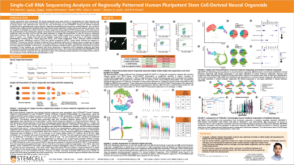 科学海报Single-Cell RNA Sequencing Analysis of Regionally Patterned Human Pluripotent Stem Cell-Derived Neural Organoids
 沪公网安备31010102008431号