McMahill BG et al. (OCT 2015)
STEM CELLS Translational Medicine 4 10 1173--1186
Feasibility Study of Canine Epidermal Neural Crest Stem Cell Transplantation in the Spinal Cords of Dogs
UNLABELLED This pilot feasibility study aimed to determine the outcome of canine epidermal neural crest stem cell (cEPI-NCSC) grafts in the normal spinal cords of healthy bred-for-research dogs. This included developing novel protocols for (a) the ex vivo expansion of cEPI-NCSCs,(b) the delivery of cEPI-NCSCs into the spinal cord,and (c) the labeling of the cells and subsequent tracing of the graft in the live animal by magnetic resonance imaging. A total of four million cEPI-NCSCs were injected into the spinal cord divided in two locations. Differences in locomotion at baseline and post-treatment were evaluated by gait analysis and compared with neurological outcome and behavioral exams. Histopathological analyses of the spinal cords and cEPI-NCSC grafts were performed at 3 weeks post-transplantation. Neurological and gait parameters were minimally affected by the stem cell injection. cEPI-NCSCs survived in the canine spinal cord for the entire period of investigation and did not migrate or proliferate. Subsets of cEPI-NCSCs expressed the neural crest stem cell marker Sox10. There was no detectable expression of markers for glial cells or neurons. The tissue reaction to the cell graft was predominantly vascular in addition to a degree of reactive astrogliosis and microglial activation. In the present study,we demonstrated that cEPI-NCSC grafts survive in the spinal cords of healthy dogs without major adverse effects. They persist locally in the normal spinal cord,may promote angiogenesis and tissue remodeling,and elicit a tissue response that may be beneficial in patients with spinal cord injury. SIGNIFICANCE It has been established that mouse and human epidermal neural crest stem cells are somatic multipotent stem cells with proved innovative potential in a mouse model of spinal cord injury (SCI) offering promise of a valid treatment for SCI. Traumatic SCI is a common neurological problem in dogs with marked similarities,clinically and pathologically,to the syndrome in people. For this reason,dogs provide a readily accessible,clinically realistic,spontaneous model for evaluation of epidermal neural crest stem cells therapeutic intervention. The results of this study are expected to give the baseline data for a future clinical trial in dogs with traumatic SCI.
View Publication
产品号#:
05750
05751
产品名:
NeuroCult™ NS-A 基础培养基(人)
NeuroCult™ NS-A 扩增试剂盒(人)
Abeysinghe HCS et al. (SEP 2015)
Stem cell research & therapy 6 1 186
Pre-differentiation of human neural stem cells into GABAergic neurons prior to transplant results in greater repopulation of the damaged brain and accelerates functional recovery after transient ischemic stroke.
INTRODUCTION Despite attempts to prevent brain injury during the hyperacute phase of stroke,most sufferers end up with significant neuronal loss and functional deficits. The use of cell-based therapies to recover the injured brain offers new hope. In the current study,we employed human neural stem cells (hNSCs) isolated from subventricular zone (SVZ),and directed their differentiation into GABAergic neurons followed by transplantation to ischemic brain. METHODS Pre-differentiated GABAergic neurons,undifferentiated SVZ-hNSCs or media alone were stereotaxically transplanted into the rat brain (n=7/group) 7 days after endothelin-1 induced stroke. Neurological outcome was assessed by neurological deficit scores and the cylinder test. Transplanted cell survival,cellular phenotype and maturation were assessed using immunohistochemistry and confocal microscopy. RESULTS Behavioral assessments revealed accelerated improvements in motor function 7 days post-transplant in rats treated with pre-differentiated GABAergic cells in comparison to media alone and undifferentiated hNSC treated groups. Histopathology 28 days-post transplant indicated that pre-differentiated cells maintained their GABAergic neuronal phenotype,showed evidence of synaptogenesis and up-regulated expression of both GABA and calcium signaling proteins associated with neurotransmission. Rats treated with pre-differentiated cells also showed increased neurogenic activity within the SVZ at 28 days,suggesting an additional trophic role of these GABAergic cells. In contrast,undifferentiated SVZ-hNSCs predominantly differentiated into GFAP-positive astrocytes and appeared to be incorporated into the glial scar. CONCLUSION Our study is the first to show enhanced exogenous repopulation of a neuronal phenotype after stroke using techniques aimed at GABAergic cell induction prior to delivery that resulted in accelerated and improved functional recovery.
View Publication
产品号#:
05750
05751
产品名:
NeuroCult™ NS-A 基础培养基(人)
NeuroCult™ NS-A 扩增试剂盒(人)
Huat T et al. (JUL 2014)
BMC Neuroscience 15 1 91
IGF-1 enhances cell proliferation and survival during early differentiation of mesenchymal stem cells to neural progenitor-like cells
BACKGROUND There has been increasing interest recently in the plasticity of mesenchymal stem cells (MSCs) and their potential to differentiate into neural lineages. To unravel the roles and effects of different growth factors in the differentiation of MSCs into neural lineages,we have differentiated MSCs into neural lineages using different combinations of growth factors. Based on previous studies of the roles of insulin-like growth factor 1 (IGF-1) in neural stem cell isolation in the laboratory,we hypothesized that IGF-1 can enhance proliferation and reduce apoptosis in neural progenitor-like cells (NPCs) during differentiation of MSCs into NCPs.We induced MSCs differentiation under four different combinations of growth factors: (A) EGF%+%bFGF,(B) EGF%+%bFGF%+%IGF-1,(C) EGF%+%bFGF%+%LIF,(D) EGF%+%bFGF%+%BDNF,and (E) without growth factors,as a negative control. The neurospheres formed were characterized by immunofluorescence staining against nestin,and the expression was measured by flow cytometry. Cell proliferation and apoptosis were also studied by MTS and Annexin V assay,respectively,at three different time intervals (24 hr,3 days,and 5 days). The neurospheres formed in the four groups were then terminally differentiated into neuron and glial cells. RESULTS The four derived NPCs showed a significantly higher expression of nestin than was shown by the negative control. Among the groups treated with growth factors,NPCs treated with IGF-1 showed the highest expression of nestin. Furthermore,NPCs derived using IGF-1 exhibited the highest cell proliferation and cell survival among the treated groups. The NPCs derived from IGF-1 treatment also resulted in a better yield after the terminal differentiation into neurons and glial cells than that of the other treated groups. CONCLUSIONS Our results suggested that IGF-1 has a crucial role in the differentiation of MSCs into neuronal lineage by enhancing the proliferation and reducing the apoptosis in the NPCs. This information will be beneficial in the long run for improving both cell-based and cell-free therapy for neurodegenerative diseases.
View Publication
产品号#:
05771
产品名:
Jarzabek MA et al. (DEC 2014)
British journal of cancer 111 12 2275--86
Interrogation of gossypol therapy in glioblastoma implementing cell line and patient-derived tumour models.
BACKGROUND Glioblastoma (GBM),being a highly vascularised and locally invasive tumour,is an attractive target for anti-angiogenic and anti-invasive therapies. The GBM/endothelial cell response to gossypol/temozolomide (TMZ) treatment was investigated with a particular aim to assess treatment effects on cancer hallmarks. METHODS Cell viability,endothelial tube formation and GBM tumour cell invasion were variously assessed following combined treatment in vitro. The U87MG-luc2 subcutaneous xenograft model was used to investigate therapeutic response in vivo. Viable tumour response to treatment was interrogated using immunohistochemistry. Combined treatment protocols were also tested in primary GBM patient-derived cultures. RESULTS An endothelial/GBM cell viability inhibitory effect,as well as an anti-angiogenic and anti-invasive response,to combined treatment have been demonstrated in vitro. A significantly greater anti-proliferative (P=0.020,P=0.030),anti-angiogenic (P=0.040,P<0.0001) and pro-apoptotic (P=0.0083,P=0.0149) response was observed when combined treatment was compared with single gossypol/TMZ treatment response,respectively. GBM cell line and patient-specific response to gossypol/TMZ treatment was observed. CONCLUSIONS Our results indicate that response to a combined gossypol/TMZ treatment is related to inhibition of tumour-associated angiogenesis,invasion and proliferation and warrants further investigation as a novel targeted GBM treatment strategy.
View Publication
产品号#:
05750
05751
产品名:
NeuroCult™ NS-A 基础培养基(人)
NeuroCult™ NS-A 扩增试剂盒(人)
Jebbett NJ et al. (SEP 2013)
NeuroToxicology 38 91--100
Low level methylmercury enhances CNTF-evoked STAT3 signaling and glial differentiation in cultured cortical progenitor cells
Although many previous investigations have studied how mercury compounds cause cell death,sub-cytotoxic levels may affect mechanisms essential for the proper development of the nervous system. The present study investigates whether low doses of methylmercury (MeHg) and mercury chloride (HgCl2) can modulate the activity of JAK/STAT signaling,a pathway that promotes gliogenesis. We report that sub-cytotoxic doses of MeHg enhance ciliary neurotrophic factor (CNTF) evoked STAT3 phosphorylation in human SH-SY5Y neuroblastoma and mouse cortical neural progenitor cells (NPCs). This effect is specific for MeHg,since HgCl2 fails to enhance JAK/STAT signaling. Exposing NPCs to these low doses of MeHg (30-300nM) enhances CNTF-induced expression of STAT3-target genes such as glial fibrillary acidic protein (GFAP) and suppressors of cytokine signaling 3 (SOCS3),and increases the proportion of cells expressing GFAP following 2 days of differentiation. Higher,near-cytotoxic concentrations of MeHg and HgCl2 inhibit STAT3 phosphorylation and lead to increased production of superoxide. Lower concentrations of MeHg effective in enhancing JAK/STAT signaling (30nM) do not result in a detectable increase in superoxide nor increased expression of the oxidant-responsive genes,heme oxygenase 1,heat shock protein A5 and sirtuin 1. These findings suggest that low concentrations of MeHg inappropriately enhance STAT3 phosphorylation and glial differentiation,and that the mechanism causing this enhancement is distinct from the reactive oxygen species-associated cell death observed at higher concentrations of MeHg and HgCl2.
View Publication
产品号#:
05707
产品名:
NeuroCult™化学解离试剂盒(小鼠)
Lazzaroni F et al. (NOV 2016)
Scientific reports 6 37201
Intronless WNT10B-short variant underlies new recurrent allele-specific rearrangement in acute myeloid leukaemia.
Defects in the control of Wnt signaling have emerged as a recurrent mechanism involved in cancer pathogenesis and acute myeloid leukaemia (AML),including the hematopoietic regeneration-associated WNT10B in AC133bright leukaemia cells,although the existence of a specific mechanism remains unproven. We have obtained evidences for a recurrent rearrangement,which involved the WNT10B locus (WNT10BR) within intron 1 (IVS1) and flanked at the 5' by non-human sequences whose origin remains to be elucidated; it also expressed a transcript variant (WNT10BIVS1) which was mainly detected in a cohort of patients with intermediate/unfavorable risk AML. We also identified in two separate cases,affected by AML and breast cancer respectively,a genomic transposable short form of human WNT10B (ht-WNT10B). The intronless ht-WNT10B resembles a long non-coding RNA (lncRNA),which suggests its involvement in a non-random microhomology-mediated recombination generating the rearranged WNT10BR. Furthermore,our studies supports an autocrine activation primed by the formation of WNT10B-FZD4/5 complexes in the breast cancer MCF7 cells that express the WNT10BIVS1. Chemical interference of WNT-ligands production by the porcupine inhibitor IWP-2 achieved a dose-dependent suppression of the WNT10B-FZD4/5 interactions. These results present the first evidence for a recurrent rearrangement promoted by a mobile ht-WNT10B oncogene,as a relevant mechanism for Wnt involvement in human cancer.
View Publication
产品号#:
05750
05751
产品名:
NeuroCult™ NS-A 基础培养基(人)
NeuroCult™ NS-A 扩增试剂盒(人)
Liu L et al. (OCT 2014)
Cell death & disease 5 10 e1471
Enrichment of c-Met+ tumorigenic stromal cells of giant cell tumor of bone and targeting by cabozantinib.
Giant cell tumor of bone (GCTB) is a very rare tumor entity,which is little examined owing to the lack of established cell lines and mouse models and the restriction of available primary cell lines. The stromal cells of GCTB have been made responsible for the aggressive growth and metastasis,emphasizing the presence of a cancer stem cell population. To identify and target such tumor-initiating cells,stromal cells were isolated from eight freshly resected GCTB tissues. Tumorigenic properties were examined by colony and spheroid formation,differentiation,migration,MTT (3-(4,5-dimethylthiazol-2-yl)-2,5-diphenyltetrazolium bromide) assay,immunohistochemistry,antibody protein array,Alu in situ hybridization,FACS analysis and xenotransplantation into fertilized chicken eggs and mice. A sub-population of the neoplastic stromal cells formed spheroids and colonies,differentiated to osteoblasts,migrated to wounded regions and expressed the metastasis marker CXC-chemokine receptor type 4,indicating self-renewal,invasion and differentiation potential. Compared with adherent-growing cells,markers for pluripotency,stemness and cancer progression,including the CSC surface marker c-Met,were enhanced in spheroidal cells. This c-Met-enriched sub-population formed xenograft tumors in fertilized chicken eggs and mice. Cabozantinib,an inhibitor of c-Met in phase II trials,eliminated CSC features with a higher therapeutic effect than standard chemotherapy. This study identifies a c-Met(+) tumorigenic sub-population within stromal GCTB cells and suggests the c-Met inhibitor cabozantinib as a new therapeutic option for targeted elimination of unresectable or recurrent GCTB.
View Publication
产品号#:
05750
05751
产品名:
NeuroCult™ NS-A 基础培养基(人)
NeuroCult™ NS-A 扩增试剂盒(人)
Rajasingh S et al. (AUG 2015)
PloS one 10 8 e0134093
Generation of Functional Cardiomyocytes from Efficiently Generated Human iPSCs and a Novel Method of Measuring Contractility.
Human induced pluripotent stem cells (iPSCs) derived cardiomyocytes (iCMCs) would provide an unlimited cell source for regenerative medicine and drug discoveries. The objective of our study is to generate functional cardiomyocytes from human iPSCs and to develop a novel method of measuring contractility of CMCs. In a series of experiments,adult human skin fibroblasts (HSF) and human umbilical vein endothelial cells (HUVECs) were treated with a combination of pluripotent gene DNA and mRNA under specific conditions. The iPSC colonies were identified and differentiated into various cell lineages,including CMCs. The contractile activity of CMCs was measured by a novel method of frame-by-frame cross correlation (particle image velocimetry-PIV) analysis. Our treatment regimen transformed 4% of HSFs into iPSC colonies at passage 0,a significantly improved efficiency compared with use of either DNA or mRNA alone. The iPSCs were capable of differentiating both in vitro and in vivo into endodermal,ectodermal and mesodermal cells,including CMCs with<88% of cells being positive for troponin T (CTT) and Gata4 by flow cytometry. We report a highly efficient combination of DNA and mRNA to generate iPSCs and functional iCMCs from adult human cells. We also report a novel approach to measure contractility of iCMCs.
View Publication


 EasySep™小鼠TIL(CD45)正选试剂盒




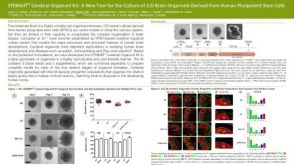 科学海报STEMdiff™ Cerebral Organoid Kit: A New Tool for the Culture of 3D Brain Organoids Derived from hPSCs


 沪公网安备31010102008431号