Da Silva CA et al. (DEC 2010)
American journal of respiratory and critical care medicine 182 12 1482--91
Chitin particles are multifaceted immune adjuvants.
RATIONALE: Chitin is a ubiquitous polysaccharide in fungi,insects,allergens,and parasites that is released at sites of infection. Its role in the generation of tissue inflammation,however,is not fully understood. OBJECTIVES: We hypothesized that chitin is an important adjuvant for adaptive immunity. METHODS: Mice were injected with a solution of ovalbumin and chitin. MEASUREMENTS AND MAIN RESULTS: We used in vivo and ex vivo/in vitro approaches to characterize the ability of chitin fragments to foster adaptive immune responses against ovalbumin and compared these responses to those induced by aluminum hydroxide (alum). In vivo,ovalbumin challenge caused an eosinophil-rich pulmonary inflammatory response,Th2 cytokine elaboration,IgE induction,and mucus metaplasia in mice that had been sensitized with ovalbumin plus chitin or ovalbumin plus alum. Toll-like receptor-2,MyD88,and IL-17A played critical roles in the chitin-induced responses,and MyD88 and IL-17A played critical roles in the alum-induced responses. In vitro,CD4(+) T cells from mice sensitized with ovalbumin plus chitin were incubated with ovalbumin-stimulated bone marrow-derived dendritic cells. In these experiments,CD4(+) T-cell proliferation,IL-5,IL-13,IFN-γ,and IL-17A production were appreciated. Toll-like receptor-2,MyD88,and IL-17A played critical roles in these in vitro adjuvant properties of chitin. TLR-2 was required for cell proliferation,whereas IL-17 and TLR-2 were required for cytokine elaboration. IL-17A also inhibited the generation of adaptive Th1 responses. CONCLUSIONS: These studies demonstrate that chitin is a potent multifaceted adjuvant that induces adaptive Th2,Th1,and Th17 immune responses. They also demonstrate that the adjuvant properties of chitin are mediated by a pathway(s) that involves and is regulated by TLR-2,MyD88,and IL-17A.
View Publication
产品号#:
19752
19752RF
产品名:
Brusko TM et al. (JAN 2010)
PloS one 5 7 e11726
Human antigen-specific regulatory T cells generated by T cell receptor gene transfer.
BACKGROUND: Therapies directed at augmenting regulatory T cell (Treg) activities in vivo as a systemic treatment for autoimmune disorders and transplantation may be associated with significant off-target effects,including a generalized immunosuppression that may compromise beneficial immune responses to infections and cancer cells. Adoptive cellular therapies using purified expanded Tregs represents an attractive alternative to systemic treatments,with results from animal studies noting increased therapeutic potency of antigen-specific Tregs over polyclonal populations. However,current methodologies are limited in terms of the capacity to isolate and expand a sufficient quantity of endogenous antigen-specific Tregs for therapeutic intervention. Moreover,FOXP3+ Tregs fall largely within the CD4+ T cell subset and are thus routinely MHC class II-specific,whereas class I-specific Tregs may function optimally in vivo by facilitating direct tissue recognition. METHODOLOGY/PRINCIPAL FINDINGS: To overcome these limitations,we have developed a novel means for generating large numbers of antigen-specific Tregs involving lentiviral T cell receptor (TCR) gene transfer into in vitro expanded polyclonal natural Treg populations. Tregs redirected with a high-avidity class I-specific TCR were capable of recognizing the melanoma antigen tyrosinase in the context of HLA-A*0201 and could be further enriched during the expansion process by antigen-specific reactivation with peptide loaded artificial antigen presenting cells. These in vitro expanded Tregs continued to express FOXP3 and functional TCRs,and maintained the capacity to suppress conventional T cell responses directed against tyrosinase,as well as bystander T cell responses. Using this methodology in a model tumor system,murine Tregs designed to express the tyrosinase TCR effectively blocked antigen-specific effector T cell (Teff) activity as determined by tumor cell growth and luciferase reporter-based imaging. CONCLUSIONS/SIGNIFICANCE: These results support the feasibility of class I-restricted TCR transfer as a promising strategy to redirect the functional properties of Tregs and provide for a more efficacious adoptive cell therapy.
View Publication
产品号#:
15022
15062
15621
15661
产品名:
RosetteSep™人CD4+ T细胞富集抗体混合物
RosetteSep™人CD4+ T细胞富集抗体混合物
RosetteSep™人CD3去除抗体混合物
RosetteSep™人CD3去除抗体混合物
Huang S-H et al. (JAN 2018)
The Journal of clinical investigation
Latent HIV reservoirs exhibit inherent resistance to elimination by CD8+ T cells.
The presence of persistent,latent HIV reservoirs in CD4+ T cells obstructs current efforts to cure infection. The so-called kick-and-kill paradigm proposes to purge these reservoirs by combining latency-reversing agents with immune effectors such as cytotoxic T lymphocytes. Support for this approach is largely based on success in latency models,which do not fully reflect the makeup of latent reservoirs in individuals on long-term antiretroviral therapy (ART). Recent studies have shown that CD8+ T cells have the potential to recognize defective proviruses,which comprise the vast majority of all infected cells,and that the proviral landscape can be shaped over time due to in vivo clonal expansion of infected CD4+ T cells. Here,we have shown that treating CD4+ T cells from ART-treated individuals with combinations of potent latency-reversing agents and autologous CD8+ T cells consistently reduced cell-associated HIV DNA,but failed to deplete replication-competent virus. These CD8+ T cells recognized and potently eliminated CD4+ T cells that were newly infected with autologous reservoir virus,ruling out a role for both immune escape and CD8+ T cell dysfunction. Thus,our results suggest that cells harboring replication-competent HIV possess an inherent resistance to CD8+ T cells that may need to be addressed to cure infection.
View Publication
产品号#:
19052
19052RF
产品名:
EasySep™人CD4+ T细胞富集试剂盒
RoboSep™ 人CD4+ T细胞富集试剂盒含滤芯吸头
Hansen AS et al. (OCT 2016)
Scientific reports 6 35406
Non-random pairing of CD46 isoforms with skewing towards BC2 and C2 in activated and memory/effector T cells.
CD46 is a glycoprotein with important functions in innate and adaptive immune responses. Functionally different isoforms are generated by alternative splicing at exons 7-9 (BC and C isoforms) and exon 13 (CYT-1 and CYT-2 isoforms) giving rise to BC1,BC2,C1 and C2. We developed a novel real-time PCR assay that allows quantitative comparisons between these isoforms. Their relative frequency in CD4(+) T cells from 100 donors revealed a distribution with high interpersonally variability. Importantly,the distribution between the isoforms was not random and although splicing favoured inclusion of exon 8 (BC isoforms),exclusion of exon 8 (C isoforms) was significantly linked to exclusion of exon 13 (CYT-2 isoforms). Despite inter-individual differences,CD4(+) and CD8(+) T cells,B cells,NK cells and monocytes expressed similar isoform profiles intra-individually. However,memory/effector CD4(+) T cells had a significantly higher frequency of CYT-2 when compared with naïve CD4(+) T cells. Likewise,in vitro activation of naïve and total CD4(+) T cells increased the expression of CYT-2. This indicates that although splicing factors determine a certain expression profile in an individual,the profile can be modulated by external stimuli. This suggests a mechanism by which alterations in CD46 isoforms may temporarily regulate the immune response.
View Publication
von Bonin A et al. (JAN 2011)
Experimental dermatology 20 1 41--7
Inhibition of the IL-2-inducible tyrosine kinase (Itk) activity: a new concept for the therapy of inflammatory skin diseases.
T-cell-mediated processes play an essential role in the pathogenesis of several inflammatory skin diseases such as atopic dermatitis,allergic contact dermatitis and psoriasis. The aim of this study was to investigate the role of the IL-2-inducible tyrosine kinase (Itk),an enzyme acting downstream of the T-cell receptor (TCR),in T-cell-dependent skin inflammation using three approaches. Itk knockout mice display significantly reduced inflammatory symptoms in mouse models of acute and subacute contact hypersensitivity (CHS) reactions. Systemic administration of a novel small molecule Itk inhibitor,Compound 44,created by chemical optimization of an initial high-throughput screening hit,inhibited Itk's activity with an IC50 in the nanomolar range. Compound 44 substantially reduced proinflammatory immune responses in vitro and in vivo after systemic administration in two acute CHS models. In addition,our data reveal that human Itk,comparable to its murine homologue,is expressed mainly in T cells and is increased in lesional skin from patients with atopic dermatitis and allergic contact dermatitis. Finally,silencing of Itk by RNA interference in primary human T cells efficiently blocks TCR-induced lymphokine secretion. In conclusion,Itk represents an interesting new target for the therapy of T-cell-mediated inflammatory skin diseases.
View Publication
产品号#:
15021
15061
产品名:
RosetteSep™人T细胞富集抗体混合物
RosetteSep™人T细胞富集抗体混合物
Ohoka Y et al. (JAN 2011)
Journal of immunology (Baltimore,Md. : 1950) 186 2 733--44
Retinoic acid-induced CCR9 expression requires transient TCR stimulation and cooperativity between NFATc2 and the retinoic acid receptor/retinoid X receptor complex.
Retinoic acid (RA) imprints gut-homing specificity on T cells upon activation by inducing the expression of chemokine receptor CCR9 and integrin α4β7. CCR9 expression seemed to be more highly dependent on RA than was the α4β7 expression,but its molecular mechanism remained unclear. In this article,we show that NFAT isoforms NFATc1 and NFATc2 directly interact with RA receptor (RAR) and retinoid X receptor (RXR) but play differential roles in RA-induced CCR9 expression on murine naive CD4(+) T cells. TCR stimulation for 6-24 h was required for the acquisition of responsiveness to RA and induced activation of NFATc1 and NFATc2. However,RA failed to induce CCR9 expression as long as TCR stimulation continued. After terminating TCR stimulation or adding cyclosporin A to the culture,Ccr9 gene transcription was induced,accompanied by inactivation of NFATc1 and sustained activation of NFATc2. Reporter and DNA-affinity precipitation assays demonstrated that the binding of NFATc2 to two NFAT-binding sites and that of the RAR/RXR complex to an RA response element half-site in the 5'-flanking region of the mouse Ccr9 gene were critical for RA-induced promoter activity. NFATc2 directly bound to RARα and RXRα,and it enhanced the binding of RARα to the RA response element half-site. NFATc1 also bound to the NFAT-binding sites and directly to RARα and RXRα,but it inhibited the NFATc2-dependent promoter activity. These results suggest that the cooperativity between NFATc2 and the RAR/RXR complex is essential for CCR9 expression on T cells and that NFATc1 interferes with the action of NFATc2.
View Publication
产品号#:
19752
19752RF
产品名:
Obar JJ et al. (SEP 2006)
Journal of virology 80 17 8303--15
In herpesvirus infections,the virus persists for life but is contained through T-cell-mediated immune surveillance. How this immune surveillance operates is poorly understood. Recent studies of other persistent infections have indicated that virus persistence is associated with functional deficits in the CD8(+) T-cell response. To test whether this is the case in a herpesvirus infection,we used a mutant murine gammaherpesvirus that is defective in its ability to persist in the host. By comparing the immune response to this virus with a revertant virus that can persist,we were able to dissect the changes in the antiviral CD8(+) T-cell response that are induced by virus persistence. Surprisingly,persistently infected mice controlled a secondary challenge infection more rapidly than nonpersistently infected mice,indicating enhanced rather than diminished effector functions. Consistent with this,virus-specific CD8 T cells from these mice exhibited faster upregulation of the cytotoxic mediator granzyme B. Another unexpected finding was that CD8(+) T cells from neither infection responded efficiently to homeostatic cytokines. The unresponsiveness of the memory cells from the nonpersistently infected mice appears to be linked to the prolonged replication of virus within the lungs. Other changes seen in different chronic infection models were also observed,such as changes in Bcl-2 levels,interleukin-2 production,and the immunodominance hierarchy. These data show persistence of gammaherpesvirus type 68 alters the properties of CD8(+) T cells and illustrates that immune surveillance does not require CD8 T cells with the same attributes as classical" memory CD8(+) T cells."
View Publication
产品号#:
18753
18753RF
产品名:
A. A. Titov et al. (jul 2019)
Journal of immunology (Baltimore,Md. : 1950) 203 2 338--348
Metformin Inhibits the Type 1 IFN Response in Human CD4+ T Cells.
In systemic lupus erythematosus,defective clearance of apoptotic debris and activation of innate cells result in a chronically activated type 1 IFN response,which can be measured in PBMCs of most patients. Metformin,a widely used prescription drug for Type 2 diabetes,has a therapeutic effect in several mouse models of lupus through mechanisms involving inhibition of oxidative phosphorylation and a decrease in CD4+ T cell activation. In this study,we report that in CD4+ T cells from human healthy controls and human systemic lupus erythematosus patients,metformin inhibits the transcription of IFN-stimulated genes (ISGs) after IFN-alpha treatment. Accordingly,metformin inhibited the phosphorylation of pSTAT1 (Y701) and its binding to IFN-stimulated response elements that control ISG expression. These effects were independent of AMPK activation or mTORC1 inhibition but were replicated using inhibitors of the electron transport chain respiratory complexes I,III,and IV. This indicates that mitochondrial respiration is required for ISG expression in CD4+ T cells and provides a novel mechanism by which metformin may exert a therapeutic effect in autoimmune diseases.
View Publication
产品号#:
19052
19052RF
15622
15662
产品名:
EasySep™人CD4+ T细胞富集试剂盒
RoboSep™ 人CD4+ T细胞富集试剂盒含滤芯吸头
RosetteSep™人CD4去除抗体混合物
RosetteSep™人CD4去除抗体混合物
L. L. Lu et al. ( 2019)
Nature medicine 25 6 977--987
IFN-gamma-independent immune markers of Mycobacterium tuberculosis exposure.
Exposure to Mycobacterium tuberculosis (Mtb) results in heterogeneous clinical outcomes including primary progressive tuberculosis and latent Mtb infection (LTBI). Mtb infection is identified using the tuberculin skin test and interferon-gamma (IFN-gamma) release assay IGRA,and a positive result may prompt chemoprophylaxis to prevent progression to tuberculosis. In the present study,we report on a cohort of Ugandan individuals who were household contacts of patients with TB. These individuals were highly exposed to Mtb but tested negative disease by IFN-gamma release assay and tuberculin skin test,'resisting' development of classic LTBI. We show that 'resisters' possess IgM,class-switched IgG antibody responses and non-IFN-gamma T cell responses to the Mtb-specific proteins ESAT6 and CFP10,immunologic evidence of exposure to Mtb. Compared to subjects with classic LTBI,'resisters' display enhanced antibody avidity and distinct Mtb-specific IgG Fc profiles. These data reveal a distinctive adaptive immune profile among Mtb-exposed subjects,supporting an expanded definition of the host response to Mtb exposure,with implications for public health and the design of clinical trials.
View Publication
产品号#:
17858
17858RF
15025
15065
100-0694
19059
19059RF
产品名:
EasySep™人CD14正选试剂盒II
RoboSep™ 人CD14正选试剂盒II
RosetteSep™人NK细胞富集抗体混合物
RosetteSep™人NK细胞富集抗体混合物
EasySep™人CD14正选试剂盒II
EasySep™人单核细胞富集试剂盒
RoboSep™ 人单核细胞富集试剂盒含滤芯吸头
Ichikawa S et al. (MAY 2011)
Journal of immunology (Baltimore,Md. : 1950) 186 10 5549--55
Hepatic stellate cells function as regulatory bystanders.
Regulatory T cells (Tregs) contribute significantly to the tolerogenic nature of the liver. The mechanisms,however,underlying liver-associated Treg induction are still elusive. We recently identified the vitamin A metabolite,retinoic acid (RA),as a key controller that promotes TGF-β-dependent Foxp3(+) Treg induction but inhibits TGF-β-driven Th17 differentiation. To investigate whether the RA producing hepatic stellate cells (HSC) are part of the liver tolerance mechanism,we investigated the ability of HSC to function as regulatory APC. Different from previous reports,we found that highly purified HSC did not express costimulatory molecules and only upregulated MHC class II after in vitro culture in the presence of exogenous IFN-γ. Consistent with an insufficient APC function,HSC failed to stimulate naive OT-II TCR transgenic CD4(+) T cells and only moderately stimulated α-galactosylceramide-primed invariant NKT cells. In contrast,HSC functioned as regulatory bystanders and promoted enhanced Foxp3 induction by OT-II TCR transgenic T cells primed by spleen dendritic cells,whereas they greatly inhibited the Th17 differentiation. Furthermore,the regulatory bystander capacity of the HSC was completely dependent on their ability to produce RA. Our data thus suggest that HSC can function as regulatory bystanders,and therefore,by promoting Tregs and suppressing Th17 differentiation,they might represent key players in the mechanism that drives liver-induced tolerance.
View Publication


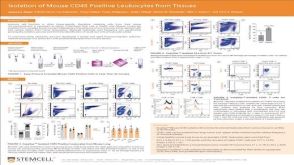
 EasySep™小鼠TIL(CD45)正选试剂盒





 沪公网安备31010102008431号