Herrmann A et al. (OCT 2010)
Cancer research 70 19 7455--64
Targeting Stat3 in the myeloid compartment drastically improves the in vivo antitumor functions of adoptively transferred T cells.
Improving effector T-cell functions is highly desirable for preventive or therapeutic interventions of diverse diseases. Signal transducer and activator of transcription 3 (Stat3) in the myeloid compartment constrains Th1-type immunity,dampening natural and induced antitumor immune responses. We have recently developed an in vivo small interfering RNA (siRNA) delivery platform by conjugating a Toll-like receptor 9 agonist with siRNA that efficiently targets myeloid and B cells. Here,we show that either CpG triggering combined with the genetic Stat3 ablation in myeloid/B cell compartments or administration of the CpG-Stat3siRNA drastically augments effector functions of adoptively transferred CD8+ T cells. Specifically,we show that both approaches are capable of increasing dendritic cell and CD8(+) T-cell engagement in tumor-draining lymph nodes. Furthermore,both approaches can significantly activate the transferred CD8(+) T cells in vivo,upregulating effector molecules such as perforin,granzyme B,and IFN-γ. Intravital multiphoton microscopy reveals that Stat3 silencing combined with CpG triggering greatly increases killing activity and tumor infiltration of transferred T cells. These results suggest the use of CpG-Stat3siRNA,and possibly other Stat3 inhibitors,as a potent adjuvant to improve T-cell therapies.
View Publication
产品号#:
19753
19753RF
产品名:
Liu C et al. (DEC 2010)
Blood 116 25 5518--27
Progenitor cell dose determines the pace and completeness of engraftment in a xenograft model for cord blood transplantation.
Two critical concerns in clinical cord blood transplantation are the initial time to engraftment and the subsequent restoration of immune function. These studies measured the impact of progenitor cell dose on both the pace and strength of hematopoietic reconstitution by transplanting nonobese diabetic/severe combined immunodeficiency/interleukin-2 receptor-gamma-null (NSγ) mice with lineage-depleted aldehyde dehydrogenase-bright CD34(+) human cord blood progenitors. The progress of each transplant was monitored over an extended time course by repeatedly analyzing the peripheral blood for human hematopoietic cells. In vivo human hematopoietic development was complete. After long-term transplantation assays (≥ 19 weeks),human T-cell development was documented within multiple tissues in 16 of 32 NSγ mice. Human T-cell differentiation was active within NSγ thymuses,as documented by the presence of CD4(+) CD8(+) T-cell progenitors as well as T-cell receptor excision circles. It is important to note that although myeloid and B-cell engraftment was detected as early as 4 weeks after transplantation,human T-cell development was exclusively late onset. High progenitor cell doses were associated with a robust human hematopoietic chimerism that accelerated both initial time to engraftment and subsequent T-cell development. At lower progenitor cell doses,the chimerism was weak and the human hematopoietic lineage development was frequently incomplete.
View Publication
产品号#:
01700
01705
01701
01702
14056
14066
28600
19056
19056RF
19756
19756RF
产品名:
ALDEFLUOR™ 试剂盒
ALDEFLUOR™ DEAB试剂, 1.5 mM, 1 mL
ALDEFLUOR™检测缓冲液
L-Calc™有限稀释软件
Akatsuka A et al. (SEP 2010)
International immunology 22 9 783--90
Tumor cells of non-hematopoietic and hematopoietic origins express activation-induced C-type lectin, the ligand for killer cell lectin-like receptor F1.
Killer cell lectin-like receptor F1 (KLRF1) is an activating C-type lectin-like receptor expressed on human NK cells and subsets of T cells. In this study,we show that activation-induced C-type lectin (AICL) is a unique KLRF1 ligand expressed on tumor cell lines of hematopoietic and non-hematopoietic origins. We screened a panel of human tumor cell lines using the KLRF1 reporter cells and found that several tumor lines expressed KLRF1 ligands. We characterized a putative KLRF1 ligand expressed on the U937 cell line. The molecular mass for the deglycosylated ligand was 28 kDa under non-reducing condition and 17 kDa under reducing condition,suggesting that the KLRF1 ligand is a homodimer. By expression cloning from a U937 cDNA library,we identified AICL as a KLRF1 ligand. We generated mAbs against AICL to identify the KLRF1 ligands on non-hematopoietic tumor lines. The anti-AICL mAbs stained the tumor lines that express the KLRF1 ligands and importantly the interaction of KLRF1 with the KLRF1 ligand on non-hematopoietic tumors was completely blocked by the two anti-AICL mAbs. Moreover,NK cell degranulation triggered by AICL-expressing targets was partially inhibited by the anti-AICL mAb. Finally,we demonstrate that AICL is expressed in human primary liver cancers. These results suggest that AICL is expressed on tumor cells of non-hematopoietic origins and raise the possibility that AICL may contribute to NK cell surveillance of tumor cells.
View Publication
产品号#:
18554
18554RF
18564
18564RF
产品名:
De Almeida DE et al. (AUG 2010)
Journal of immunology (Baltimore,Md. : 1950) 185 3 1927--34
Immune dysregulation by the rheumatoid arthritis shared epitope.
Rheumatoid arthritis (RA) is closely associated with HLA-DRB1 alleles that code a five-amino acid sequence motif in positions 70-74 of the HLA-DRbeta-chain,called the shared epitope (SE). The mechanistic basis of SE-RA association is unknown. We recently found that the SE functions as an allele-specific signal-transducing ligand that activates an NO-mediated pathway in other cells. To better understand the role of the SE in the immune system,we examined its effect on T cell polarization in mice. In CD11c(+)CD8(+) dendritic cells (DCs),the SE inhibited the enzymatic activity of indoleamine 2,3 dioxygenase,a key enzyme in immune tolerance and T cell regulation,whereas in CD11c(+)CD8(-) DCs,the ligand activated robust production of IL-6. When SE-activated DCs were cocultured with CD4(+) T cells,the differentiation of Foxp3(+) T regulatory cells was suppressed,whereas Th17 cells were expanded. The polarizing effects could be seen with SE(+) synthetic peptides,but even more so when the SE was in its natural tridimensional conformation as part of HLA-DR tetrameric proteins. In vivo administration of the SE ligand resulted in a greater abundance of Th17 cells in the draining lymph nodes and increased IL-17 production by splenocytes. Thus,we conclude that the SE acts as a potent immune-stimulatory ligand that can polarize T cell differentiation toward Th17 cells,a T cell subset that was recently implicated in the pathogenesis of autoimmune diseases,including RA.
View Publication
产品号#:
19752
19752RF
产品名:
Marks BR et al. (OCT 2009)
Nature immunology 10 10 1125--32
Thymic self-reactivity selects natural interleukin 17-producing T cells that can regulate peripheral inflammation.
Interleukin 17 (IL-17)-producing CD4(+) helper T cells (T(H)-17 cells) share a developmental relationship with Foxp3(+) regulatory T cells (T(reg) cells). Here we show that a T(H)-17 population differentiates in the thymus in a manner influenced by recognition of self antigen and by the cytokines IL-6 and transforming growth factor-beta (TGF-beta). Like previously described T(H)-17 cells,the T(H)-17 cells that developed in the thymus expressed the transcription factor RORgamma t and the IL-23 receptor. These cells also expressed alpha(4)beta(1) integrins and the chemokine receptor CCR6 and were recruited to the lung,gut and liver. In the liver,these cells secreted IL-22 in response to self antigen and mediated host protection during inflammation. Thus,T(H)-17 cells,like T(reg) cells,can be selected by self antigens in the thymus.
View Publication
产品号#:
19752
19752RF
产品名:
Le Dieu R et al. (AUG 2009)
Journal of immunological methods 348 1-2 95--100
Negative immunomagnetic selection of T cells from peripheral blood of presentation AML specimens.
To date,studies on T cells in acute myeloid leukemia (AML) have been limited to flow cytometric analysis of whole peripheral blood mononuclear cell (PBMC) specimens or functional work looking at the impact of AML myeloblasts on normal or remission T cells. This lack of information on T cells at the time of presentation with disease is due in part to the difficulty in isolating sufficiently pure T cells from these specimens for further study. Negative immunomagnetic selection has been the method of choice for isolating immune cells for functional studies due to concerns that binding antibodies to the cell surface may induce cellular activation,block ligand-receptor interactions or result in immune clearance. In order specifically to study T cells in presentation AML specimens,we set out to develop a method of isolating highly pure CD4 and CD8 T cells by negative selection from the peripheral blood (PB) of newly diagnosed AML patients. This technique,unlike T cell selection from PB from normal individuals or from patients with chronic lymphocytic leukaemia,was extremely problematic due to properties of the leukaemic myeloblasts. A successful method was eventually optimized requiring the use of a custom antibody cocktail consisting of CD33,CD34,CD123,CD11c and CD36,to deplete myeloblasts.
View Publication
产品号#:
产品名:
Grinshtein N et al. (MAY 2009)
Cancer research 69 9 3979--85
Neoadjuvant vaccination provides superior protection against tumor relapse following surgery compared with adjuvant vaccination.
Tumors that recur following surgical resection of melanoma are typically metastatic and associated with poor prognosis. Using the murine B16F10 melanoma and a robust antimelanoma vaccine,we evaluated immunization as a tool to improve tumor-free survival following surgery. We investigated the utility of vaccination in both neoadjuvant and adjuvant settings. Surprisingly,neoadjuvant vaccination was far superior and provided approximately 100% protection against tumor relapse. Neoadjuvant vaccination was associated with enhanced frequencies of tumor-specific T cells within the tumor and the tumor-draining lymph nodes following resection. We also observed increased infiltration of antigen-specific T cells into the area of surgery. This method should be amenable to any vaccine platform and can be readily extended to the clinic.
View Publication
Engineering a stable and selective peptide blocker of the Kv1.3 channel in T lymphocytes.
Kv1.3 potassium channels maintain the membrane potential of effector memory (T(EM)) T cells that are important mediators of multiple sclerosis,type 1 diabetes mellitus,and rheumatoid arthritis. The polypeptide ShK-170 (ShK-L5),containing an N-terminal phosphotyrosine extension of the Stichodactyla helianthus ShK toxin,is a potent and selective blocker of these channels. However,a stability study of ShK-170 showed minor pH-related hydrolysis and oxidation byproducts that were exacerbated by increasing temperatures. We therefore engineered a series of analogs to minimize the formation of these byproducts. The analog with the greatest stability,ShK-192,contains a nonhydrolyzable phosphotyrosine surrogate,a methionine isostere,and a C-terminal amide. ShK-192 shows the same overall fold as ShK,and there is no evidence of any interaction between the N-terminal adduct and the rest of the peptide. The docking configuration of ShK-192 in Kv1.3 shows the N-terminal para-phosphonophenylalanine group lying at the junction of two channel monomers to form a salt bridge with Lys(411) of the channel. ShK-192 blocks Kv1.3 with an IC(50) of 140 pM and exhibits greater than 100-fold selectivity over closely related channels. After a single subcutaneous injection of 100 microg/kg,approximately 100 to 200 pM concentrations of active peptide is detectable in the blood of Lewis rats 24,48,and 72 h after the injection. ShK-192 effectively inhibits the proliferation of T(EM) cells and suppresses delayed type hypersensitivity when administered at 10 or 100 microg/kg by subcutaneous injection once daily. ShK-192 has potential as a therapeutic for autoimmune diseases mediated by T(EM) cells.
View Publication


 EasySep™小鼠TIL(CD45)正选试剂盒




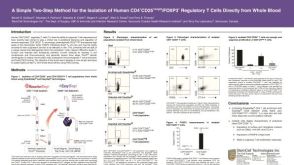 科学海报Isolation of Human CD4+CD25+Bright/Foxp3+ Regulatory T Cells Directly from Whole Blood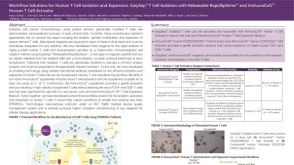
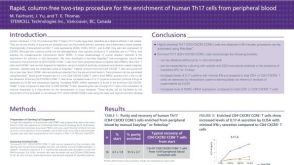
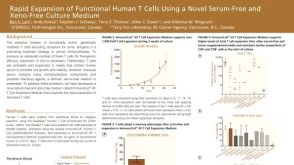 科学海报Rapid Expansion of Functional Human T Cells Using a Novel Serum-Free and Xeno-Free Culture Medium
 沪公网安备31010102008431号