Jones RB et al. (SEP 2009)
Journal of virology 83 17 8722--32
Human immunodeficiency virus type 1 escapes from interleukin-2-producing CD4+ T-cell responses without high-frequency fixation of mutations.
The presence of interleukin-2 (IL-2)-producing human immunodeficiency virus type 1 (HIV-1)-specific CD4(+) T-cell responses has been associated with the immunological control of HIV-1 replication; however,the causal relationship between these factors remains unclear. Here we show that IL-2-producing HIV-1-specific CD4(+) T cells can be cloned from acutely HIV-1-infected individuals. Despite the early presence of these cells,each of the individuals in the present study exhibited progressive disease,with one individual showing rapid progression. In this rapid progressor,three IL-2-producing HIV-1 Gag-specific CD4(+) T-cell responses were identified and mapped to the following optimal epitopes: HIVWASRELER,REPRGSDIAGT,and FRDYVDRFYKT. Responses to these epitopes in peripheral blood mononuclear cells were monitored longitudinally to textgreater1 year postinfection,and contemporaneous circulating plasma viruses were sequenced. A variant of the FRDYVDRFYKT epitope sequence,FRDYVDQFYKT,was observed in 1/21 plasma viruses sequenced at 5 months postinfection and 1/10 viruses at 7 months postinfection. This variant failed to stimulate the corresponding CD4(+) T-cell clone and thus constitutes an escape mutant. Responses to each of the three Gag epitopes were rapidly lost,and this loss was accompanied by a loss of antigen-specific cells in the periphery as measured by using an FRDYVDRFYKT-presenting major histocompatibility complex class II tetramer. Highly active antiretroviral therapy was associated with the reemergence of FRDYVDRFYKT-specific cells by tetramer. Thus,our data support that IL-2-producing HIV-1-specific CD4(+) T-cell responses can exert immune pressure during early HIV-1 infection but that the inability of these responses to enforce enduring control of viral replication is related to the deletion and/or dysfunction of HIV-1-specific CD4(+) T cells rather than to the fixation of escape mutations at high frequencies.
View Publication
产品号#:
19052
19052RF
产品名:
EasySep™人CD4+ T细胞富集试剂盒
RoboSep™ 人CD4+ T细胞富集试剂盒含滤芯吸头
Doreau A et al. (JUL 2009)
Nature immunology 10 7 778--85
Interleukin 17 acts in synergy with B cell-activating factor to influence B cell biology and the pathophysiology of systemic lupus erythematosus.
Studies have suggested involvement of interleukin 17 (IL-17) in autoimmune diseases,although its effect on B cell biology has not been clearly established. Here we demonstrate that IL-17 alone or in combination with B cell-activating factor controlled the survival and proliferation of human B cells and their differentiation into immunoglobulin-secreting cells. This effect was mediated mainly through the nuclear factor-kappaB-regulated transcription factor Twist-1. In support of the relevance of our observations and the potential involvement of IL-17 in B cell biology,we found that the serum of patients with systemic lupus erythematosus had higher concentrations of IL-17 than did the serum of healthy people and that IL-17 abundance correlated with the disease severity of systemic lupus erythematosus.
View Publication
产品号#:
18054
18054RF
产品名:
Giassi LJ et al. (AUG 2008)
Experimental biology and medicine (Maywood,N.J.) 233 8 997--1012
Expanded CD34+ human umbilical cord blood cells generate multiple lymphohematopoietic lineages in NOD-scid IL2rgamma(null) mice.
Umbilical cord blood (UCB) is increasingly being used for human hematopoietic stem cell (HSC) transplantation in children but often requires pooling multiple cords to obtain sufficient numbers for transplantation in adults. To overcome this limitation,we have used an ex vivo two-week culture system to expand the number of hematopoietic CD34(+) cells in cord blood. To assess the in vivo function of these expanded CD34(+) cells,cultured human UCB containing 1 x 10(6) CD34(+) cells were transplanted into conditioned NOD-scid IL2rgamma(null) mice. The expanded CD34(+) cells displayed short- and long-term repopulating cell activity. The cultured human cells differentiated into myeloid,B-lymphoid,and erythroid lineages,but not T lymphocytes. Administration of human recombinant TNFalpha to recipient mice immediately prior to transplantation promoted human thymocyte and T-cell development. These T cells proliferated vigorously in response to TCR cross-linking by anti-CD3 antibody. Engrafted TNFalpha-treated mice generated antibodies in response to T-dependent and T-independent immunization,which was enhanced when mice were co-treated with the B cell cytokine BLyS. Ex vivo expanded CD34(+) human UCB cells have the capacity to generate multiple hematopoietic lineages and a functional human immune system upon transplantation into TNFalpha-treated NOD-scid IL2rgamma(null) mice.
View Publication
产品号#:
09600
09650
09850
产品名:
StemSpan™ SFEM
StemSpan™ SFEM
Lambert AA et al. (AUG 2008)
Blood 112 4 1299--307
The C-type lectin surface receptor DCIR acts as a new attachment factor for HIV-1 in dendritic cells and contributes to trans- and cis-infection pathways.
The dynamic interplay between dendritic cells (DCs) and human immunodeficiency virus type-1 (HIV-1) is thought to result in viral dissemination and evasion of antiviral immunity. Although initial observations suggested that the C-type lectin receptor (CLR) DC-SIGN was responsible for the trans-infection function of the virus,subsequent studies demonstrated that trans-infection of CD4(+) T cells with HIV-1 can also occur through DC-SIGN-independent mechanisms. We demonstrate that a cell surface molecule designated DCIR (for DC immunoreceptor),a member of a recently described family of DC-expressing CLRs,can participate in the capture of HIV-1 and promote infection in trans and in cis of autologous CD4(+) T cells from human immature monocyte-derived DCs. The contribution of DCIR to these processes was revealed using DCIR-specific siRNAs and a polyclonal antibody specific for the carbohydrate recognition domain of DCIR. Data from transfection experiments indicated that DCIR acts as a ligand for HIV-1 and is involved in events leading to productive virus infection. Finally,we show that the neck domain of DCIR is important for the DCIR-mediated effect on virus binding and infection. These results point to a possible role for DCIR in HIV-1 pathogenesis by supporting the productive infection of DCs and promoting virus propagation.
View Publication


 EasySep™小鼠TIL(CD45)正选试剂盒




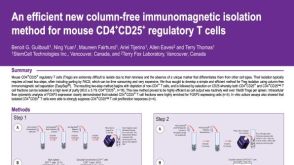 科学海报Immunomagnetic Isolation Method for Mouse CD4+CD25+ Regulatory T Cells
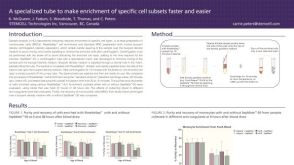 科学海报A Specialized Tube to Make Enrichment of Specific Cell Subsets Faster and Easier


 沪公网安备31010102008431号