Zhang Z et al. (SEP 2003)
The EMBO journal 22 18 4759--69
Enforced expression of EBF in hematopoietic stem cells restricts lymphopoiesis to the B cell lineage.
Mice deficient in early B cell factor (EBF) are blocked at the progenitor B cell stage prior to immunoglobulin gene rearrangement. The EBF-dependent block in B cell development occurs near the onset of B-lineage commitment,which raises the possibility that EBF may act instructively to specify the B cell fate from uncommitted,multipotential progenitor cells. To test this hypothesis,we transduced enriched hematopoietic progenitor cells with a retroviral vector that coexpressed EBF and the green fluorescent protein (GFP). Mice reconstituted with EBF-expressing cells showed a near complete absence of T lymphocytes. Spleen and peripheral blood samples were textgreater95 and 90% GFP+EBF+ mature B cells,respectively. Both NK and lymphoid-derived dendritic cells were also significantly reduced compared with control-transplanted mice. These data suggest that EBF can restrict lymphopoiesis to the B cell lineage by blocking development of other lymphoid-derived cell pathways.
View Publication
产品号#:
03434
03444
产品名:
MethoCult™ GF M3434
MethoCult™ GF M3434
Baumann BC et al. (MAY 2004)
Journal of immunology (Baltimore,Md. : 1950) 172 10 6460--7
Lack of galactose-alpha-1,3-galactose expression on porcine endothelial cells prevents complement-induced lysis but not direct xenogeneic NK cytotoxicity.
The galactose-alpha-1,3-galactose (alphaGal) carbohydrate epitope is expressed on porcine,but not human cells,and therefore represents a major target for preformed human anti-pig natural Abs (NAb). Based on results from pig-to-primate animal models,NAb binding to porcine endothelial cells will likely induce complement activation,lysis,and hyperacute rejection in pig-to-human xenotransplantation. Human NK cells may also contribute to innate immune responses against xenografts,either by direct recognition of activating molecules on target cells or by FcgammaRIII-mediated xenogeneic Ab-dependent cellular cytotoxicity (ADCC). The present study addressed the question as to whether the lack of alphaGal protects porcine endothelial cells from NAb/complement-induced lysis,direct xenogeneic NK lysis,NAb-dependent ADCC,and adhesion of human NK cells under shear stress. Homologous recombination,panning,and limiting dilution cloning were used to generate an alphaGal-negative porcine endothelial cell line,PED2*3.51. NAb/complement-induced xenogeneic lysis of PED2*3.51 was reduced by an average of 86% compared with the alphaGal-positive phenotype. PED2*3.51 resisted NK cell-mediated ADCC with a reduction of lysis ranging from 30 to 70%. However,direct xenogeneic lysis of PED2*3.51,mediated either by freshly isolated or IL-2-activated human NK cells or the NK cell line NK92,was not reduced. Furthermore,adhesion of IL-2-activated human NK cells did not rely on alphaGal expression. In conclusion,removal of alphaGal leads to a clear reduction in complement-induced lysis and ADCC,but does not resolve adhesion of NK cells and direct anti-porcine NK cytotoxicity,indicating that alphaGal is not a dominant target for direct human NK cytotoxicity against porcine cells.
View Publication
产品号#:
05150
产品名:
MyeloCult™ H5100
Koka R et al. (SEP 2004)
Journal of immunology (Baltimore,Md. : 1950) 173 6 3594--8
Cutting edge: murine dendritic cells require IL-15R alpha to prime NK cells.
NK cells protect hosts against viral pathogens and transformed cells,and dendritic cells (DCs) play important roles in activating NK cells. We now find that murine IL-15Ralpha-deficient DCs fail to support NK cell cytolytic activity and elaboration of IFN-gamma,despite the fact that these DCs express normal levels of costimulatory molecules and IL-12. By contrast,IL-15Ralpha expression on NK cells is entirely dispensable for their activation by DCs. In addition,blockade with anti-IL-15Ralpha and anti-IL-2Rbeta but not anti-IL-2Ralpha-specific Abs prevents NK cell activation by wild-type DCs. Finally,presentation of IL-15 by purified IL-15Ralpha/Fc in trans synergizes with IL-12 to support NK cell priming. These findings suggest that murine DCs require IL-15Ralpha to present IL-15 in trans to NK cells during NK cell priming.
View Publication
产品号#:
18755
18755RF
产品名:
EasySep™小鼠CD49b正选试剂盒
RoboSep™ 小鼠CD49b正选试剂盒含滤芯吸头
Jounaidi Y et al. (NOV 2017)
Cancer research 77 21 5938--5951
Tethering IL2 to Its Receptor IL2Rβ Enhances Antitumor Activity and Expansion of Natural Killer NK92 Cells.
IL2 is an immunostimulatory cytokine for key immune cells including T cells and natural killer (NK) cells. Systemic IL2 supplementation could enhance NK-mediated immunity in a variety of diseases ranging from neoplasms to viral infection. However,its systemic use is restricted by its serious side effects and limited efficacy due to activation of T regulatory cells (Tregs). IL2 signaling is mediated through interactions with a multi-subunit receptor complex containing IL2Rα,IL2Rβ,and IL2Rγ. Adult natural killer (NK) cells express only IL2Rβ and IL2Rγ subunits and are therefore relatively insensitive to IL2. To overcome these limitations,we created a novel chimeric IL2-IL2Rβ fusion protein of IL2 and its receptor IL2Rβ joined via a peptide linker (CIRB). NK92 cells expressing CIRB (NK92CIRB) were highly activated and expanded indefinitely without exogenous IL2. When compared with an IL2-secreting NK92 cell line,NK92CIRB were more activated,cytotoxic,and resistant to growth inhibition. Direct contact with cancer cells enhanced the cytotoxic character of NK92CIRB cells,which displayed superior in vivo antitumor effects in mice. Overall,our results showed how tethering IL2 to its receptor IL2Rβ eliminates the need for IL2Rα and IL2Rβ,offering a new tool to selectively activate and empower immune therapy. Cancer Res; 77(21); 5938-51. textcopyright2017 AACR.
View Publication
产品号#:
15025
15065
产品名:
RosetteSep™人NK细胞富集抗体混合物
RosetteSep™人NK细胞富集抗体混合物
C. Onyilagha et al. (jun 2019)
Journal of immunology (Baltimore,Md. : 1950)
NK Cells Are Critical for Optimal Immunity to Experimental Trypanosoma congolense Infection.
NK cells are key innate immune cells that play critical roles in host defense. Although NK cells have been shown to regulate immunity to some infectious diseases,their role in immunity to Trypanosoma congolense has not been investigated. NK cells are vital sources of IFN-gamma and TNF-alpha; two key cytokines that are known to play important roles in resistance to African trypanosomes. In this article,we show that infection with T. congolense leads to increased levels of activated and functional NK cells in multiple tissue compartments. Systemic depletion of NK cells with anti-NK1.1 mAb led to increased parasitemia,which was accompanied by significant reduction in IFN-gamma production by immune cells in the spleens and liver of infected mice. Strikingly,infected NFIL3-/- mice (which genetically lack NK cell development and function) on the normally resistant background were highly susceptible to T. congolense infection. These mice developed fulminating and uncontrolled parasitemia and died significantly earlier (13 ± 1 d) than their wild-type control mice (106 ± 26 d). The enhanced susceptibility of NFIL3-/- mice to infection was accompanied by significantly impaired cytokine (IFN-gamma and TNF-alpha) response by CD3+ T cells in the spleens and liver. Adoptive transfer of NK cells into NFIL3-/- mice before infection rescued them from acute death in a perforin-dependent manner. Collectively,these studies show that NK cells are critical for optimal resistance to T. congolense,and its deficiency leads to enhanced susceptibility in infected mice.
View Publication
产品号#:
19855
19855RF
产品名:
EasySep™小鼠NK细胞分选试剂盒
RoboSep™ 小鼠NK细胞分选试剂盒
Briercheck EL et al. ( 2015)
The Journal of Immunology 194 4 1832--1840
PTEN Is a Negative Regulator of NK Cell Cytolytic Function
Human NK cells are characterized by their ability to initiate an immediate and direct cytolytic response to virally infected or malignantly transformed cells. Within human peripheral blood,the more mature CD56(dim) NK cell efficiently kills malignant targets at rest,whereas the less mature CD56(bright) NK cells cannot. In this study,we show that resting CD56(bright) NK cells express significantly more phosphatase and tensin homolog deleted on chromosome 10 (PTEN) protein when compared with CD56(dim) NK cells. Consistent with this,forced overexpression of PTEN in NK cells resulted in decreased cytolytic activity,and loss of PTEN in CD56(bright) NK cells resulted in elevated cytolytic activity. Comparable studies in mice showed PTEN overexpression did not alter NK cell development or NK cell-activating and inhibitory receptor expression yet,as in humans,did decrease expression of downstream NK activation targets MAPK and AKT during early cytolysis of tumor target cells. Confocal microscopy revealed that PTEN overexpression disrupts the NK cell's ability to organize immunological synapse components including decreases in actin accumulation,polarization of the microtubule organizing center,and the convergence of cytolytic granules. In summary,our data suggest that PTEN normally works to limit the NK cell's PI3K/AKT and MAPK pathway activation and the consequent mobilization of cytolytic mediators toward the target cell and suggest that PTEN is among the active regulatory components prior to human NK cells transitioning from the noncytolytic CD56(bright) NK cell to the cytolytic CD56(dim) NK cells.
View Publication
产品号#:
15025
15065
产品名:
RosetteSep™人NK细胞富集抗体混合物
RosetteSep™人NK细胞富集抗体混合物
Cavalli RC et al. ( 2016)
PloS one 11 10 e0164353
Induced Human Decidual NK-Like Cells Improve Utero-Placental Perfusion in Mice.
Decidual NK (dNK) cells,a distinct type of NK cell,are thought to regulate uterine spiral artery remodeling,a process that allows for increased blood delivery to the fetal-placental unit. Impairment of uterine spiral artery remodeling is associated with decreased placental perfusion,increased uterine artery resistance,and obstetric complications such as preeclampsia and intrauterine growth restriction. Ex vivo manipulation of human peripheral blood NK (pNK) cells by a combination of hypoxia,TGFß-1 and 5-aza-2'-deoxycytidine yields cells with phenotypic and in vitro functional similarities to dNK cells,called idNK cells. Here,gene expression profiling shows that CD56Bright idNK cells derived ex vivo from human pNK cells,and to a lesser extent CD56Dim idNK cells,are enriched in the gene expression signature that distinguishes dNK cells from pNK cells. When injected into immunocompromised pregnant mice with elevated uterine artery resistance,idNK cells homed to the uterus and reduced the uterine artery resistance index,suggesting improved placental perfusion.
View Publication
产品号#:
15025
15065
产品名:
RosetteSep™人NK细胞富集抗体混合物
RosetteSep™人NK细胞富集抗体混合物
Mace EM et al. (NOV 2016)
The Journal of clinical investigation
Biallelic mutations in IRF8 impair human NK cell maturation and function.
Human NK cell deficiencies are rare yet result in severe and often fatal disease,particularly as a result of viral susceptibility. NK cells develop from hematopoietic stem cells,and few monogenic errors that specifically interrupt NK cell development have been reported. Here we have described biallelic mutations in IRF8,which encodes an interferon regulatory factor,as a cause of familial NK cell deficiency that results in fatal and severe viral disease. Compound heterozygous or homozygous mutations in IRF8 in 3 unrelated families resulted in a paucity of mature CD56dim NK cells and an increase in the frequency of the immature CD56bright NK cells,and this impairment in terminal maturation was also observed in Irf8-/-,but not Irf8+/-,mice. We then determined that impaired maturation was NK cell intrinsic,and gene expression analysis of human NK cell developmental subsets showed that multiple genes were dysregulated by IRF8 mutation. The phenotype was accompanied by deficient NK cell function and was stable over time. Together,these data indicate that human NK cells require IRF8 for development and functional maturation and that dysregulation of this function results in severe human disease,thereby emphasizing a critical role for NK cells in human antiviral defense.
View Publication
产品号#:
15025
15065
产品名:
RosetteSep™人NK细胞富集抗体混合物
RosetteSep™人NK细胞富集抗体混合物
Huang Y et al. (DEC 2016)
Journal of immunology (Baltimore,Md. : 1950) 197 12 4603--4612
Diversity of Antiviral IgG Effector Activities Observed in HIV-Infected and Vaccinated Subjects.
Diverse Ab effector functions mediated by the Fc domain have been commonly associated with reduced risk of infection in a growing number of nonhuman primate and human clinical studies. This study evaluated the anti-HIV Ab effector activities in polyclonal serum samples from HIV-infected donors,VAX004 vaccine recipients,and healthy HIV-negative subjects using a variety of primary and cell line-based assays,including Ab-dependent cellular cytotoxicity (ADCC),Ab-dependent cell-mediated viral inhibition,and Ab-dependent cellular phagocytosis. Additional assay characterization was performed with a panel of Fc-engineered variants of mAb b12. The goal of this study was to characterize different effector functions in the study samples and identify assays that might most comprehensively and dependably capture Fc-mediated Ab functions mediated by different effector cell types and against different viral targets. Deployment of such assays may facilitate assessment of functionally unique humoral responses and contribute to identification of correlates of protection with potential mechanistic significance in future HIV vaccine studies. Multivariate and correlative comparisons identified a set of Ab-dependent cell-mediated viral inhibition and phagocytosis assays that captured different Ab activities and were distinct from a group of ADCC assays that showed a more similar response profile across polyclonal serum samples. The activities of a panel of b12 monoclonal Fc variants further identified distinctions among the ADCC assays. These results reveal the natural diversity of Fc-mediated Ab effector responses among vaccine recipients in the VAX004 trial and in HIV-infected subjects,and they point to the potential importance of polyfunctional Ab responses.
View Publication
产品号#:
15025
15065
产品名:
RosetteSep™人NK细胞富集抗体混合物
RosetteSep™人NK细胞富集抗体混合物
S. L. Rogers et al. (JUL 2006)
Journal of immunology (Baltimore,Md. : 1950) 177 1 414--21
A role for DNA hypomethylation and histone acetylation in maintaining allele-specific expression of mouse NKG2A in developing and mature NK cells.
The repertoire of receptors that is expressed by NK cells is critical for their ability to kill virally infected or transformed cells. However,the molecular mechanisms that determine whether and when NK receptor genes are transcribed during hemopoiesis remain unclear. In this study,we show that hypomethylation of a CpG-rich region in the mouse NKG2A gene is associated with transcription of NKG2A in ex vivo NK cells and NK cell lines. This observation was extended to various developmental stages of NK cells sorted from bone marrow,in which we demonstrate that the CpGs are methylated in the NKG2A-negative stages (hemopoietic stem cells,NK progenitors,and NKG2A-negative NK cells),and hypomethylated specifically in the NKG2A-positive NK cells. Furthermore,we provide evidence that DNA methylation is important in maintaining the allele-specific expression of NKG2A. Finally,we show that acetylated histones are associated with the CpG-rich region in NKG2A positive,but not negative,cell lines,and that treatment with the histone deacetylase inhibitor trichostatin A alone is sufficient to induce NKG2A expression. Treatment with the methyltransferase inhibitor 5-azacytidine only is insufficient to induce transcription,but cotreatment with both drugs resulted in a significantly greater induction,suggesting a cooperative role for DNA methylation and histone acetylation status in regulating gene expression. These results enhance our understanding of the formation and maintenance of NK receptor repertoires in developing and mature NK cells.
View Publication
产品号#:
18556
18556RF
18554
18554RF
18564
18564RF
36750
07100
产品名:
RPMI 1640培养基
L-谷氨酰胺
Fujii H et al. (MAR 2007)
Blood 109 5 2008--13
In vivo control of acute lymphoblastic leukemia by immunostimulatory CpG oligonucleotides.
Despite considerable success in treating newly diagnosed childhood acute lymphoblastic leukemia (ALL),relapsed disease remains a significant clinical challenge. Using a NOD/SCID mouse xenograft model,we report that immunostimulatory DNA oligonucleotides containing CpG motifs (CpG ODNs) stimulate significant immune activity against primary human ALL cells in vivo. The administration of CpG ODNs induced a significant reduction in systemic leukemia burden,mediated continued disease control,and significantly improved survival of mice with established human ALL. The death of leukemia cells in vivo was independent of the ability of ALL cells to respond directly to CpG ODNs and correlated with the production of IL-12p70,IFN-alpha,and IFN-gamma by the host. In addition,depletion of natural killer cells by anti-asialo-GM1 treatment significantly reduced the in vivo antileukemic activity of CpG ODN. This antileukemia effect was not limited to the xenograft model because natural killer cell-dependent killing of ALL by human peripheral blood mononuclear cells (PBMCs) was also increased by CpG ODN stimulation. These results suggest that CpG ODNs have potential as therapeutic agents for the treatment of ALL.
View Publication


 EasySep™小鼠TIL(CD45)正选试剂盒




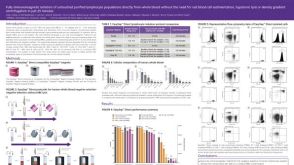 科学海报Immunomagnetic Cell Isolation of Untouched Lymphocyte Populations Directly from Whole Blood
 沪公网安备31010102008431号