Neutrophil development and function critically depend on Bruton tyrosine kinase in a mouse model of X-linked agammaglobulinemia.
Bruton tyrosine kinase (Btk) is essential for B cell development and function and also appears to be important for myeloid cells. The bone marrow of Btk-deficient mice shows enhanced granulopoiesis compared with that of wild-type mice. In purified granulocyte-monocyte-progenitors (GMP) from Btk-deficient mice,the development of granulocytes is favored at the expense of monocytes. However,Btk-deficient neutrophils are impaired in maturation and function. Using bone marrow chimeras,we show that this defect is cell-intrinsic to neutrophils. In GMP and neutrophils,Btk plays a role in GM-CSF- and Toll-like receptor-induced differentiation. Molecular analyses revealed that expression of the lineage-determining transcription factors C/EBPα,C/EBPβ,and PU.1,depends on Btk. In addition,expression of several granule proteins,including myeloperoxidase,neutrophilic granule protein,gelatinase and neutrophil elastase,is Btk-dependent. In the Arthus reaction,an acute inflammatory response,neutrophil migration into tissues,edema formation,and hemorrhage are significantly reduced in Btk-deficient animals. Together,our findings implicate Btk as an important regulator of neutrophilic granulocyte maturation and function in vivo.
View Publication
产品号#:
03231
产品名:
MethoCult™ M3231
Vasu S et al. (MAR 2016)
Blood
Decitabine enhances Fc engineered anti-CD33 mAb mediated natural killer antibody dependent cellular cytotoxicity against AML blasts.
Acute myeloid leukemia (AML) is the most common type of acute leukemia affecting older individuals at a median age of 67 years. Resistance to intensive induction chemotherapy is the major cause of death in elderly AML; hence novel treatment strategies are warranted. CD33-directed antibody-drug conjugates (Gemtuzumab ozogamicin) have been shown to improve overall survival,validating CD33 as a target for antibody-based therapy of AML. Here we report the in vitro efficacy of BI 836858,a fully human,Fc-engineered,anti-CD33 antibody using AML cell lines and primary AML blasts as targets. BI 836858-opsonized AML cells significantly induced both autologous and allogeneic natural killer (NK)-cell degranulation and NK cell-mediated antibody-dependent cellular cytotoxicity (ADCC). In vitro treatment of AML blasts with decitabine (DAC) or 5-azacytidine,two hypomethylating agents that show efficacy in older patients,did not compromise BI 836858-induced NK cell-mediated ADCC. Evaluation of BI 836858-mediated ADCC in serial marrow AML aspirates in patients who received a ten-day course of DAC (pre-DAC,days 4,11 and 28 post-DAC) revealed significantly higher ADCC in samples at day 28 post-DAC when compared to pre-DAC treatment. Analysis of ligands (L) to activating receptors (NKG2D showed significantly increased NKG2DL expression in day 28 post-DAC samples compared to pre-DAC samples; when NKG2DL receptor was blocked using antibodies,BI 836858-mediated ADCC was significantly decreased,suggesting that DAC enhances AML blast susceptibility to BI 836858 by upregulating NKG2DL. These data provide a rationale for combination therapy of Fc-engineered antibodies such as BI 836858 with azanucleosides in elderly patients with AML.
View Publication
产品号#:
15025
15065
产品名:
RosetteSep™人NK细胞富集抗体混合物
RosetteSep™人NK细胞富集抗体混合物
Imbert A-M et al. (OCT 2006)
Blood 108 8 2578--86
CD99 expressed on human mobilized peripheral blood CD34+ cells is involved in transendothelial migration.
Hematopoietic progenitor cell trafficking is an important phenomenon throughout life. It is thought to occur in sequential steps,similar to what has been described for mature leukocytes. Molecular actors have been identified for each step of leukocyte migration; recently,CD99 was shown to play a part during transendothelial migration. We explored the expression and role of CD99 on human hematopoietic progenitors. We demonstrate that (1) CD34+ cells express CD99,albeit with various intensities; (2) subsets of CD34+ cells with high or low levels of CD99 expression produce different numbers of erythroid,natural killer (NK),or dendritic cells in the in vitro differentiation assays; (3) the level of CD99 expression is related to the ability to differentiate toward B cells; (4) CD34+ cells that migrate through an endothelial monolayer in response to SDF-1alpha and SCF display the highest level of CD99 expression; (5) binding of a neutralizing antibody to CD99 partially inhibits transendothelial migration of CD34+ progenitors in an in vitro assay; and (6) binding of a neutralizing antibody to CD99 reduces homing of CD34+ progenitors xenotransplanted in NOD-SCID mice. We conclude that expression of CD99 on human CD34+ progenitors has functional significance and that CD99 may be involved in transendothelial migration of progenitors.
View Publication
Jensen H et al. ( 2017)
Journal of immunology (Baltimore,Md. : 1950) 199 6 1967--1972
Cutting Edge: IL-2-Induced Expression of the Amino Acid Transporters SLC1A5 and CD98 Is a Prerequisite for NKG2D-Mediated Activation of Human NK Cells.
Priming of human NK cells with IL-2 is necessary to render them functionally competent upon NKG2D engagement. We examined the underlying mechanisms that control NKG2D responsiveness in NK cells and found that IL-2 upregulates expression of the amino acid transporters SLC1A5 and CD98. Using specific inhibitors to block SLC1A5 and CD98 function,we found that production of IFN-γ and degranulation by CD56bright and CD56dim NK cells following NKG2D stimulation were dependent on both transporters. IL-2 priming increased the activity of mTORC1,and inhibition of mTORC1 abrogated the ability of the IL-2-primed NK cells to produce IFN-γ in response to NKG2D-mediated stimulation. This study identifies a series of IL-2-induced cellular changes that regulates the NKG2D responsiveness in human NK cells.
View Publication


 EasySep™小鼠TIL(CD45)正选试剂盒




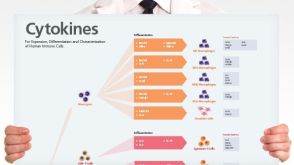 挂图Human Immune Cytokines Infographic of key cytokines for expansion, differentiation and characterization of major immune cell types
 实验方案How to Measure NK Cell Killing Activity with a Standardized Potency Assay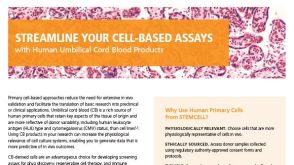
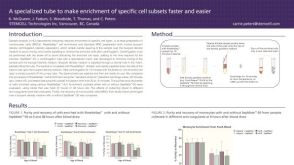 科学海报A Specialized Tube to Make Enrichment of Specific Cell Subsets Faster and Easier
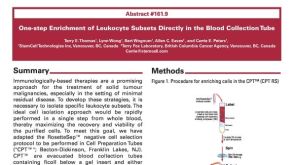 科学海报One-Step Enrichment of Leukocyte Subsets Directly in the Blood Collection Tube


 沪公网安备31010102008431号