Downregulation of MicroRNA-152 contributes to high expression of DKK1 in multiple myeloma.
Multiple myeloma (MM) induced bone lesion is one of the most crippling characteristics,and the MM secreted Dickkopf-1 (DKK1) has been reported to play important role in this pathologic process. However,the underlying regulation mechanisms involved in DKK1 expression are still unclear. In this study,we validated the expression patterns of microRNA (miR) 15a,34a,152,and 223 in MM cells and identified that miR-152 was significantly downregulated in the MM group compared with the non-MM group,and that miR-152 level was negatively correlated with the expression of DKK1 in the MM cells. Mechanistic studies showed that manipulating miR-152 artificially in MM cells led to changes in DKK-1 expression,and miR-152 blocked DKK1 transcriptional activity by binding to the 3'UTR of DKK1 mRNA. Importantly,we revealed that MM cells stably expressing miR-152 improved the chemotherapy sensitivity,and counteracted the bone disruption in an intrabone-MM mouse model. Our study contributes better understanding of the regulation mechanism of DKK-1 in MM,and opens up the potential for developing newer therapeutic strategies in the MM treatment.
View Publication
产品号#:
19674
19674RF
产品名:
EasySep™ Direct人B细胞分选试剂盒
RoboSep™ Direct人B细胞分选试剂盒
N. Mimura et al. ( 2012)
Blood 119 5772-5781
Blockade of XBP1 splicing by inhibition of IRE1? is a promising therapeutic option in multiple myeloma
Multiple myeloma (MM) cells are characterized by high protein synthesis resulting in chronic endoplasmic reticulum (ER) stress,which is adaptively managed by the unfolded protein response. Inositol-requiring enzyme 1? (IRE1?) is activated to splice X-box binding protein 1 (XBP1) mRNA,thereby increasing XBP1s protein,which in turn regulates genes responsible for protein folding and degradation during the unfolded protein response. In this study,we examined whether IRE1?-XBP1 pathway is a potential therapeutic target in MM using a small-molecule IRE1? endoribonuclease domain inhibitor MKC-3946. MKC-3946 triggered modest growth inhibition in MM cell lines,without toxicity in normal mononuclear cells. Importantly,it significantly enhanced cytotoxicity induced by bortezomib or 17-AAG,even in the presence of bone marrow stromal cells or exogenous IL-6. Both bortezomib and 17-AAG induced ER stress,evidenced by induction of XBP1s,which was blocked by MKC-3946. Apoptosis induced by these agents was enhanced by MKC-3946,associated with increased CHOP. Finally,MKC-3946 inhibited XBP1 splicing in a model of ER stress in vivo,associated with significant growth inhibition of MM cells. Taken together,our results demonstrate that blockade of XBP1 splicing by inhibition of IRE1? endoribonuclease domain is a potential therapeutic opt
View Publication
Glodek AM et al. (FEB 2003)
The Journal of experimental medicine 197 4 461--73
Sustained activation of cell adhesion is a differentially regulated process in B lymphopoiesis.
It is largely unknown how hematopoietic progenitors are positioned within specialized niches of the bone marrow microenvironment during development. Chemokines such as CXCL12,previously called stromal cell-derived factor 1,are known to activate cell integrins of circulating leukocytes resulting in transient adhesion before extravasation into tissues. However,this short-term effect does not explain the mechanism by which progenitor cells are retained for prolonged periods in the bone marrow. Here we show that in human bone marrow CXCL12 triggers a sustained adhesion response specifically in progenitor (pro- and pre-) B cells. This sustained adhesion diminishes during B cell maturation in the bone marrow and,strikingly,is absent in circulating mature B cells,which exhibit only transient CXCL12-induced adhesion. The duration of adhesion is tightly correlated with CXCL12-induced activation of focal adhesion kinase (FAK),a known molecule involved in integrin-mediated signaling. Sustained adhesion of progenitor B cells is associated with prolonged FAK activation,whereas transient adhesion in circulating B cells is associated with short-lived FAK activation. Moreover,sustained and transient adhesion responses are differentially affected by pharmacological inhibitors of protein kinase C and phosphatidylinositol 3-kinase. These results provide a developmental cell stage-specific mechanism by which chemokines orchestrate hematopoiesis through sustained rather than transient activation of adhesion and cell survival pathways.
View Publication


 EasySep™小鼠TIL(CD45)正选试剂盒




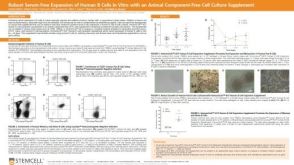 科学海报Robust Serum-Free Expansion of Human B Cells In Vitro with an Animal Component-Free Cell Culture Supplement
 技术公告Achieve Scalable, High-Quality Nucleic Acid Extractions with the EasySep™ Total Nucleic Acid Extraction Kit



 沪公网安备31010102008431号