TC-PTP-deficient bone marrow stromal cells fail to support normal B lymphopoiesis due to abnormal secretion of interferon-gamma.
The T-cell protein tyrosine phosphatase (TC-PTP) is a negative regulator of the Jak/Stat cytokine signaling pathway. Our study shows that the absence of TC-PTP leads to an early bone marrow B-cell deficiency characterized by hindered transition from the pre-B cell to immature B-cell stage. This phenotype is intrinsic to the B cells but most importantly due to bone marrow stroma abnormalities. We found that bone marrow stromal cells from TC-PTP(-/-) mice have the unique property of secreting 232-890 pg/mL IFN-gamma. These high levels of IFN-gamma result in 2-fold reduction in mitotic index on IL-7 stimulation of TC-PTP(-/-) pre-B cells and lower responsiveness of IL-7 receptor downstream Jak/Stat signaling molecules. Moreover,we noted constitutive phosphorylation of Stat1 in those pre-B cells and demonstrated that this was due to soluble IFN-gamma secreted by TC-PTP(-/-) bone marrow stromal cells. Interestingly,culturing murine early pre-B leukemic cells within a TC-PTP-deficient bone marrow stroma environment leads to a 40% increase in apoptosis in these malignant cells. Our results unraveled a new role for TC-PTP in normal B lymphopoiesis and suggest that modulation of bone marrow microenvironment is a potential therapeutic approach for selected B-cell leukemia.
View Publication
产品号#:
03630
03434
03444
产品名:
MethoCult™ M3630
MethoCult™ GF M3434
MethoCult™ GF M3434
Finstad SL et al. (JUL 2007)
Journal of virology 81 13 7274--9
Diminished potential for B-lymphoid differentiation after murine leukemia virus infection in vivo and in EML hematopoietic progenitor cells.
Infection with a recombinant murine-feline gammaretrovirus,MoFe2,or with the parent virus,Moloney murine leukemia virus,caused significant reduction in B-lymphoid differentiation of bone marrow at 2 to 8 weeks postinfection. The suppression was selective,in that myeloid potential was significantly increased by infection. Analysis of cell surface markers and immunoglobulin H gene rearrangements in an in vitro model demonstrated normal B-lymphoid differentiation after infection but significantly reduced viability of differentiating cells. This reduction in viability may confer a selective advantage on undifferentiated lymphoid progenitors in the bone marrow of gammaretrovirus-infected animals and thereby contribute to the establishment of a premalignant state.
View Publication
产品号#:
03630
03434
03444
产品名:
MethoCult™ M3630
MethoCult™ GF M3434
MethoCult™ GF M3434
Nguyen CQ et al. (JUL 2007)
Journal of immunology (Baltimore,Md. : 1950) 179 1 382--90
IL-4-STAT6 signal transduction-dependent induction of the clinical phase of Sjögren's syndrome-like disease of the nonobese diabetic mouse.
NOD.B10-H2(b) and NOD/LtJ mice manifest,respectively,many features of primary and secondary Sjögren's syndrome (SjS),an autoimmune disease affecting primarily the salivary and lacrimal glands leading to xerostomia (dry mouth) and xerophthalmia (dry eyes). B lymphocytes play a central role in the onset of SjS with clinical manifestations dependent on the appearance of autoantibodies reactive to multiple components of acinar cells. Previous studies with NOD.IL4(-/-) and NOD.B10-H2(b).IL4(-/-) mice suggest that the Th2 cytokine,IL-4,plays a vital role in the development and onset of SjS-like disease in the NOD mouse model. To investigate the molecular mechanisms by which IL-4 controls SjS development,a Stat6 gene knockout mouse,NOD.B10-H2(b).C-Stat6(-/-),was constructed and its disease profile was defined and compared with that of NOD.B10-H2(b).C-Stat6(+/+) mice. As the NOD.B10-H2(b).C-Stat6(-/-) mice aged from 4 to 24 wk,they exhibited leukocyte infiltration of the exocrine glands,produced anti-nuclear autoantibodies,and showed loss and gain of saliva-associated proteolytic enzymes,similar to NOD.B10-H2(b).C-Stat6(+/+) mice. In contrast,NOD.B10-H2(b).C-Stat6(-/-) mice failed to develop glandular dysfunction,maintaining normal saliva flow rates. NOD.B10-H2(b).C-Stat6(-/-) mice were found to lack IgG1 isotype-specific anti-muscarinic acetylcholine type-3 receptor autoantibodies. Furthermore,the IgG fractions from NOD.B10-H2(b).C-Stat6(-/-) sera were unable to induce glandular dysfunction when injected into naive recipient C57BL/6 mice. NOD.B10-H2(b).C-Stat6(-/-) mice,like NOD.B10-H2(b).IL4(-/-) mice,are unable to synthesize IgG1 Abs,an observation that correlates with an inability to develop end-stage clinical SjS-like disease. These data imply a requirement for the IL-4/STAT6-pathway for onset of the clinical phase of SjS-like disease in the NOD mouse model.
View Publication
产品号#:
18754
18754RF
产品名:
Li T et al. ( 2016)
Scientific reports 6 27055
Immuno-targeting the multifunctional CD38 using nanobody.
CD38,as a cell surface antigen is highly expressed in several hematologic malignancies including multiple myeloma (MM) and has been proven to be a good target for immunotherapy of the disease. CD38 is also a signaling enzyme responsible for the metabolism of two novel calcium messenger molecules. To be able to target this multifunctional protein,we generated a series of nanobodies against CD38 with high affinities. Crystal structures of the complexes of CD38 with the nanobodies were solved,identifying three separate epitopes on the carboxyl domain. Chromobodies,engineered by tagging the nanobody with fluorescence proteins,provide fast,simple and versatile tools for quantifying CD38 expression. Results confirmed that CD38 was highly expressed in malignant MM cells compared with normal white blood cells. The immunotoxin constructed by splicing the nanobody with a bacterial toxin,PE38 shows highly selective cytotoxicity against patient-derived MM cells as well as the cell lines,with half maximal effective concentration reaching as low as 10(-11) molar. The effectiveness of the immunotoxin can be further increased by stimulating CD38 expression using retinoid acid. These results set the stage for the development of clinical therapeutics as well as diagnostic screening for myeloma.
View Publication
产品号#:
15129
15169
产品名:
RosetteSep™人多发性骨髓瘤细胞富集抗体混合物
RosetteSep™人多发性骨髓瘤细胞富集抗体混合物
Drake LY et al. (JUL 2016)
Journal of immunology (Baltimore,Md. : 1950)
Group 2 Innate Lymphoid Cells Promote an Early Antibody Response to a Respiratory Antigen in Mice.
Innate lymphoid cells (ILCs) are a new family of immune cells that play important roles in innate immunity in mucosal tissues,and in the maintenance of tissue and metabolic homeostasis. Recently,group 2 ILCs (ILC2s) were found to promote the development and effector functions of Th2-type CD4(+) T cells by interacting directly with T cells or by activating dendritic cells,suggesting a role for ILC2s in regulating adaptive immunity. However,our current knowledge on the role of ILCs in humoral immunity is limited. In this study,we found that ILC2s isolated from the lungs of naive BALB/c mice enhanced the proliferation of B1- as well as B2-type B cells and promoted the production of IgM,IgG1,IgA,and IgE by these cells in vitro. Soluble factors secreted by ILC2s were sufficient to enhance B cell Ig production. By using blocking Abs and ILC2s isolated from IL-5-deficient mice,we found that ILC2-derived IL-5 is critically involved in the enhanced production of IgM. Furthermore,when adoptively transferred to Il7r(-/-) mice,which lack ILC2s and mature T cells,lung ILC2s promoted the production of IgM Abs to a polysaccharide Ag,4-hydroxy-3-nitrophenylacetyl Ficoll,within 7 d of airway exposure in vivo. These findings add to the growing body of literature regarding the regulatory functions of ILCs in adaptive immunity,and suggest that lung ILC2s promote B cell production of early Abs to a respiratory Ag even in the absence of T cells.
View Publication
产品号#:
19754
19754RF
18554
18554RF
18564
18564RF
产品名:
Rovituso DM et al. ( 2016)
Scientific reports 6 29847
CEACAM1 mediates B cell aggregation in central nervous system autoimmunity.
B cell aggregates in the central nervous system (CNS) have been associated with rapid disease progression in patients with multiple sclerosis (MS). Here we demonstrate a key role of carcinoembryogenic antigen-related cell adhesion molecule1 (CEACAM1) in B cell aggregate formation in MS patients and a B cell-dependent mouse model of MS. CEACAM1 expression was increased on peripheral blood B cells and CEACAM1(+) B cells were present in brain infiltrates of MS patients. Administration of the anti-CEACAM1 antibody T84.1 was efficient in blocking aggregation of B cells derived from MS patients. Along these lines,application of the monoclonal anti-CEACAM1 antibody mCC1 was able to inhibit CNS B cell aggregate formation and significantly attenuated established MS-like disease in mice in the absence of any adverse effects. CEACAM1 was co-expressed with the regulator molecule T cell immunoglobulin and mucin domain -3 (TIM-3) on B cells,a novel molecule that has recently been described to induce anergy in T cells. Interestingly,elevated coexpression on B cells coincided with an autoreactive T helper cell phenotype in MS patients. Overall,these data identify CEACAM1 as a clinically highly interesting target in MS pathogenesis and open new therapeutic avenues for the treatment of the disease.
View Publication
产品号#:
15024
15064
产品名:
RosetteSep™人B细胞富集抗体混合物
RosetteSep™人B细胞富集抗体混合物
Chorny A et al. (SEP 2016)
The Journal of experimental medicine
The soluble pattern recognition receptor PTX3 links humoral innate and adaptive immune responses by helping marginal zone B cells.
Pentraxin 3 (PTX3) is a fluid-phase pattern recognition receptor of the humoral innate immune system with ancestral antibody-like properties but unknown antibody-inducing function. In this study,we found binding of PTX3 to splenic marginal zone (MZ) B cells,an innate-like subset of antibody-producing lymphocytes strategically positioned at the interface between the circulation and the adaptive immune system. PTX3 was released by a subset of neutrophils that surrounded the splenic MZ and expressed an immune activation-related gene signature distinct from that of circulating neutrophils. Binding of PTX3 promoted homeostatic production of IgM and class-switched IgG antibodies to microbial capsular polysaccharides,which decreased in PTX3-deficient mice and humans. In addition,PTX3 increased IgM and IgG production after infection with blood-borne encapsulated bacteria or immunization with bacterial carbohydrates. This immunogenic effect stemmed from the activation of MZ B cells through a neutrophil-regulated pathway that elicited class switching and plasmablast expansion via a combination of T cell-independent and T cell-dependent signals. Thus,PTX3 may bridge the humoral arms of the innate and adaptive immune systems by serving as an endogenous adjuvant for MZ B cells. This property could be harnessed to develop more effective vaccines against encapsulated pathogens.
View Publication
产品号#:
19754
19754RF
产品名:
挂图
Human Immune Cytokines
Infographic of key cytokines for expansion, differentiation and characterization of major immune cell types
J. U. Hermansen et al. (dec 2018)
Scientific reports 8 1 17651
Cryopreservation of primary B cells minimally influences their signaling responses.
Phospho flow is a powerful approach to detect cell signaling aberrations,identify biomarkers and assess pharmacodynamics,and can be performed using cryopreserved samples. The effects of cryopreservation on signaling responses and the reproducibility of phospho flow measurements are however unknown in many cell systems. Here,B lymphocytes were isolated from healthy donors and patients with the B cell malignancy chronic lymphocytic leukemia and analyzed by phospho flow using phospho-specific antibodies targeting 20 different protein epitopes. Cells were analyzed both at basal conditions and after activation of cluster of differentiation 40 (CD40) or the B cell receptor. Pharmacodynamics of the novel pathway inhibitor ibrutinib was also assessed. At all conditions,fresh cells were compared to cryopreserved cells. Minimal variation between fresh and frozen samples was detected. Reproducibility was tested by running samples from the same donors in different experiments. The results demonstrate reproducibility across different phospho flow runs and support the use of cryopreserved samples in future phospho flow studies of B lymphocytes.
View Publication
产品号#:
15024
15064
产品名:
RosetteSep™人B细胞富集抗体混合物
RosetteSep™人B细胞富集抗体混合物
C.-W. J. Lio et al. (apr 2019)
Science immunology 4 34
TET enzymes augment activation-induced deaminase (AID) expression via 5-hydroxymethylcytosine modifications at the Aicda superenhancer.
TET enzymes are dioxygenases that promote DNA demethylation by oxidizing the methyl group of 5-methylcytosine to 5-hydroxymethylcytosine (5hmC). Here,we report a close correspondence between 5hmC-marked regions,chromatin accessibility and enhancer activity in B cells,and a strong enrichment for consensus binding motifs for basic region-leucine zipper (bZIP) transcription factors at TET-responsive genomic regions. Functionally,Tet2 and Tet3 regulate class switch recombination (CSR) in murine B cells by enhancing expression of Aicda,which encodes the activation-induced cytidine deaminase (AID) enzyme essential for CSR. TET enzymes deposit 5hmC,facilitate DNA demethylation,and maintain chromatin accessibility at two TET-responsive enhancer elements,TetE1 and TetE2,located within a superenhancer in the Aicda locus. Our data identify the bZIP transcription factor,ATF-like (BATF) as a key transcription factor involved in TET-dependent Aicda expression. 5hmC is not deposited at TetE1 in activated Batf-deficient B cells,indicating that BATF facilitates TET recruitment to this Aicda enhancer. Our study emphasizes the importance of TET enzymes for bolstering AID expression and highlights 5hmC as an epigenetic mark that captures enhancer dynamics during cell activation.
View Publication
产品号#:
19854
19854RF
产品名:
EasySep™小鼠B细胞分选试剂盒
RoboSep™ 小鼠B细胞分选试剂盒
Nova-Lamperti E et al. (JAN 2016)
Scientific Reports 6 20044
IL-10-produced by human transitional B-cells down-regulates CD86 expression on B-cells leading to inhibition of CD4+T-cell responses.
A novel subset of human regulatory B-cells has recently been described. They arise from within the transitional B-cell subpopulation and are characterised by the production of IL-10. They appear to be of significant importance in regulating T-cell immunity in vivo. Despite this important function,the molecular mechanisms by which they control T-cell activation are incompletely defined. Here we show that transitional B-cells produced more IL-10 and expressed higher levels of IL-10 receptor after CD40 engagement compared to other B-cell subsets. Furthermore,under this stimulatory condition,CD86 expressed by transitional B-cells was down regulated and T-cell proliferation was reduced. We provide evidence to demonstrate that the down-regulation of CD86 expression by transitional B-cells was due to the autocrine effect of IL-10,which in turn leads to decreased T-cell proliferation and TNF-α production. This analysis was further extended to peripheral B-cells in kidney transplant recipients. We observed that B-cells from patients tolerant to the graft maintained higher IL-10 production after CD40 ligation,which correlates with lower CD86 expression compared to patients with chronic rejection. Hence,the results obtained in this study shed light on a new alternative mechanism by which transitional B-cells inhibit T-cell proliferation and cytokine production.
View Publication
产品号#:
15022
15062
15024
15064
产品名:
RosetteSep™人CD4+ T细胞富集抗体混合物
RosetteSep™人CD4+ T细胞富集抗体混合物
RosetteSep™人B细胞富集抗体混合物
RosetteSep™人B细胞富集抗体混合物
Valsecchi R et al. (APR 2016)
Blood 127 16 1987--97
HIF-1α regulates the interaction of chronic lymphocytic leukemia cells with the tumor microenvironment.
Hypoxia-inducible transcription factors (HIFs) regulate a wide array of adaptive responses to hypoxia and are often activated in solid tumors and hematologic malignancies due to intratumoral hypoxia and emerging new layers of regulation. We found that in chronic lymphocytic leukemia (CLL),HIF-1α is a novel regulator of the interaction of CLL cells with protective leukemia microenvironments and,in turn,is regulated by this interaction in a positive feedback loop that promotes leukemia survival and propagation. Through unbiased microarray analysis,we found that in CLL cells,HIF-1α regulates the expression of important chemokine receptors and cell adhesion molecules that control the interaction of leukemic cells with bone marrow and spleen microenvironments. Inactivation of HIF-1α impairs chemotaxis and cell adhesion to stroma,reduces bone marrow and spleen colonization in xenograft and allograft CLL mouse models,and prolongs survival in mice. Of interest,we found that in CLL cells,HIF-1α is transcriptionally regulated after coculture with stromal cells. Furthermore,HIF-1α messenger RNA levels vary significantly within CLL patients and correlate with the expression of HIF-1α target genes,including CXCR4,thus further emphasizing the relevance of HIF-1α expression to CLL pathogenesis.
View Publication


 EasySep™小鼠TIL(CD45)正选试剂盒




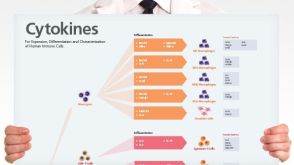 挂图Human Immune Cytokines Infographic of key cytokines for expansion, differentiation and characterization of major immune cell types
 沪公网安备31010102008431号