Feng T et al. (NOV 2010)
Journal of immunology (Baltimore,Md. : 1950) 185 10 5915--25
Generation of mucosal dendritic cells from bone marrow reveals a critical role of retinoic acid.
It is unknown how dendritic cells (DCs) become specialized as mucosal DCs and maintain intestinal homeostasis. We report that a subset of bone marrow cells freshly isolated from C57BL/6 mice express the retinoic acid (RA)-synthesizing enzyme aldehyde dehydrogenase family 1,subfamily A2 (ALDH1a2) and are capable of providing RA to DC precursors in the bone marrow microenvironment. RA induced bone marrow-derived DCs to express CCR9 and ALDH1a2 and conferred upon them mucosal DC functions,including induction of Foxp3(+) regulatory T cells,IgA-secreting B cells,and gut-homing molecules. This response of DCs to RA was dependent on a narrow time window and stringent dose effect. RA promoted bone marrow-derived DC production of bioactive TGF-β by inhibiting suppressor of cytokine signaling 3 expression and thereby enhancing STAT3 activation. These RA effects were evident in vivo,in that mucosal DCs from vitamin A-deficient mice had reduced mucosal DC function,namely failure to induce Foxp3(+) regulatory T cells. Furthermore,MyD88 signaling enhanced RA-educated DC ALDH1a2 expression and was required for optimal TGF-β production. These data indicate that RA plays a critical role in the generation of mucosal DCs from bone marrow and in their functional activity.
View Publication
产品号#:
01700
01705
01702
产品名:
ALDEFLUOR™ 试剂盒
ALDEFLUOR™ DEAB试剂, 1.5 mM, 1 mL
ALDEFLUOR™检测缓冲液
Fathallah I et al. (DEC 2010)
Journal of immunology (Baltimore,Md. : 1950) 185 11 6439--47
EBV latent membrane protein 1 is a negative regulator of TLR9.
EBV infects most of the human population and is associated with a number of human diseases including cancers. Moreover,evasion of the immune system and chronic infection is an essential step for EBV-associated diseases. In this paper,we show that EBV can alter the regulation and expression of TLRs,the key effector molecules of the innate immune response. EBV infection of human primary B cells resulted in the inhibition of TLR9 functionality. Stimulation of TLR9 on primary B cells led to the production of IL-6,TNF-α,and IgG,which was inhibited in cells infected with EBV. The virus exerts its inhibitory function by decreasing TLR9 mRNA and protein levels. This event was observed at early time points after EBV infection of primary cells,as well as in an immortalized lymphoblastoid cell line. We determined that the EBV oncoprotein latent membrane protein 1 (LMP1) is a strong inhibitor of TLR9 transcription. Overexpression of LMP1 in B cells reduced TLR9 promoter activity,mRNA,and protein levels. LMP1 mutants altered in activating the NF-κB pathway prevented TLR9 promoter deregulation. Blocking the NF-κB pathway recovered TLR9 promoter activity. Mutating the NF-κB cis element on the TLR9 promoter restored luciferase transcription in the presence of LMP1. Finally,deletion of the LMP1 gene in the EBV genome abolished the ability of the virus to induce TLR9 downregulation. Our study describes a mechanism used by EBV to suppress the host immune response by deregulating the TLR9 transcript through LMP1-mediated NF-κB activation.
View Publication
产品号#:
18054
18054RF
产品名:
Jiang S et al. (JAN 2018)
Cell metabolism
Let-7 Suppresses B Cell Activation through Restricting the Availability of Necessary Nutrients.
The control of uptake and utilization of necessary extracellular nutrients-glucose and glutamine-is an important aspect of B cell activation. Let-7 is a family of microRNAs known to be involved in metabolic control. Here,we employed several engineered mouse models,including B cell-specific overexpression of Lin28a or the let-7a-1/let-7d/let-7f-1 cluster (let-7adf) and knockout of individual let-7 clusters to show that let-7adf specifically inhibits T cell-independent (TI) antigen-induced immunoglobulin (Ig)M antibody production. Both overexpression and deletion of let-7 in this cluster leads to altered TI-IgM production. Mechanistically,let-7adf suppresses the acquisition and utilization of key nutrients,including glucose and glutamine,through directly targeting hexokinase 2 (Hk2) and by repressing a glutamine transporter Slc1a5 and a key degradation enzyme,glutaminase (Gls),a mechanism mediated by regulation of c-Myc. Our results suggest a novel role of let-7adf as a metabolic brake" on B cell antibody production."
View Publication


 EasySep™小鼠TIL(CD45)正选试剂盒





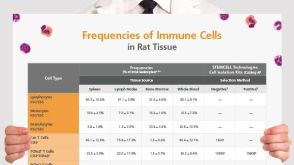 挂图Frequencies of Immune Cells in Rat Tissue Lists the estimated frequencies of more than 15 immune cell types in Sprague Dawley rats
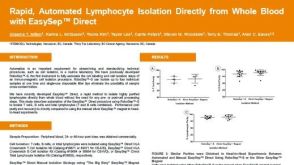 科学海报Rapid, Automated Lymphocyte Isolation Directly from Whole Blood with EasySep™ Direct





 沪公网安备31010102008431号