Role for the conserved N-terminal cysteines in the anti-chemokine activities by the chemokine-like protein MC148R1 encoded by Molluscum contagiosum virus.
Molluscum contagiosum poxvirus (MCV) type 1 and type 2 encode two chemokine-like proteins MC148R1 and MC148R2. It is believed that MC148R proteins function by blocking the inflammatory response. However,the mechanism of the proposed biological activities of MC148R proteins and the role of the additional C-terminal cysteines that do not exist in other chemokines are not understood. Here,we demonstrated in two different assay systems that His-tagged MC148R1 displaces the interaction between CXCL12α and CXCR4. The N-terminal cysteines but not the additional C-terminal cysteines modulate this displacement. His-tagged MC148R1 blocked both CXCL12α-mediated and MIP-1α-mediated chemotaxis. In contrast,MC148R2 blocked MIP-1α-mediated but not CXCL12α-mediated chemotaxis. Immunoprecipitation by antibodies to MC148R1 or CXCL12α followed by immunoblotting and detection by antibodies to the other protein demonstrated physical interaction of His-tagged CXCL12α and His-tagged MC148R1. Interaction with chemokines might mask the receptor interaction site resulting in decreased binding and impairment of the biological activities.
View Publication
产品号#:
70025
70025.1
70025.2
70025.3
70047
70047.1
70047.2
70048
70048.1
70048.2
产品名:
冻存的人外周血单个核细胞
冻存的人外周血单个核细胞
冻存的人外周血单个核细胞
冻存的人外周血单个核细胞
Callahan KP et al. (OCT 2014)
Leukemia 28 10 1960--8
Flavaglines target primitive leukemia cells and enhance anti-leukemia drug activity.
Identification of agents that target human leukemia stem cells is an important consideration for the development of new therapies. The present study demonstrates that rocaglamide and silvestrol,closely related natural products from the flavagline class of compounds,are able to preferentially kill functionally defined leukemia stem cells,while sparing normal stem and progenitor cells. In addition to efficacy as single agents,flavaglines sensitize leukemia cells to several anticancer compounds,including front-line chemotherapeutic drugs used to treat leukemia patients. Mechanistic studies indicate that flavaglines strongly inhibit protein synthesis,leading to the reduction of short-lived antiapoptotic proteins. Notably though,treatment with flavaglines,alone or in combination with other drugs,yields a much stronger cytotoxic activity toward leukemia cells than the translational inhibitor temsirolimus. These results indicate that the underlying cell death mechanism of flavaglines is more complex than simply inhibiting general protein translation. Global gene expression profiling and cell biological assays identified Myc inhibition and the disruption of mitochondrial integrity to be features of flavaglines,which we propose contribute to their efficacy in targeting leukemia cells. Taken together,these findings indicate that rocaglamide and silvestrol are distinct from clinically available translational inhibitors and represent promising candidates for the treatment of leukemia.
View Publication
产品号#:
07930
07931
07940
07955
07956
07959
07954
100-1061
07952
产品名:
CryoStor® CS10
CryoStor® CS10
CryoStor® CS10
CryoStor® CS10
CryoStor® CS10
CryoStor® CS10
CryoStor® CS10
Kofanova OA et al. (JUN 2014)
Biopreservation and biobanking 12 3 206--16
Viable mononuclear cell stability study for implementation in a proficiency testing program: impact of shipment conditions.
The impact of shipping temperatures and preservation media used during transport of either peripheral blood mononuclear cells (PBMCs) or Jurkat cells was assessed,in view of implementing of a proficiency testing scheme on mononuclear cell viability. Samples were analyzed before and after shipment at different temperatures (ambient temperature,dry ice,and liquid nitrogen) and in different preservation media (serum with cryoprotectant,commercial cryopreservation solution,and room temperature transport medium). Sample quality was assessed by viability assays (Trypan Blue dye exclusion,flow cytometry,Cell Analysis System cell counting (CASY)),and by ELISpot functional assay. The liquid nitrogen storage and shipment were found to be the most stable conditions to preserve cell viability and functionality. However,we show that alternative high quality shipment conditions for viable cells are dry ice shipment and commercial cryopreservation solution. These were also cost-efficient shipment conditions,satisfying the requirements of a proficiency testing scheme for viable mononuclear cells. Room temperature transport medium dramatically and adversely affected the integrity of mononuclear cells.
View Publication
产品号#:
07930
07931
07940
07955
07956
07959
07954
100-1061
07952
产品名:
CryoStor® CS10
CryoStor® CS10
CryoStor® CS10
CryoStor® CS10
CryoStor® CS10
CryoStor® CS10
CryoStor® CS10
Hamot G et al. (JUN 2015)
Biopreservation and biobanking 13 3 152--63
Method validation for automated isolation of viable peripheral blood mononuclear cells.
BACKGROUND This article is part of a series of publications providing formal method validation for biospecimen processing in the context of accreditation in laboratories and biobanks. We report the optimization and validation for fitness-for-purpose of automated and manual protocols for isolating peripheral blood mononuclear cells (PBMCs) from whole blood,and compare the two methods. METHODS The manual method was optimized for whole blood centrifugation speed,gradient type (Ficoll,Leucosep,CPT),and freezing method (Mr Frosty,Controlled Rate Freezing). Various parameters of the automated protocol using a CPT gradient on a Tecan liquid handler were optimized. Optimal protocols were validated in parallel for reproducibility and robustness. Optimization and validation were assessed in terms of cell yield,viability,recovery,white blood cell (WBC) subpopulation distribution,gene expression,and lymphoblastoid cell line (LCL) transformation. RESULTS An initial centrifugation of whole blood at 2000 g was considered optimal for further processing,allowing isolation of plasma and PBMCs from a single sample. The three gradients gave similar outcomes in terms of cell yield,viability,and WBC subpopulation distribution. Ficoll showed some advantages and was selected for further evaluations. Optimization of the automated protocol script using a CPT gradient gave 61% cell recovery. No significant differences in quality,quantity,and WBC subpopulation distribution were seen between the two freezing methods,and Mr. Frosty was selected. The manual and automated protocols were reproducible in terms of quantity,recovery,viability,WBC subpopulation distribution,gene expression,and LCL transformation. Most (75%-100%) of the 13 robustness parameters were accepted for both methods with an 8 h pre-centrifugation delay versus 38%-85% after 24 h. Differences identified between the automated and manual methods were not considered consequential. CONCLUSIONS We validated the first fully automated method for isolating viable PBMCs,including RNA analysis and generation of LCLs. We recommend processing within 8 h of blood collection.
View Publication
产品号#:
07930
07931
07940
07955
07956
07959
07954
100-1061
07952
产品名:
CryoStor® CS10
CryoStor® CS10
CryoStor® CS10
CryoStor® CS10
CryoStor® CS10
CryoStor® CS10
CryoStor® CS10
Xu H et al. (JUL 2016)
Organic & biomolecular chemistry 14 26 6179--83
Cellular thermal shift and clickable chemical probe assays for the determination of drug-target engagement in live cells.
Proof of drug-target engagement in physiologically-relevant contexts is a key pillar of successful therapeutic target validation. We developed two orthogonal technologies,the cellular thermal shift assay (CETSA) and a covalent chemical probe reporter approach (harnessing sulfonyl fluoride tyrosine labeling and subsequent click chemistry) to measure the occupancy of the mRNA-decapping scavenger enzyme DcpS by a small molecule inhibitor in live cells. Enzyme affinity determined using isothermal dose response fingerprinting (ITDRFCETSA) and the concentration required to occupy 50% of the enzyme (OC50) using the chemical probe reporter assay were very similar. In this case,the chemical probe method worked well due to the long offset kinetics of the reversible inhibitor (determined using a fluorescent dye-tagged probe). This work suggests that CETSA could become the first choice assay to determine in-cell target engagement due to its simplicity.
View Publication
Karystinou A et al. (MAY 2015)
Arthritis research & therapy 17 4-Mar 147
Yes-associated protein (YAP) is a negative regulator of chondrogenesis in mesenchymal stem cells.
INTRODUCTION The control of differentiation of mesenchymal stromal/stem cells (MSCs) is crucial for tissue engineering strategies employing MSCs. The purpose of this study was to investigate whether the transcriptional co-factor Yes-associated protein (YAP) regulates chondrogenic differentiation of MSCs. METHODS Expression of total YAP,its paralogue transcriptional co-activator with PDZ-binding motif (TAZ),and individual YAP transcript variants during in vitro chondrogenesis of human MSCs was determined by quantitative reverse transcription polymerase chain reaction (RT-PCR). YAP expression was confirmed by western blotting. To determine the effect of high YAP activity on chondrogenesis,C3H10T1/2 MSC-like cells were transduced with human (h)YAP and treated in micromass with bone morphogenetic protein-2 (BMP-2). Chondrogenic differentiation was assessed by alcian blue staining and expression of chondrocyte-lineage genes. BMP signalling was determined by detection of pSmad1,5,8 by western blotting and expression of BMP target genes by quantitative RT-PCR. Finally,YAP and pYAP were detected in mouse embryo hindlimbs by immunohistochemistry. RESULTS YAP,but not TAZ,was downregulated during in vitro chondrogenesis of human MSCs. One of the YAP transcript variants,however,was upregulated in high-density micromass culture. Overexpression of hYAP in murine C3H10T1/2 MSCs inhibited chondrogenic differentiation. High YAP activity in these cells decreased Smad1,5,8 phosphorylation and expression of the BMP target genes Inhibitor of DNA binding/differentiation (Id)1,Id2 and Id3 in response to BMP-2. In developing mouse limbs,Yap was nuclear in the perichondrium while mostly phosphorylated and cytosolic in cells of the cartilage anlage,suggesting downregulation of Yap co-transcriptional activity during physiological chondrogenesis in vivo. CONCLUSIONS Our findings indicate that YAP is a negative regulator of chondrogenic differentiation of MSCs. Downregulation of YAP is required for chondrogenesis through derepression of chondrogenic signalling. Therapeutic targeting of YAP to promote cartilage repair and prevent secondary osteoarthritis is an exciting prospect in rheumatology.
View Publication


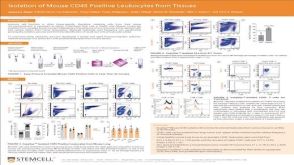
 EasySep™小鼠TIL(CD45)正选试剂盒







 沪公网安备31010102008431号