Role for the conserved N-terminal cysteines in the anti-chemokine activities by the chemokine-like protein MC148R1 encoded by Molluscum contagiosum virus.
Molluscum contagiosum poxvirus (MCV) type 1 and type 2 encode two chemokine-like proteins MC148R1 and MC148R2. It is believed that MC148R proteins function by blocking the inflammatory response. However,the mechanism of the proposed biological activities of MC148R proteins and the role of the additional C-terminal cysteines that do not exist in other chemokines are not understood. Here,we demonstrated in two different assay systems that His-tagged MC148R1 displaces the interaction between CXCL12α and CXCR4. The N-terminal cysteines but not the additional C-terminal cysteines modulate this displacement. His-tagged MC148R1 blocked both CXCL12α-mediated and MIP-1α-mediated chemotaxis. In contrast,MC148R2 blocked MIP-1α-mediated but not CXCL12α-mediated chemotaxis. Immunoprecipitation by antibodies to MC148R1 or CXCL12α followed by immunoblotting and detection by antibodies to the other protein demonstrated physical interaction of His-tagged CXCL12α and His-tagged MC148R1. Interaction with chemokines might mask the receptor interaction site resulting in decreased binding and impairment of the biological activities.
View Publication
产品号#:
70025
70025.1
70025.2
70025.3
70047
70047.1
70047.2
70048
70048.1
70048.2
产品名:
冻存的人外周血单个核细胞
冻存的人外周血单个核细胞
冻存的人外周血单个核细胞
冻存的人外周血单个核细胞
Kofanova OA et al. (JUN 2014)
Biopreservation and biobanking 12 3 206--16
Viable mononuclear cell stability study for implementation in a proficiency testing program: impact of shipment conditions.
The impact of shipping temperatures and preservation media used during transport of either peripheral blood mononuclear cells (PBMCs) or Jurkat cells was assessed,in view of implementing of a proficiency testing scheme on mononuclear cell viability. Samples were analyzed before and after shipment at different temperatures (ambient temperature,dry ice,and liquid nitrogen) and in different preservation media (serum with cryoprotectant,commercial cryopreservation solution,and room temperature transport medium). Sample quality was assessed by viability assays (Trypan Blue dye exclusion,flow cytometry,Cell Analysis System cell counting (CASY)),and by ELISpot functional assay. The liquid nitrogen storage and shipment were found to be the most stable conditions to preserve cell viability and functionality. However,we show that alternative high quality shipment conditions for viable cells are dry ice shipment and commercial cryopreservation solution. These were also cost-efficient shipment conditions,satisfying the requirements of a proficiency testing scheme for viable mononuclear cells. Room temperature transport medium dramatically and adversely affected the integrity of mononuclear cells.
View Publication
产品号#:
07930
07931
07940
07955
07956
07959
07954
100-1061
07952
产品名:
CryoStor® CS10
CryoStor® CS10
CryoStor® CS10
CryoStor® CS10
CryoStor® CS10
CryoStor® CS10
CryoStor® CS10
Hamot G et al. (JUN 2015)
Biopreservation and biobanking 13 3 152--63
Method validation for automated isolation of viable peripheral blood mononuclear cells.
BACKGROUND This article is part of a series of publications providing formal method validation for biospecimen processing in the context of accreditation in laboratories and biobanks. We report the optimization and validation for fitness-for-purpose of automated and manual protocols for isolating peripheral blood mononuclear cells (PBMCs) from whole blood,and compare the two methods. METHODS The manual method was optimized for whole blood centrifugation speed,gradient type (Ficoll,Leucosep,CPT),and freezing method (Mr Frosty,Controlled Rate Freezing). Various parameters of the automated protocol using a CPT gradient on a Tecan liquid handler were optimized. Optimal protocols were validated in parallel for reproducibility and robustness. Optimization and validation were assessed in terms of cell yield,viability,recovery,white blood cell (WBC) subpopulation distribution,gene expression,and lymphoblastoid cell line (LCL) transformation. RESULTS An initial centrifugation of whole blood at 2000 g was considered optimal for further processing,allowing isolation of plasma and PBMCs from a single sample. The three gradients gave similar outcomes in terms of cell yield,viability,and WBC subpopulation distribution. Ficoll showed some advantages and was selected for further evaluations. Optimization of the automated protocol script using a CPT gradient gave 61% cell recovery. No significant differences in quality,quantity,and WBC subpopulation distribution were seen between the two freezing methods,and Mr. Frosty was selected. The manual and automated protocols were reproducible in terms of quantity,recovery,viability,WBC subpopulation distribution,gene expression,and LCL transformation. Most (75%-100%) of the 13 robustness parameters were accepted for both methods with an 8 h pre-centrifugation delay versus 38%-85% after 24 h. Differences identified between the automated and manual methods were not considered consequential. CONCLUSIONS We validated the first fully automated method for isolating viable PBMCs,including RNA analysis and generation of LCLs. We recommend processing within 8 h of blood collection.
View Publication
Perin EC et al. (JUN 2011)
American heart journal 161 6 1078--87.e3
A randomized study of transendocardial injection of autologous bone marrow mononuclear cells and cell function analysis in ischemic heart failure (FOCUS-HF).
BACKGROUND Autologous bone marrow mononuclear cell (ABMMNC) therapy has shown promise in patients with heart failure (HF). Cell function analysis may be important in interpreting trial results. METHODS In this prospective study,we evaluated the safety and efficacy of the transendocardial delivery of ABMMNCs in no-option patients with chronic HF. Efficacy was assessed by maximal myocardial oxygen consumption,single photon emission computed tomography,2-dimensional echocardiography,and quality-of-life assessment (Minnesota Living with Heart Failure and Short Form 36). We also characterized patients' bone marrow cells by flow cytometry,colony-forming unit,and proliferative assays. RESULTS Cell-treated (n = 20) and control patients (n = 10) were similar at baseline. The procedure was safe; adverse events were similar in both groups. Canadian Cardiovascular Society angina score improved significantly (P = .001) in cell-treated patients,but function was not affected. Quality-of-life scores improved significantly at 6 months (P = .009 Minnesota Living with Heart Failure and P = .002 physical component of Short Form 36) over baseline in cell-treated but not control patients. Single photon emission computed tomography data suggested a trend toward improved perfusion in cell-treated patients. The proportion of fixed defects significantly increased in control (P = .02) but not in treated patients (P = .16). Function of patients' bone marrow mononuclear cells was severely impaired. Stratifying cell results by age showed that younger patients (%60 years) had significantly more mesenchymal progenitor cells (colony-forming unit fibroblasts) than patients<60 years (20.16 ± 14.6 vs 10.92 ± 7.8,P = .04). Furthermore,cell-treated younger patients had significantly improved maximal myocardial oxygen consumption (15 ± 5.8,18.6 ± 2.7,and 17 ± 3.7 mL/kg per minute at baseline,3 months,and 6 months,respectively) compared with similarly aged control patients (14.3 ± 2.5,13.7 ± 3.7,and 14.6 ± 4.7 mL/kg per minute,P = .04). CONCLUSIONS ABMMNC therapy is safe and improves symptoms,quality of life,and possibly perfusion in patients with chronic HF.
View Publication
产品号#:
70001
70001.1
70001.2
70001.3
70001.4
产品名:
Daniels TR et al. ( 2011)
Journal of immunotherapy (Hagerstown,Md. : 1997) 34 6 500--8
An antibody-based multifaceted approach targeting the human transferrin receptor for the treatment of B-cell malignancies.
We previously developed an antibody-avidin fusion protein (ch128.1Av) targeting the human transferrin receptor 1 (TfR1,also known as CD71),which demonstrates direct in vitro cytotoxicity against malignant hematopoietic cells. This cytotoxicity is attributed to its ability to decrease the level of TfR1 leading to lethal iron deprivation. We now report that ch128.1Av shows the ability to bind the Fcγ receptors and the complement component C1q,suggesting that it is capable of eliciting Fc-mediated effector functions such as antibody-dependent cell-mediated cytotoxicity and complement-mediated cytotoxicity. In addition,in 2 disseminated multiple myeloma xenograft mouse models,we show that a single dose of ch128.1Av results in significant antitumor activity,including long-term survival. It is interesting to note that the parental antibody without avidin (ch128.1) also shows remarkable in vivo anticancer activity despite its limited in vitro cytotoxicity. Finally,we demonstrate that ch128.1Av is not toxic to pluripotent hematopoietic progenitor cells using the long-term cell-initiating culture assay suggesting that these important progenitors would be preserved in different therapeutic approaches,including the in vitro purging of cancer cells for autologous transplantation and in vivo passive immunotherapy. Our results suggest that ch128.1Av and ch128.1 may be effective in the therapy of human multiple myeloma and potentially other hematopoietic malignancies.
View Publication


 EasySep™小鼠TIL(CD45)正选试剂盒




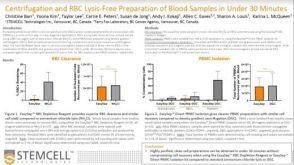 科学海报Centrifugation and RBC Lysis-Free Preparation of Blood Samples in Under 30 Minutes
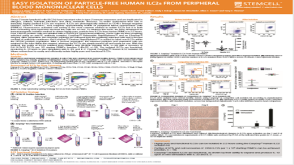 科学海报Easy Isolation of Particle-Free Human ILC2s from Peripheral Blood Mononuclear Cells

 沪公网安备31010102008431号