Many acute and chronic anaemias,including haemolysis,sepsis and genetic bone marrow failure diseases such as Diamond-Blackfan anaemia,are not treatable with erythropoietin (Epo),because the colony-forming unit erythroid progenitors (CFU-Es) that respond to Epo are either too few in number or are not sensitive enough to Epo to maintain sufficient red blood cell production. Treatment of these anaemias requires a drug that acts at an earlier stage of red cell formation and enhances the formation of Epo-sensitive CFU-E progenitors. Recently,we showed that glucocorticoids specifically stimulate self-renewal of an early erythroid progenitor,burst-forming unit erythroid (BFU-E),and increase the production of terminally differentiated erythroid cells. Here we show that activation of the peroxisome proliferator-activated receptor α (PPAR-α) by the PPAR-α agonists GW7647 and fenofibrate synergizes with the glucocorticoid receptor (GR) to promote BFU-E self-renewal. Over time these agonists greatly increase production of mature red blood cells in cultures of both mouse fetal liver BFU-Es and mobilized human adult CD34(+) peripheral blood progenitors,with a new and effective culture system being used for the human cells that generates normal enucleated reticulocytes. Although Ppara(-/-) mice show no haematological difference from wild-type mice in both normal and phenylhydrazine (PHZ)-induced stress erythropoiesis,PPAR-α agonists facilitate recovery of wild-type but not Ppara(-/-) mice from PHZ-induced acute haemolytic anaemia. We also show that PPAR-α alleviates anaemia in a mouse model of chronic anaemia. Finally,both in control and corticosteroid-treated BFU-E cells,PPAR-α co-occupies many chromatin sites with GR; when activated by PPAR-α agonists,additional PPAR-α is recruited to GR-adjacent sites and presumably facilitates GR-dependent BFU-E self-renewal. Our discovery of the role of PPAR-α agonists in stimulating self-renewal of early erythroid progenitor cells suggests that the clinically tested PPAR-α agonists we used may improve the efficacy of corticosteroids in treating Epo-resistant anaemias.
View Publication


 EasySep™小鼠TIL(CD45)正选试剂盒




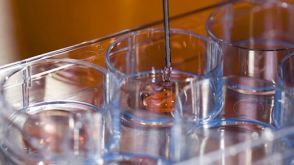 实验方案How to Prepare and Plate Semi-Solid Methylcellulose Medium for Cell Culture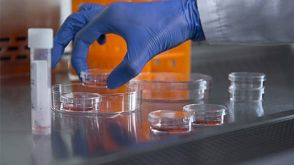


 沪公网安备31010102008431号