Contribution of Hfe expression in macrophages to the regulation of hepatic hepcidin levels and iron loading.
Hereditary hemochromatosis (HH),an iron overload disease associated with mutations in the HFE gene,is characterized by increased intestinal iron absorption and consequent deposition of excess iron,primarily in the liver. Patients with HH and Hfe-deficient (Hfe-/-) mice manifest inappropriate expression of the iron absorption regulator hepcidin,a peptide hormone produced by the liver in response to iron loading. In this study,we investigated the contribution of Hfe expression in macrophages to the regulation of liver hepcidin levels and iron loading. We used bone marrow transplantation to generate wild-type (wt) and Hfe-/- mice chimeric for macrophage Hfe gene expression. Reconstitution of Hfe-deficient mice with wt bone marrow resulted in augmented capacity of the spleen to store iron and in significantly decreased liver iron loading,accompanied by a significant increase of hepatic hepcidin mRNA levels. Conversely,wt mice reconstituted with Hfe-deficient bone marrow had a diminished capacity to store iron in the spleen but no significant alterations of liver iron stores or hepcidin mRNA levels. Our results suggest that macrophage Hfe participates in the regulation of splenic and liver iron concentrations and liver hepcidin expression.
View Publication
Rega A et al. (MAR 2013)
Journal of immunology (Baltimore,Md. : 1950) 190 5 2391--402
Plasmacytoid dendritic cells play a key role in tumor progression in lipopolysaccharide-stimulated lung tumor-bearing mice.
The antitumor activity of LPS was first described by Dr. William Coley. However,its role in lung cancer remains unclear. The aim of our study was to elucidate the dose-dependent effects of LPS (0.1-10 μg/mouse) in a mouse model of B16-F10-induced metastatic lung cancer. Lung tumor growth increased at 3 and 7 d after the administration of low-dose LPS (0.1 μg/mouse) compared with control mice. This was associated with an influx of plasmacytoid dendritic cells (pDCs),regulatory T cells,myeloid-derived suppressor cells,and CD8(+) regulatory T cells. In contrast,high-dose LPS (10 μg/mouse) reduced lung tumor burden and was associated with a greater influx of pDCs,as well as a stronger Th1 and Th17 polarization. Depletion of pDCs during low-dose LPS administration resulted in a decreased lung tumor burden. Depletion of pDCs during high-dose LPS treatment resulted in an increased tumor burden. The dichotomy in LPS effects was due to the phenotype of pDCs,which were immunosuppressive after the low-dose LPS,and Th1- and T cytotoxic-polarizing cells after the high-dose LPS. Adoptive transfer of T cells into nude mice demonstrated that CD8(+) T cells were responsible for pDC recruitment following low-dose LPS administration,whereas CD4(+) T cells were required for pDC influx after the high-dose LPS. In conclusion,our data suggest differential effects of low-dose versus high-dose LPS on pDC phenotype and tumor progression or regression in the lungs of mice.
View Publication
产品号#:
19752
19752RF
19753
19753RF
19764
19764RF
产品名:
EasySep™小鼠浆细胞样DC分选试剂盒
RoboSep™ 小鼠浆细胞样DC分选试剂盒
Quintarelli C et al. (MAR 2011)
Blood 117 12 3353--62
High-avidity cytotoxic T lymphocytes specific for a new PRAME-derived peptide can target leukemic and leukemic-precursor cells.
The cancer testis antigen (CTA) preferentially expressed antigen of melanoma (PRAME) is overexpressed by many hematologic malignancies,but is absent on normal tissues,including hematopoietic progenitor cells,and may therefore be an appropriate candidate for T cell-mediated immunotherapy. Because it is likely that an effective antitumor response will require high-avidity,PRAME-specific cytotoxic T lymphocytes (CTLs),we attempted to generate such CTLs using professional and artificial antigen-presenting cells loaded with a peptide library spanning the entire PRAME protein and consisting of 125 synthetic pentadecapeptides overlapping by 11 amino acids. We successfully generated polyclonal,PRAME-specific CTL lines and elicited high-avidity CTLs,with a high proportion of cells recognizing a previously uninvestigated HLA-A*02-restricted epitope,P435-9mer (NLTHVLYPV). These PRAME-CTLs could be generated both from normal donors and from subjects with PRAME(+) hematologic malignancies. The cytotoxic activity of our PRAME-specific CTLs was directed not only against leukemic blasts,but also against leukemic progenitor cells as assessed by colony-forming-inhibition assays,which have been implicated in leukemia relapse. These PRAME-directed CTLs did not affect normal hematopoietic progenitors,indicating that this approach may be of value for immunotherapy of PRAME(+) hematologic malignancies.
View Publication
产品号#:
产品名:
Hisatomi T et al. (MAR 2011)
Blood 117 13 3575--84
NK314 potentiates antitumor activity with adult T-cell leukemia-lymphoma cells by inhibition of dual targets on topoisomerase IIalpha and DNA-dependent protein kinase.
Adult T-cell leukemia-lymphoma (ATL) is an aggressive disease,incurable by standard chemotherapy. NK314,a new anticancer agent possessing inhibitory activity specific for topoisomerase IIα (Top2α),inhibited the growth of various ATL cell lines (50% inhibitory concentration: 23-70nM) with more potent activity than that of etoposide. In addition to the induction of DNA double-strand breaks by inhibition of Top2α,NK314 induced degradation of the catalytic subunit of DNA-dependent protein kinase (DNA-PKcs),resulting in impaired DNA double-strand break repair. The contribution of DNA-PK to inhibition of cell growth was affirmed by the following results: NK314 inhibited cell growth of M059J (a DNA-PKcs-deficient cell line) and M059K (a cell line with DNA-PKcs present) with the same potency,whereas etoposide exhibited weak inhibition of cell growth with M059K cells. A DNA-PK specific inhibitor,NU7026,enhanced inhibitory activity of etoposide on M059K as well as on ATL cells. These results suggest that NK314 is a dual inhibitor of Top2α and DNA-PK. Because ATL cells express a high amount of DNA-PKcs,NK314 as a dual molecular targeting anticancer agent is a potential therapeutic tool for treatment of ATL.
View Publication
产品号#:
04437
04447
产品名:
MethoCult™ Express
MethoCult™ Express
Barbui AM et al. (APR 2006)
Experimental hematology 34 4 475--85
Clinical grade expansion of CD45RA, CD45RO, and CD62L-positive T-cell lines from HLA-compatible donors: high cytotoxic potential against AML and ALL cells.
OBJECTIVE: Identification of a clinical grade method for the ex vivo generation of donor-derived T cells cytotoxic against both myeloid and lymphoblastic cells still remains elusive. We investigated rapid generation and expansion of donor derived-allogeneic T-cell lines cytotoxic against patient leukemic cells. MATERIALS AND METHODS: Acute myelogenous leukemia (AML) and acute lymphoblastic leukemia (ALL) blasts were cultured 5 days in Stem Span,granulocyte macrophage colony-stimulating factor,interleukin-4,and calcium ionophore. All B-precursor ALL (N22) and AML (N13),but not T-cell ALL (N3),differentiated into mature leukemia-derived antigen-presenting cells (LD-APC). All but one LD-APC generated cytotoxic T lymphocyte (CTL) from adult human leukocyte antigen (HLA)-identical (N8) or unrelated donors (N2). RESULTS: Upon in vitro culture,donor-derived CTL acquired a memory T phenotype,showing concomitant high CD45RA,CD45RO,CD62L expression. CD8(+) cells,but not CD4(+) cells,were granzyme,perforine,and interferon-gamma-positive. Pooled CD4(+) and CD8(+) cells were cytotoxic against leukemic blasts (32%,30:1 E:T ratio),but not against autologous or patient-derived phytohemagglutinin blasts. LD-APC from five ALL patients were used to generate CTL from cord blood. A mixed population of CD4(+) and CD8(+) cells was documented in 54% of wells. T cells acquired classical effector memory phenotype and showed a higher cytotoxicity against leukemia blasts (47%,1:1 E:T ratio). Adult and cord blood CTL showed a skewing from a complete T-cell receptor repertoire to an oligo-clonal/clonal pattern. CONCLUSIONS: Availability of these cells should allow clinical trials for salvage treatment of leukemia patients relapsing after allogeneic stem cell transplantation.
View Publication
产品号#:
09600
09650
产品名:
StemSpan™ SFEM
StemSpan™ SFEM
Fassnacht M et al. (AUG 2005)
Clinical cancer research : an official journal of the American Association for Cancer Research 11 15 5566--71
Induction of CD4(+) and CD8(+) T-cell responses to the human stromal antigen, fibroblast activation protein: implication for cancer immunotherapy.
PURPOSE: The propensity of tumor cells to escape immune elimination could limit,if not defeat,the long-term benefits of effective immunotherapeutic protocols. Immunologic targeting of tumor stroma could significantly reduce the ability of tumors to evade immune elimination. Murine studies have shown that inducing immunity against angiogenesis-associated products engenders potent antitumor immunity without significant pathology. It is,however,not known whether T cells corresponding to stromal products are present in humans. In this study,we describe a method to screen for human stromal products that have not triggered significant tolerance and could therefore serve as candidate antigens for cancer immunotherapy. EXPERIMENTAL DESIGN: To identify candidates for human stromal antigens,we used an in vitro-screening method to determine whether dendritic cells transfected with mRNA encoding products,which are overexpressed in the tumor stroma,are capable of stimulating cytotoxic CD8(+) (CTL) responses from human peripheral blood mononuclear cells. RESULTS: CTL responses could be consistently generated against fibroblast activation protein (FAP) but not against matrix metalloproteinase-9 (MMP-9) or MMP-14. To enhance the immunogenicity of the mRNA-translated FAP product,a lysosomal targeting signal derived from lysosome-associated membrane protein-1 (LAMP-1) was fused to the COOH terminus of FAP to redirect the translated product into the class II presentation pathway. Dendritic cells transfected with mRNA encoding the FAP-LAMP fusion product stimulated enhanced CD4(+) and CD8(+) T-cell responses. CONCLUSION: This study identifies FAP,a protease preferentially expressed in tumor-associated fibroblasts,as a candidate human stromal antigen to target in the setting of cancer immunotherapy,and shows that differential expression of stromal products is not a sufficient criteria to indicate its immunogenicity in a vaccination setting.
View Publication


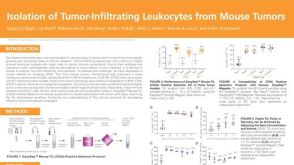
 EasySep™小鼠TIL(CD45)正选试剂盒




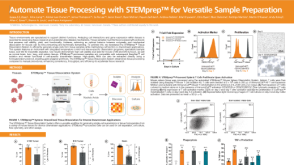 科学海报Automate Tissue Processing with STEMprep™ for Versatile Sample Preparation
 技术窍门组织解离方法指南

 沪公网安备31010102008431号