Koul D et al. ( 2006)
Molecular cancer therapeutics 5 3 637--644
Inhibition of Akt survival pathway by a small-molecule inhibitor in human glioblastoma.
Phosphatase and tensin homologue deleted on chromosome 10 (PTEN) and Akt are important regulators of the phosphatidylinositol 3-kinase (PI3K) pathway and thus are important to the regulation of a wide spectrum of tumor-related biological processes. Akt regulates several critical cellular functions,including cell cycle progression; cell migration,invasion,and survival; and angiogenesis. Decreased expression of PTEN and overexpression of the Akt proto-oncogene,which is located downstream of PI3K,have been shown in a variety of cancers,including glioblastoma. Novel small-molecule inhibitors of receptors and signaling pathways,including inhibitors of the PI3K pathway,have shown antitumor activity,but inhibitors of Akt have not been examined. In this study,we tested our hypothesis that the pharmacologic inhibition of Akt has an antiproliferative effect on gliomas. We showed that two newly developed Akt inhibitors,KP-372-1 and KP-372-2 (herein called KP-1 and KP-2),effectively inhibited the PI3K/Akt signaling cascade. KP-1 and KP-2 blocked both the basal and epidermal growth factor-induced phosphorylation of Akt Ser473 at 125 and 250 nmol/L,which,in turn,reduced the activation of intracellular downstream targets of Akt,including GSK-3beta and p70s6k. Furthermore,the treatment of U87 and U251 glioma cells with 125 to 250 nmol/L KP-1 and KP2 for 48 hours inhibited cell growth by approximately 50%. This decrease in cell growth stemmed from the induction of apoptosis. Collectively,these results provide a strong rationale for the pharmacologic targeting of Akt for the treatment of gliomas.
View Publication
产品号#:
73222
产品名:
Ferrari-Amorotti G et al. (AUG 2006)
Blood 108 4 1353--62
Leukemogenesis induced by wild-type and STI571-resistant BCR/ABL is potently suppressed by C/EBPalpha.
Chronic phase-to-blast crisis transition in chronic myelogenous leukemia (CML) is associated with differentiation arrest and down-regulation of C/EBPalpha,a transcription factor essential for granulocyte differentiation. Patients with CML in blast crisis (CML-BC) became rapidly resistant to therapy with the breakpoint cluster region-Abelson murine leukemia (BCR/ABL) kinase inhibitor imatinib (STI571) because of mutations in the kinase domain that interfere with drug binding. We show here that the restoration of C/EBPalpha activity in STI571-sensitive or -resistant 32D-BCR/ABL cells induced granulocyte differentiation,inhibited proliferation in vitro and in mice,and suppressed leukemogenesis. Moreover,activation of C/EBPalpha eradicated leukemia in 4 of 10 and in 6 of 7 mice injected with STI571-sensitive or -resistant 32D-BCR/ABL cells,respectively. Differentiation induction and proliferation inhibition were required for optimal suppression of leukemogenesis,as indicated by the effects of p42 C/EBPalpha,which were more potent than those of K298E C/EBPalpha,a mutant defective in DNA binding and transcription activation that failed to induce granulocyte differentiation. Activation of C/EBPalpha in blast cells from 4 patients with CML-BC,including one resistant to STI571 and BMS-354825 and carrying the T315I Abl kinase domain mutation,also induced granulocyte differentiation. Thus,these data indicate that C/EBPalpha has potent antileukemia effects even in cells resistant to ATP-binding competitive tyrosine kinase inhibitors,and they portend the development of anti-leukemia therapies that rely on C/EBPalpha activation.
View Publication
Eric Song
Priming the Immune System Against Brain Tumors
研究方向:
免疫学,癌症研究
Frelin C et al. (JAN 2005)
Blood 105 2 804--11
Targeting NF-kappaB activation via pharmacologic inhibition of IKK2-induced apoptosis of human acute myeloid leukemia cells.
Acute myeloid leukemia (AML) cells are characterized by a constitutive and abnormal activation of the nuclear factor-kappaB (NF-kappaB) transcription factor. This study,conducted in vitro on 18 patients,shows that targeting the IKB kinase 2 (IKK2) kinase with the specific pharmacologic inhibitor AS602868 to block NF-kappaB activation led to apoptosis of human primary AML cells. Moreover,AS602868 potentiated the apoptotic response induced by the current chemotherapeutic drugs doxorubicin,cytarabine,or etoposide (VP16). AS602868-induced cell death was associated with rupture of the mitochondrial transmembrane potential and activation of cellular caspases. NF-kappaB inhibition did not affect normal CD34+ hematopoietic precursors,suggesting that it could represent a new adjuvant strategy for AML treatment.
View Publication
产品号#:
15026
15066
产品名:
RosetteSep™人造血祖细胞富集抗体混合物
RosetteSep™人造血祖细胞富集抗体混合物
Ohene-Abuakwa Y et al. (JAN 2005)
Blood 105 2 838--46
Two-phase culture in Diamond Blackfan anemia: localization of erythroid defect.
The erythroid defect in Diamond Blackfan anemia (DBA) is known to be intrinsic to the stem cell,but its molecular pathophysiology remains obscure. Using a 2-phase liquid erythroid culture system,we have demonstrated a consistent defect in DBA,regardless of clinical severity,including 3 first-degree relatives with normal hemoglobin levels but increased erythrocyte adenosine deaminase activity. DBA cultures were indistinguishable from controls until the end of erythropoietin (Epo)-free phase 1,but failed to demonstrate the normal synchronized wave of erythroid expansion and terminal differentiation on exposure to Epo. Dexamethasone increased Epo sensitivity of erythroid progenitor cells,and enhanced erythroid expansion in phase 2 in both normal and DBA cultures. In DBA cultures treated with dexamethasone,Epo sensitivity was comparable to normal,but erythroid expansion remained subnormal. In clonogenic phase 2 cultures,the number of colonies did not significantly differ between normal cultures and DBA,in the presence or absence of dexamethasone,and at both low and high Epo concentrations. However,colonies were markedly smaller in DBA under all conditions. This suggests that the Epo-triggered onset of terminal maturation is intact in DBA,and the defect lies down-stream of the Epo receptor,influencing survival and/or proliferation of erythroid progenitors.
View Publication
产品号#:
09600
09650
产品名:
StemSpan™ SFEM
StemSpan™ SFEM
Castriconi R et al. (AUG 2004)
Proceedings of the National Academy of Sciences of the United States of America 101 34 12640--5
Identification of 4Ig-B7-H3 as a neuroblastoma-associated molecule that exerts a protective role from an NK cell-mediated lysis.
In this study,in an attempt to identify neuroblastoma-associated surface antigens,we generated mAbs against the ACN neuroblastoma cell line. A mAb was selected (5B14) that reacted with all neuroblastoma cell lines analyzed and allowed detection of tumor cell infiltrates in bone marrow aspirates from neuroblastoma patients. In cytofluorimetric analysis,unlike anti-disialoganglioside mAb,5B14 mAb did not display reactivity with normal bone marrow hematopoietic cell precursors,thus representing a highly specific marker for identifying neuroblastoma cells. Molecular analysis revealed that the 5B14 mAb-reactive surface glycoprotein corresponded to the recently identified 4Ig-B7-H3 molecule. Remarkably,mAb-mediated masking of the 4Ig-B7-H3 molecule on cell transfectants or on freshly isolated neuroblastoma cells resulted in enhancement of natural killer-mediated lysis of these target cells. These data suggest that 4Ig-B7-H3 molecules expressed at the tumor cell surface can exert a protective role from natural killer-mediated lysis by interacting with a still undefined inhibitory receptor expressed on natural killer cells.
View Publication


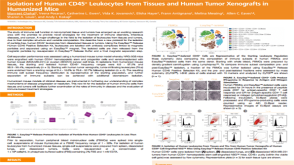
 EasySep™小鼠TIL(CD45)正选试剂盒




 技术公告Achieve Scalable, High-Quality Nucleic Acid Extractions with the EasySep™ Total Nucleic Acid Extraction Kit




 沪公网安备31010102008431号