Mitochondrial Disease-Specific Induced Pluripotent Stem Cell Models: Generation and Characterization.
Mitochondrial disease is a group of disorders caused by dysfunctional mitochondria,of which the mutation in the mitochondrial DNA is one of the primary factors. However,the molecular pathogenesis of mitochondrial diseases remains poorly understood due to lack of cell models. Patient-specific induced pluripotent stem cells (iPS cells or iPSCs) are originated from individuals suffering different diseases but carrying unchanged disease causing gene. Therefore,patient-specific iPS cells can be used as excellent cell models to elucidate the mechanisms underlying mitochondrial diseases. Here we present a detailed protocol for generating iPS cells from urine cells and fibroblasts for instance,as well as a series of characterizations.
View Publication
产品号#:
05850
05857
05870
05875
85850
85857
85870
85875
产品名:
mTeSR™1
mTeSR™1
Du S-HH et al. (AUG 2015)
Journal of bioscience and bioengineering 120 2 210--217
Human iPS cell-derived fibroblast-like cells as feeder layers for iPS cell derivation and expansion
Mouse embryonic fibroblasts (MEFs) are commonly used as feeder cells for the generation of human induced pluripotent stem cells (hiPSCs). However,medical applications of cell derivatives of hiPSCs generated with a MEF feeder system run the risk of having xeno-factor contamination due to long-term cell culturing under an animal factor-containing environment. We developed a new method for the derivation of human fibroblast-like cells (FLCs) from a previously established hiPSC line in an FLC differentiation medium. The method was based on direct differentiation of hiPSCs seeded on Matrigel followed by expansion of differentiating cells on gelatin. Using inactivated FLCs as feeder layers,primary human foreskin fibroblasts were successfully reprogrammed into a state of pluripotency by Oct4,Sox2 Klf4,and c-Myc (OSKM) transcription factor genes,with a reprogramming efficiency under an optimized condition superior to that obtained on MEF feeder layers. Furthermore,the FLCs were more effective in supporting the growth of human pluripotent stem cells. The pluripotency and differentiation capability of the cells cultured on FLC feeder layers were well retained. Our results suggest that FLCs are a safe alternative to MEFs for hiPSC generation and expansion,especially in the clinical settings wherein hiPSC derivatives will be used for medical treatment.
View Publication
产品号#:
05850
05857
05870
05875
07923
85850
85857
85870
85875
产品名:
Dispase (1 U/mL)
mTeSR™1
mTeSR™1
Ma R et al. (APR 2015)
Thyroid 25 4 455--461
Human embryonic stem cells form functional thyroid follicles.
OBJECTIVE: The molecular events that lead to human thyroid cell speciation remain incompletely characterized. It has been shown that overexpression of the regulatory transcription factors Pax8 and Nkx2-1 (ttf-1) directs murine embryonic stem (mES) cells to differentiate into thyroid follicular cells by initiating a transcriptional regulatory network. Such cells subsequently organized into three-dimensional follicular structures in the presence of extracellular matrix. In the current study,human embryonic stem (hES) cells were studied with the aim of recapitulating this scenario and producing functional human thyroid cell lines. METHODS: Reporter gene tagged pEZ-lentiviral vectors were used to express human PAX8-eGFP and NKX2-1-mCherry in the H9 hES cell line followed by differentiation into thyroid cells directed by Activin A and thyrotropin (TSH). RESULTS: Both transcription factors were expressed efficiently in hES cells expressing either PAX8,NKX2-1,or in combination in the hES cells,which had low endogenous expression of these transcription factors. Further differentiation of the double transfected cells showed the expression of thyroid-specific genes,including thyroglobulin (TG),thyroid peroxidase (TPO),the sodium/iodide symporter (NIS),and the TSH receptor (TSHR) as assessed by reverse transcription polymerase chain reaction and immunostaining. Most notably,the Activin/TSH-induced differentiation approach resulted in thyroid follicle formation and abundant TG protein expression within the follicular lumens. On stimulation with TSH,these hES-derived follicles were also capable of dose-dependent cAMP generation and radioiodine uptake,indicating functional thyroid epithelial cells. CONCLUSION: The induced expression of PAX8 and NKX2-1 in hES cells was followed by differentiation into thyroid epithelial cells and their commitment to form functional three-dimensional neo-follicular structures. The data provide proof of principal that hES cells can be committed to thyroid cell speciation under appropriate conditions.
View Publication
产品号#:
05850
05857
05870
05875
85850
85857
85870
85875
产品名:
mTeSR™1
mTeSR™1
Xing Q et al. (AUG 2014)
Digestive and liver disease : official journal of the Italian Society of Gastroenterology and the Italian Association for the Study of the Liver 46 8 731--737
Hepatectomised patient sera promote hepatocyte differentiation of human-induced pluripotent stem cells.
Background: Human induced pluripotent stem cells,which can be differentiated into hepatocyte-like cells,could provide a source for liver regeneration and bio-artificial liver devices. However,the functionality of hepatocyte-like cells is significantly lower than that of primary hepatocytes. Aims: To investigate whether serum from patients undergoing hepatectomy might promote differentiation from human induced pluripotent stem cells to hepatocyte-like cells. Methods: Serum from patients undergoing hepatectomy (acquired pre-hepatectomy and 3. hours,1 day and 3 days post-hepatectomy) was used to replace foetal bovine serum when differentiating human induced pluripotent stem cells into hepatocyte-like cells. Properties of hepatocyte-like cells were assessed and compared with cells cultured in foetal bovine serum. Results: The differentiation efficiency and functionality of hepatocyte-like cells cultured in human serum 3. hours and 1 day post-hepatectomy were superior to those cultured in foetal bovine serum and human serum pre-hepatectomy. Human serum 3 days post-hepatectomy had an equal effect to that of human serum pre-hepatectomy. Some cytochrome P450 isozyme transcript levels of hepatocyte-like cells cultured in human serum were higher than those cultured in foetal bovine serum. Conclusion: Human serum,particularly that acquired relatively soon after hepatectomy,can enhance the differentiation efficiency and functionality of hepatocyte-like cells derived from human induced pluripotent stem cells. textcopyright 2014 Editrice Gastroenterologica Italiana S.r.l.
View Publication
产品号#:
05850
05857
05870
05875
07920
85850
85857
85870
85875
27845
27945
27840
27865
27940
27965
07922
产品名:
ACCUTASE™
mTeSR™1
mTeSR™1
ACCUTASE™
Richardson T et al. (DEC 2013)
Tissue Engineering: Part A 20 23-24 Epub ahead of print
Alginate encapsulation of human embryonic stem cells to enhance directed differentiation to pancreatic islet-like cells
The pluripotent property of hESCs makes them attractive for treatment of degenerative diseases such as diabetes. We have developed a stage-wise directed differentiation protocol to produce alginate-encapsulated islet-like cells derived from hESCs,which can be directly implanted for diabetes therapy. The advantage of alginate encapsulation lies in its capability to immunoisolate,along with the added possibility of scalable culture. We have evaluated the possibility of encapsulating hESCs at different stages of differentiation. Encapsulation of predifferentiated cells resulted in insufficient cellular yield and differentiation. On the other hand,encapsulation of undifferentiated hESCs followed by differentiation induction upon encapsulation,resulted in the highest viability and differentiation. More striking was that alginate encapsulation resulted in a much stronger differentiation compared to parallel 2D cultures,resulting in 20-fold increase in c-peptide protein synthesis. To elucidate the mechanism contributing to encapsulation-mediated enhancement in hESC maturation,investigation of the signaling pathways revealed interesting insight. While the phospho-protein levels of all the tested signaling molecules were lower under encapsulation,the ratio of pSMAD/pAKT was significantly higher,indicating a more efficient signal transduction under encapsulation. These results clearly demonstrate that alginate encapsulation of hESCs and differentiation to islet-cells types provides a potentially translatable treatment option for type1 diabetes.
View Publication
产品号#:
05850
05857
05870
05875
85850
85857
85870
85875
产品名:
mTeSR™1
mTeSR™1
Lin P-Y et al. (NOV 2013)
Stem cells and development 23 4 372--379
A synthetic peptide-acrylate surface for production of insulin-producing cells from human embryonic stem cells.
Human embryonic stem cells (hESCs),due to their self-renewal capacity and pluripotency,have become a potential source of transplantable $\$-cells for the treatment of diabetes. However,it is imperative that the derived cells fulfill the criteria for clinical treatment. In this study,we replaced common Matrigel with a synthetic peptide-acrylate surface (Synthemax) to expand undifferentiated hESCs and direct their differentiation in a defined and serum-free medium. We confirmed that the cells still expressed pluripotent markers,had the ability to differentiate into three germ layers,and maintained a normal karyotype after 10 passages of subculture. Next,we reported an efficient protocol for deriving nearly 86% definitive endoderm cells from hESCs under serum-free conditions. Moreover,we were able to obtain insulin-producing cells within 21 days following a simple three-step protocol. The results of immunocytochemical and quantitative gene expression analysis showed that the efficiency of induction was not significantly different between the Synthemax surface and the Matrigel-coated surface. Thus,we provided a totally defined condition from hESC culture to insulin-producing cell differentiation,and the derived cells could be a therapeutic resource for diabetic patients in the future.
View Publication
产品号#:
05850
05857
05870
05875
85850
85857
85870
85875
产品名:
mTeSR™1
mTeSR™1
Shimada H et al. (JAN 2012)
Biochemical and Biophysical Research Communications 417 2 659--664
Accelerated generation of human induced pluripotent stem cells with retroviral transduction and chemical inhibitors under physiological hypoxia
Induced pluripotent stem (iPS) cells are generated from somatic cells by the forced expression of a defined set of pluripotency-associated transcription factors. Human iPS cells can be propagated indefinitely,while maintaining the capacity to differentiate into all cell types in the body except for extra-embryonic tissues. This technology not only represents a new way to use individual-specific stem cells for regenerative medicine but also constitutes a novel method to obtain large amounts of disease-specific cells for biomedical research. Despite their great potential,the long reprogramming process (up to 1. month) remains one of the most significant challenges facing standard virus-mediated methodology. In this study,we report the accelerated generation of human iPS cells from adipose-derived stem (ADS) cells,using a new combination of chemical inhibitors under a setting of physiological hypoxia in conjunction with retroviral transduction of Oct4,Sox2,Klf4,and L-Myc. Under optimized conditions,we observed human embryonic stem (ES)-like cells as early as 6. days after the initial retroviral transduction. This was followed by the emergence of fully reprogrammed cells bearing Tra-1-81-positive and DsRed transgene-silencing properties on day 10. The resulting cell lines resembled human ES cells in many respects including proliferation rate,morphology,pluripotency-associated markers,global gene expression patterns,genome-wide DNA methylation states,and the ability to differentiate into all three of the germ layers,both in vitro and in vivo. Our method,when combined with chemical inhibitors under conditions of physiological hypoxia,offers a powerful tool for rapidly generating bona fide human iPS cells and facilitates the application of iPS cell technology to biomedical research. textcopyright 2011 Elsevier Inc.
View Publication
Fabrication of a myocardial patch with cells differentiated from human-induced pluripotent stem cells
The incidence of cardiovascular disease represents a significant and growing health-care challenge to the developed and developing world. The ability of native heart muscle to regenerate in response to myocardial infarct is minimal. Tissue engineering and regenerative medicine approaches represent one promising response to this difficulty. Here,we present methods for the construction of a cell-seeded cardiac patch with the potential to promote regenerative outcomes in heart muscle with damage secondary to myocardial infarct. This method leverages iPS cells and a fibrin-based scaffold to create a simple and commercially viable tissue-engineered cardiac patch. Human-induced pluripotent stem cells (hiPSCs) can,in principle,be differentiated into cells of any lineage. However,most of the protocols used to generate hiPSC-derived endothelial cells (ECs) and cardiomyocytes (CMs) are unsatisfactory because the yield and phenotypic stability of the hiPSC-ECs are low,and the hiPSC-CMs are often purified via selection for expression of a promoter-reporter construct. In this chapter,we describe an hiPSC-EC differentiation protocol that generates large numbers of stable ECs and an hiPSC-CM differentiation protocol that does not require genetic manipulation,single-cell selection,or sorting with fluorescent dyes or other reagents. We also provide a simple but effective method that can be used to combine hiPSC-ECs and hiPSC-CMs with hiPSC-derived smooth muscle cells to engineer a contracting patch of cardiac cells.
View Publication
产品号#:
05850
05857
05870
05875
85850
85857
85870
85875
产品名:
mTeSR™1
mTeSR™1
Varela I et al. (DEC 2014)
Cellular reprogramming 16 6 447--455
Generation of human $\$-thalassemia induced pluripotent cell lines by reprogramming of bone marrow-derived mesenchymal stromal cells using modified mRNA.
Synthetic modified mRNA molecules encoding pluripotency transcription factors have been used successfully in reprogramming human fibroblasts to induced pluripotent stem cells (iPSCs). We have applied this method on bone marrow-derived mesenchymal stromal cells (BM-MSCs) obtained from a patient with $$-thalassemia ($$-thal) with the aim to generate trangene-free $$-thal-iPSCs. Transfection of 10(4) BM-MSCs by lipofection with mRNA encoding the reprogramming factors Oct4,Klf4,Sox2,cMyc,and Lin28 resulted in formation of five iPSC colonies,from which three were picked up and expanded in $$-thal-iPSC lines. After 10 serial passages in vitro,$$-thal-iPSCs maintain genetic stability as shown by array comparative genomic hybridization (aCGH) and are capable of forming embryoid bodies in vitro and teratomas in vivo. Their gene expression profile compared to human embryonic stem cells (ESCs) and BM-MSCs seems to be similar to that of ESCs,whereas it differs from the profile of the parental BM-MSCs. Differentiation cultures toward a hematopoietic lineage showed the generation of CD34(+) progenitors up to 10%,but with a decreased hematopoietic colony-forming capability. In conclusion,we report herein the generation of transgene-free $$-thal-iPSCs that could be widely used for disease modeling and gene therapy applications. Moreover,it was demonstrated that the mRNA-based reprogramming method,used mainly in fibroblasts,is also suitable for reprogramming of human BM-MSCs.
View Publication
Watson CL et al. (NOV 2014)
Nature Medicine 20 11 1310--4
An in vivo model of human small intestine using pluripotent stem cells.
Differentiation of human pluripotent stem cells (hPSCs) into organ-specific subtypes offers an exciting avenue for the study of embryonic development and disease processes,for pharmacologic studies and as a potential resource for therapeutic transplant. To date,limited in vivo models exist for human intestine,all of which are dependent upon primary epithelial cultures or digested tissue from surgical biopsies that include mesenchymal cells transplanted on biodegradable scaffolds. Here,we generated human intestinal organoids (HIOs) produced in vitro from human embryonic stem cells (ESCs) or induced pluripotent stem cells (iPSCs) that can engraft in vivo. These HIOs form mature human intestinal epithelium with intestinal stem cells contributing to the crypt-villus architecture and a laminated human mesenchyme,both supported by mouse vasculature ingrowth. In vivo transplantation resulted in marked expansion and maturation of the epithelium and mesenchyme,as demonstrated by differentiated intestinal cell lineages (enterocytes,goblet cells,Paneth cells,tuft cells and enteroendocrine cells),presence of functional brush-border enzymes (lactase,sucrase-isomaltase and dipeptidyl peptidase 4) and visible subepithelial and smooth muscle layers when compared with HIOs in vitro. Transplanted intestinal tissues demonstrated digestive functions as shown by permeability and peptide uptake studies. Furthermore,transplanted HIO-derived tissue was responsive to systemic signals from the host mouse following ileocecal resection,suggesting a role for circulating factors in the intestinal adaptive response. This model of the human small intestine may pave the way for studies of intestinal physiology,disease and translational studies.
View Publication


 EasySep™小鼠TIL(CD45)正选试剂盒




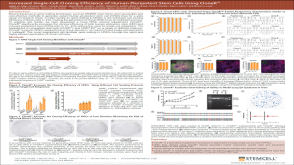 科学海报Increased Single-Cell Cloning Efficiency of Human Pluripotent Stem Cells Using CloneR™

 沪公网安备31010102008431号