Jeerage KM et al. (OCT 2012)
Neurotoxicology 33 5 1170--9
Neurite outgrowth and differentiation of rat cortex progenitor cells are sensitive to lithium chloride at non-cytotoxic exposures.
Neuron-specific in vitro screening strategies have the potential to accelerate the evaluation of chemicals for neurotoxicity. We examined neurite outgrowth as a measure of neuronal response with a commercially available rat cortex progenitor cell model,where cells were exposed to a chemical during a period of cell differentiation. In control cultures,the fraction of beta-III-tubulin positive neurons and their neurite length increased significantly with time,indicating differentiation of the progenitor cells. Expression of glial fibrillary acidic protein,an astrocyte marker,also increased significantly with time. By seeding progenitor cells at varying densities,we demonstrated that neurite length was influenced by cell-cell spacing. After ten days,cultures seeded at densities of 1000 cells/mm(2) or lower had significantly shorter neurites than cultures seeded at densities of 1250 cells/mm(2) or higher. Progenitor cells were exposed to lithium,a neuroactive chemical with diverse modes of action. Cultures exposed to 30 mmol/L or 10 mmol/L lithium chloride (LiCl) had significantly lower metabolic activity than control cultures,as reported by adenosine triphosphate content,and no neurons were observed after ten days of exposure. Cultures exposed to 3 mmol/L,1 mmol/L,or 0.3 mmol/L LiCl,which encompass lithium's therapeutic range,had metabolic activity similar to control cultures. These cultures exhibited concentration-dependent decreases in neurite outgrowth after ten days of LiCl exposure. Neurite outgrowth results were relatively robust,regardless of the evaluation methodology. This work demonstrates that measurement of neurite outgrowth in differentiating progenitor cell cultures can be a sensitive endpoint for neuronal response under non-cytotoxic exposure conditions.
View Publication
产品号#:
05771
05772
产品名:
Chakrabarti L et al. (JAN 2012)
Frontiers in oncology 2 82
Reversible adaptive plasticity: a mechanism for neuroblastoma cell heterogeneity and chemo-resistance.
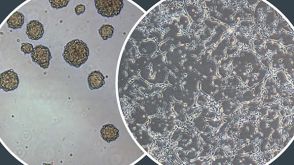
We describe a novel form of tumor cell plasticity characterized by reversible adaptive plasticity in murine and human neuroblastoma. Two cellular phenotypes were defined by their ability to exhibit adhered,anchorage dependent (AD) or sphere forming,anchorage independent (AI) growth. The tumor cells could transition back and forth between the two phenotypes and the transition was dependent on the culture conditions. Both cell phenotypes exhibited stem-like features such as expression of nestin,self-renewal capacity,and mesenchymal differentiation potential. The AI tumorspheres were found to be more resistant to chemotherapy and proliferated slower in vitro compared to the AD cells. Identification of specific molecular markers like MAP2,β-catenin,and PDGFRβ enabled us to characterize and observe both phenotypes in established mouse tumors. Irrespective of the phenotype originally implanted in mice,tumors grown in vivo show phenotypic heterogeneity in molecular marker signatures and are indistinguishable in growth or histologic appearance. Similar molecular marker heterogeneity was demonstrated in primary human tumor specimens. Chemotherapy or growth factor receptor inhibition slowed tumor growth in mice and promoted initial loss of AD or AI heterogeneity,respectively. Simultaneous targeting of both phenotypes led to further tumor growth delay with emergence of new unique phenotypes. Our results demonstrate that neuroblastoma cells are plastic,dynamic,and may optimize their ability to survive by changing their phenotype. Phenotypic switching appears to be an adaptive mechanism to unfavorable selection pressure and could explain the phenotypic and functional heterogeneity of neuroblastoma.
View Publication
产品号#:
05700
05701
05702
产品名:
NeuroCult™ 基础培养基(小鼠和大鼠)
NeuroCult™ 扩增添加物(小鼠和大鼠)
NeuroCult™扩增试剂盒(小鼠和大鼠)
Li Y et al. (AUG 2008)
Neuron 59 3 399--412
TrkB regulates hippocampal neurogenesis and governs sensitivity to antidepressive treatment.
Adult hippocampal neurogenesis is stimulated by chronic administration of antidepressants (ADs) and by voluntary exercise. Neural progenitor cells (NPCs) in the dentate gyrus (DG) that are capable of continuous proliferation and neuronal differentiation are the source of such structural plasticity. Here we report that mice lacking the receptor tyrosine kinase TrkB in hippocampal NPCs have impaired proliferation and neurogenesis. When exposed to chronic ADs or wheel-running,no increase in proliferation or neurogenesis is observed. Ablation of TrkB also renders these mice behaviorally insensitive to antidepressive treatment in depression- and anxiety-like paradigms. In contrast,mice lacking TrkB only in differentiated DG neurons display typical neurogenesis and respond normally to chronic ADs. Thus,our data establish an essential cell-autonomous role for TrkB in regulating hippocampal neurogenesis and behavioral sensitivity to antidepressive treatments,and support the notion that impairment of the neurogenic niche is an etiological factor for refractory responses to an antidepressive regimen.
View Publication
Kerosuo L et al. (DEC 2008)
Journal of cell science 121 Pt 23 3941--50
Myc increases self-renewal in neural progenitor cells through Miz-1.
The mechanisms underlying the decision of a stem or progenitor cell to either self-renew or differentiate are incompletely understood. To address the role of Myc in this process,we expressed different forms of the proto-oncogene Myc in multipotent neural progenitor cells (NPCs) using retroviral transduction. Expression of Myc in neurospheres increased the proportion of self-renewing cells fivefold,and 1% of the Myc-overexpressing cells,but none of the control cells,retained self-renewal capacity even under differentiation-inducing conditions. A Myc mutant (MycV394D) deficient in binding to Miz-1,did not increase the percentage of self-renewing cells but was able to stimulate proliferation of NPCs as efficiently as wild-type Myc,indicating that these two cellular phenomena are regulated by at least partially different pathways. Our results suggest that Myc,through Miz-1,enhances self-renewal of NPCs and influences the way progenitor cells react to the environmental cues that normally dictate the cellular identity of tissues containing self-renewing cells.
View Publication
产品号#:
05707
产品名:
NeuroCult™化学解离试剂盒(小鼠)
Mathieu C et al. (AUG 2008)
Molecular and cellular neurosciences 38 4 569--77
Endothelial cell-derived bone morphogenetic proteins control proliferation of neural stem/progenitor cells.
Neurogenesis persists in the adult brain subventricular zone where neural stem/progenitor cells (NSPCs) lie close to brain endothelial cells (BECs). We show in mouse that BECs produce bone morphogenetic proteins (BMPs). Coculture of embryonic and adult NSPCs with BECs activated the canonical BMP/Smad pathway and reduced their proliferation. We demonstrate that coculture with BECs in the presence of EGF and FGF2 induced a reversible cell cycle exit of NSPCs (LeX+) and an increase in the amount of GFAP/LeX-expressing progenitors thought to be stem cells. Levels of the phosphatidylinositol phosphatase PTEN were upregulated in NSPCs after coculture with BECs,or treatment with recombinant BMP4,with a concomitant reduction in Akt phosphorylation. Silencing Smad5 with siRNA or treatment with Noggin,a BMP antagonist,demonstrated that upregulation of PTEN in NSPCs required BMP/Smad signaling and that this pathway regulated cell cycle exit of NSPCs. Therefore,BECs may provide a feedback mechanism to control the proliferation of NSPCs.
View Publication
产品号#:
05700
05701
05702
产品名:
NeuroCult™ 基础培养基(小鼠和大鼠)
NeuroCult™ 扩增添加物(小鼠和大鼠)
NeuroCult™扩增试剂盒(小鼠和大鼠)
Walker TL et al. (MAY 2008)
The Journal of neuroscience : the official journal of the Society for Neuroscience 28 20 5240--7
Latent stem and progenitor cells in the hippocampus are activated by neural excitation.
The regulated production of neurons in the hippocampus throughout life underpins important brain functions such as learning and memory. Surprisingly,however,studies have so far failed to identify a resident hippocampal stem cell capable of providing the renewable source of these neurons. Here,we report that depolarizing levels of KCl produce a threefold increase in the number of neurospheres generated from the adult mouse hippocampus. Most interestingly,however,depolarizing levels of KCl led to the emergence of a small subpopulation of precursors (approximately eight per hippocampus) with the capacity to generate very large neurospheres (textgreater 250 microm in diameter). Many of these contained cells that displayed the cardinal properties of stem cells: multipotentiality and self-renewal. In contrast,the same conditions led to the opposite effect in the other main neurogenic region of the brain,the subventricular zone,in which neurosphere numbers decreased by approximately 40% in response to depolarizing levels of KCl. Most importantly,we also show that the latent hippocampal progenitor population can be activated in vivo in response to prolonged neural activity found in status epilepticus. This work provides the first direct evidence of a latent precursor and stem cell population in the adult hippocampus,which is able to be activated by neural activity. Because the latent population is also demonstrated to reside in the aged animal,defining the precise mechanisms that underlie its activation may provide a means to combat the cognitive deficits associated with a decline in neurogenesis.
View Publication


 EasySep™小鼠TIL(CD45)正选试剂盒





 沪公网安备31010102008431号