A. Stern et al. (Apr 2022)
SLAS Discovery 27 201-208
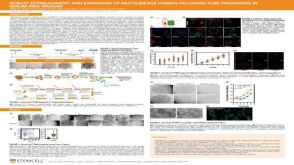
The CellRaft AIR? system: A novel system enabling organoid imaging, identification, and isolation
Three-dimensional (3D) culture systems have been developed that can re-capitulate organ level responses,simulate compound diffusion through complex structures,and assess cellular heterogeneity of tissues,making them attractive models for advanced in vitro research and discovery. Organoids are a unique subtype of 3D cell culture that are grown from stem cells,are self-organizing,and closely replicate in vivo pathophysiology. Organoids have been used to understand tissue development,model diseases,test drug sensitivity and toxicity,and advance regenerative medicine. However,traditional organoid culture methods are inadequate because they are low throughput and ill-suited for single organoid imaging,phenotypic assessment,and isolation from heterogenous organoid populations. To address these bottlenecks,we have adapted our tissue culture consumable and instrumentation to enable automated imaging,identification,and isolation of individual organoids. Organoids grown on the 3D CytoSort? Array can be reliably tracked,imaged,and phenotypically analyzed using brightfield and fluorescent microscopy as they grow over time,then released and transferred fully intact for use in downstream applications. Using mouse hepatic and pancreatic organoids,we have demonstrated the use of this technology for single-organoid imaging,clonal organoid generation,parent organoid subcloning,and single-organoid RNA extraction for downstream gene expression or transcriptomic analysis. The results validate the ability of the CellRaft AIR? System to facilitate efficient,user-friendly,and automated workflows broadly applicable to organoid research by overcoming several pain points: 1) single organoid time-course imaging and phenotypic assessment,2) establishment of single cell-derived organoids,and 3) isolation and retrieval of single organoids for downstream applications.
View Publication
Aladegbami B et al. (JUL 2017)
Scientific reports 7 1 5580
Epithelial cell specific Raptor is required for initiation of type 2 mucosal immunity in small intestine.
Intestinal tuft cells are one of 4 secretory cell linages in the small intestine and the source of IL-25,a critical initiator of the type 2 immune response to parasite infection. When Raptor,a critical scaffold protein for mammalian target of rapamycin complex 1 (mTORC1),was acutely deleted in intestinal epithelium via Tamoxifen injection in Tritrichomonas muris (Tm) infected mice,tuft cells,IL-25 in epithelium and IL-13 in the mesenchyme were significantly reduced,but Tm burden was not affected. When Tm infected mice were treated with rapamycin,DCLK1 and IL-25 expression in enterocytes and IL-13 expression in mesenchyme were diminished. After massive small bowel resection,tuft cells and Tm were diminished due to the diet used postoperatively. The elimination of Tm and subsequent re-infection of mice with Tm led to type 2 immune response only in WT,but Tm colonization in both WT and Raptor deficient mice. When intestinal organoids were stimulated with IL-4,tuft cells and IL-25 were induced in both WT and Raptor deficient organoids. In summary,our study reveals that enterocyte specific Raptor is required for initiating a type 2 immune response which appears to function through the regulation of mTORC1 activity.
View Publication
产品号#:
06005
产品名:
IntestiCult™ 类器官生长培养基 (小鼠)
C. L. Kraft et al. (NOV 2017)
Oncotarget 8 61 102923--102933
GUCY2C maintains intestinal LGR5+stem cells by opposing ER stress.
Long-lived multipotent stem cells (ISCs) at the base of intestinal crypts adjust their phenotypes to accommodate normal maintenance and post-injury regeneration of the epithelium. Their long life,lineage plasticity,and proliferative potential underlie the necessity for tight homeostatic regulation of the ISC compartment. In that context,the guanylate cyclase C (GUCY2C) receptor and its paracrine ligands regulate intestinal epithelial homeostasis,including proliferation,lineage commitment,and DNA damage repair. However,a role for this axis in maintaining ISCs remains unknown. Transgenic mice enabling analysis of ISCs (Lgr5-GFP) in the context of GUCY2C elimination (Gucy2c -/- ) were combined with immunodetection techniques and pharmacological treatments to define the role of the GUCY2C signaling axis in supporting ISCs. ISCs were reduced inGucy2c -/- mice,associated with loss of active Lgr5+cells but a reciprocal increase in reserve Bmi1+cells. GUCY2C was expressed in crypt base Lgr5+cells in which it mediates canonical cyclic (c) GMP-dependent signaling. Endoplasmic reticulum (ER) stress,typically absent from ISCs,was elevated throughout the crypt base inGucy2c -/- mice. The chemical chaperone tauroursodeoxycholic acid resolved this ER stress and restored the balance of ISCs,an effect mimicked by the GUCY2C effector 8Br-cGMP. Reduced ISCs inGucy2c -/- mice was associated with greater epithelial injury and impaired regeneration following sub-lethal doses of irradiation. These observations suggest that GUCY2C provides homeostatic signals that modulate ER stress and cell vulnerability as part of the machinery contributing to the integrity of ISCs.
View Publication
产品号#:
06005
产品名:
IntestiCult™ 类器官生长培养基 (小鼠)
Ma I and Allan AL (JUN 2011)
Stem cell reviews 7 2 292--306
The role of human aldehyde dehydrogenase in normal and cancer stem cells.
Normal stem cells and cancer stem cells (CSCs) share similar properties,in that both have the capacity to self-renew and differentiate into multiple cell types. In both the normal stem cell and cancer stem cell fields,there has been a great need for a universal marker that can effectively identify and isolate these rare populations of cells in order to characterize them and use this information for research and therapeutic purposes. Currently,it would appear that certain isoenzymes of the aldehyde dehydrogenase (ALDH) superfamily may be able to fulfill this role as a marker for both normal and cancer stem cells. ALDH has been identified as an important enzyme in the protection of normal hematopoietic stem cells,and is now also widely used as a marker to identify and isolate various types of normal stem cells and CSCs. In addition,emerging evidence suggests that ALDH1 is not only a marker for stem cells,but may also play important functional roles related to self-protection,differentiation,and expansion. This comprehensive review discusses the role that ALDH plays in normal stem cells and CSCs,with focus on ALDH1 and ALDH3A1. Discrepancies in the functional themes between cell types and future perspectives for therapeutic applications will also be discussed.
View Publication
产品号#:
01700
01705
01702
产品名:
ALDEFLUOR™ 试剂盒
ALDEFLUOR™ DEAB试剂, 1.5 mM, 1 mL
ALDEFLUOR™检测缓冲液
M. D. Hu et al. (JUL 2018)
Journal of immunology (Baltimore,Md. : 1950) 201 2 747--756
Epithelial IL-15 Is a Critical Regulator of gamma$delta$ Intraepithelial Lymphocyte Motility within the Intestinal Mucosa.
Intraepithelial lymphocytes (IELs) expressing the gamma$delta$ TCR (gamma$delta$ IELs) provide continuous surveillance of the intestinal epithelium. However,the mechanisms regulating the basal motility of these cells within the epithelial compartment have not been well defined. We investigated whether IL-15 contributes to gamma$delta$ IEL localization and migratory behavior in addition to its role in IEL differentiation and survival. Using advanced live cell imaging techniques in mice,we find that compartmentalized overexpression of IL-15 in the lamina propria shifts the distribution of gamma$delta$ T cells from the epithelial compartment to the lamina propria. This mislocalization could be rescued by epithelial IL-15 overexpression,indicating that epithelial IL-15 is essential for gamma$delta$ IEL migration into the epithelium. Furthermore,in vitro analyses demonstrated that exogenous IL-15 stimulates gamma$delta$ IEL migration into cultured epithelial monolayers,and inhibition of IL-2Rbeta$ significantly attenuates the basal motility of these cells. Intravital microscopy showed that impaired IL-2Rbeta$ signaling induced gamma$delta$ IEL idling within the lateral intercellular space,which resulted in increased early pathogen invasion. Similarly,the redistribution of gamma$delta$ T cells to the lamina propria due to local IL-15 overproduction also enhanced bacterial translocation. These findings thus reveal a novel role for IL-15 in mediating gamma$delta$ T cell localization within the intestinal mucosa and regulating gamma$delta$ IEL motility and patrolling behavior as a critical component of host defense.
View Publication