Shiozawa T et al. (FEB 2016)
Virchows Archiv 468 2 179--90
Dimethylarginine dimethylaminohydrolase 2 promotes tumor angiogenesis in lung adenocarcinoma
Although embryonal proteins have been used as tumor marker,most are not useful for detection of early malignancy. In the present study,we developed mouse monoclonal antibodies against fetal lung of miniature swine,and screened them to find an embryonal protein that is produced at the early stage of malignancy,focusing on lung adenocarcinoma. We found an antibody clone that specifically stained stroma of lung adenocarcinoma. LC-MS/MS identified the protein recognized by this clone as dimethylarginine dimethylaminohydrolase 2 (DDAH2),an enzyme known for antiatherosclerotic activity. DDAH2 was found to be expressed in fibroblasts of stroma of malignancies,with higher expression in minimally invasive adenocarcinoma (MIA) and invasive adenocarcinoma than in adenocarcinoma in situ (AIS). Moreover,tumors with high stromal expression of DDAH2 had a poorer prognosis than those without. In vitro analysis showed that DDAH2 increases expression of endothelial nitric oxide synthase (eNOS),inducing proliferation and capillary-like tube formation of vascular endothelial cells. In resected human tissues,eNOS also showed higher expression in invasive adenocarcinoma than in AIS and normal lung,similarly to DDAH2. Our data indicate that expression of DDAH2 is associated with invasiveness of lung adenocarcinoma via tumor angiogenesis. DDAH2 expression might be a prognostic factor in lung adenocarcinoma.
View Publication
DNMT3A mutations promote anthracycline resistance in acute myeloid leukemia via impaired nucleosome remodeling.
Although the majority of patients with acute myeloid leukemia (AML) initially respond to chemotherapy,many of them subsequently relapse,and the mechanistic basis for AML persistence following chemotherapy has not been determined. Recurrent somatic mutations in DNA methyltransferase 3A (DNMT3A),most frequently at arginine 882 (DNMT3A(R882)),have been observed in AML and in individuals with clonal hematopoiesis in the absence of leukemic transformation. Patients with DNMT3A(R882) AML have an inferior outcome when treated with standard-dose daunorubicin-based induction chemotherapy,suggesting that DNMT3A(R882) cells persist and drive relapse. We found that Dnmt3a mutations induced hematopoietic stem cell expansion,cooperated with mutations in the FMS-like tyrosine kinase 3 gene (Flt3(ITD)) and the nucleophosmin gene (Npm1(c)) to induce AML in vivo,and promoted resistance to anthracycline chemotherapy. In patients with AML,the presence of DNMT3A(R882) mutations predicts minimal residual disease,underscoring their role in AML chemoresistance. DNMT3A(R882) cells showed impaired nucleosome eviction and chromatin remodeling in response to anthracycline treatment,which resulted from attenuated recruitment of histone chaperone SPT-16 following anthracycline exposure. This defect led to an inability to sense and repair DNA torsional stress,which resulted in increased mutagenesis. Our findings identify a crucial role for DNMT3A(R882) mutations in driving AML chemoresistance and highlight the importance of chromatin remodeling in response to cytotoxic chemotherapy.
View Publication
Kuroki MM et al. ( 2005)
Anticancer Research 25 6A 3733--9
Preparation of human IgG and IgM monoclonal antibodies for MK-1/Ep-CAM by using human immunoglobulin gene-transferred mouse and gene cloning of their variable regions.
For antibody-based therapy of cancer,monoclonal antibodies (mAbs) of human origin are superior to mouse,mouse/human chimeric or humanized mAbs,because of their minimum immunogenicity to humans and their efficient collaboration with human effector cells. In the present study,human mAbs were prepared against a pancarcinoma antigen,MK-1 (Ep-CAM),using a genetically-engineered mouse (KM mouse) that contains the human immunoglobulin genes. Spleen cells from KM mice,immunized with recombinant MK-1,were fused with P3-U1 mouse myeloma cells. Of 44 anti-MK-1 clones analyzed,two were of IgG4 and the others of IgM clones. Although the two IgG4 clones were suggested to recognize the same antigenic determinant or two closely located determinants,their VK regions were encoded by different light-chain genes while their VH sequences were identical. The two IgG4 and one of the IgM clones tested revealed antibody-dependent cell-mediated cytotoxicity and complement-dependent cytotoxicity,respectively,against MK-1-expressing cells in vitro,suggesting that these fully human mAbs produced against MK-1 and their V-region genes,which are applicable for the preparation of engineered antibody fragments that may be useful for antibody-based therapy of cancer.
View Publication


 EasySep™小鼠TIL(CD45)正选试剂盒





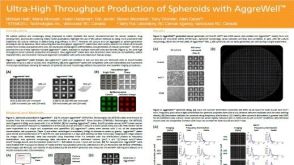 科学海报Ultra-High Throughput Production of Spheroids with AggreWell™

 沪公网安备31010102008431号