Shreffler WG et al. (SEP 2006)
Journal of immunology (Baltimore,Md. : 1950) 177 6 3677--85
The major glycoprotein allergen from Arachis hypogaea, Ara h 1, is a ligand of dendritic cell-specific ICAM-grabbing nonintegrin and acts as a Th2 adjuvant in vitro.
Nonmammalian glycan structures from helminths act as Th2 adjuvants. Some of these structures are also common on plant glycoproteins. We hypothesized that glycan structures present on peanut glycoallergens act as Th2 adjuvants. Peanut Ag (PNAg),but not deglycosylated PNAg,activated monocyte-derived dendritic cells (MDDCs) as measured by MHC/costimulatory molecule up-regulation,and by their ability to drive T cell proliferation. Furthermore,PNAg-activated MDDCs induced 2- to 3-fold more IL-4- and IL-13-secreting Th2 cells than immature or TNF/IL-1-activated MDDCs when cultured with naive CD4+ T cells. Human MDDCs rapidly internalized Ag in a calcium- and glycan-dependent manner consistent with recognition by C-type lectin. Dendritic cell (DC)-specific ICAM-grabbing nonintegrin (DC-SIGN) (CD209) was shown to recognize PNAg by enhanced uptake in transfected cell lines. To identify the DC-SIGN ligand from unfractionated PNAg,we expressed the extracellular portion of DC-SIGN as an Fc-fusion protein and used it to immunoprecipitate PNAg. A single glycoprotein was pulled down in a calcium-dependent manner,and its identity as Ara h 1 was proven by immunolabeling and mass spectrometry. Purified Ara h 1 was found to be sufficient for the induction of MDDCs that prime Th2-skewed T cell responses. Both PNAg and purified Ara h 1 induced Erk 1/2 phosphorylation of MDDCs,consistent with previous reports on the effect of Th2 adjuvants on DCs.
View Publication
产品号#:
18058
18058RF
19155
19155RF
产品名:
Nanua S et al. (MAR 2011)
Blood 117 13 3539--47
Activation of the unfolded protein response is associated with impaired granulopoiesis in transgenic mice expressing mutant Elane.
Severe congenital neutropenia (SCN) is an inborn disorder of granulopoiesis that in many cases is caused by mutations of the ELANE gene,which encodes neutrophil elastase (NE). Recent data suggest a model in which ELANE mutations result in NE protein misfolding,induction of endoplasmic reticulum (ER) stress,activation of the unfolded protein response (UPR),and ultimately a block in granulocytic differentiation. To test this model,we generated transgenic mice carrying a targeted mutation of Elane (G193X) reproducing a mutation found in SCN. The G193X Elane allele produces a truncated NE protein that is rapidly degraded. Granulocytic precursors from G193X Elane mice,though without significant basal UPR activation,are sensitive to chemical induction of ER stress. Basal and stress granulopoiesis after myeloablative therapy are normal in these mice. Moreover,inaction of protein kinase RNA-like ER kinase (Perk),one of the major sensors of ER stress,either alone or in combination with G193X Elane,had no effect on basal granulopoiesis. However,inhibition of the ER-associated degradation (ERAD) pathway using a proteosome inhibitor resulted in marked neutropenia in G193X Elane. The selective sensitivity of G913X Elane granulocytic cells to ER stress provides new and strong support for the UPR model of disease patho-genesis in SCN.
View Publication
N. Kuroda et al. (jun 2019)
Scientific reports 9 1 8568
Infiltrating CCR2+ monocytes and their progenies, fibrocytes, contribute to colon fibrosis by inhibiting collagen degradation through the production of TIMP-1.
Intestinal fibrosis is a serious complication in inflammatory bowel disease (IBD). Despite the remarkable success of recent anti-inflammatory therapies for IBD,incidence of intestinal fibrosis and need for bowel resection have not significantly changed. To clarify the contribution of haematopoietic-derived cells in intestinal fibrosis,we prepared bone marrow (BM) chimeric mice (chimeras),which were reconstituted with BM cells derived from enhanced green fluorescent protein (EGFP)-transgenic mice or CC chemokine receptor 2 (CCR2)-deficient mice. After 2 months of transplantation,BM chimeras were treated with azoxymethane/dextran sodium sulphate. During chronic inflammation,CCR2+ BM-derived monocyte and fibrocyte infiltration into the colon and CC chemokine ligand 2 production increased,leading to colon fibrosis in EGFP BM chimeras. In CCR2-deficient BM chimeras,monocyte and fibrocyte numbers in the colonic lamina propria significantly decreased,and colon fibrosis was attenuated. In colon tissue,mRNA expression of tissue inhibitor of metalloproteinase (TIMP)-1 but not of collagen I,transforming growth factor-beta1 or matrix metalloproteinases was significantly different between the two chimeras. CCR2+ monocytes and fibrocytes showed high Timp1 mRNA expression. Our results suggest that infiltrating CCR2+ monocytes and their progenies,fibrocytes,promote colon fibrosis by inhibiting collagen degradation through TIMP-1 production.
View Publication
产品号#:
19861
19861RF
产品名:
EasySep™小鼠单核细胞分选试剂盒
RoboSep™ 小鼠单核细胞分选试剂盒
Dewhurst JA et al. (AUG 2017)
Scientific reports 7 1 7143
Characterisation of lung macrophage subpopulations in COPD patients and controls.
Lung macrophage subpopulations have been identified based on size. We investigated characteristics of small and large macrophages in the alveolar spaces and lung interstitium of COPD patients and controls. Alveolar and interstitial cells were isolated from lung resection tissue from 88 patients. Macrophage subpopulation cell-surface expression of immunological markers and phagocytic ability were assessed by flow cytometry. Inflammatory related gene expression was measured. Alveolar and interstitial macrophages had subpopulations of small and large macrophages based on size and granularity. Alveolar macrophages had similar numbers of small and large cells; interstitial macrophages were mainly small. Small macrophages expressed significantly higher cell surface HLA-DR,CD14,CD38 and CD36 and lower CD206 compared to large macrophages. Large alveolar macrophages showed lower marker expression in COPD current compared to ex-smokers. Small interstitial macrophages had the highest pro-inflammatory gene expression levels,while large alveolar macrophages had the lowest. Small alveolar macrophages had the highest phagocytic ability. Small alveolar macrophage CD206 expression was lower in COPD patients compared to smokers. COPD lung macrophages include distinct subpopulations; Small interstitial and small alveolar macrophages with more pro-inflammatory and phagocytic function respectively,and large alveolar macrophages with low pro-inflammatory and phagocytic ability.
View Publication


 EasySep™小鼠TIL(CD45)正选试剂盒





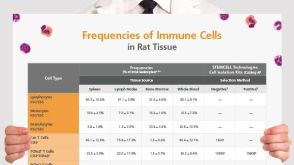 挂图Frequencies of Immune Cells in Rat Tissue Lists the estimated frequencies of more than 15 immune cell types in Sprague Dawley rats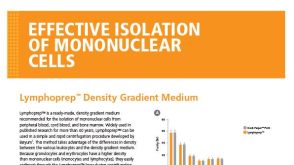


 沪公网安备31010102008431号